Artwork
A ilha de San Giorgio Maggiore
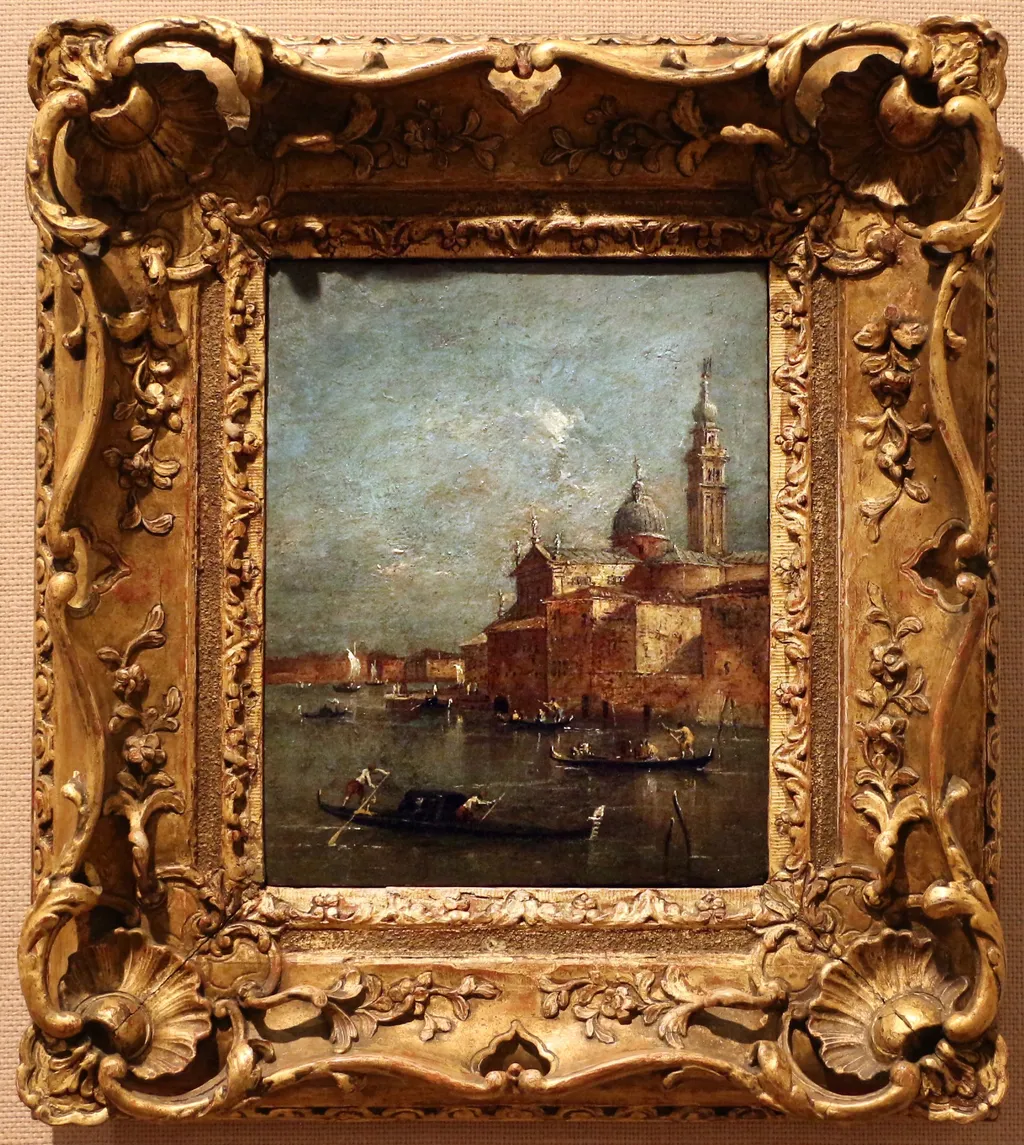
A ilha de San Giorgio Maggiore is an unspecified painting by Francesco Guardi. It is held in the collection of the Calouste Gulbenkian Museum.
About this work
Overview
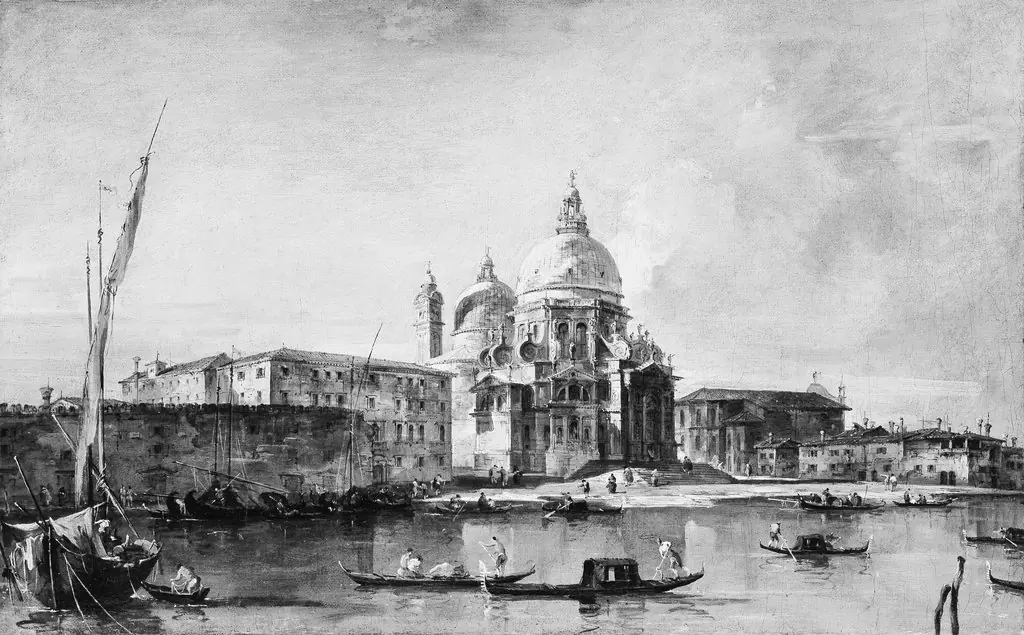
The composition balances the dome and campanile of the church with the surrounding urban fabric, while a handful of vessels animate the water’s surface.
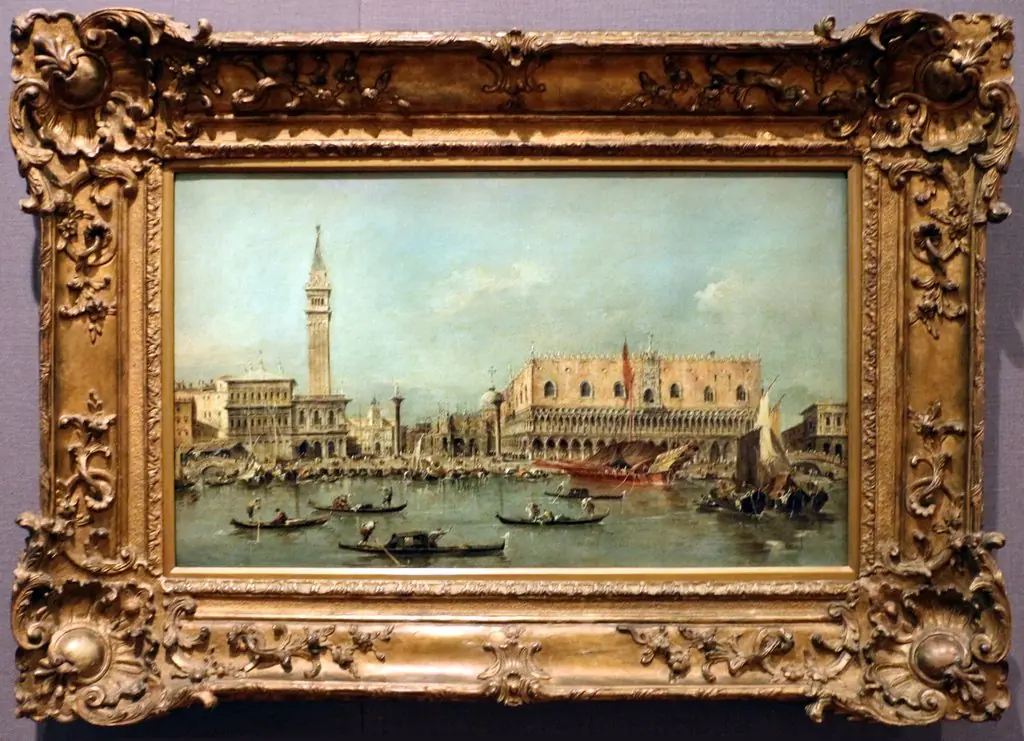
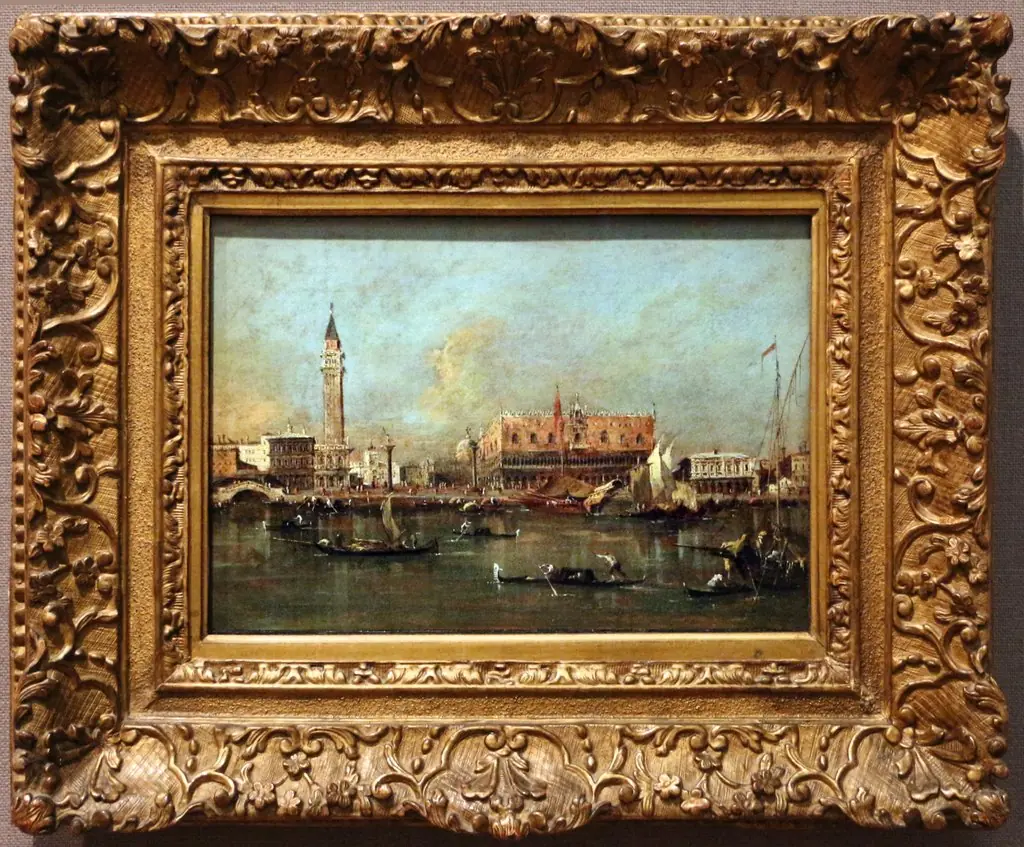
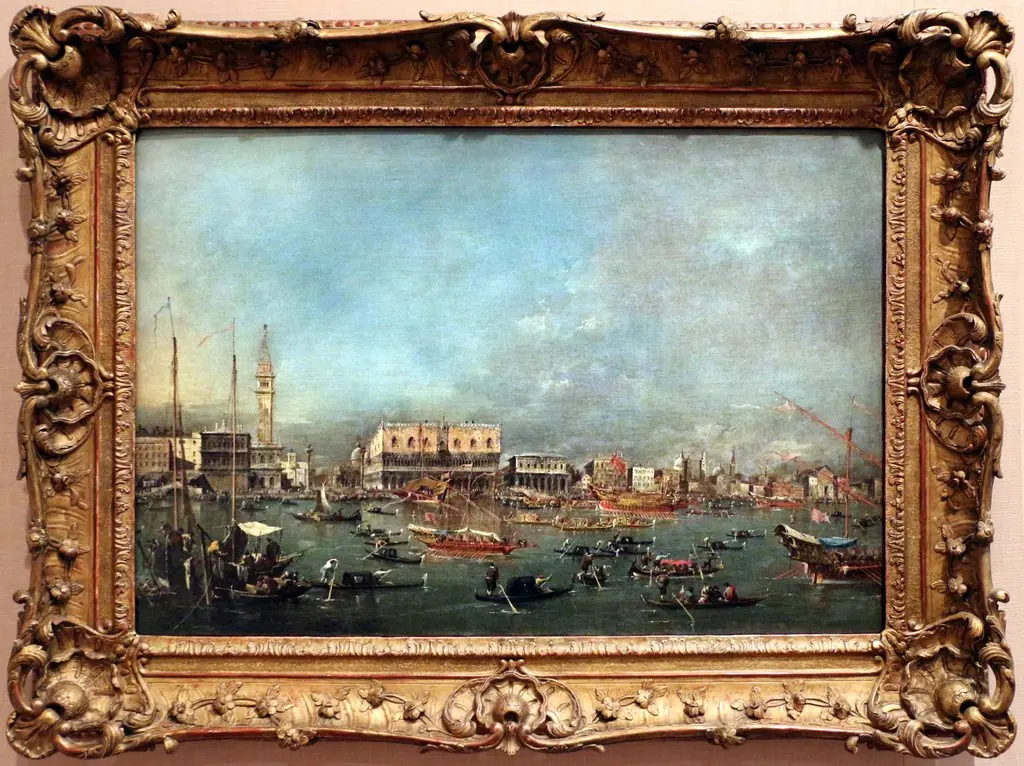
Francesco Guardi’s 1796 canvas portrays the island of San Giorgio Maggiore, a Venetian landmark seen across a tranquil canal. The composition balances the dome and campanile of the church with the surrounding urban fabric, while a handful of vessels animate the water’s surface. Guardi’s palette shifts between warm, earthy tones for the buildings and cooler blues and grays that define sky and water, creating atmospheric depth.
Subject & Meaning
The painting captures a typical Venetian vista, emphasizing the harmonious relationship between architecture and the lagoon. The prominent church, with its dome and tower, serves as a focal point, symbolising the city’s religious and civic identity, while the modest boats suggest everyday commerce and travel along the canal.
Technique & Style
Executed in Guardi’s later period, the work exhibits looser, more expressive brushwork than his earlier, more detailed vedute. Light is rendered through subtle gradations of color, and the interplay of shadow and illumination enhances the sense of three‑dimensional space. The contrast between warm building tones and cool water hues underscores Guardi’s evolving, atmospheric approach.
History & Provenance
Created toward the end of Guardi’s career, the painting entered the collection of the Calouste Gulbenkian Museum, where it remains on display. Its acquisition reflects the museum’s focus on European art of the 18th century and Guardi’s role within the Venetian school.
Context
Guardi, born into a noble Venetian family, initially painted religious subjects before turning to cityscapes after 1760. By the 1790s, his work exemplified the later phase of the classic Venetian school, characterized by a shift toward more fluid handling of paint and an emphasis on mood over strict topographical accuracy.
Artist & collection

Artist
Francesco Lazzaro Guardi (Italian pronunciation: ; 5 October 1712 – 1 January 1793) was an Italian painter, nobleman, and a member of the Venetian School.