Artwork
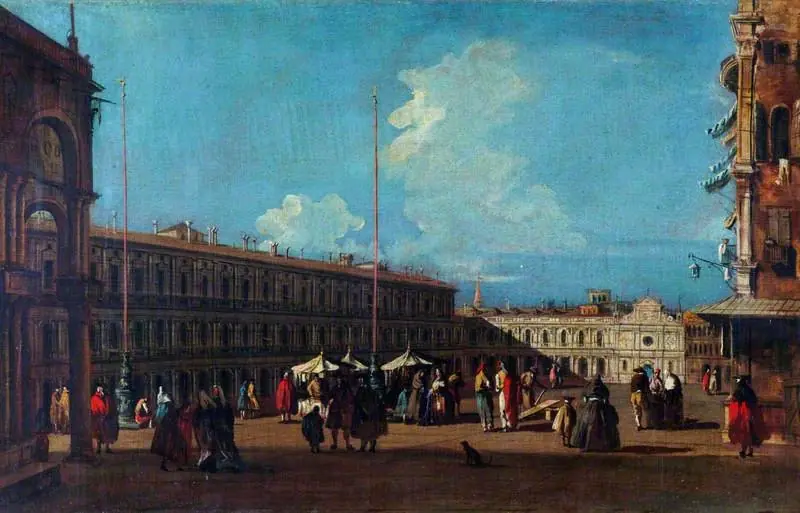
Venice: A Fair in the Piazza San Marco Seen through an Archway at the South-West End
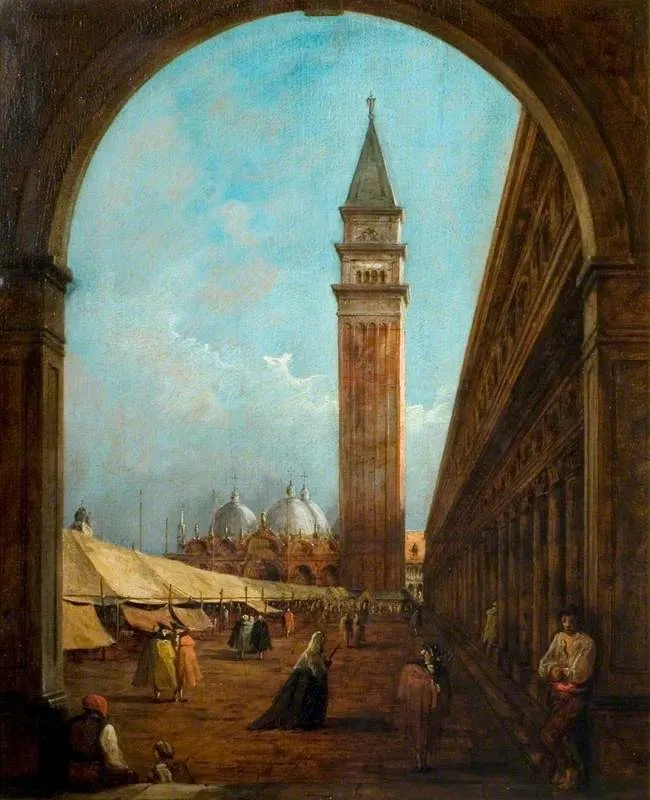
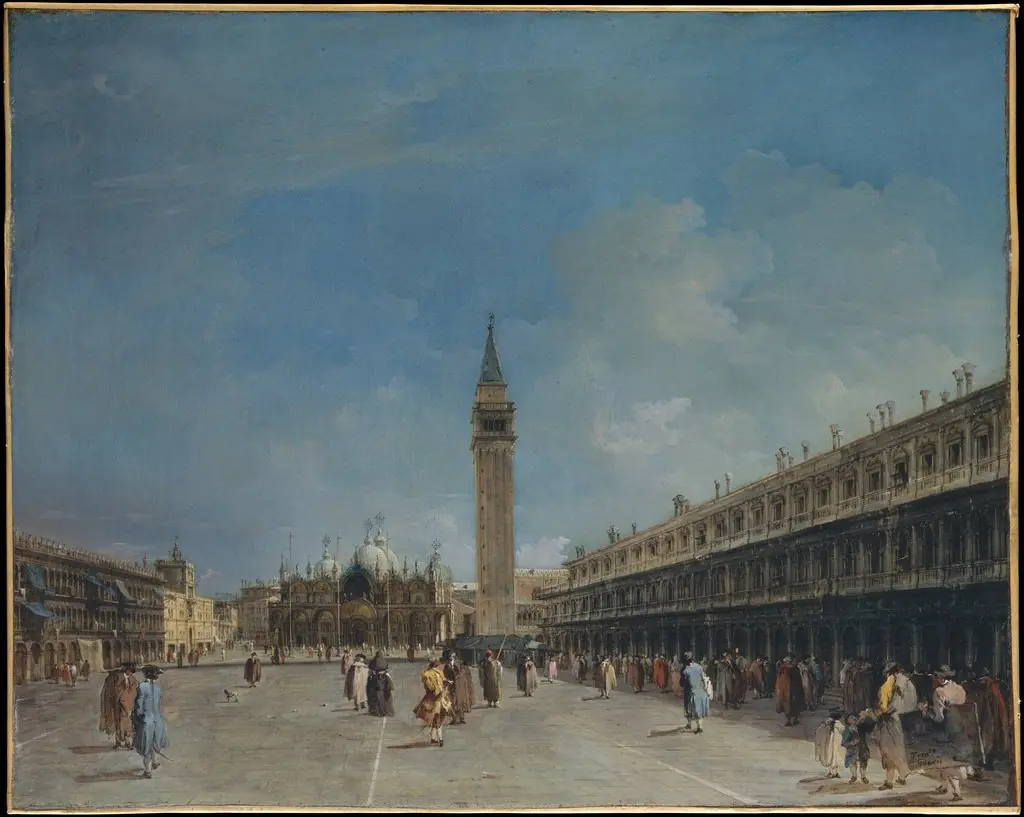
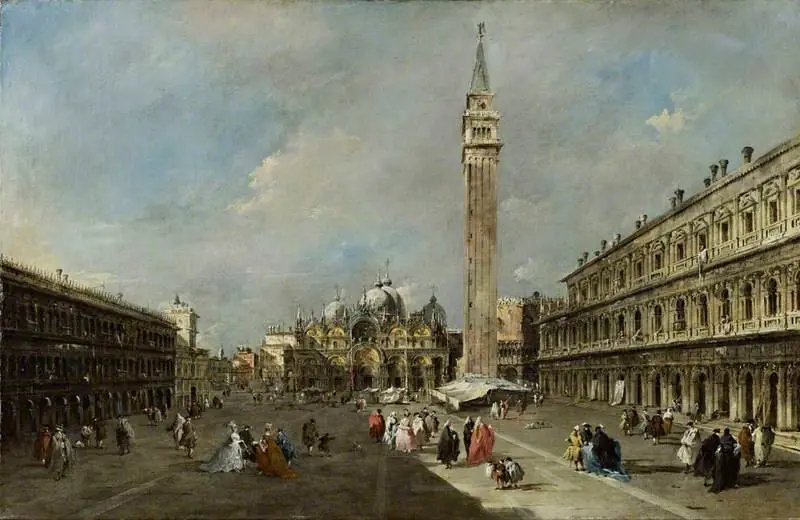
Venice: A Fair in the Piazza San Marco Seen through an Archway at the South-West End is an unspecified painting by Francesco Guardi. It dates from 1762 and is held in the collection of the Victoria and Albert Museum.
About this work
Overview
Painted around 1762 by Francesco Guardi, this work captures a lively fair in St. Mark’s Square as seen through a stone archway at its southwestern edge. Guardi, a Venetian nobleman and painter, turned increasingly to urban landscapes after his brother’s death in 1760, refining a loose, atmospheric approach to vedute that diverged from the precision of earlier contemporaries.
Subject & Meaning
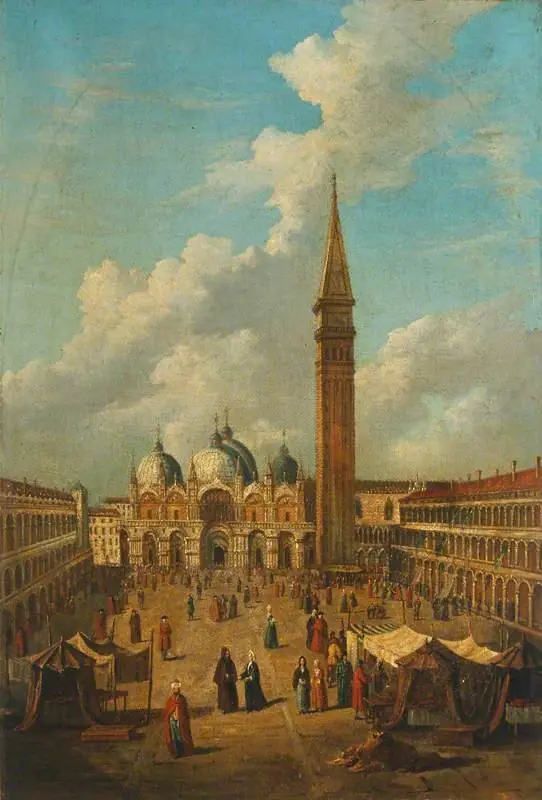
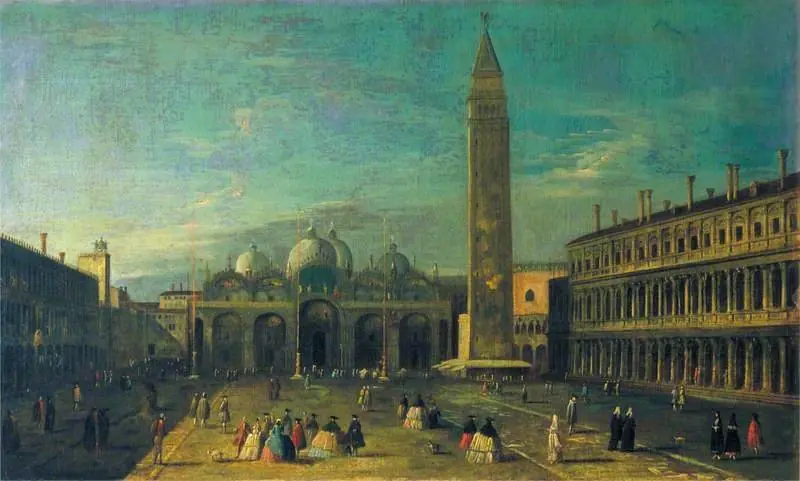
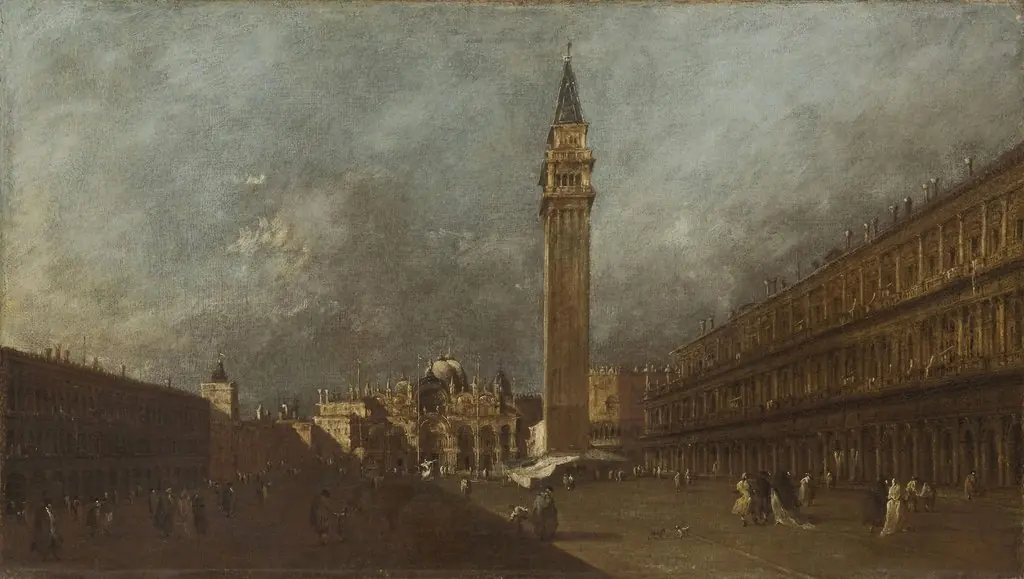
The scene portrays a public market in full motion—vendors, pedestrians, and onlookers fill the piazza beneath the towering campanile.
The scene portrays a public market in full motion—vendors, pedestrians, and onlookers fill the piazza beneath the towering campanile. The archway acts as a pictorial frame, directing attention to the rhythm of daily life in Venice. Rather than idealizing the city, Guardi emphasizes its transient energy, suggesting the ordinary rhythms of commerce and social interaction as worthy of artistic attention.
Technique & Style
Guardi employed rapid, broken brushstrokes to convey movement and light, contrasting with the sharper lines of Canaletto’s vedute. Warm ochres and terracottas define the architecture, while the sky is rendered in soft, luminous blues. The figures are suggested with minimal detail, their forms emerging from dabs of color that imply gesture and posture, enhancing the sense of spontaneity.
History & Provenance
Created during Guardi’s mature period, the painting reflects his shift from religious and mythological subjects to topographical views after 1760. It likely entered private collections in Venice or northern Italy before being acquired by a public institution. No definitive record of its early ownership survives, but its style aligns with other works from his late 1750s to 1770s output.
Context
In mid-18th-century Venice, vedute paintings catered to Grand Tour travelers seeking souvenirs of the city’s grandeur. Guardi’s approach, however, moved beyond topographical accuracy toward emotional resonance. His work coincided with Venice’s economic decline, and his paintings subtly reflect a city still vibrant in daily life, even as its political power waned.
Legacy
Guardi’s loose, impressionistic handling influenced later generations of landscape painters, including the French Impressionists. His ability to evoke atmosphere over detail marked a departure from the rigid conventions of veduta painting. Though less celebrated in his lifetime than Canaletto, his work is now recognized for its intuitive grasp of light, motion, and urban texture.
Artist & collection
Artist
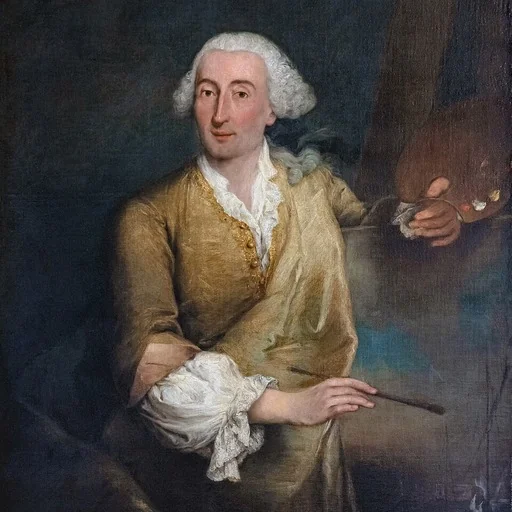
Francesco Lazzaro Guardi (Italian pronunciation: ; 5 October 1712 – 1 January 1793) was an Italian painter, nobleman, and a member of the Venetian School.