Artwork
The Ecstasy of Saint Francis
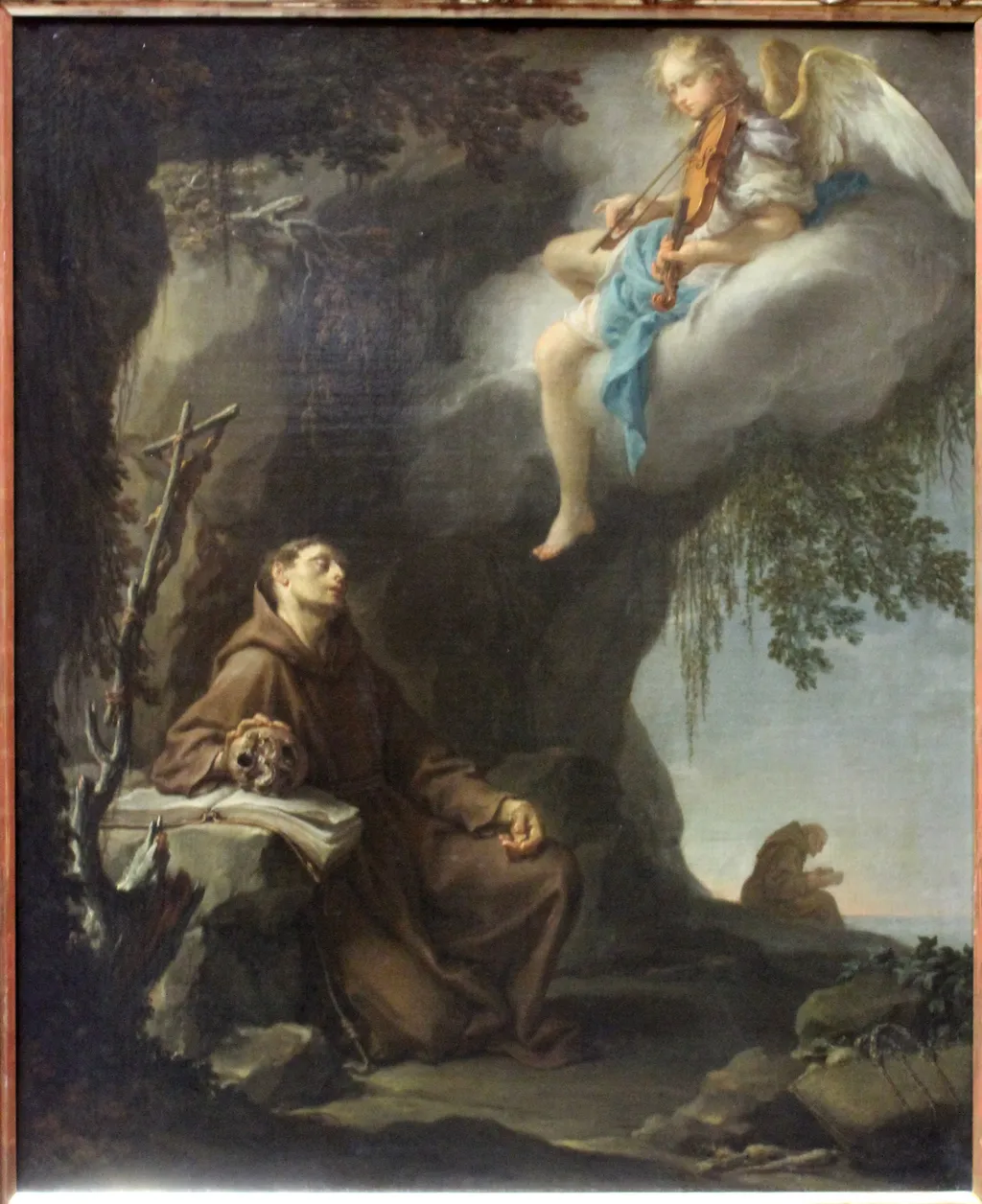
The Ecstasy of Saint Francis is an oil painting by the Rococo painting artist Francesco Trevisani. It dates from 1725 and is held in the collection of the Staatliche Kunstsammlungen Dresden.
About this work
Overview
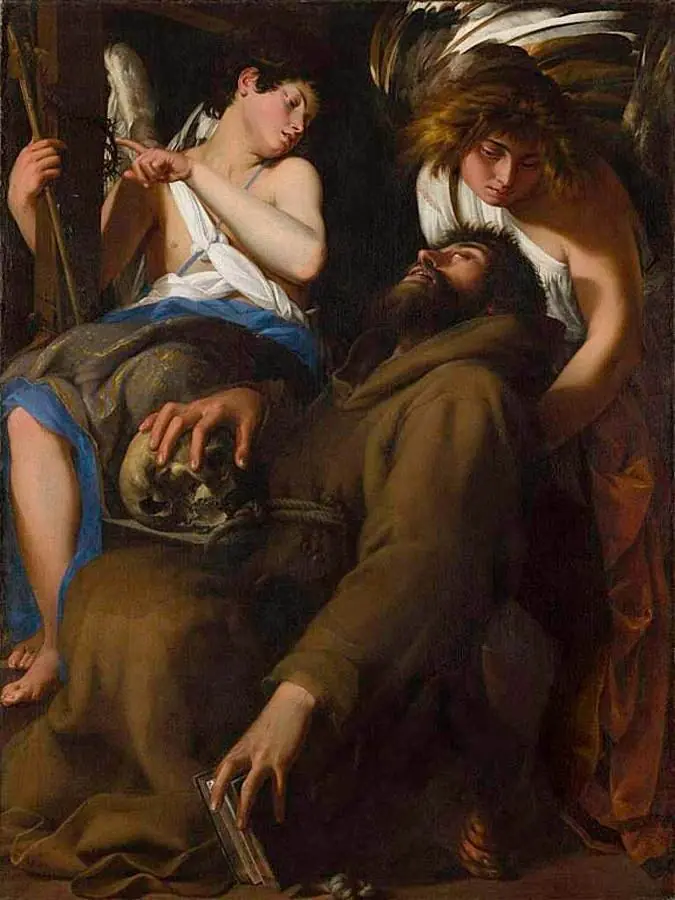
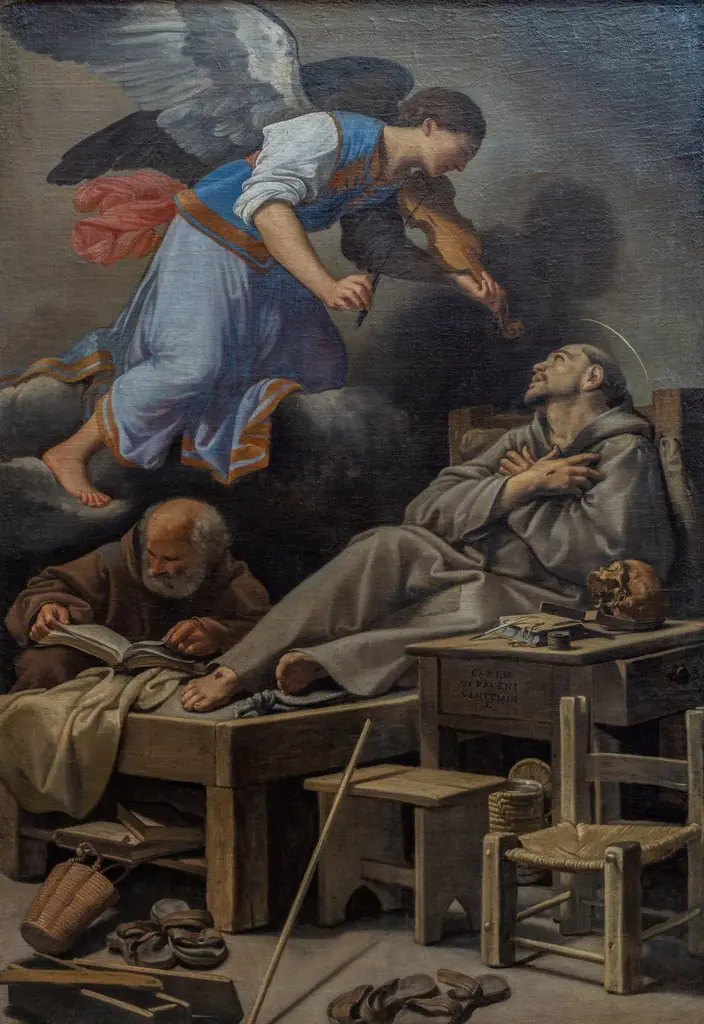
Francesco Trevisani’s 1725 oil painting, *The Ecstasy of Saint Francis*, presents a tranquil devotional scene. The work, now housed in the Gemäldegalerie Alte Meister, captures the moment of Saint Francis’s spiritual rapture amid a softly lit landscape.
Subject & Meaning
At the centre, Saint Francis, clad in a modest brown habit, clasps his hands in prayer while a skull rests on a nearby stone, a reminder of human mortality. An angel, rendered with golden hair and feathered wings, sits on a cloud to the saint’s right, gently playing a violin, underscoring the harmony between earthly contemplation and celestial music.
Technique & Style
Trevisani employs a refined chiaroscuro, balancing luminous highlights against deeper shadows to model forms and convey depth. The composition reflects the transitional aesthetic between late Baroque grandeur and early Rococo elegance, with smooth brushwork and a polished finish reminiscent of his mentor Carlo Maratta.
History & Provenance
Created during the final phase of Trevisani’s career, the painting entered the collection of the Gemäldegalerie Alte Meister in the 18th century. Its provenance traces a continuous museum ownership, preserving the work’s original condition and context within a historic European painting collection.
Context
The work belongs to the religious genre prevalent in post‑Baroque Italy, where depictions of saints in moments of divine encounter served both didactic and devotional purposes. Trevisani’s choice of a serene natural setting aligns with contemporary trends that favored gentle, pastoral backdrops for spiritual narratives.
Artist & collection
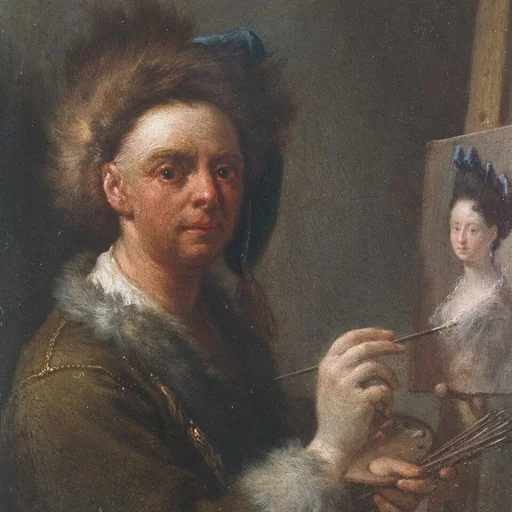
Artist
Francesco Trevisani (April 9, 1656 – July 30, 1746) was an Italian painter, active in the period called either early Rococo or late Baroque (barochetto).

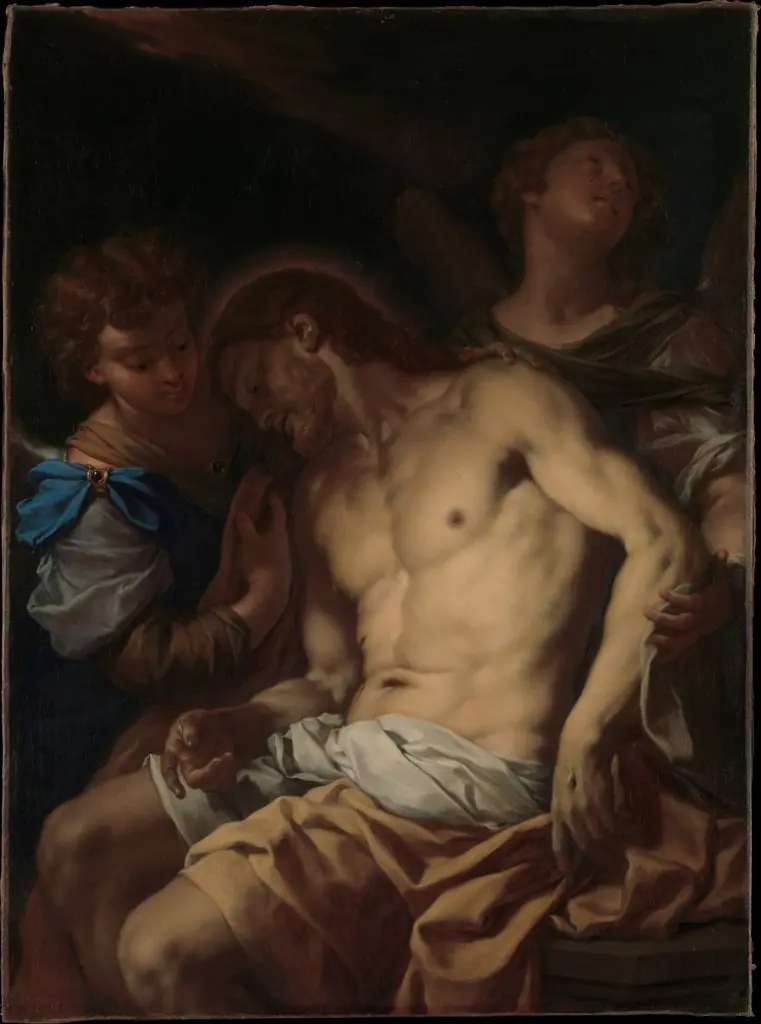 Dead Christ Supported by Angels
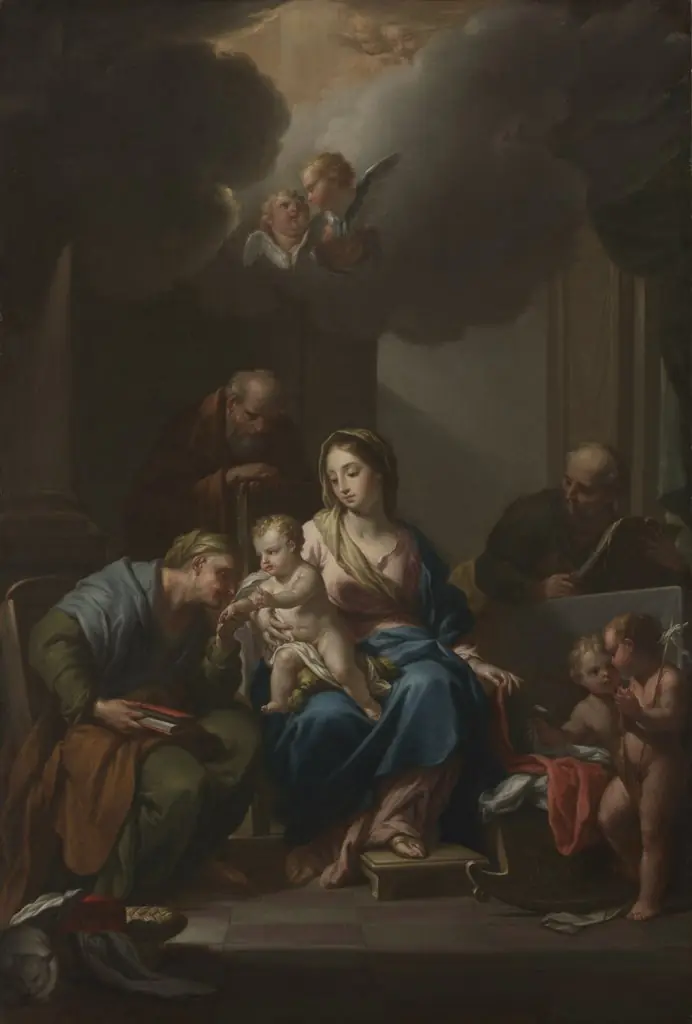 Presentation Sketch for "The Holy Family with Saints Anne, Joachim, and John the Baptist" (for Santa Maria in Via Lata, Roma)
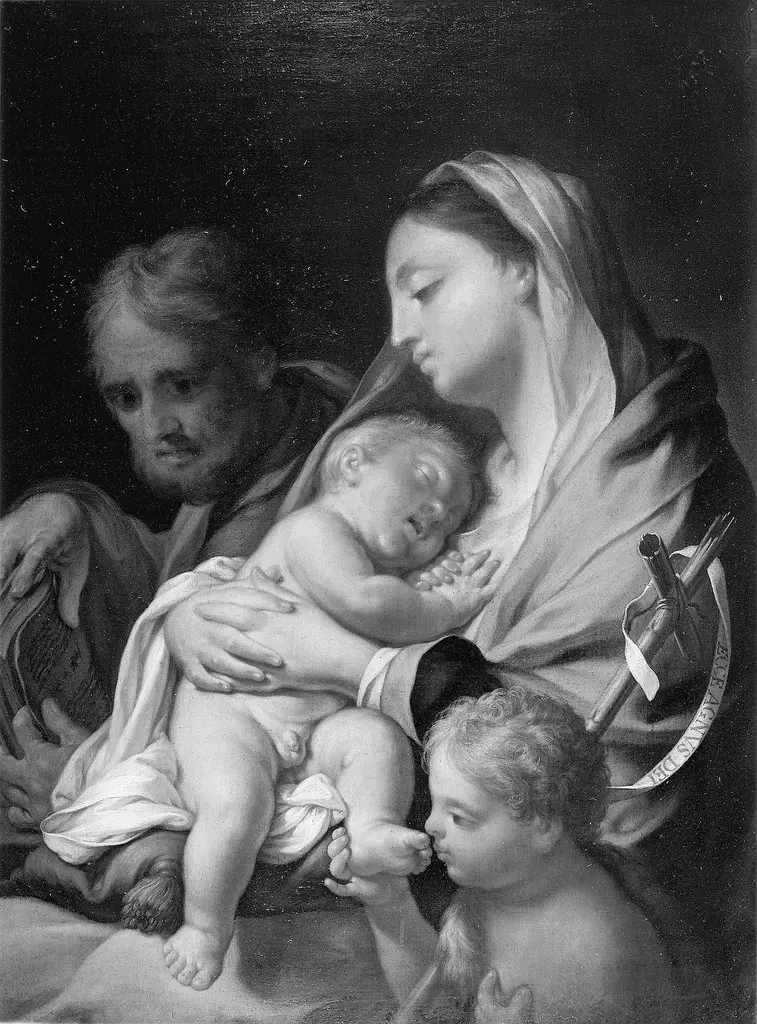 Holy Family with the Infant St. John
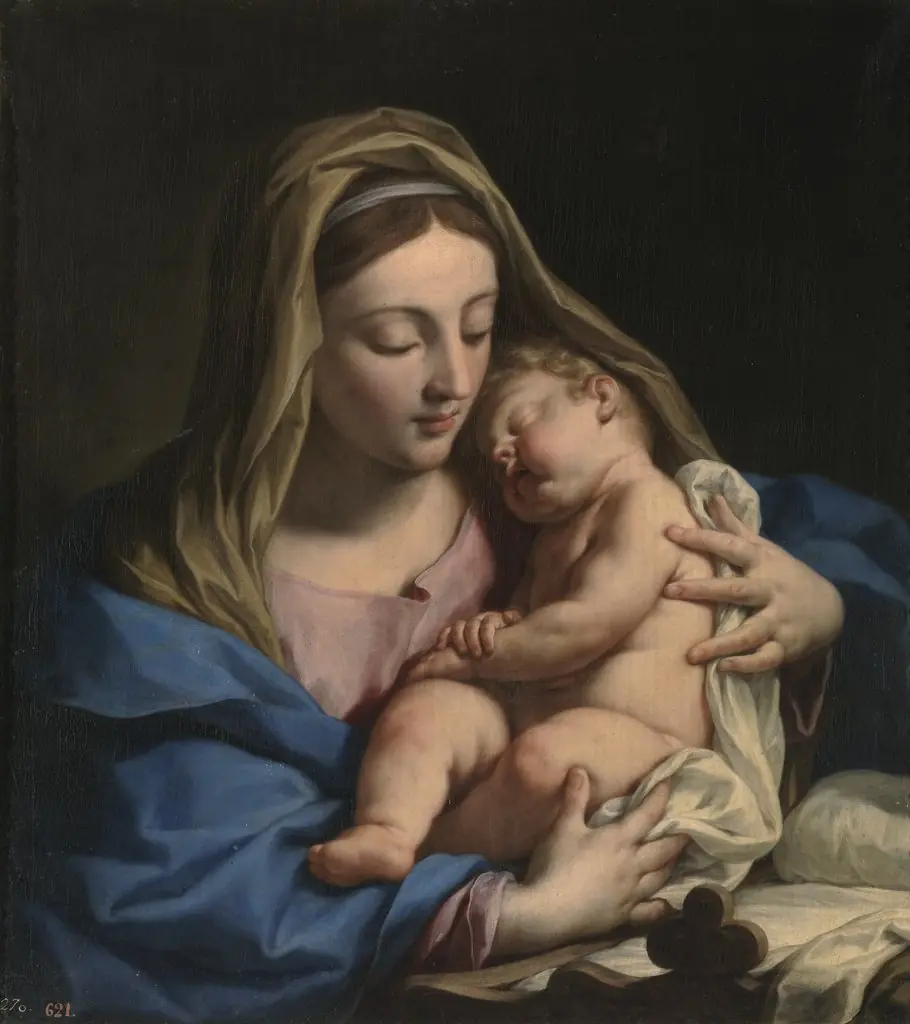 The Virgin and Child
 Hl. Sebastian
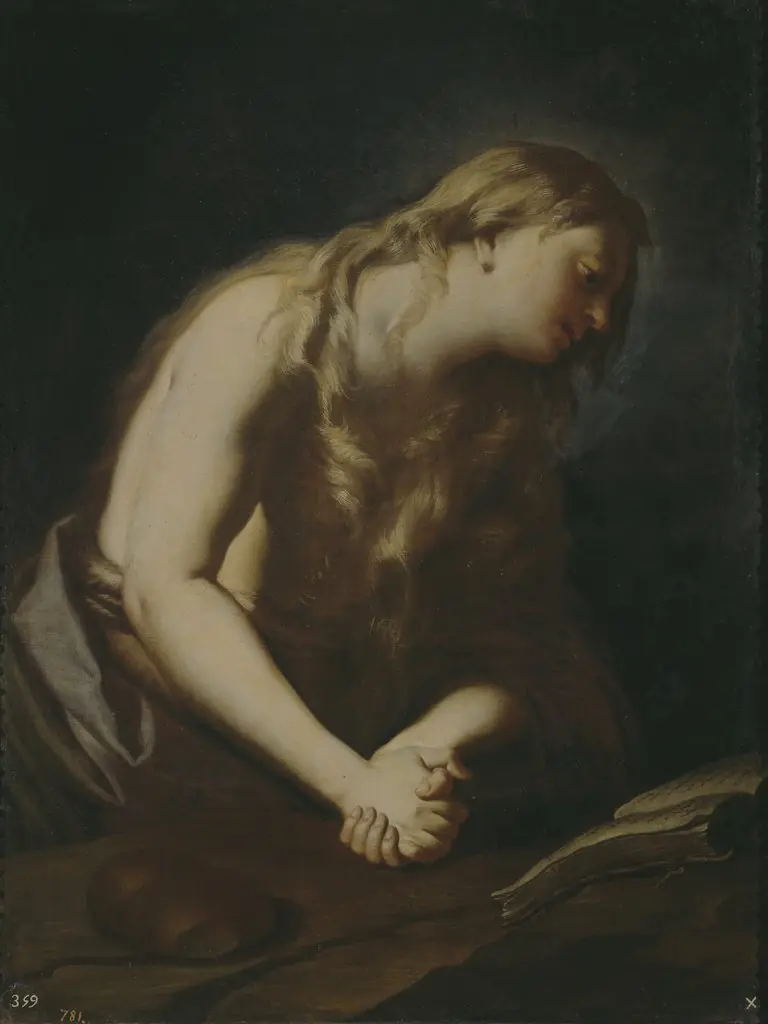 Penitent Magdalen
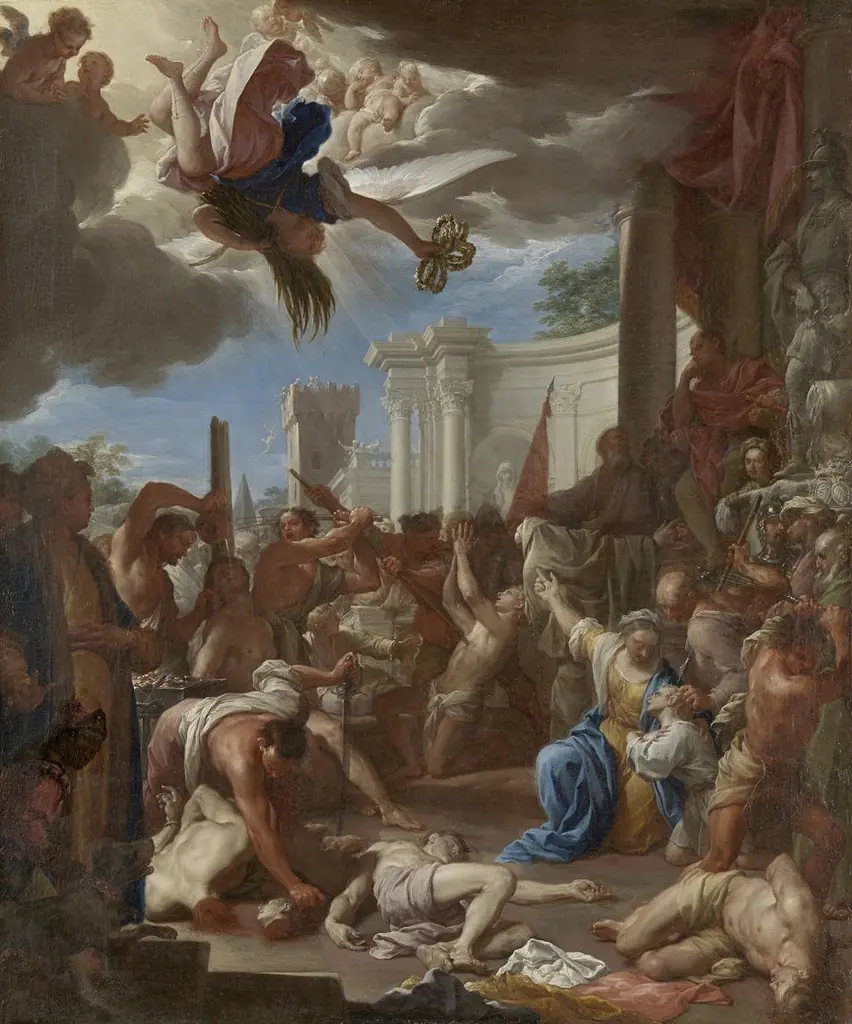 The Martyrdom of the Seven Sons of Saint Felicity
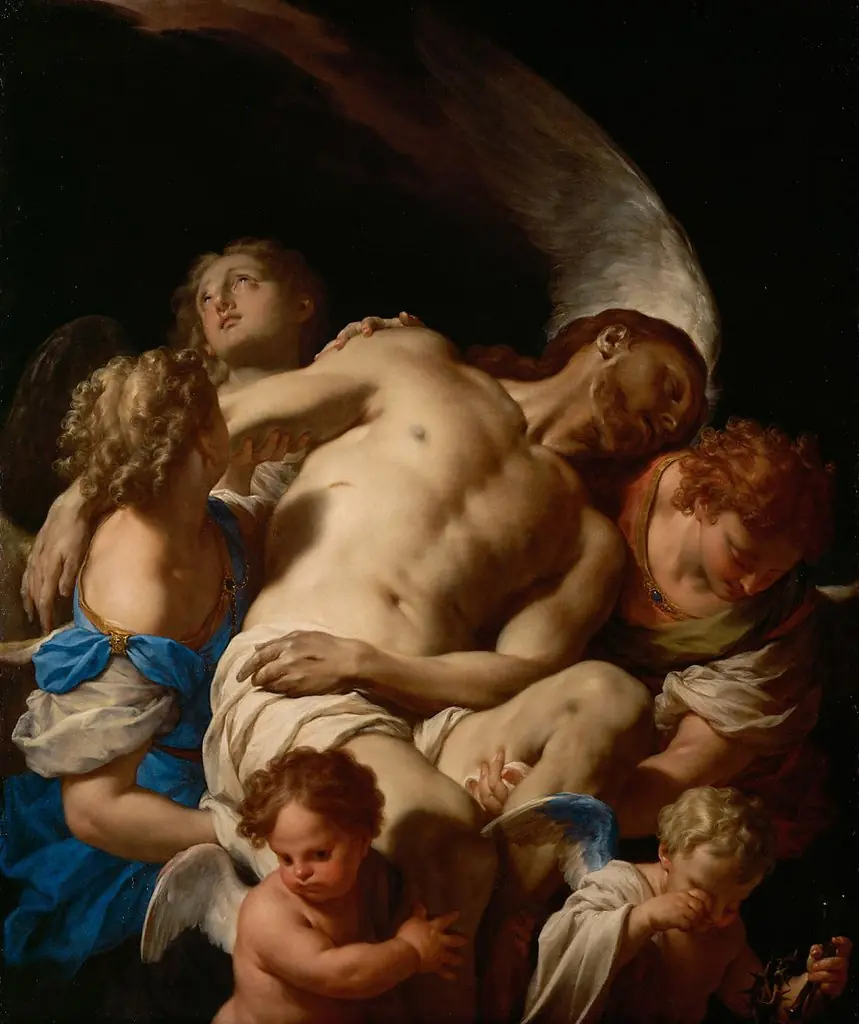 Body of Christ, held by angels