Artwork
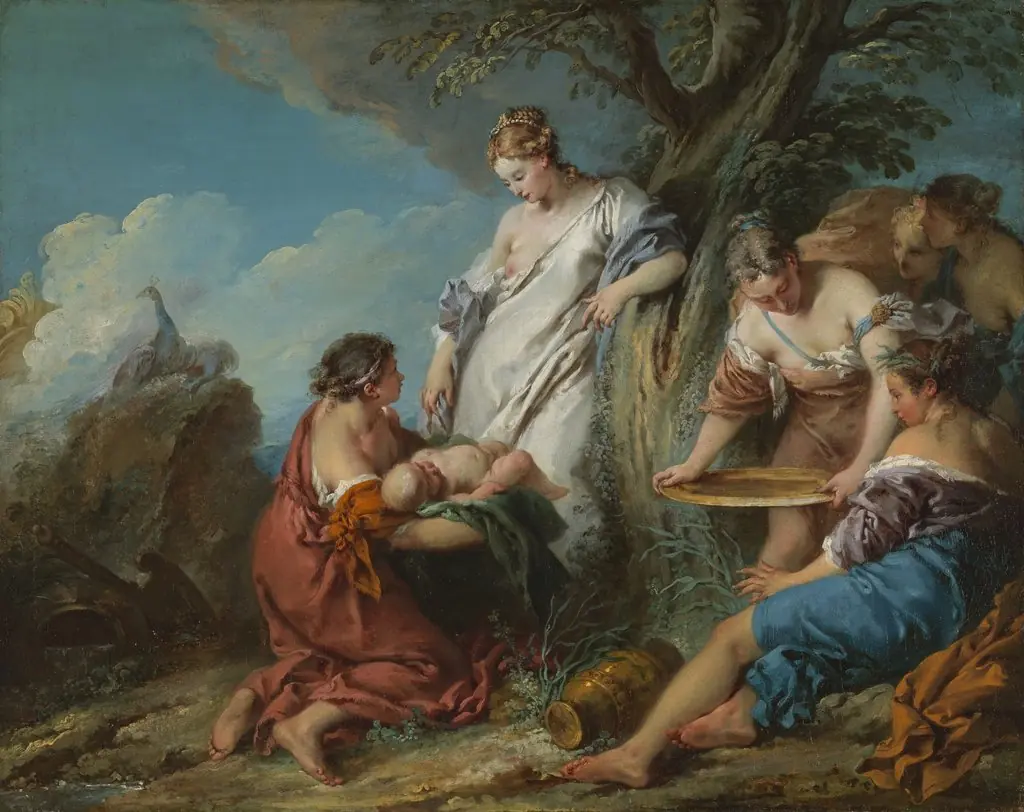
Landscape with the Education of Bacchus
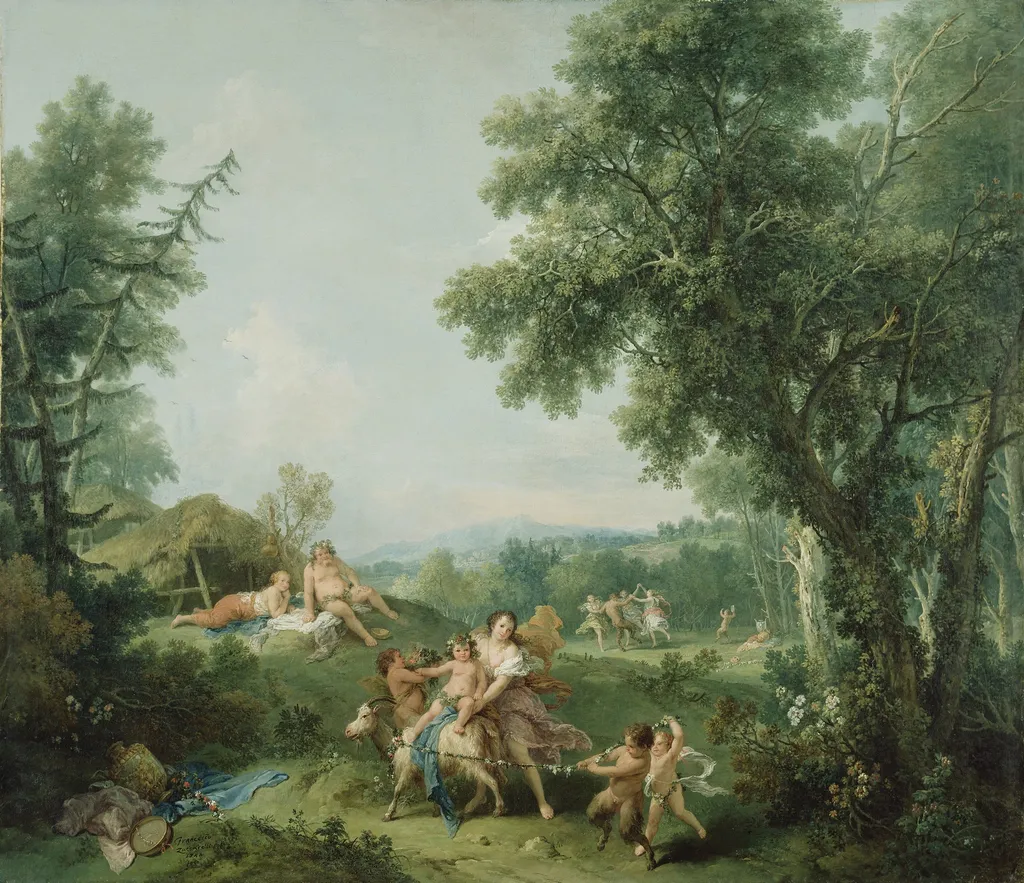
Landscape with the Education of Bacchus is an oil painting by the Rococo painting artist Francesco Zuccarelli. It dates from 1744 and is held in the collection of the J. Paul Getty Museum.
About this work
Overview
Painted in 1744 by Francesco Zuccarelli, this oil on canvas work presents a mythological scene set within an idealized natural environment.
Painted in 1744 by Francesco Zuccarelli, this oil on canvas work presents a mythological scene set within an idealized natural environment. Zuccarelli, active in Venice and later England, was known for harmonizing classical narratives with serene landscapes. The painting reflects the Rococo aesthetic through its gentle palette, light composition, and emphasis on pastoral tranquility, aligning with broader European tastes for refined, escapist imagery.
Subject & Meaning
The scene illustrates the mythological upbringing of Bacchus, the Roman god of wine, depicted as a young boy being tended to by nymphs and satyrs amid a pastoral setting. Surrounded by playful children and a goat, the figure evokes themes of innocence and divine nurture. The composition avoids dramatic tension, instead emphasizing harmony between human figures and nature, reinforcing the Rococo preference for gentle, idyllic storytelling over heroic or tragic narratives.
Technique & Style
Zuccarelli employed soft, diffused brushwork and a muted pastel palette to evoke atmospheric depth and tactile delicacy. The foliage, clouds, and terrain are rendered with subtle gradations of color, avoiding harsh contours. Light is evenly distributed, enhancing the sense of calm. Attention to natural textures—leaves, fur, and stone—adds quiet realism without disrupting the overall idealization, characteristic of his mature style.
History & Provenance
Commissioned during Zuccarelli’s time in England, where he enjoyed patronage from aristocratic collectors, the painting reflects the transnational appeal of Venetian landscape traditions. It entered European collections shortly after its completion, likely through the artist’s network of patrons. Its survival in relatively stable condition suggests continuous care, though its early ownership records remain partially undocumented.
Context
In mid-18th-century Europe, there was a growing appetite for landscapes infused with classical mythology, particularly among collectors seeking refined, non-religious subjects. Zuccarelli’s work responded to this trend, blending Venetian colorism with Northern European landscape conventions. His paintings offered a visual retreat from urban life, aligning with Enlightenment ideals of nature as a source of moral and aesthetic harmony.
Legacy
Zuccarelli’s approach influenced later landscape painters who favored poetic over dramatic compositions. While his reputation waned in the 19th century with the rise of Romanticism and Realism, his work remains a reference for the Rococo adaptation of classical themes. Today, the painting is studied for its synthesis of myth, nature, and decorative elegance, illustrating a distinct phase in European visual culture.
Own this work as a print
Artist & collection

Artist
Giacomo Francesco Zuccarelli (commonly known as Francesco Zuccarelli, Italian pronunciation: ; 15 August 1702 – 30 December 1788) was an Italian artist of the late Baroque or Rococo period.

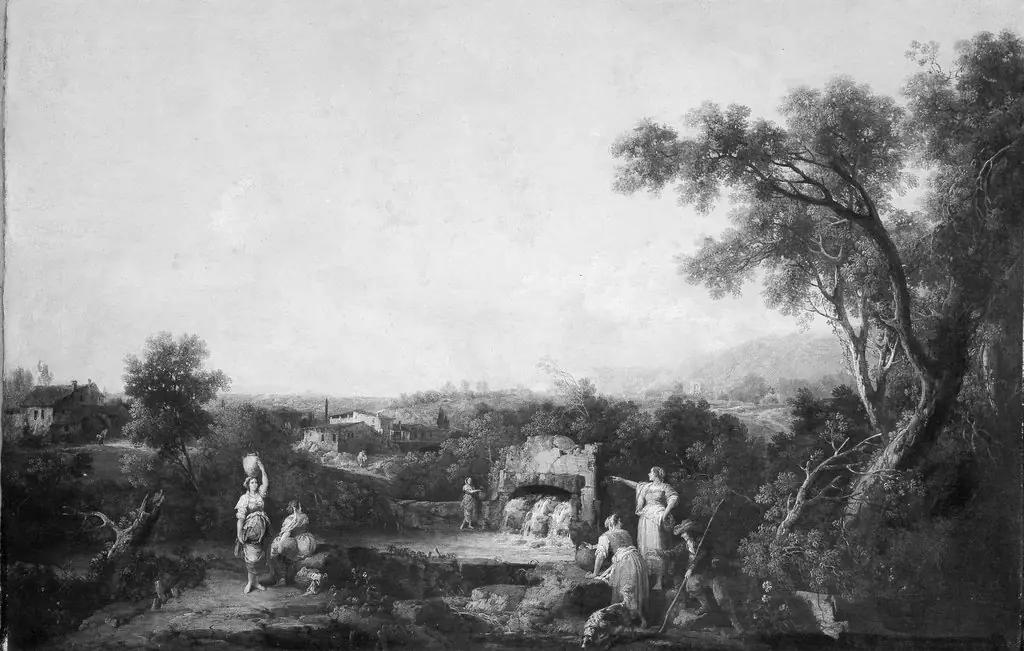 Landscape with Peasants at a Fountain
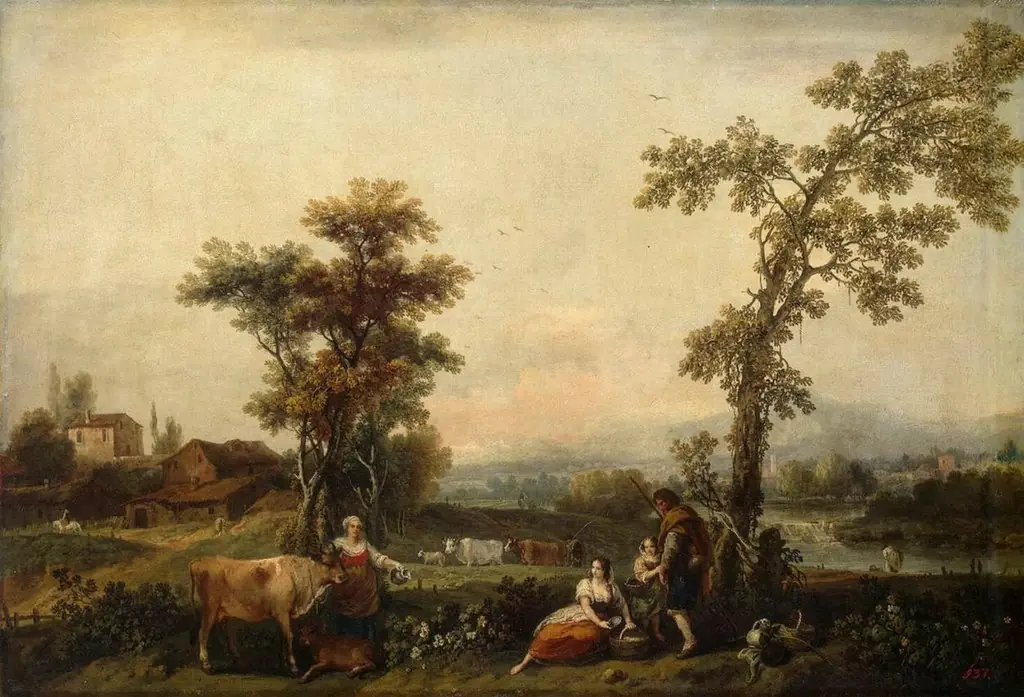 Landscape with a Woman Leading a Cow
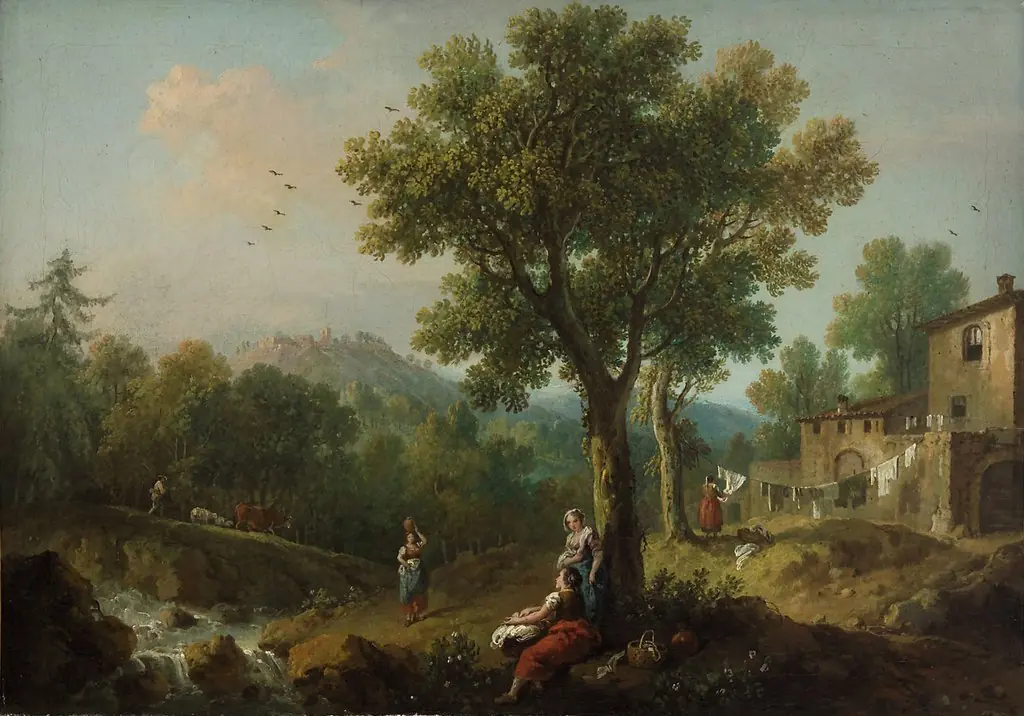 Landschaft mit Wäscherinnen
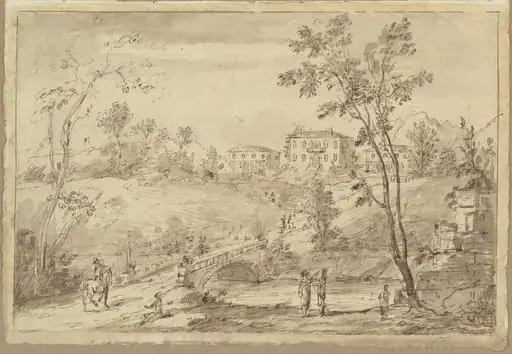 Landscape with a Bridge
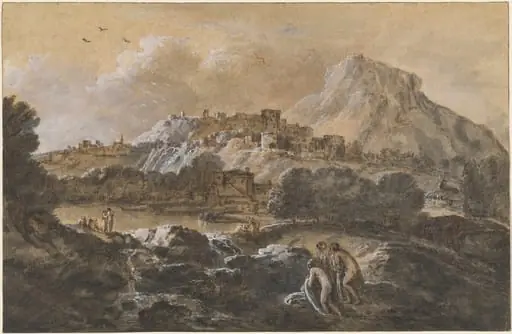 Mountainous River Landscape with Bathers
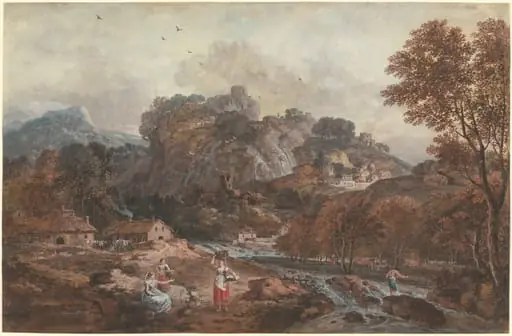 Mountain Landscape with Washerwomen and a Fisherman
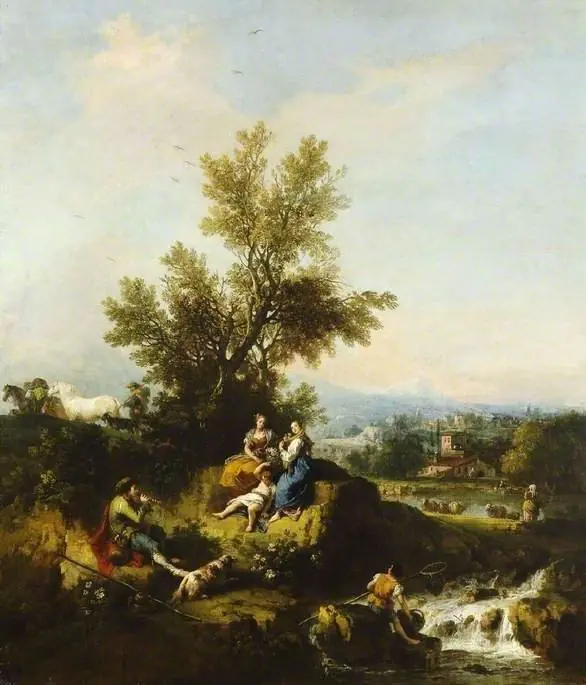 Italianate wooded river landscape with a piping shepherd, two women and a child
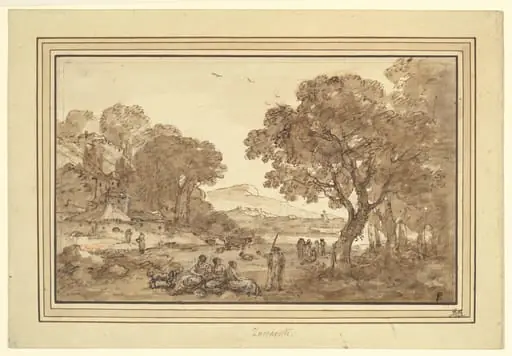 Landscape with Shepherds