Artwork
The Twilight Walk
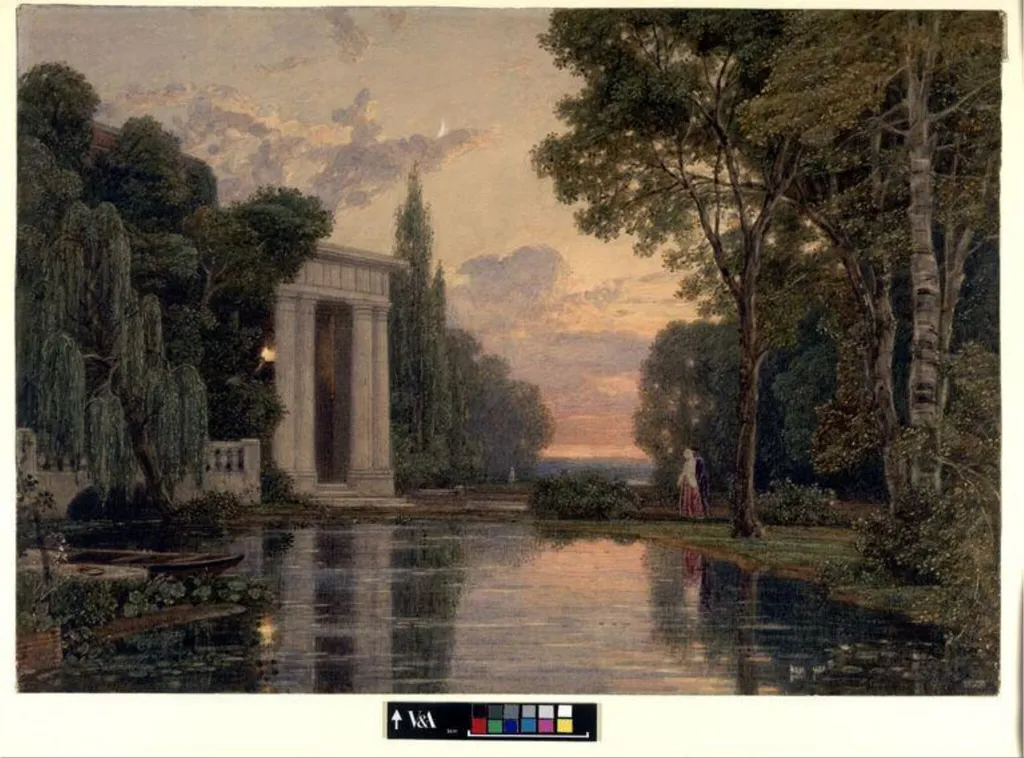
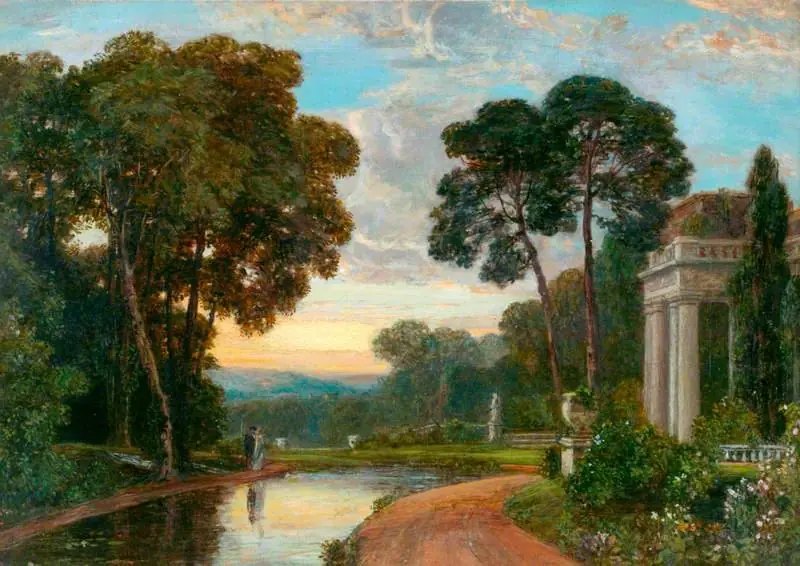
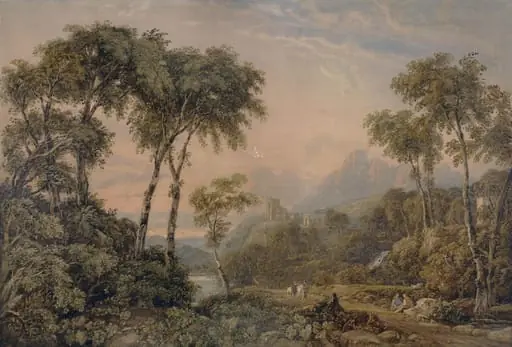
The Twilight Walk is a watercolor work on paper by the British Romanticist artist Francis Oliver Finch. It dates from 1825 and is held in the collection of the Victoria and Albert Museum.
About this work
Overview
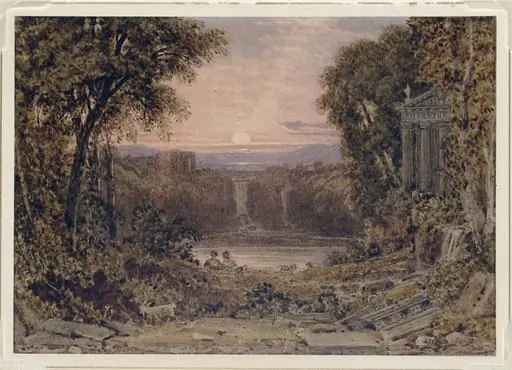
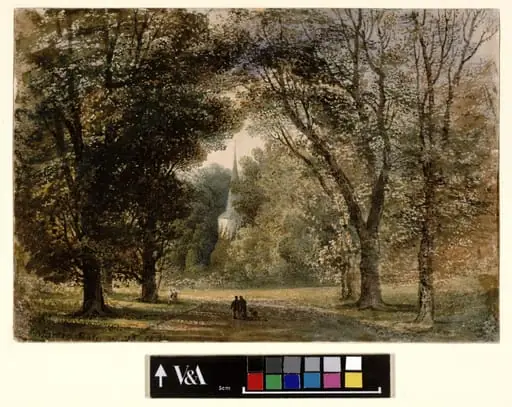
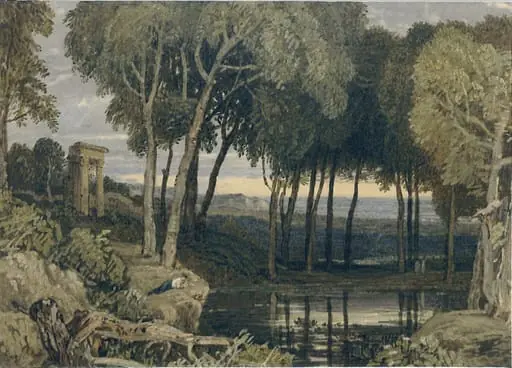
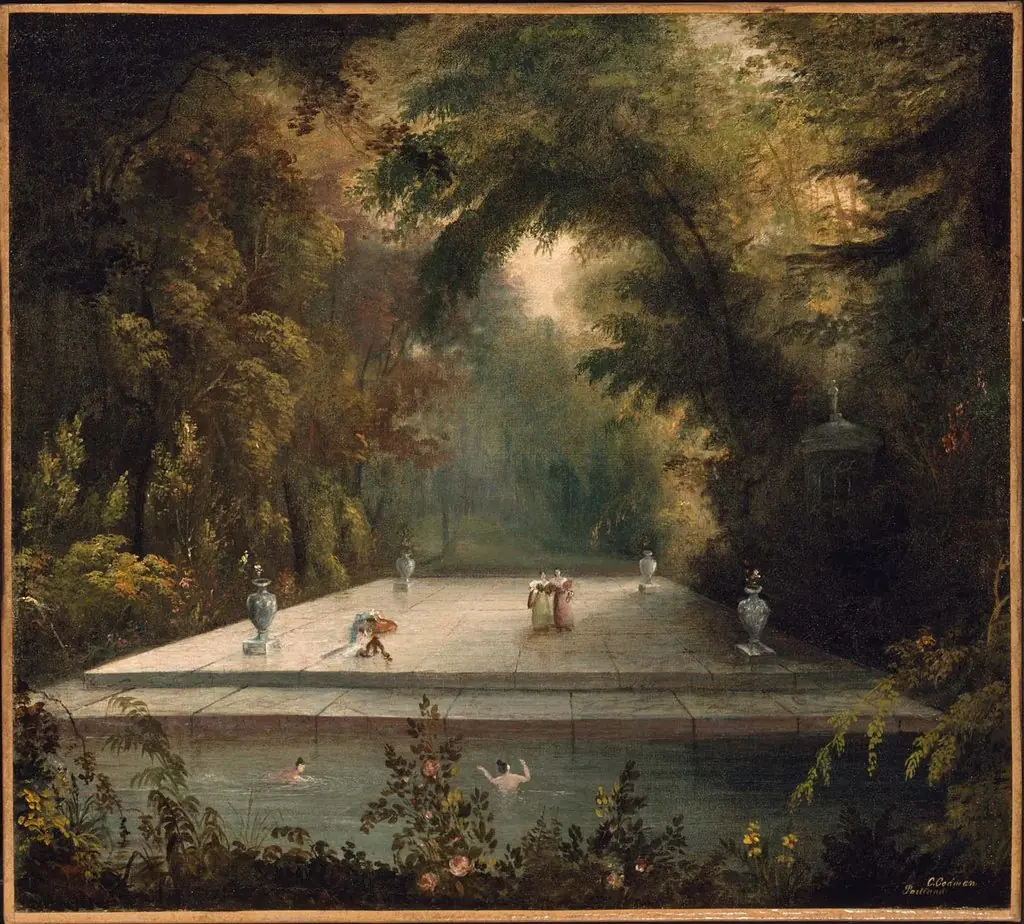
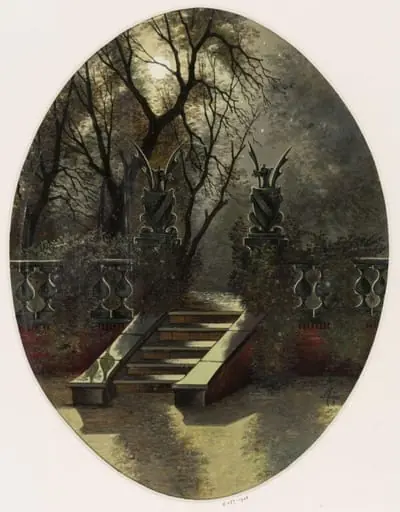
The Twilight Walk, a watercolour by Francis Oliver Finch, depicts a serene evening scene featuring a couple strolling near a calm lake, with a classical, temple-like building partially hidden by trees under a crescent moonlit sky.
Subject & Meaning
The subject is a peaceful evening stroll, emphasizing tranquility and intimacy. The classical building and natural setting may symbolize a harmony between human culture and nature, while the twilight hour suggests a moment of contemplation.
Technique & Style
Finch employed watercolour to capture the soft, fleeting effects of twilight. The blending of pink and blue hues in the sky and its reflection in the water creates a sense of depth and movement, enhanced by the contrast with deep green foliage and shadows.
Context
This work aligns with Romantic-era themes, where nature was often depicted as a source of emotional and spiritual experience. The dreamy, peaceful atmosphere reflects the period's emphasis on evoking feelings through landscape.
Legacy
While specific legacy details of 'The Twilight Walk' are not provided, it contributes to the broader appreciation of watercolour techniques and Romantic themes in early 19th-century British art, influencing subsequent generations of landscape painters.
Artist & collection
Artist
Francis Oliver Finch (22 November 1802 – 27 August 1862), was an English watercolour painter, and a member of The Ancients, the group of young artists formed around Samuel Palmer and the elderly William Blake in the 1820s.