Artwork
Hands Drypointing
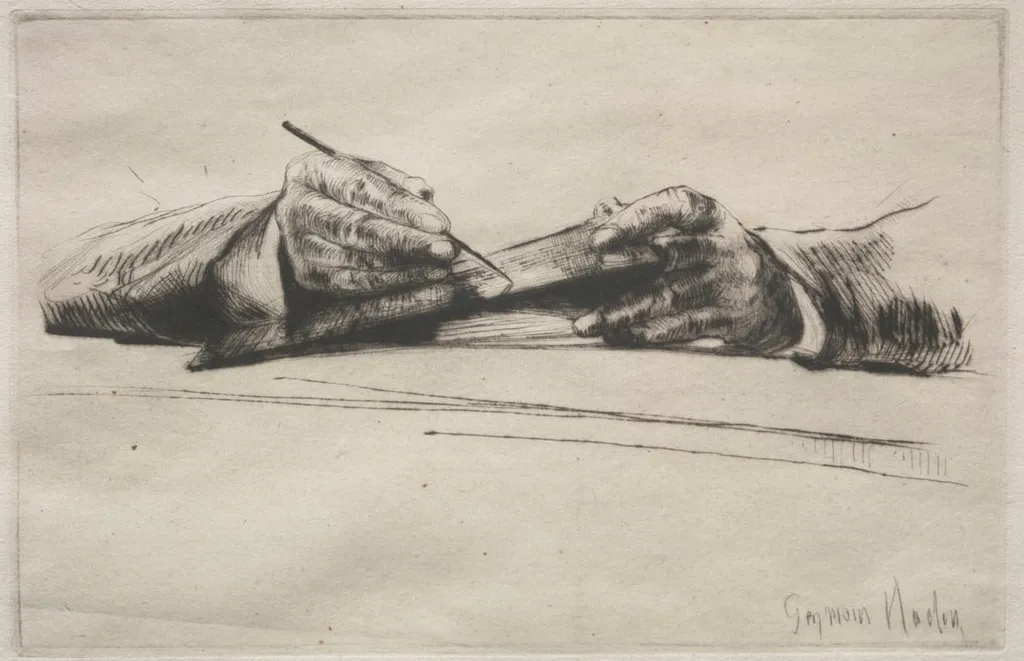
Hands Drypointing is a print by the Impressionist artist Francis Seymour Haden. It dates from 1865 and is held in the collection of the Cleveland Museum of Art.
About this work
Overview
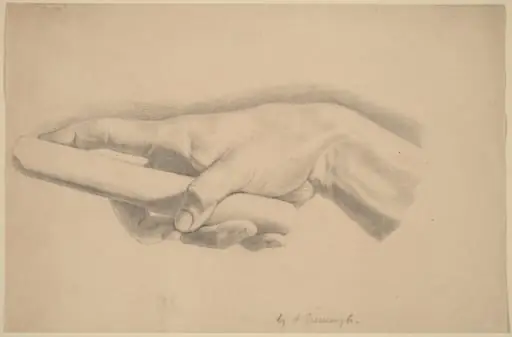
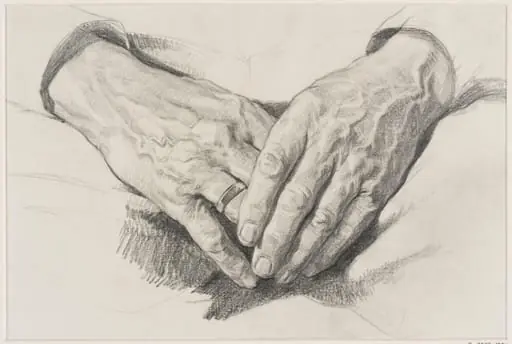
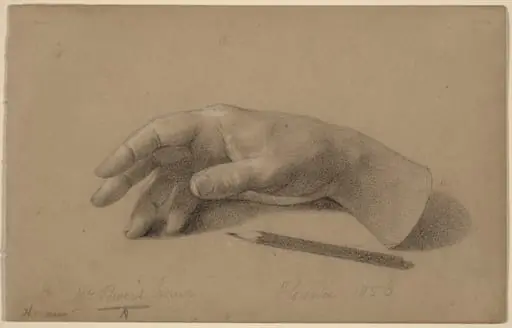
Created in 1865 by Francis Seymour Haden, this drypoint print depicts two hands engaged in the meticulous act of etching a metal plate. The work was produced during Haden’s personal experimentation with printmaking at home, where he constructed his own press. It captures not just a subject but the process itself, reflecting his deep investment in the technical and tactile nature of printmaking.
Subject & Meaning
The image focuses on the hands of the artist at work, emphasizing labor and precision over a finished composition. By centering the act of creation, Haden draws attention to the physicality of printmaking. The absence of a larger scene underscores the quiet, intimate ritual of making art, transforming an ordinary studio moment into a meditation on craftsmanship.
Technique & Style
This technique produces a distinctive burr along the edges of lines, resulting in soft, richly textured marks when inked.
Haden employed drypoint, a method involving direct scratching of lines into a metal plate with a sharp needle. This technique produces a distinctive burr along the edges of lines, resulting in soft, richly textured marks when inked. The resulting print retains a tactile quality, with dense blacks and subtle gradations that invite close viewing, characteristic of Haden’s preference for intimate, handcrafted effects.
History & Provenance
The print entered the collection of The Cleveland Museum of Art through documented acquisition, where it remains part of the museum’s holdings of 19th-century British printmaking. Its survival reflects Haden’s influence as a collector and advocate for etching as a serious art form. The work’s personal origins—made during his home press experiments—add to its historical significance as a record of his artistic practice.
Context
In mid-19th century Britain, etching experienced a revival among artists seeking alternatives to mass-produced illustrations. Haden, a physician turned printmaker, was central to this movement, promoting drypoint for its directness and expressive potential. His work aligned with broader European interests in the medium, particularly the legacy of Rembrandt, whose prints he studied and admired.
Legacy
Haden’s focus on the process of printmaking, as seen in this work, helped redefine etching as a personal, expressive medium rather than a reproductive technique. His emphasis on handcrafted lines and studio practice influenced later generations of printmakers. The Cleveland Museum of Art’s preservation of this piece continues to offer insight into the quiet, deliberate art of making prints by hand.
Artist & collection