Artwork
Kew
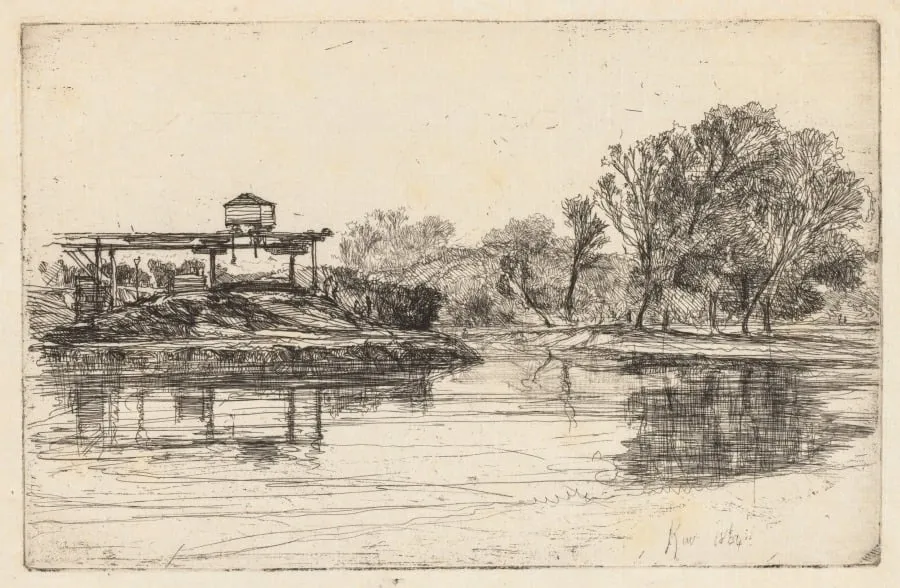
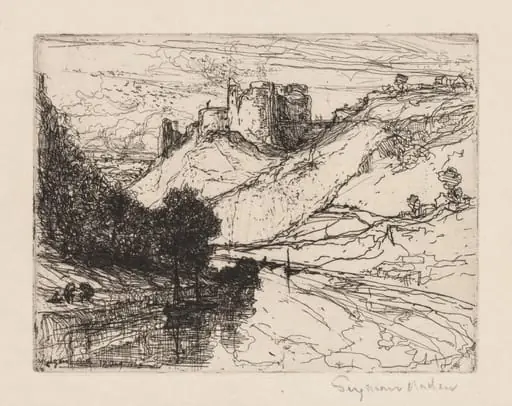
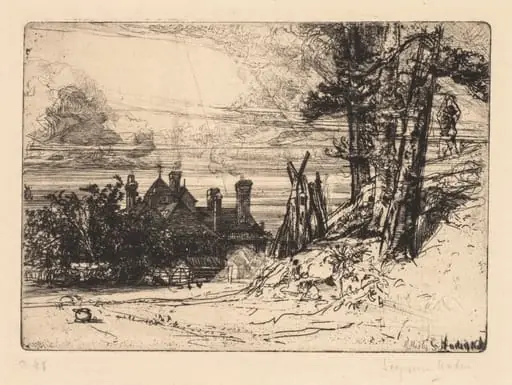
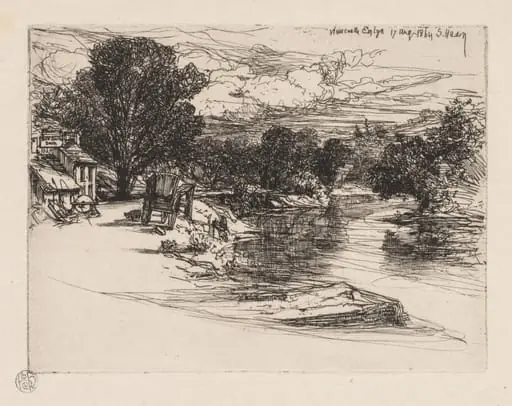
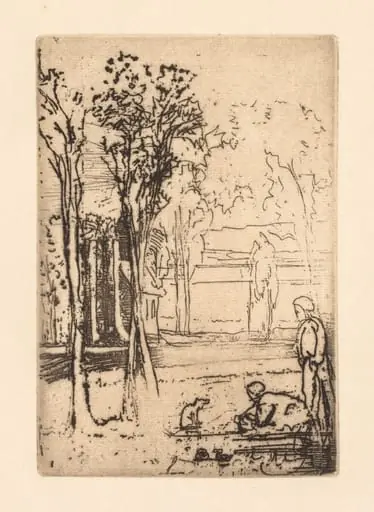
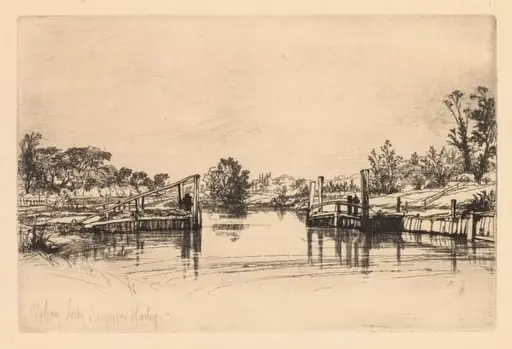
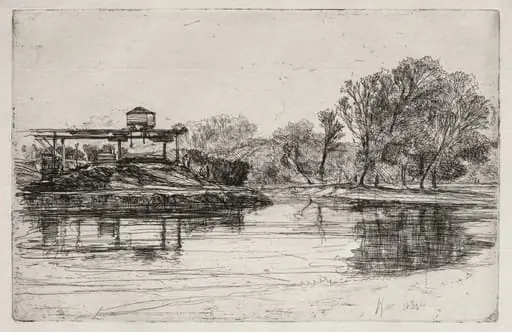
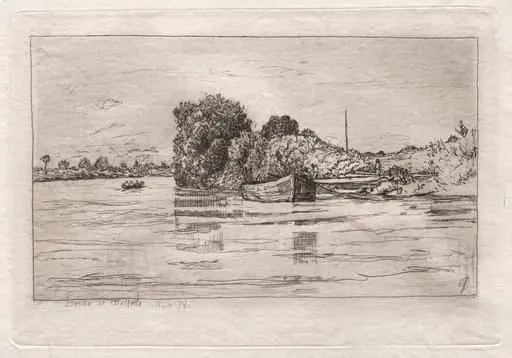
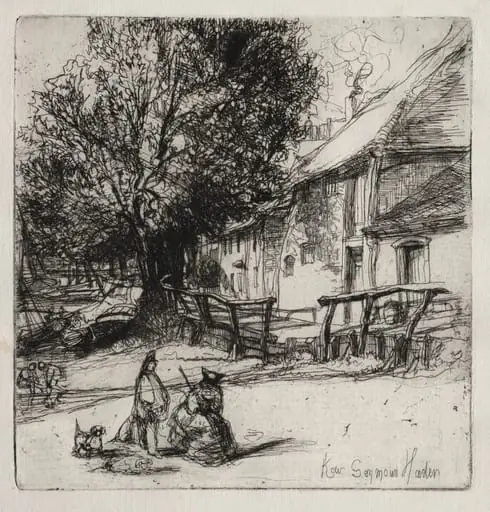
Kew is a print by the Impressionist artist Francis Seymour Haden. It dates from 1864 and is held in the collection of the Cleveland Museum of Art.
About this work
Overview
Its intimate scale and delicate line work reflect the artist’s engagement with printmaking as a medium for personal observation rather than grand narrative.
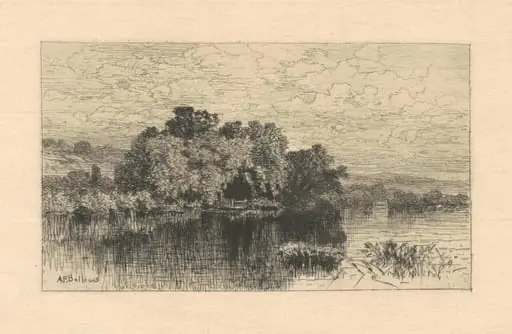
Created in 1864 by Francis Seymour Haden, Kew is a drypoint print depicting a tranquil riverside scene near London. The work is part of the collection at The Cleveland Museum of Art and exemplifies Haden’s interest in capturing quiet, unadorned natural settings. Its intimate scale and delicate line work reflect the artist’s engagement with printmaking as a medium for personal observation rather than grand narrative.
Subject & Meaning
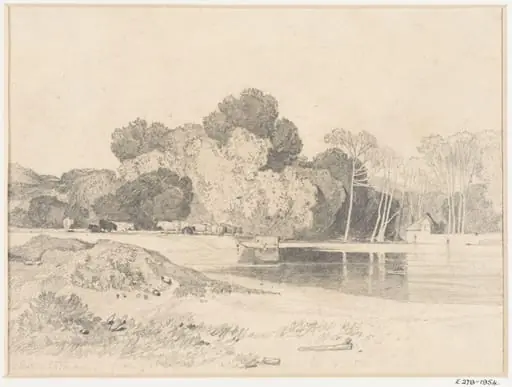
The scene portrays a modest wooden platform extending over a still river, with a small structure atop it and sparse trees lining the opposite bank. There is no human presence, emphasizing solitude and stillness. The composition invites contemplation of ordinary landscapes, aligning with 19th-century shifts toward valuing everyday environments over idealized or dramatic subjects.
Technique & Style
Haden employed drypoint engraving, using fine, incised lines to model light and shadow with subtle gradations. The soft, slightly blurred edges of the lines enhance the atmospheric quality of the water and foliage. This technique, favored by etchers of the time, allowed for nuanced tonal effects, conveying calm through texture rather than bold contrast or color.
History & Provenance
Kew was produced during Haden’s active period as a printmaker, when he was exploring the English countryside near his home. The work entered The Cleveland Museum of Art’s collection through established acquisitions of British prints in the early 20th century. Its preservation reflects growing institutional interest in printmaking as a legitimate artistic medium beyond reproductive purposes.
Context
In the mid-19th century, artists increasingly turned to direct observation of nature, moving away from romanticized landscapes. Haden’s work aligns with this trend, sharing affinities with the Realist movement’s focus on unembellished scenes. His prints, often made en plein air, contributed to a broader reevaluation of printmaking as a vehicle for personal expression.
Legacy
Kew stands as an example of Haden’s influence on the British etching revival. His emphasis on quiet, observational subjects helped elevate printmaking to the status of fine art. Though not widely known today, his approach inspired later generations of printmakers who valued subtlety, intimacy, and technical precision over spectacle.
Artist & collection