Artwork
The Mouth of a Brook (Second Plate)
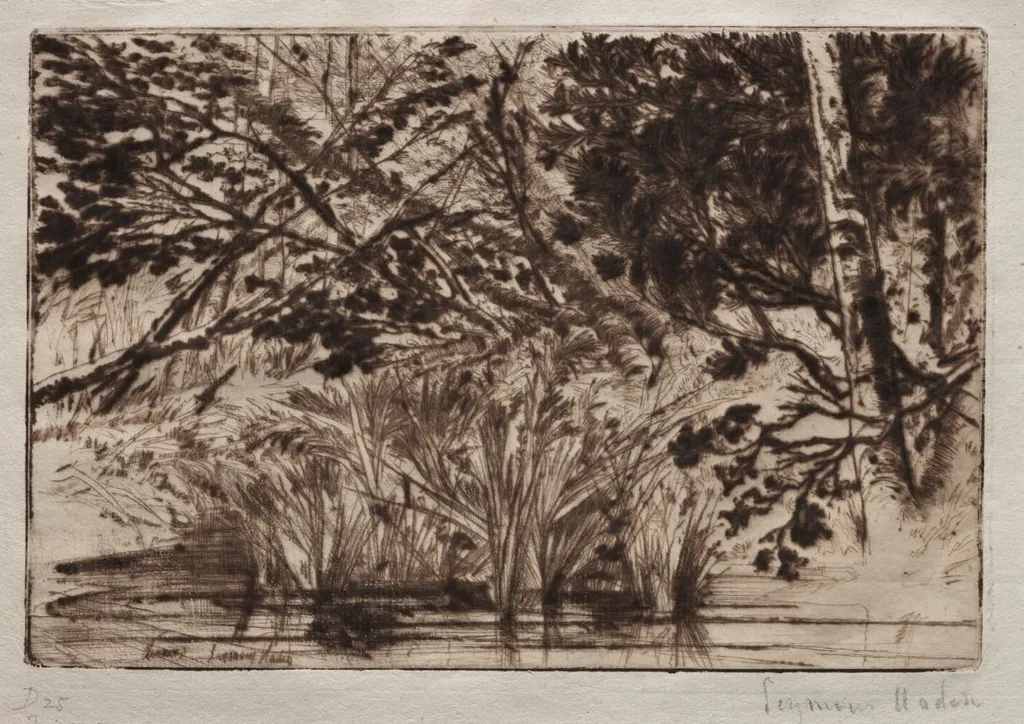
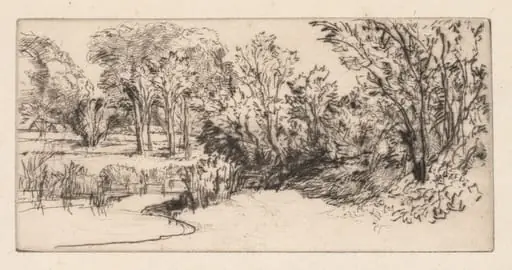
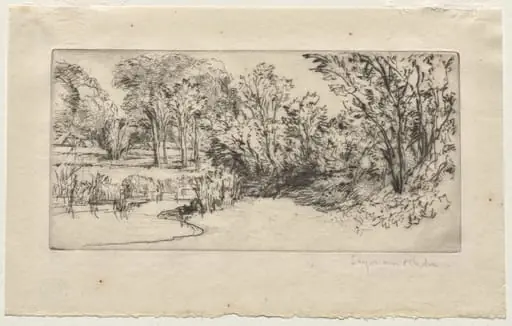
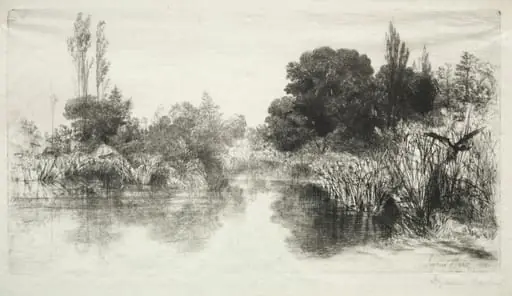
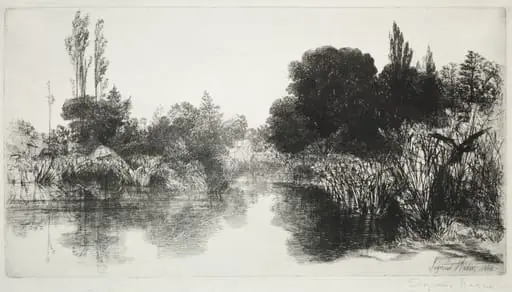
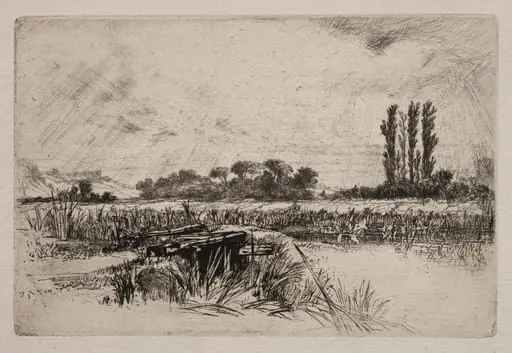
The Mouth of a Brook (Second Plate) is a print by Francis Seymour Haden. It dates from 1868 and is held in the collection of the Cleveland Museum of Art.
About this work
Overview
The work is part of a small series exploring the same subject, and it resides in the collection of The Cleveland Museum of Art.
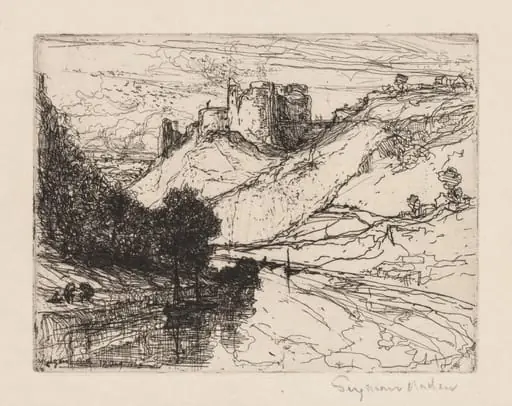
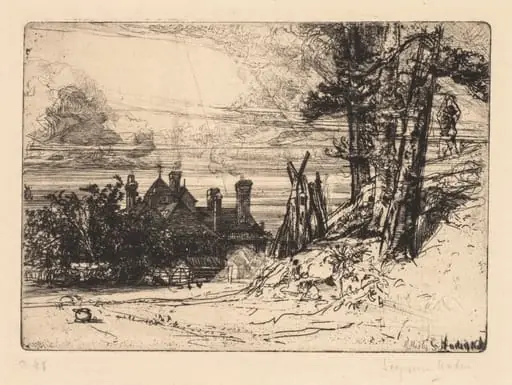
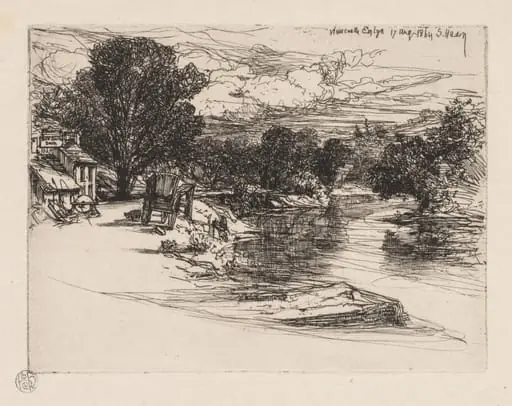
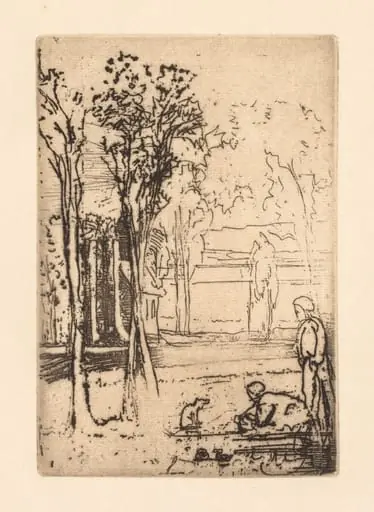
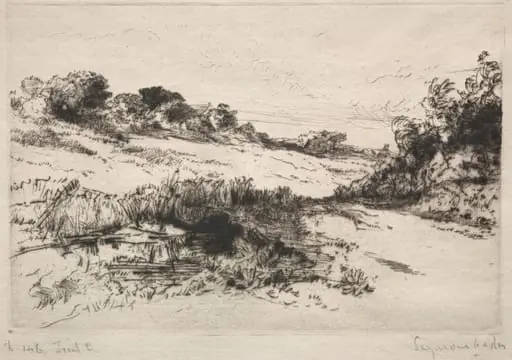
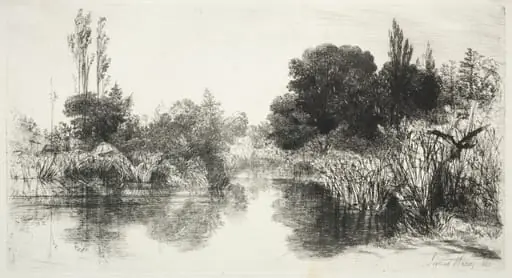
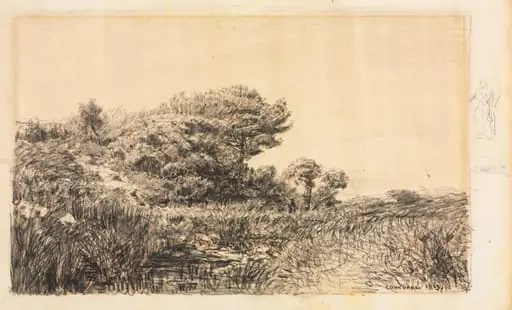
Created around 1868, The Mouth of a Brook (Second Plate) is a drypoint etching by Francis Seymour Haden. It depicts a close-up view of a shallow stream where vegetation crowds the water’s edge. The composition is tightly framed, emphasizing the dense interplay of natural forms. The work is part of a small series exploring the same subject, and it resides in the collection of The Cleveland Museum of Art.
Subject & Meaning
The scene captures the boundary between land and water, where reeds, twigs, and submerged rocks converge. There is no human presence; the focus is on the quiet, unstructured growth of wild flora. The composition suggests a moment of stillness, inviting observation of nature’s unmanaged rhythms rather than romanticizing the landscape.
Technique & Style
Haden employed drypoint, scratching directly into a metal plate to create rich, velvety lines. The resulting image has a tactile, uneven texture, with deep shadows and broken contours that mimic the disorder of undergrowth. The monochromatic palette—dominated by grays and browns—enhances the sketchlike immediacy, as if the scene were captured in a single, urgent gesture.
History & Provenance
The print was made during Haden’s active period as a printmaker, when he was refining his technique and advocating for etching as a fine art form. It entered The Cleveland Museum of Art’s collection through established acquisition channels in the 20th century. Its provenance reflects the museum’s longstanding interest in 19th-century British graphic art.
Context
Haden worked alongside the Etching Revival movement in Britain, which sought to elevate printmaking beyond reproductive purposes. This piece aligns with contemporaneous efforts to capture intimate, unidealized natural scenes. Unlike landscape painters of the time, Haden focused on marginal, overlooked spaces, emphasizing texture and atmosphere over grandeur.
Legacy
The work exemplifies Haden’s influence on the acceptance of etching as a legitimate artistic medium. Its raw, unpolished aesthetic challenged academic norms and inspired later artists to value directness and material honesty. Though not widely reproduced, it remains a key example of his personal approach to landscape through print.
Artist & collection