Artwork
Bullfights: Fight in a Carriage Harnessed to Two Mules
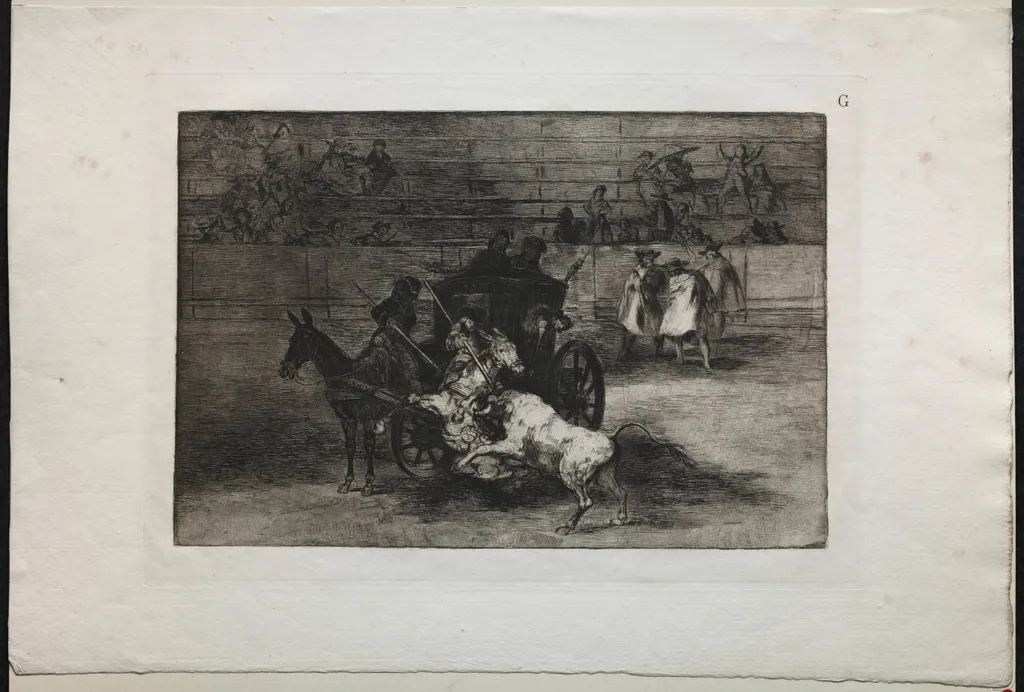
Bullfights: Fight in a Carriage Harnessed to Two Mules is a print by the Romanticist artist Francisco Goya. It dates from 1816 and is held in the collection of the Cleveland Museum of Art. Created in 1816, this print by Francisco de Goya captures a chaotic moment in a Spanish bullfight.
About this work
Overview
The composition conveys sudden violence amid a crowd of onlookers, reflecting Goya’s interest in the raw spectacle of public spectacle and animal aggression.
Created in 1816, this print by Francisco de Goya captures a chaotic moment in a Spanish bullfight. Unlike traditional ring-based contests, the scene unfolds in a narrow space where a carriage, pulled by two mules, is targeted by a charging bull. The composition conveys sudden violence amid a crowd of onlookers, reflecting Goya’s interest in the raw spectacle of public spectacle and animal aggression.
Subject & Meaning
The scene depicts an unusual variant of bullfighting, where a vehicle becomes the target rather than a matador. The mules, terrified and rearing, contrast with the bull’s relentless advance, suggesting the futility of human control over nature. Spectators in the background observe passively, hinting at societal detachment or complicity in violent entertainment. The work critiques the brutality masked as tradition.
Technique & Style
Goya employs sharp contrasts of light and dark, with thick, expressive lines defining the thrashing animals and fractured architecture. The print’s tonal range, achieved through etching and aquatint, enhances the sense of motion and impending chaos. Figures in the stands are rendered with minimal detail, emphasizing their role as anonymous witnesses rather than participants.
History & Provenance
The work belongs to Goya’s series of prints exploring Spanish customs and violence, produced during his later years. It was likely made as part of his broader investigation into societal rituals. The print entered the Cleveland Museum of Art’s collection in the 20th century, having passed through private European holdings after its initial circulation in Spain.
Context
Created after the Peninsular War and during Goya’s growing disillusionment with authority, this image reflects a darker view of Spanish identity. Traditional bullfighting was evolving into a state-sanctioned spectacle, and Goya’s depiction subverts its grandeur. The carriage, an absurd substitute for the matador, underscores the absurdity and danger inherent in the ritual.
Legacy
This print contributes to Goya’s reputation for exposing the undercurrents of violence in everyday life. It influenced later artists interested in the psychological dimensions of spectacle and cruelty. While not widely exhibited, it remains a key example of his late graphic work, offering insight into his critical perspective on culture and power.
Artist & collection
Artist
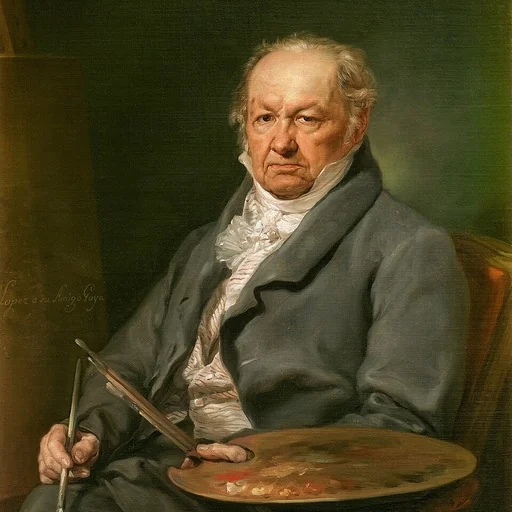
Francisco José de Goya y Lucientes (; Spanish: ; 30 March 1746 – 16 April 1828) was a Spanish romantic painter and printmaker.

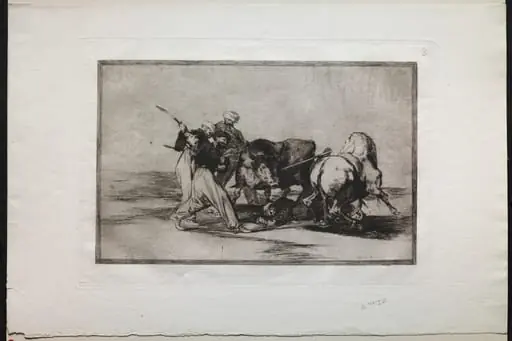 Bullfights: The Moors Settled in Spain, Giving Up the Superstitions of the Qur’an, Adopted this Art of Hunting, and Spear a Bull in the Open
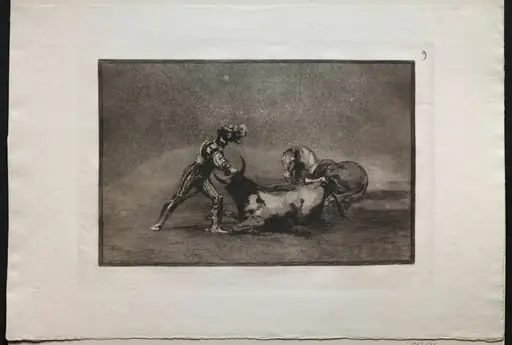 Bullfights: A Spanish Knight Kills the Bull After Having Lost His Horse
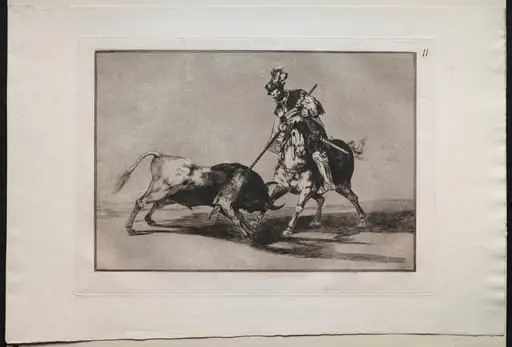 Bullfights: El Cid Campeador Spearing Another Bull
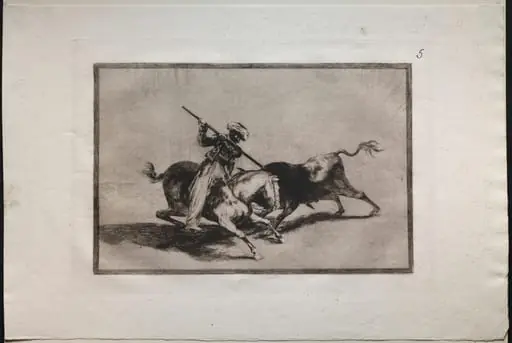 Bullfights: The Spirited Moor Gazul is the First to Fight According to the Rules
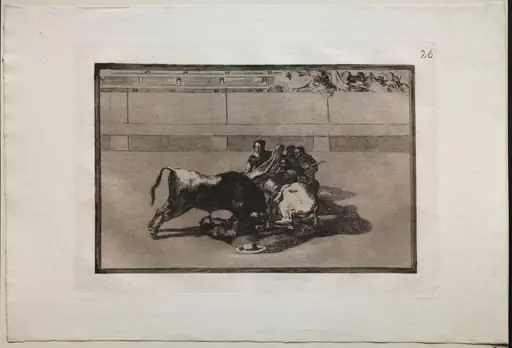 Bullfights: A Picador is Unhorsed and Falls Under the Bull
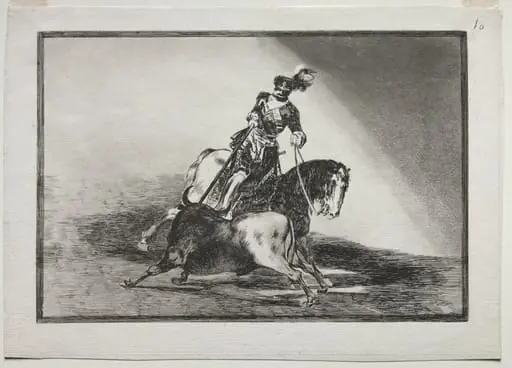 Charles V Spearing a Bull in the Ring at Valladolid
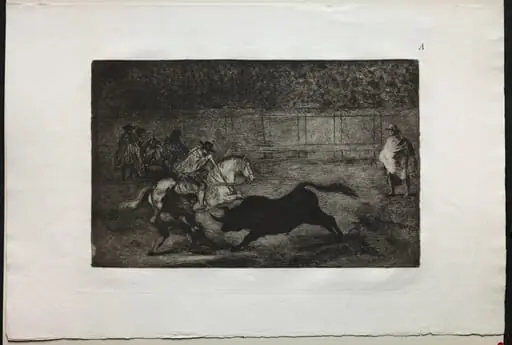 Bullfights: A Spanish Mounted Knight Breaking Short Spears with the Help of Assistants
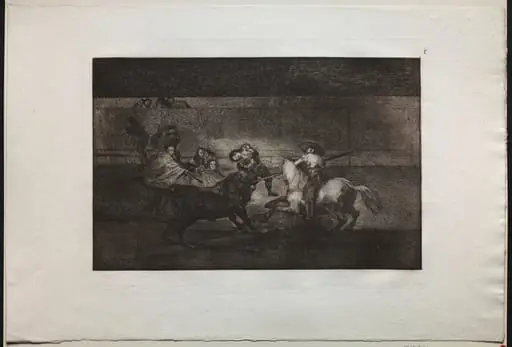 Bullfights: The Death of Pepe Illo (3rd Composition)
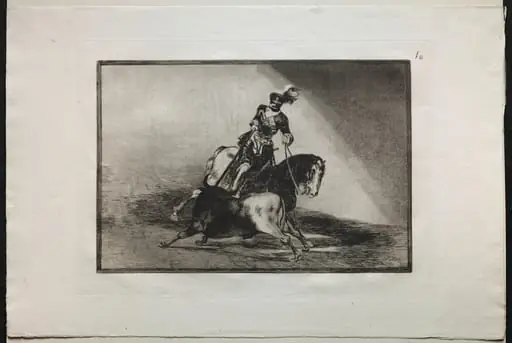 Bullfights: Charles V spearing a bull