Artwork
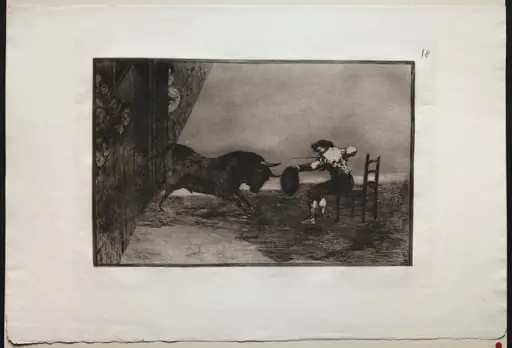
Bullfights: The Famous Martincho Places the Banderillas Playing the Bull with the Movement of his Body
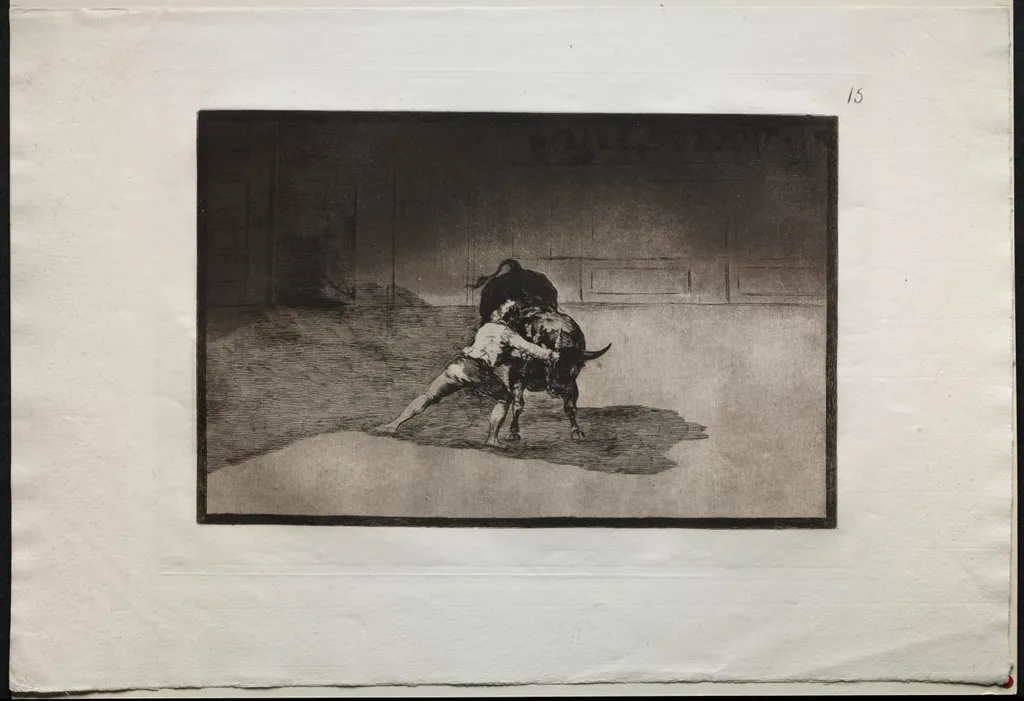
Bullfights: The Famous Martincho Places the Banderillas Playing the Bull with the Movement of his Body is a print by the Romanticist artist Francisco Goya. It dates from 1816 and is held in the collection of the Cleveland Museum of Art. Created in 1816, this print by Francisco de Goya captures a precise instant in a Spanish bullfight.
About this work
Overview
The work is part of the collection at The Cleveland Museum of Art, where it is studied for its dynamic composition and psychological tension.
Created in 1816, this print by Francisco de Goya captures a precise instant in a Spanish bullfight. It belongs to a series documenting the spectacle and ritual of bullfighting, rendered in etching and aquatint. The work is part of the collection at The Cleveland Museum of Art, where it is studied for its dynamic composition and psychological tension. Goya’s focus on a single, unglamorous moment reflects his interest in the raw reality of public spectacle.
Subject & Meaning
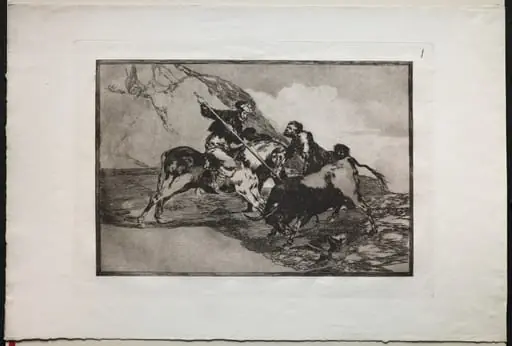
The scene depicts Martincho, a well-known matador, inserting banderillas—decorative darts—into the back of a charging bull. The man’s body is twisted in motion, balancing agility against the bull’s explosive force. There is no heroism here, only a tense, fleeting exchange between two living beings caught in ritualized violence. Goya avoids romanticizing the event, instead emphasizing its physicality and precariousness.
Technique & Style
Goya employed etching and aquatint to achieve rich tonal contrasts, using deep shadows to isolate figures against a murky arena. The bull’s musculature is suggested through bold, fluid lines, while the matador’s form dissolves slightly into darkness, enhancing the sense of motion. The muddy ground and distant walls are rendered with minimal detail, focusing attention on the central confrontation. This use of chiaroscuro heightens the drama without embellishment.
History & Provenance
The print was produced as part of Goya’s series on bullfighting, likely intended for private circulation rather than public sale. It was made after his physical decline and increasing disillusionment with societal norms. The work passed through private collections before entering the Cleveland Museum of Art’s holdings, where it remains as a testament to Goya’s late-period engagement with Spanish cultural traditions.
Context
In early 19th-century Spain, bullfighting was both popular entertainment and a symbol of national identity. Goya, having witnessed its brutality firsthand, portrayed it without glorification. His series stands apart from contemporary depictions that celebrated matadors as heroes. Instead, he recorded the event as a visceral, ambiguous ritual—reflecting his broader skepticism toward authority and spectacle.
Legacy
Goya’s bullfight prints influenced later artists interested in realism and psychological depth. They shifted the genre from pageantry to human and animal vulnerability. Today, these works are valued not for their depiction of sport, but for their unflinching observation of power, risk, and the fragile boundary between control and chaos.
Artist & collection
Artist
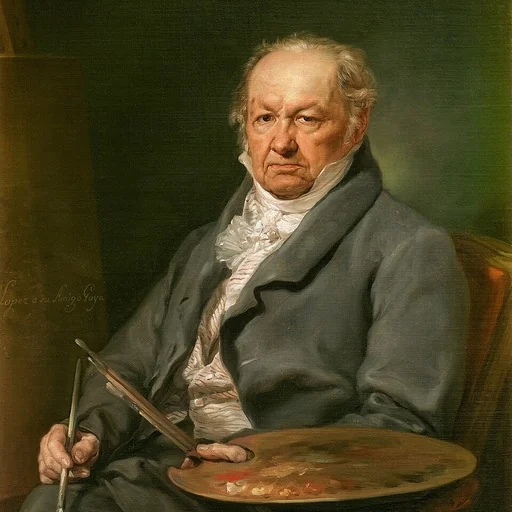
Francisco José de Goya y Lucientes (; Spanish: ; 30 March 1746 – 16 April 1828) was a Spanish romantic painter and printmaker.

 Bullfights: The Daring of Martincho in the Ring at Saragossa
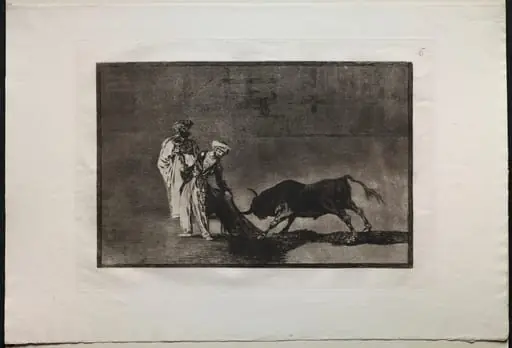 Bullfights: The Moors Make a Different Play in the Ring Calling the Bull with the Burnous
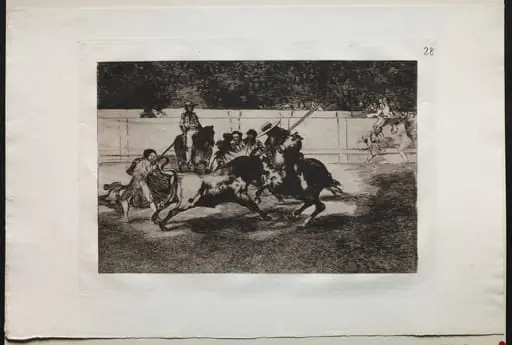 Bullfights: The Forceful Rendon Stabs a Bull with the Pique, From Which Pass he died in the Ring at Madrid
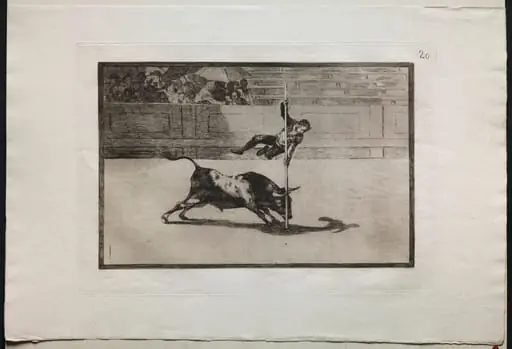 Bullfights: The Agility and Audacity of Juanito Apinani in (the Ring) at Madrid
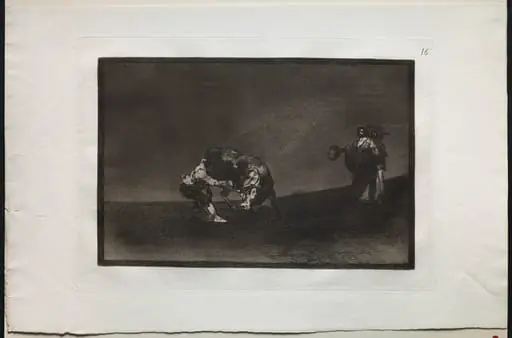 Bullfights: The Same Man Throws a Bull in the Ring at Madrid
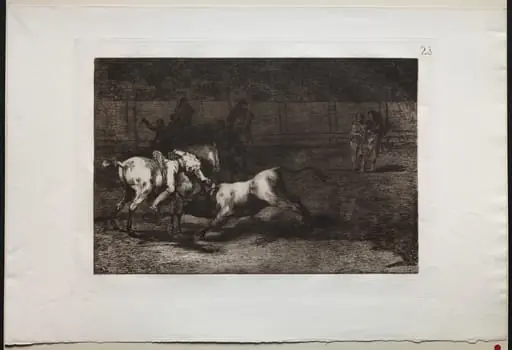 Bullfights: Mariano Ceballos, Alias the Indian, Kills the Bull From his Horse
 Bullfights: The Way in Which the Ancient Spaniards Hunted Bulls on Horseback in the Open Country