Artwork
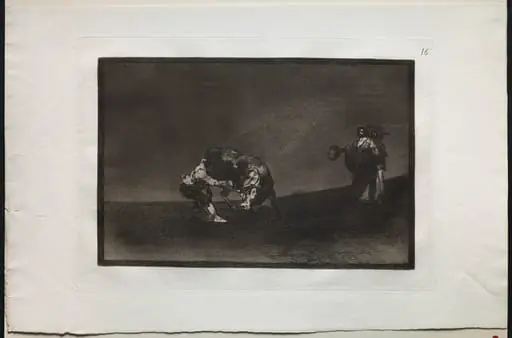
Bullfights: The Forceful Rendon Stabs a Bull with the Pique, From Which Pass he died in the Ring at Madrid
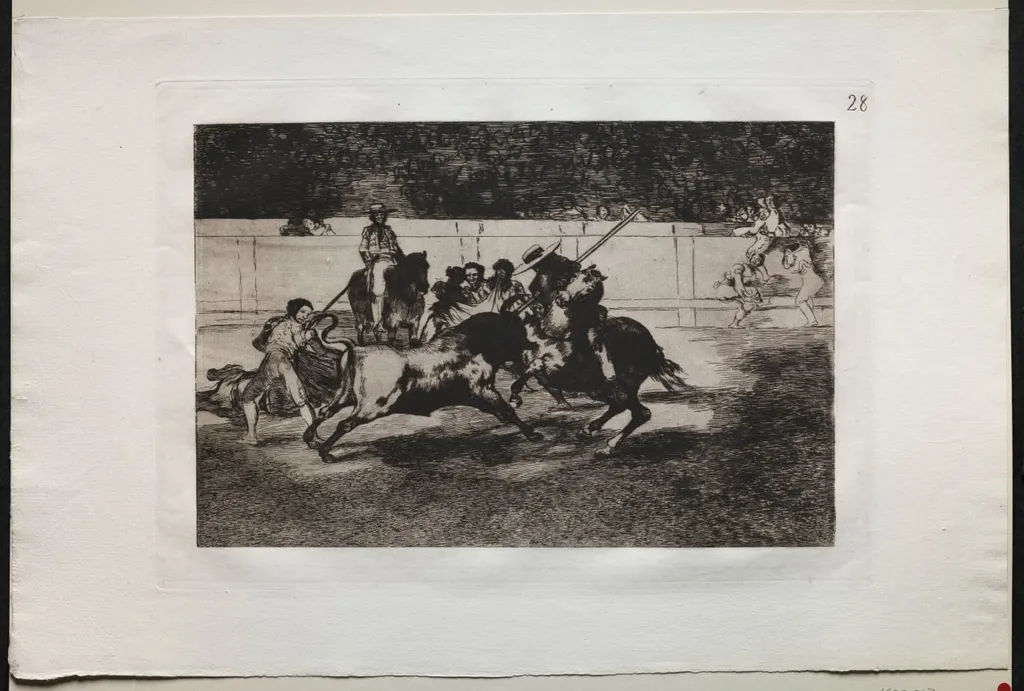
Bullfights: The Forceful Rendon Stabs a Bull with the Pique, From Which Pass he died in the Ring at Madrid is a print by the Romanticist artist Francisco Goya. It dates from 1816 and is held in the collection of the Cleveland Museum of Art. Created in 1816, this black-and-white print by Francisco de Goya depicts a violent moment in a Madrid bullfight.
About this work
Overview
Rendered in etching and aquatint, the work captures a rider on horseback thrusting a lance into a charging bull, moments before fatal injury.
Created in 1816, this black-and-white print by Francisco de Goya depicts a violent moment in a Madrid bullfight. It belongs to a series documenting the spectacle and danger of the arena. Rendered in etching and aquatint, the work captures a rider on horseback thrusting a lance into a charging bull, moments before fatal injury. The scene is rendered with stark tonal contrasts and dynamic composition, emphasizing tension and chaos.
Subject & Meaning
The print illustrates the death of a matador known as Rendon, who was killed during a pass with the pique. Rather than glorifying the event, Goya presents it as a raw, unvarnished confrontation between human and animal. The figures are caught in motion—some struggling, others watching—suggesting the inevitability of fate and the brutality inherent in the spectacle. The crowd in the background remains detached, underscoring the ritual’s social distance from its violence.
Technique & Style
Goya employed etching and aquatint to achieve deep blacks and subtle gradations of gray, heightening the drama of the scene. Sharp, angular lines define the straining muscles of the bull and the rider’s rigid posture, while the background dissolves into shadow. The absence of color focuses attention on movement and form. The composition is tightly framed, pulling the viewer into the immediacy of the action without romantic embellishment.
History & Provenance
The print was produced as part of Goya’s series on bullfighting, likely drawn from direct observation or sketches made during his visits to Madrid’s arenas. It entered the collection of The Cleveland Museum of Art in the 20th century, having passed through private European collections after Goya’s death. Its preservation reflects its status as a significant record of early 19th-century Spanish popular culture and Goya’s unflinching documentation of life and death.
Context
Goya created this work during a period of political and social upheaval in Spain, following the Napoleonic Wars. Bullfighting, long a national tradition, became a symbol of national identity amid foreign occupation and internal instability. His depictions diverged from idealized portrayals, instead revealing the physical cost and psychological weight of the spectacle. This series stands as a quiet critique of violence embedded in cultural ritual.
Legacy
Goya’s bullfight prints influenced later artists seeking to portray raw human experience without sentimentality. They contributed to the shift in Romantic art toward emotional authenticity and the sublime in violence. Unlike earlier depictions that celebrated heroism, these works exposed vulnerability and mortality, reshaping how the public and artists alike viewed spectacle, courage, and death in public life.
Artist & collection
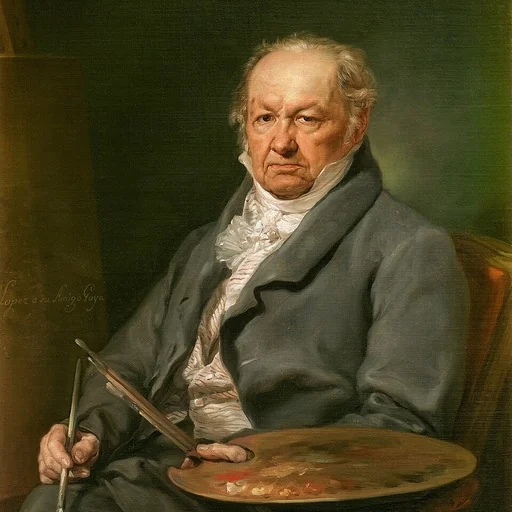
Artist
Francisco José de Goya y Lucientes (; Spanish: ; 30 March 1746 – 16 April 1828) was a Spanish romantic painter and printmaker.

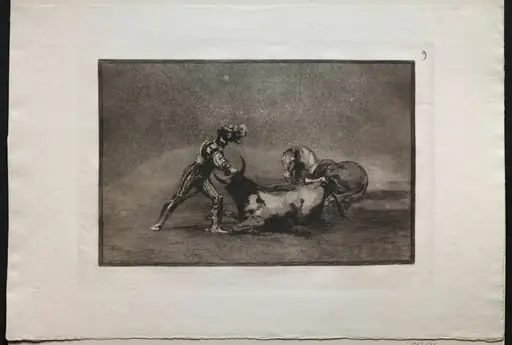 Bullfights: A Spanish Knight Kills the Bull After Having Lost His Horse
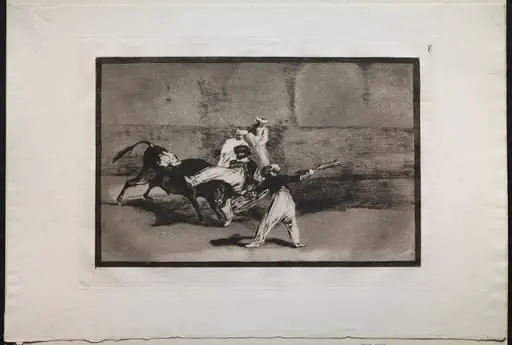 Bullfights: A Moor Caught by a Bull in the Ring
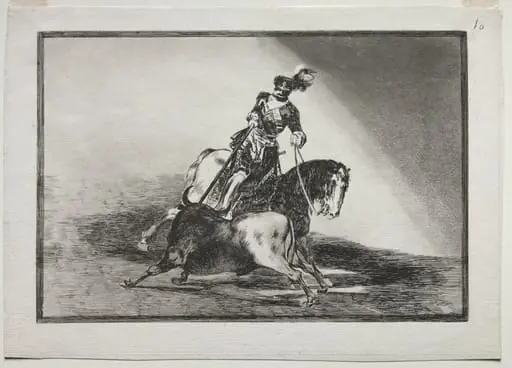 Charles V Spearing a Bull in the Ring at Valladolid
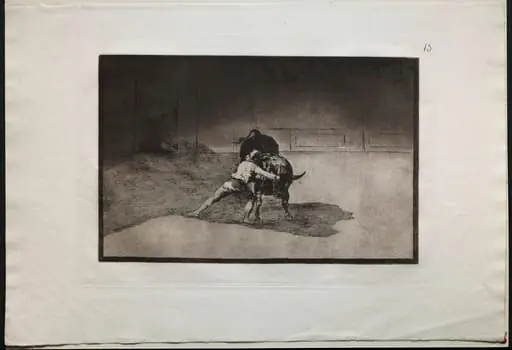 Bullfights: The Famous Martincho Places the Banderillas Playing the Bull with the Movement of his Body
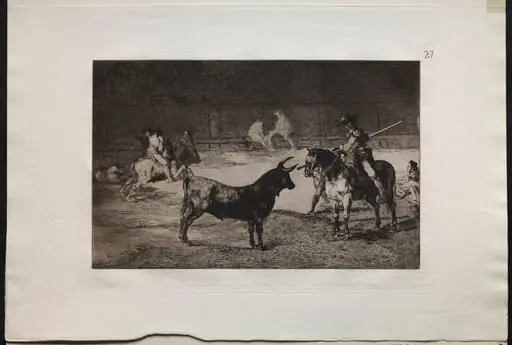 Bullfights: The Celebrated Picador, Fernando del Toro, Draws the Fierce Beast on with his Pique
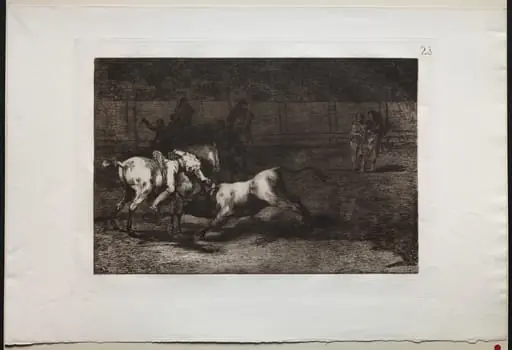 Bullfights: Mariano Ceballos, Alias the Indian, Kills the Bull From his Horse
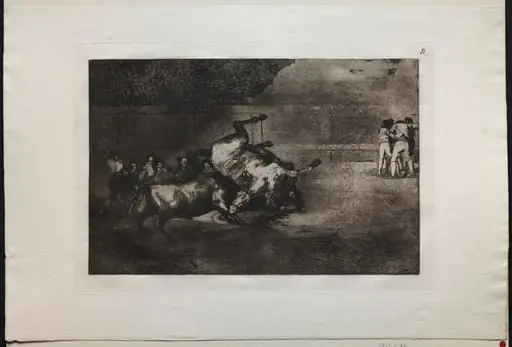 Bullfights: A Horse Thrown by the Bull
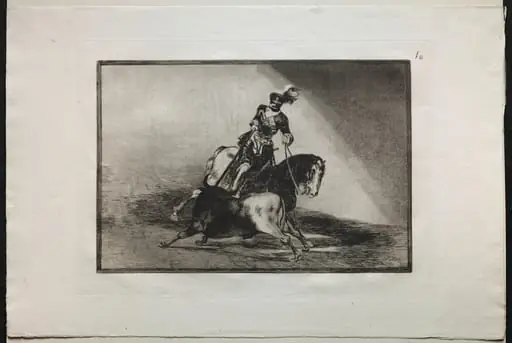 Bullfights: Charles V spearing a bull
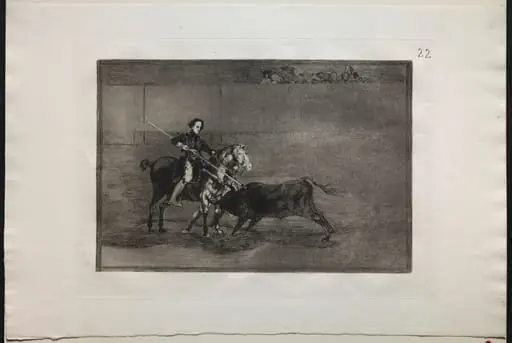 Bullfights: Manly Courage of the Celebrated Pajuelera in (the Ring) at Saragosa
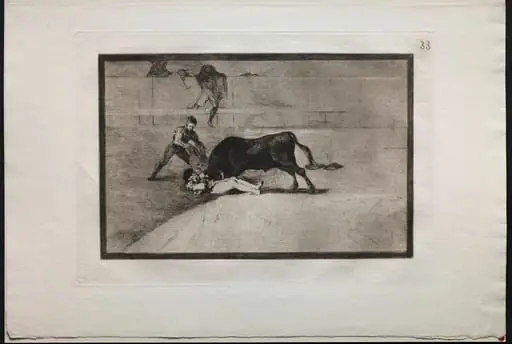 Bullfights: The Unlucky Death of Pepe Illo, in the Ring at Madrid
 Bullfights: The Same Man Throws a Bull in the Ring at Madrid