Artwork
Bullfights: The Same Ceballos Mounted on Another Bull Breaks Short Spears in the Ring at Madrid
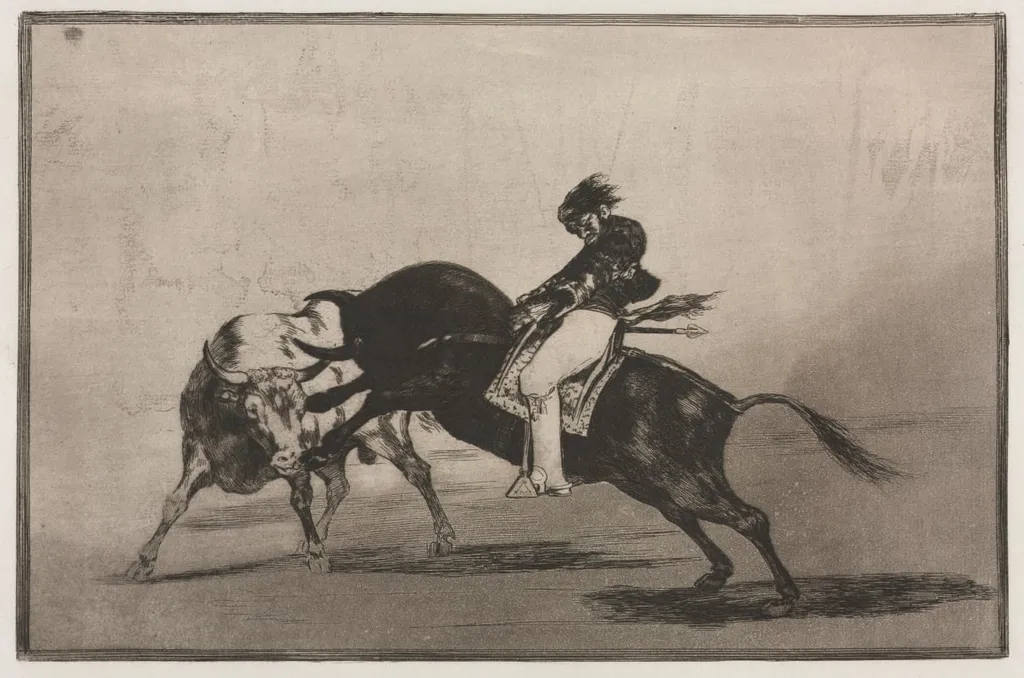
Bullfights: The Same Ceballos Mounted on Another Bull Breaks Short Spears in the Ring at Madrid is a print by the Romanticist artist Francisco Goya. It dates from 1816 and is held in the collection of the Cleveland Museum of Art. Created in 1816, this print by Francisco de Goya captures a moment from a Madrid bullfight, focusing on a mounted picador named Ceballos.
About this work
Overview
The scene depicts the precise, ritualized violence of the early phase of the fight, where spears are driven into the bull’s shoulders to weaken it.
Created in 1816, this print by Francisco de Goya captures a moment from a Madrid bullfight, focusing on a mounted picador named Ceballos. The scene depicts the precise, ritualized violence of the early phase of the fight, where spears are driven into the bull’s shoulders to weaken it. Goya rendered the event with urgency, using sharp lines and dynamic composition to convey motion and tension without overt spectacle.
Subject & Meaning
The print centers on Ceballos, a known picador, who has just broken his spear against the bull’s hide. His posture, leaning forward with the fractured lance, reflects both control and vulnerability. The bull, low and charging, embodies raw power. The image avoids glorification, instead presenting the event as a disciplined, almost mechanical exchange—highlighting the ritual’s brutality without sentiment.
Technique & Style
Goya employed etching and aquatint to achieve stark contrasts and textured depth. Bold, rapid lines define the horse’s motion and the bull’s muscular form, while granular shading in the dust and ground suggests movement and atmosphere. The composition is tightly framed, focusing attention on the collision of man and beast, with minimal background detail to heighten immediacy.
History & Provenance
The print belongs to Goya’s series Los Toros, produced between 1815 and 1816, documenting bullfighting in Spain. It was likely made for private circulation rather than public sale. The Cleveland Museum of Art acquired the work in the 20th century, where it remains part of its print collection, representing Goya’s late-period engagement with Spanish cultural traditions.
Context
During the 1810s, Spain was recovering from war and political upheaval. Bullfighting, long a popular spectacle, took on new symbolic weight as a national ritual. Goya’s depictions, unlike earlier celebratory portrayals, emphasize tension and physical strain, reflecting a more critical, observational stance toward tradition and violence in post-Napoleonic Spain.
Legacy
Goya’s bullfight prints influenced later artists interested in raw human experience and the aesthetics of danger. Their unembellished realism and psychological depth marked a departure from idealized depictions of sport. These works remain important for their documentation of 19th-century Spanish life and their quiet, unsentimental portrayal of endurance and risk.
Artist & collection
Artist
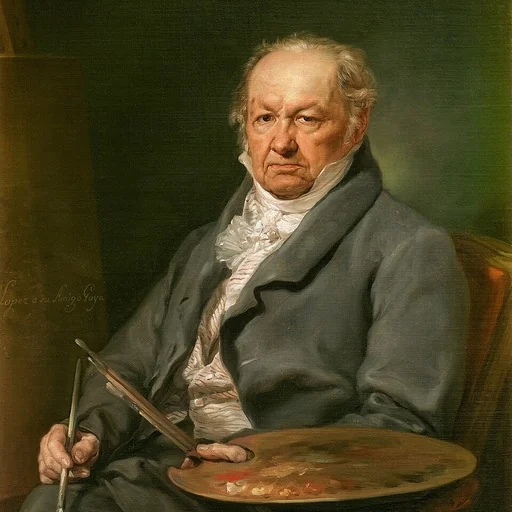
Francisco José de Goya y Lucientes (; Spanish: ; 30 March 1746 – 16 April 1828) was a Spanish romantic painter and printmaker.

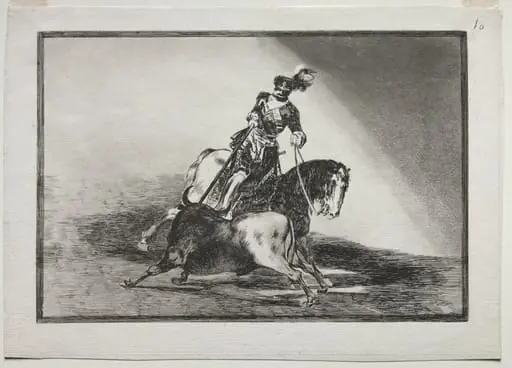 Charles V Spearing a Bull in the Ring at Valladolid
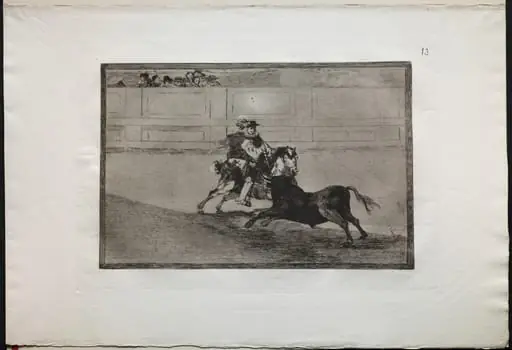 Bullfights: A Spanish Mounted Knight in the Ring Breaking Short Spears Without the Help of Assistants
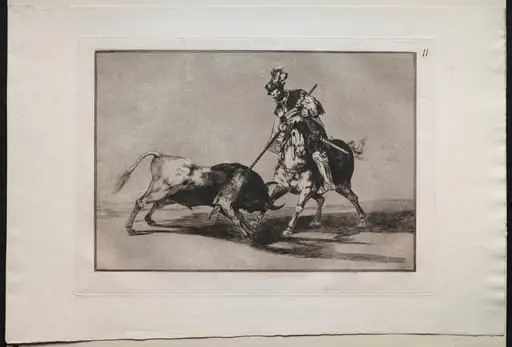 Bullfights: El Cid Campeador Spearing Another Bull
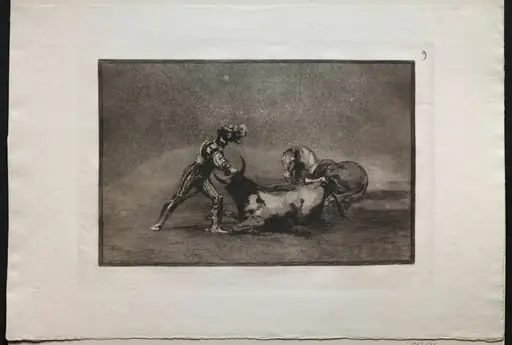 Bullfights: A Spanish Knight Kills the Bull After Having Lost His Horse
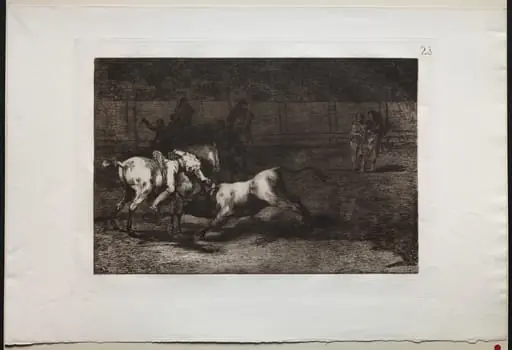 Bullfights: Mariano Ceballos, Alias the Indian, Kills the Bull From his Horse
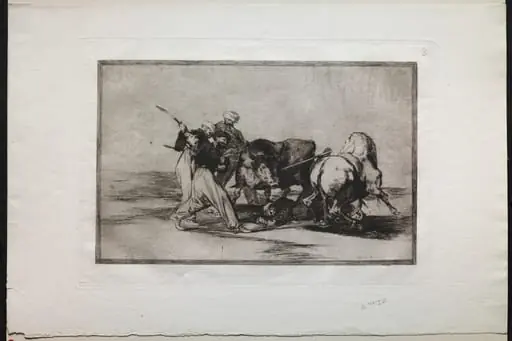 Bullfights: The Moors Settled in Spain, Giving Up the Superstitions of the Qur’an, Adopted this Art of Hunting, and Spear a Bull in the Open
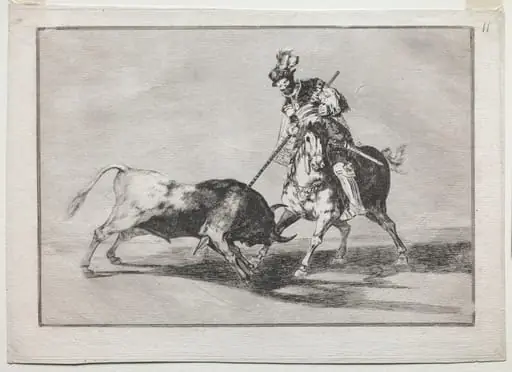 The Cid Campeador Spearing Another Bull
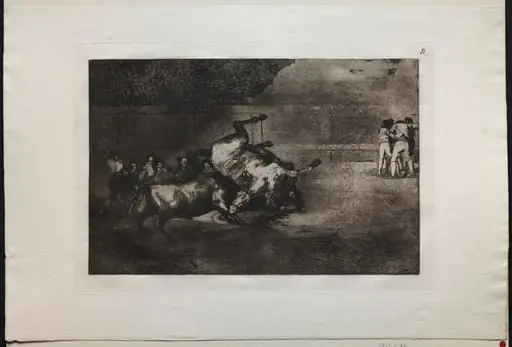 Bullfights: A Horse Thrown by the Bull
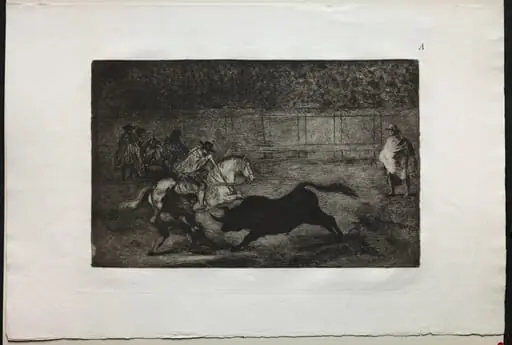 Bullfights: A Spanish Mounted Knight Breaking Short Spears with the Help of Assistants
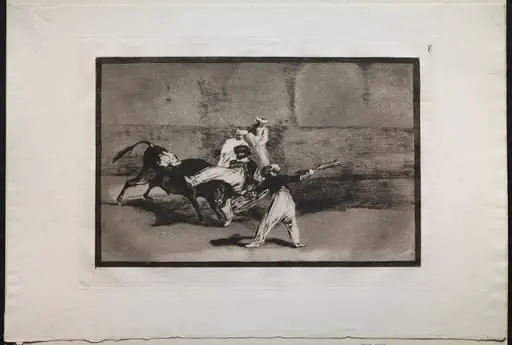 Bullfights: A Moor Caught by a Bull in the Ring
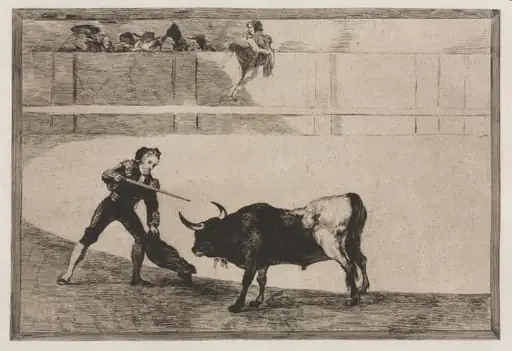 Bullfights: Pedro Romeo Killing the Halted Bull
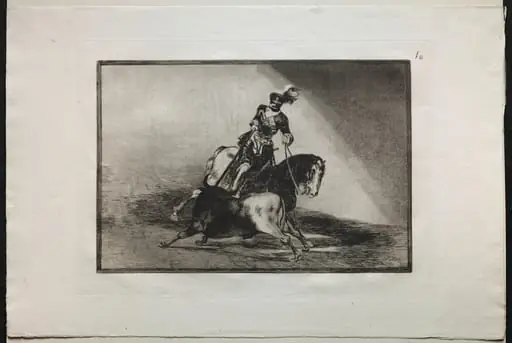 Bullfights: Charles V spearing a bull