Artwork
Pretty Advice, Plate 15
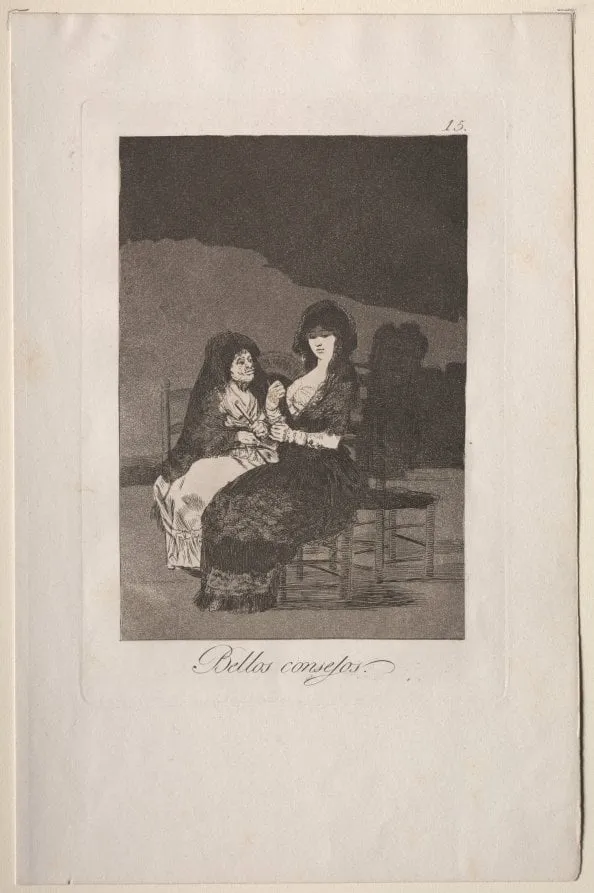
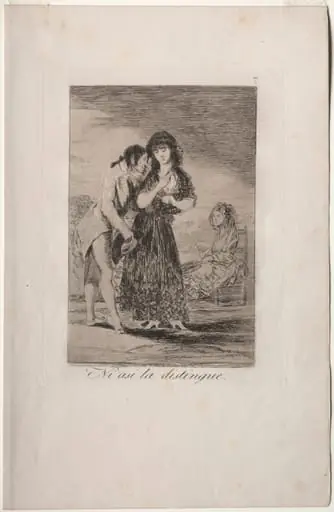
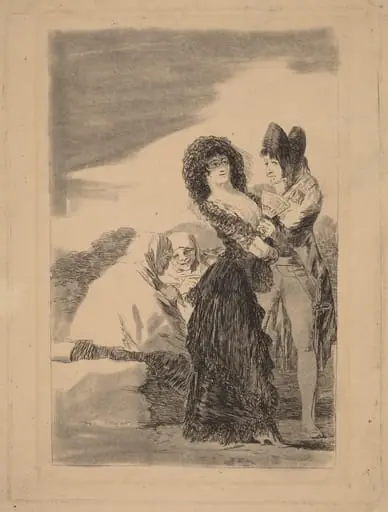
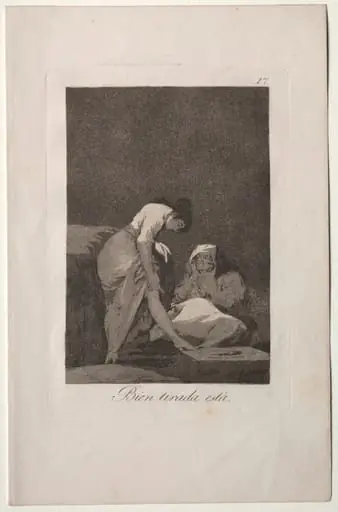
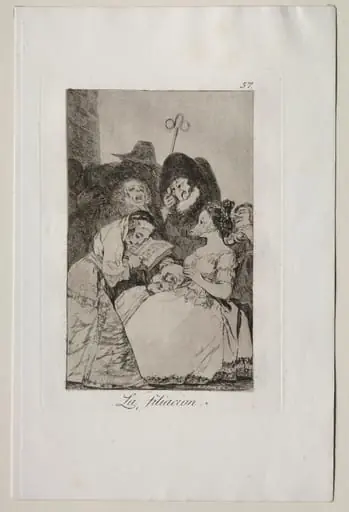
Pretty Advice, Plate 15 is a print by the Romanticist artist Francisco Goya. It dates from 1799 and is held in the collection of the Cleveland Museum of Art.
About this work
Overview
The work reflects Goya’s interest in social behavior and moral commentary, rendered through stark contrasts and intimate composition.
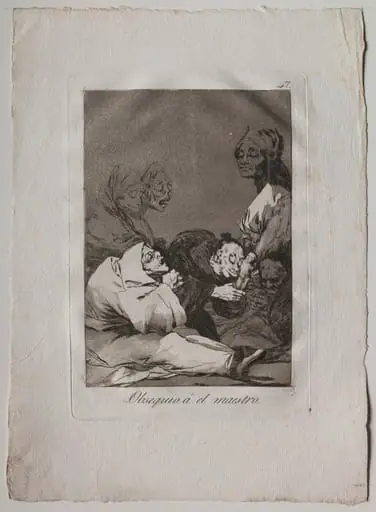
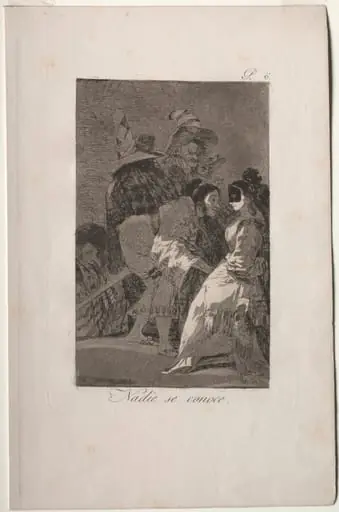
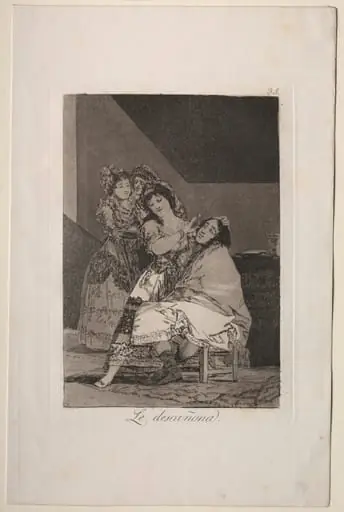
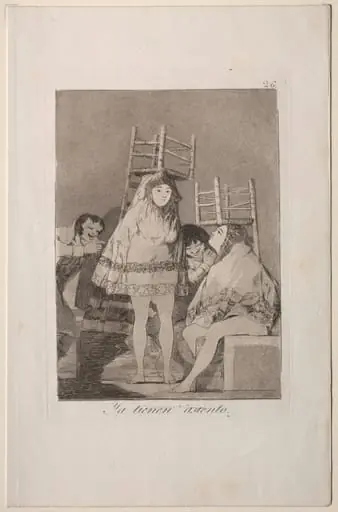
Created around 1799, 'Pretty Advice, Plate 15' is an etching by Francisco de Goya, part of his series 'Los Caprichos.' The print is held in the collection of The Cleveland Museum of Art. It depicts two women seated together under dim, ambiguous lighting, their interaction charged with quiet tension. The work reflects Goya’s interest in social behavior and moral commentary, rendered through stark contrasts and intimate composition.
Subject & Meaning
The scene portrays one woman offering counsel to another, who holds an infant. The title, 'Bellas consejas'—'pretty advice'—ironically frames the moment, suggesting the wisdom being shared may be superficial, manipulative, or burdened by societal expectation. The solemn expression and close proximity imply a moment of pressure rather than warmth, hinting at the constraints placed on women’s roles in late 18th-century Spain.
Technique & Style
Goya employed etching and aquatint to achieve deep shadows and hazy atmospheric effects. The background dissolves into near-blackness, isolating the figures and heightening psychological intensity. Delicate lines define their clothing and postures, while the blurred surroundings suggest moral obscurity. The contrast between sharp detail and indistinct space exemplifies chiaroscuro, reinforcing the ambiguity of the scene’s emotional tone.
History & Provenance
The print originates from Goya’s 1799 publication of 'Los Caprichos,' a set of 80 satirical prints critiquing Spanish society. 'Pretty Advice' was among the plates distributed to subscribers before public sale. The Cleveland Museum of Art acquired it as part of its broader collection of European prints, preserving its original state and historical context within Goya’s critical oeuvre.
Context
Created during Spain’s Enlightenment era, the print reflects Goya’s disillusionment with social norms, particularly those governing women’s lives. The depiction of maternal duty and whispered counsel aligns with broader critiques of superstition, gender roles, and institutional hypocrisy. Unlike idealized portrayals of domesticity, Goya presents intimacy as fraught with unspoken obligations and hidden judgment.
Legacy
As part of 'Los Caprichos,' this print influenced later generations of artists exploring psychological depth and social critique through printmaking. Its unflinching portrayal of interpersonal dynamics prefigured modernist concerns with alienation and moral ambiguity. Though not widely exhibited in isolation, it remains a key example of Goya’s ability to distill complex social tensions into a single, quiet moment.
Artist & collection
Artist
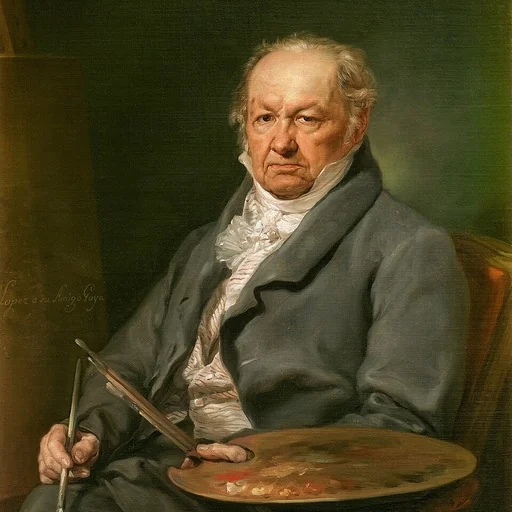
Francisco José de Goya y Lucientes (; Spanish: ; 30 March 1746 – 16 April 1828) was a Spanish romantic painter and printmaker.