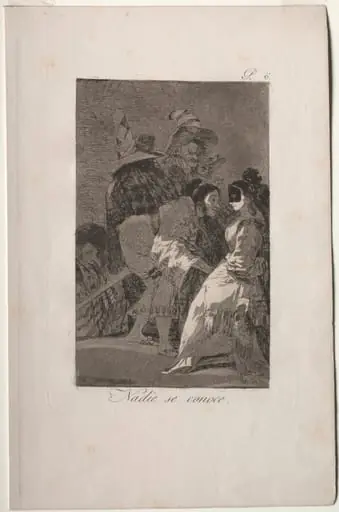
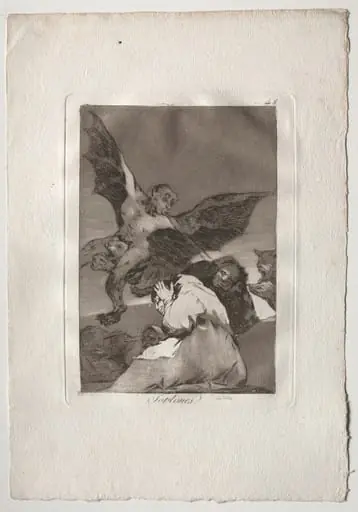
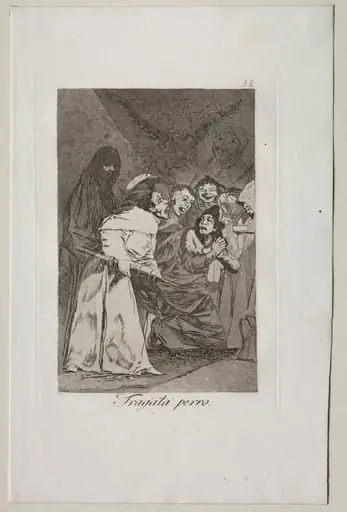
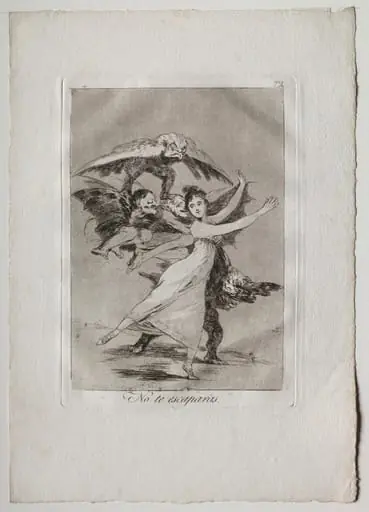
Artwork
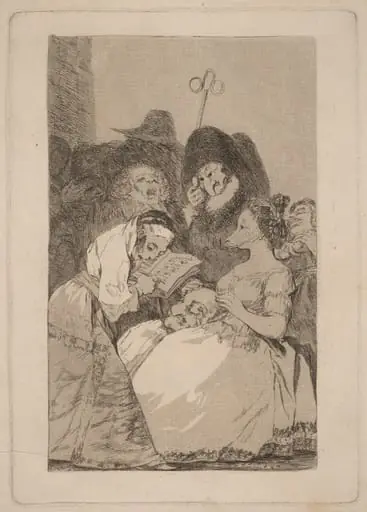
The Filiation, Plate 57
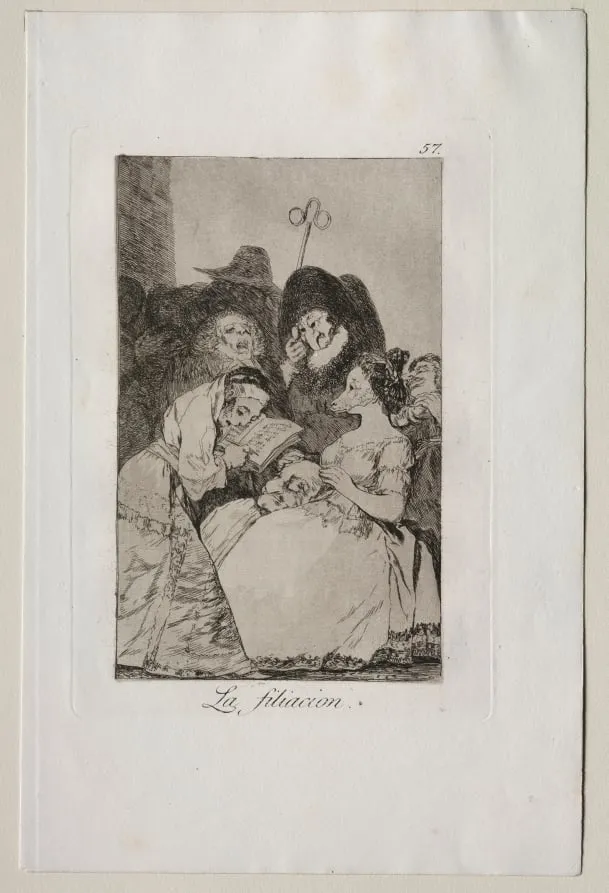
The Filiation, Plate 57 is a print by the Romanticist artist Francisco Goya. It dates from 1799 and is held in the collection of the Cleveland Museum of Art.
About this work
Overview
Created around 1799, The Filiation, Plate 57 is one of Francisco de Goya’s etchings from the series Los Caprichos. It is a single plate in a larger collection exploring human folly and social critique. The work is currently held in the collection of The Cleveland Museum of Art, where it is preserved as part of Goya’s early satirical output before his darker later works.
Subject & Meaning
The ambiguity invites interpretation without offering resolution.
The scene depicts three women in a confined interior: one reads aloud while cradling an infant, another leans close to listen, and a third stands behind them with scissors raised. The title suggests lineage or inherited truth, while the scissors imply a moment of rupture—perhaps the severing of deception, the cutting of a bond, or the exposure of a secret. The ambiguity invites interpretation without offering resolution.
Technique & Style
Goya employed etching and aquatint to achieve subtle tonal gradations and deep shadows, enhancing the intimate, claustrophobic atmosphere. The figures are rendered with loose, expressive lines, emphasizing gesture over detail. The dim lighting and compressed space focus attention on the tension between the women, reflecting Goya’s interest in psychological nuance over narrative clarity.
History & Provenance
The print was produced as part of Goya’s Los Caprichos series, first published in 1799. It was likely circulated among educated Spanish elites before the series was withdrawn under pressure from the Inquisition. The Cleveland Museum of Art acquired the plate in the 20th century as part of a broader collection of Goya’s graphic works, preserving its historical and artistic significance.
Context
In late 18th-century Spain, Enlightenment ideals clashed with entrenched religious and social hierarchies. Goya’s prints critiqued superstition, gender roles, and familial authority. The Filiation reflects anxieties about hidden truths within domestic life, mirroring broader cultural unease about inherited power, secrecy, and the reliability of tradition.
Legacy
The Filiation, Plate 57 exemplifies Goya’s shift toward psychological depth in printmaking, influencing later artists who explored the uncanny in domestic settings. Its open-ended symbolism and emotional tension prefigure themes in 19th-century Romantic and modernist art, where mystery and ambiguity replaced didactic storytelling.
Artist & collection
Artist
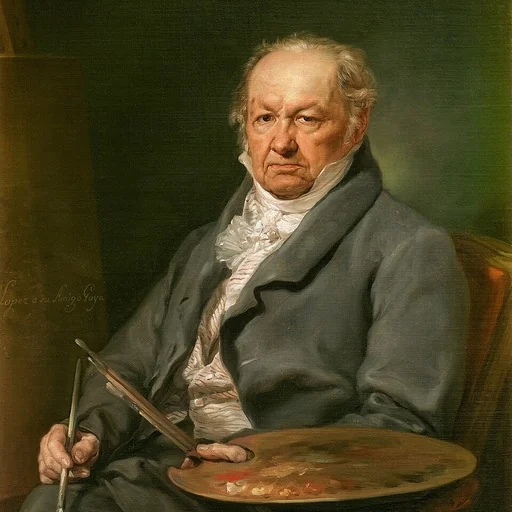
Francisco José de Goya y Lucientes (; Spanish: ; 30 March 1746 – 16 April 1828) was a Spanish romantic painter and printmaker.