Artwork
Saint Ambrose
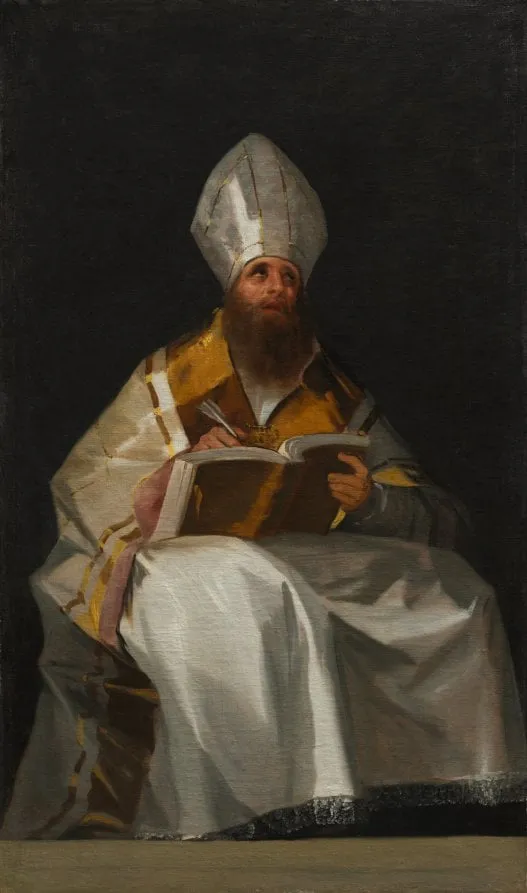
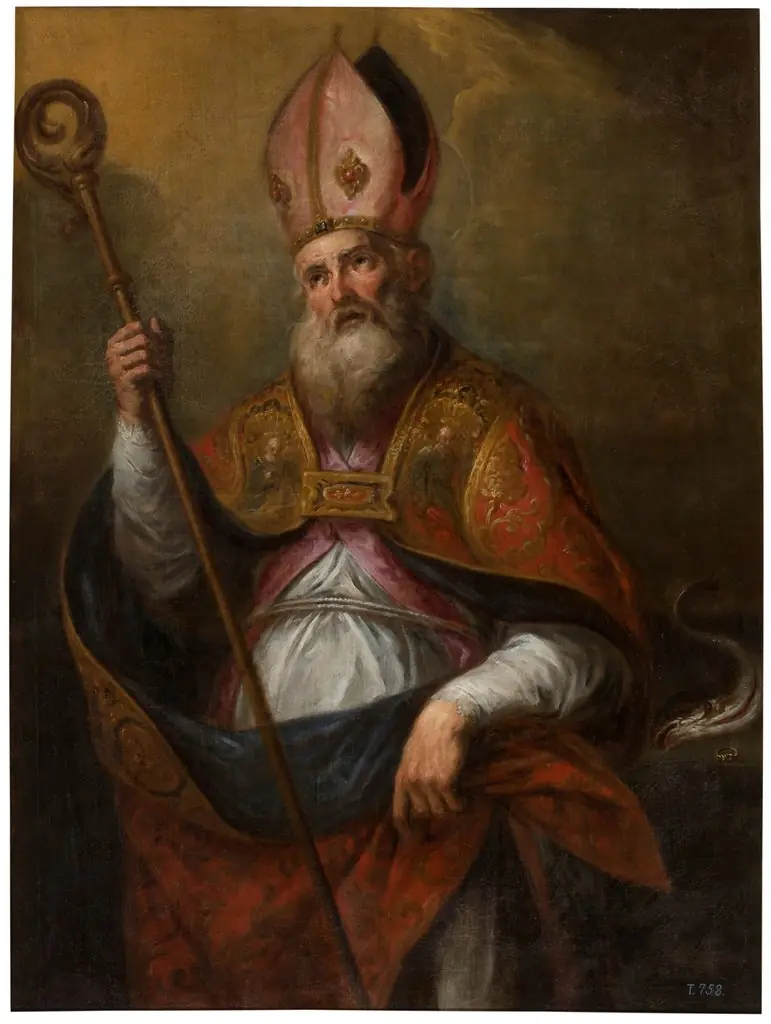
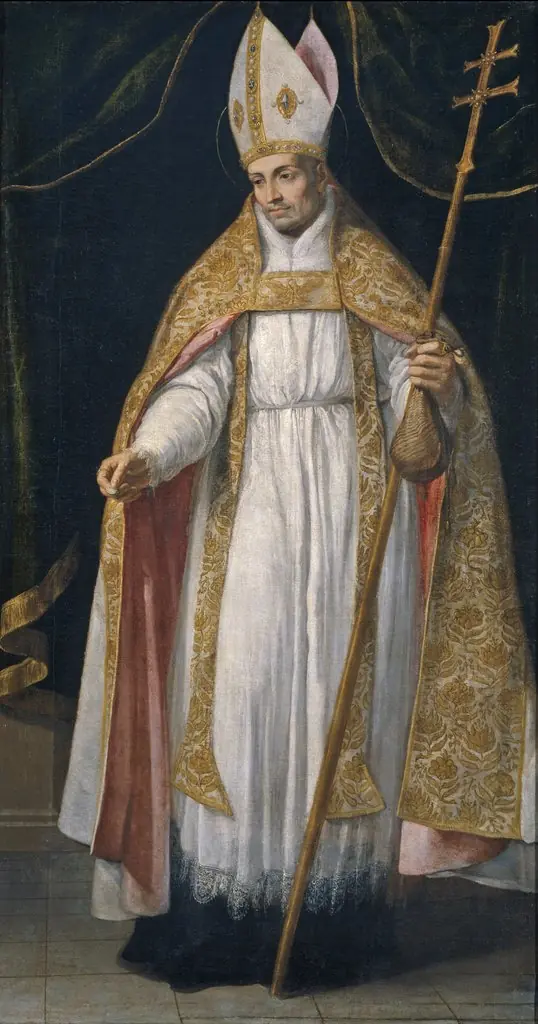
Saint Ambrose is an unspecified painting by the Romanticist artist Francisco Goya. It dates from 1798 and is held in the collection of the Cleveland Museum of Art. The canvas forms part of a quartet portraying pivotal early Catholic figures—Ambrose, Jerome, Augustine and Gregory.
About this work
The low viewpoint and large scale of the painting suggest it was meant to be seen from below, maybe in a church.
This painting shows Saint Ambrose, a bishop of Milan.
He's a big figure in Catholicism.
The artist made a series of these paintings, including other key figures like Jerome and Augustine, which is interesting because it shows the importance of these people in the church.
The low viewpoint and large scale of the painting suggest it was meant to be seen from below, maybe in a church.
The painting's history is also notable, as it was created during a time of change in Spain.
Check out the work of artist: Francisco de Goya (Spanish, 1746–1828) for more paintings like this.
Overview
The canvas forms part of a quartet portraying pivotal early Catholic figures—Ambrose, Jerome, Augustine and Gregory. Executed on a grand scale, the work’s composition is intended to be viewed from a low angle, indicating it originally occupied an elevated position within a religious setting, though the precise original site has not been identified.
Subject & Meaning
The central figure is Saint Ambrose, the fourth‑century bishop of Milan renowned for mediating doctrinal disputes and engaging with contemporary pagan thought. His depiction underscores his role as a theological stabilizer and a model of episcopal authority within the formative centuries of the Church.
Technique & Style
The painting employs a monumental format with a low horizon line that amplifies the saint’s stature. Broad brushwork and a restrained palette emphasize the figure’s solemnity, while the spatial arrangement directs the viewer’s gaze upward, reinforcing the sense of reverence appropriate to a liturgical environment.
History & Provenance
Created in the late eighteenth century, the work emerged amid the expulsion of the Jesuits from Spain and the ensuing ecclesiastical reforms. It is likely that a newly formed religious body, seeking inspiration from early Church leaders, commissioned the piece as part of a broader visual program.
Context
The series reflects a broader turn toward patristic exemplars during a period of Spanish religious upheaval. By foregrounding foundational saints, the paintings served both didactic and devotional functions, reinforcing continuity with the early Church at a time when institutional identities were being renegotiated.
Artist & collection
Artist
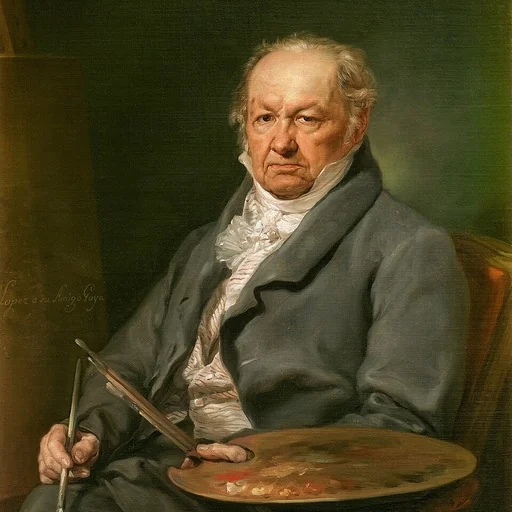
Francisco José de Goya y Lucientes (; Spanish: ; 30 March 1746 – 16 April 1828) was a Spanish romantic painter and printmaker.