Artwork
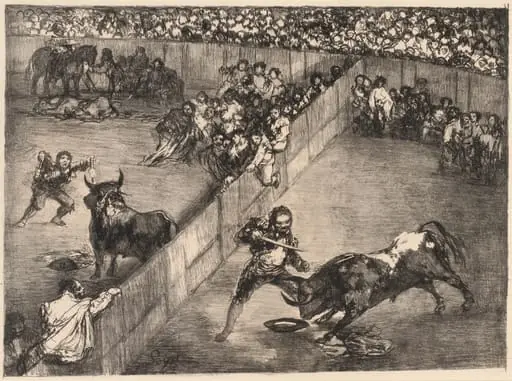
The Bulls of Bordeaux: Bullfight in a Divided Ring
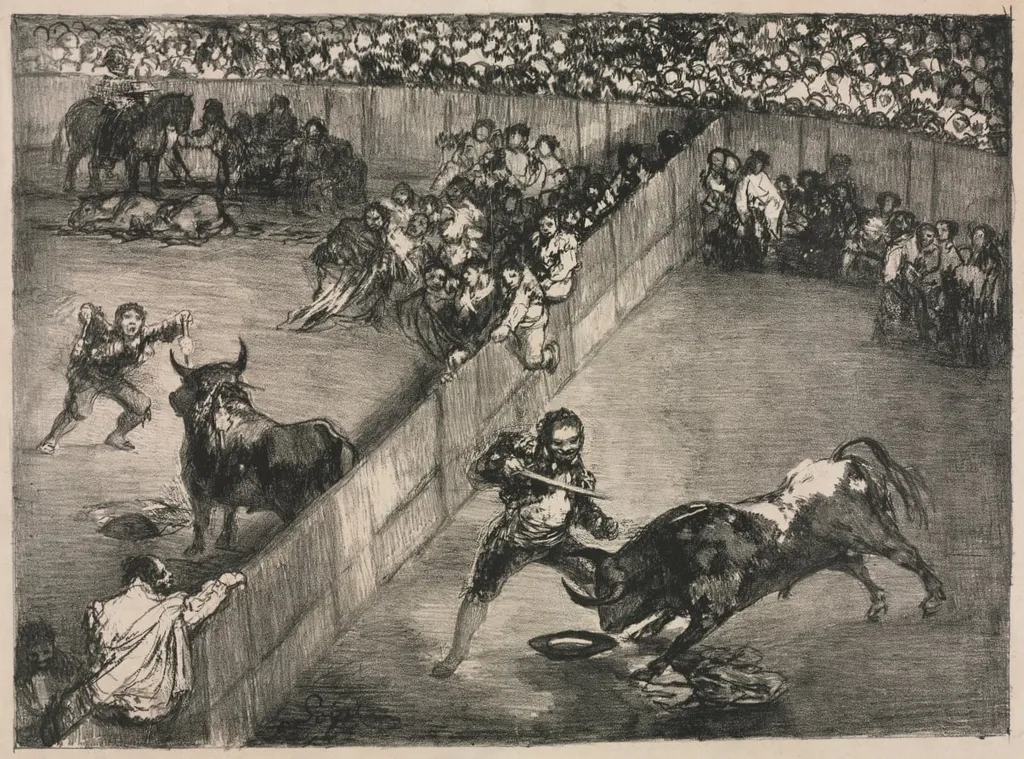
The Bulls of Bordeaux: Bullfight in a Divided Ring is a print by the Romanticist artist Francisco Goya. It dates from 1825 and is held in the collection of the Cleveland Museum of Art. Created in 1825, this print by Francisco de Goya captures a bullfight in Bordeaux, rendered in ink and watercolor on paper.
About this work
Overview
The work is held in the collection of The Cleveland Museum of Art, where it is studied for its raw depiction of spectacle and violence.
Created in 1825, this print by Francisco de Goya captures a bullfight in Bordeaux, rendered in ink and watercolor on paper. It is part of a series documenting Spanish and French bullfighting traditions. The work is held in the collection of The Cleveland Museum of Art, where it is studied for its raw depiction of spectacle and violence. Unlike traditional celebratory portrayals, Goya’s version emphasizes chaos and danger.
Subject & Meaning
The scene centers on a charging bull and a matador fleeing with a muleta, their movements frozen mid-action. The crowd in the background is blurred and distant, suggesting detachment or helplessness. Goya avoids glorification; instead, he presents the event as a moment of primal confrontation, where human effort is fragile against animal force. The composition implies futility and impending violence, reflecting his later preoccupations with power and mortality.
Technique & Style
Goya employs loose, expressive brushwork and stark contrasts of light and shadow to heighten tension. Washes of diluted ink and watercolor create atmospheric depth, while the figures emerge from darkened areas with minimal detail. The lack of precise outlines and the emphasis on movement over realism align with his late style, prioritizing emotional impact over decorative finish. The palette is muted, dominated by earth tones and stark whites, reinforcing the scene’s grim urgency.
History & Provenance
This work was made during Goya’s exile in Bordeaux, where he lived after leaving Spain in 1824. It belongs to a group of small-scale works he produced in private, often exploring themes of violence and human folly. The print remained in private hands until acquired by The Cleveland Museum of Art in the 20th century. Its survival as a personal study rather than a commissioned piece underscores its intimate, unvarnished character.
Context
Goya created this during a period of political disillusionment and personal isolation. Bullfighting, once a national ritual in Spain, had become a subject of moral scrutiny. His depictions diverged from romanticized versions popular in his youth. In Bordeaux, surrounded by French audiences unfamiliar with the tradition, he revisited the spectacle with detached observation, treating it as a universal metaphor for human recklessness.
Legacy
This print exemplifies Goya’s shift from courtly imagery to unflinching realism in his later years. It influenced 19th-century artists seeking to portray raw human experience without idealization. Its rawness and psychological depth anticipate modernist approaches to violence and spectacle. Though not widely exhibited during his lifetime, it now stands as a key example of his mature vision — unadorned, somber, and deeply human.
Artist & collection
Artist
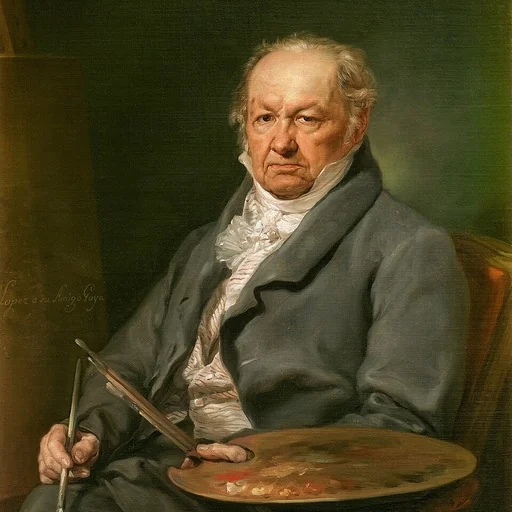
Francisco José de Goya y Lucientes (; Spanish: ; 30 March 1746 – 16 April 1828) was a Spanish romantic painter and printmaker.

 Bullfight in a Divided Ring
 The Bulls of Bordeaux: Spanish Entertainment
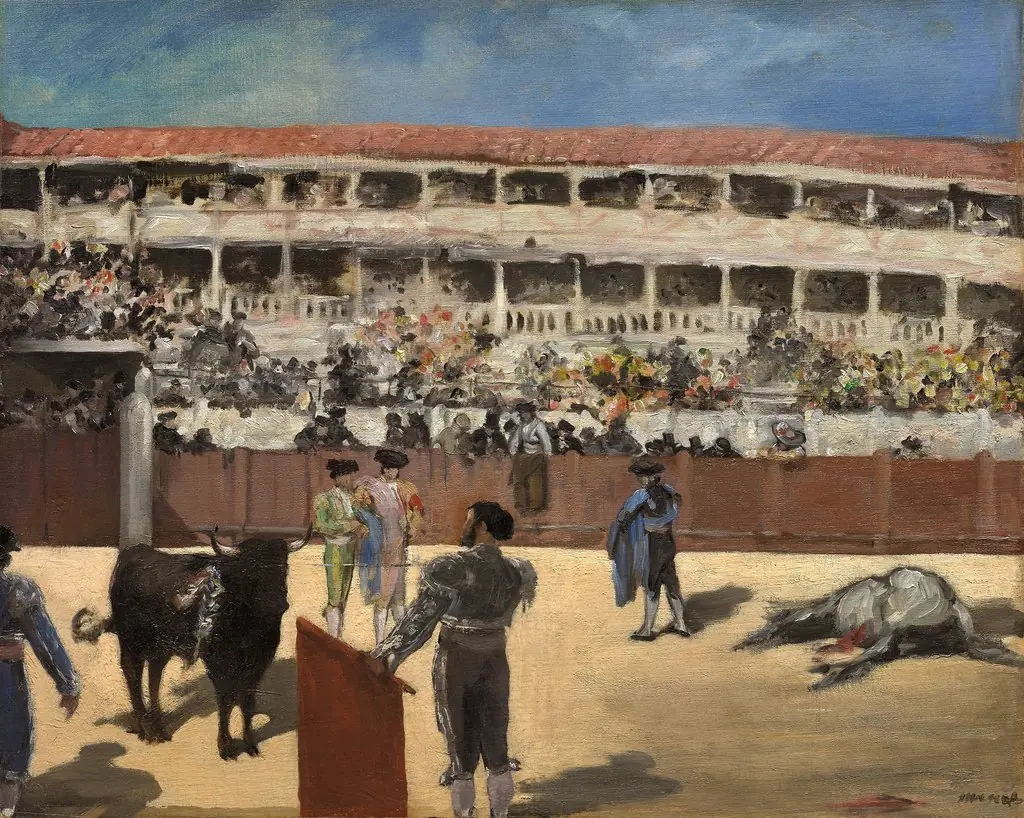 The Bullfight
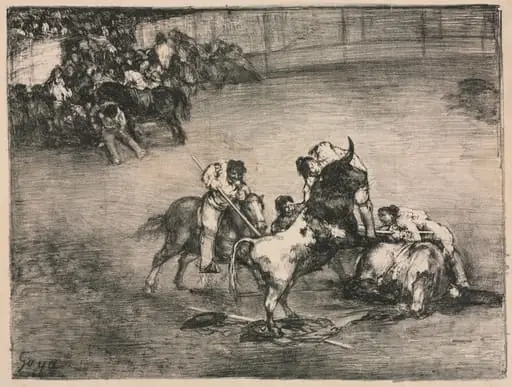 The Bulls of Bordeaux: Picador Caught by a Bull
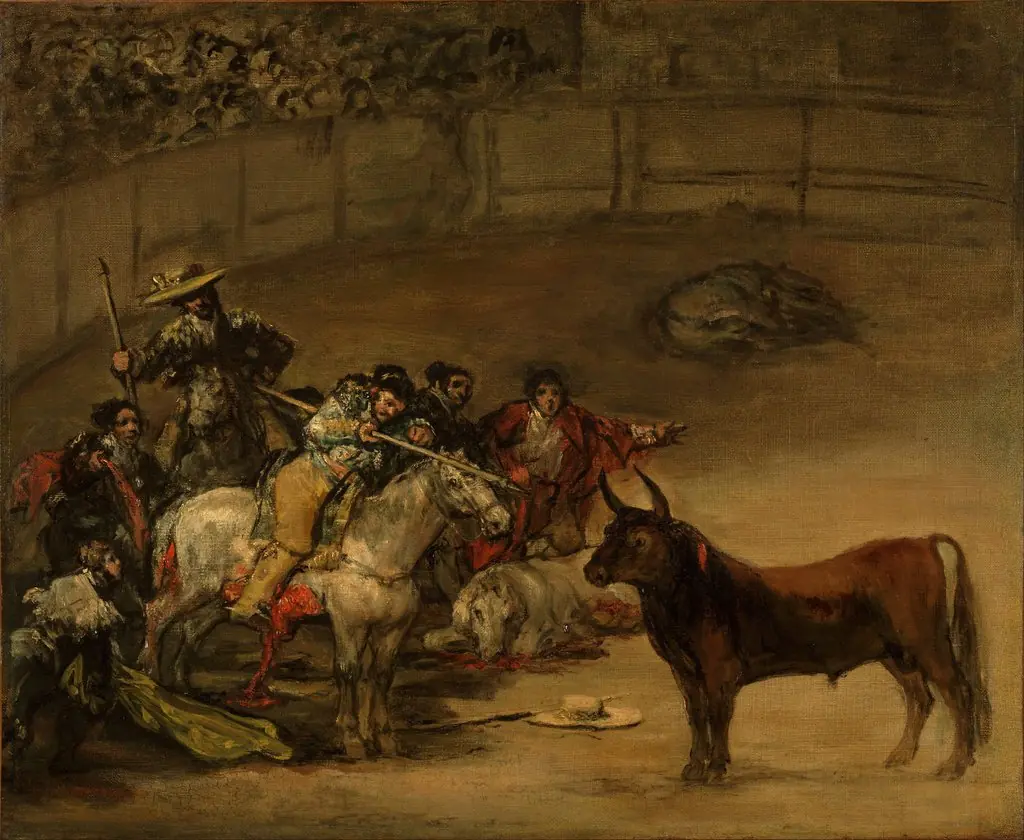 Bullfight, Suerte de Varas
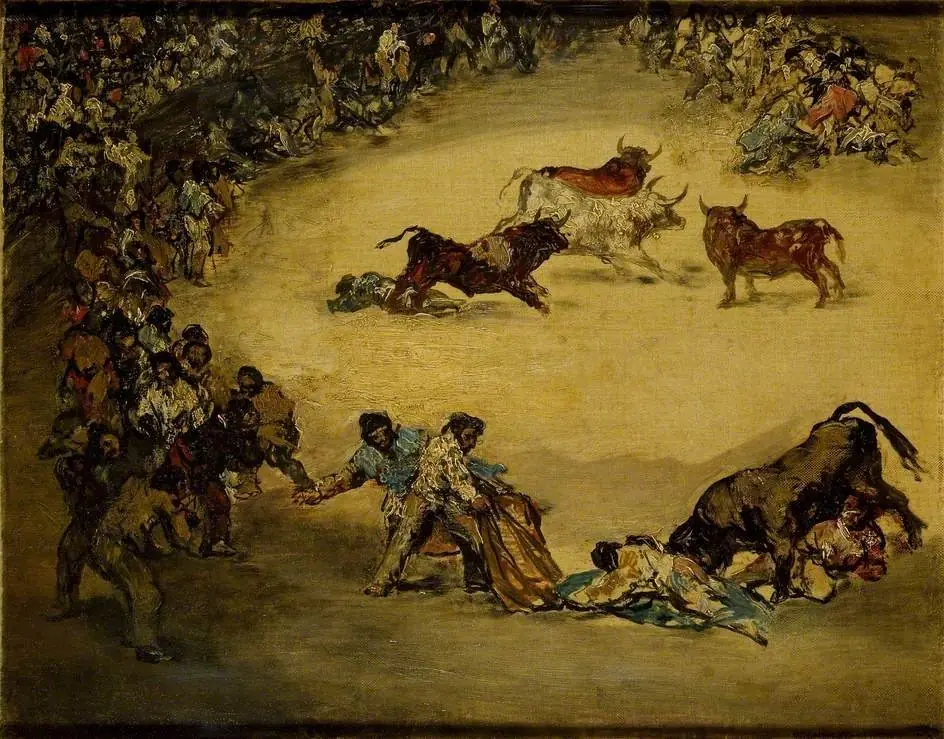 Scene at a Bullfight: Diversión de España
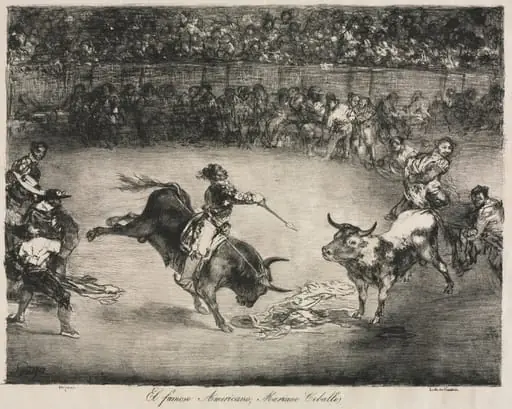 The Bulls of Bordeaux: The Famous American, Mariano Ceballos
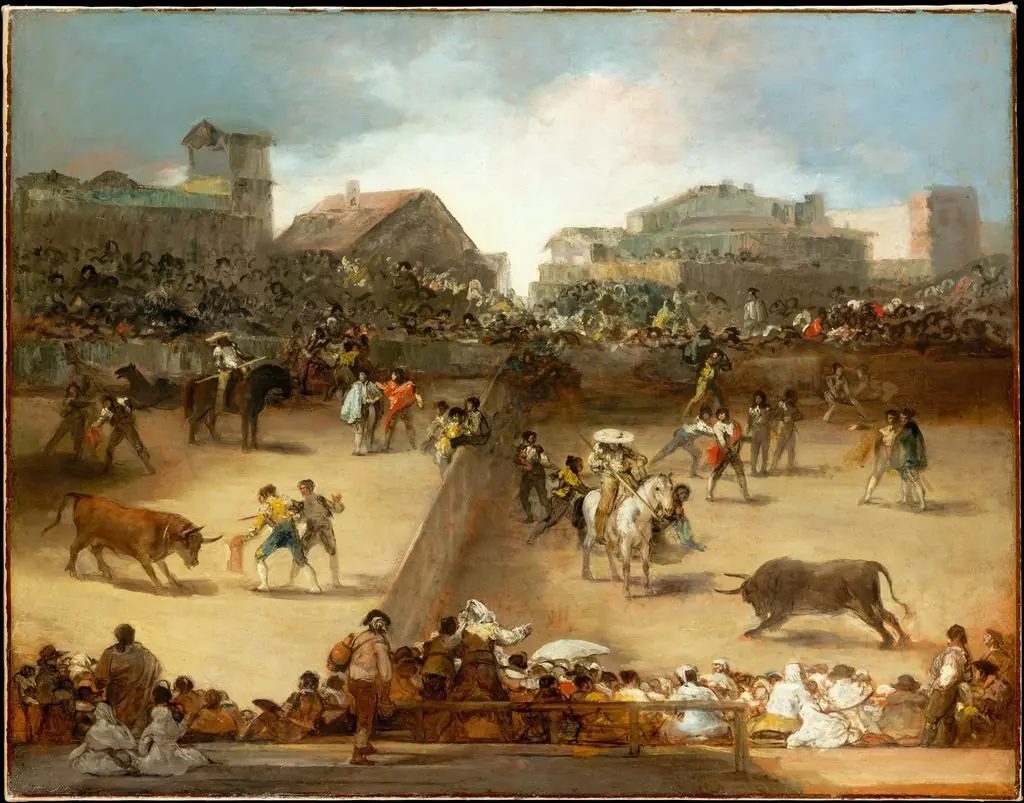 Bullfight in a Divided Ring
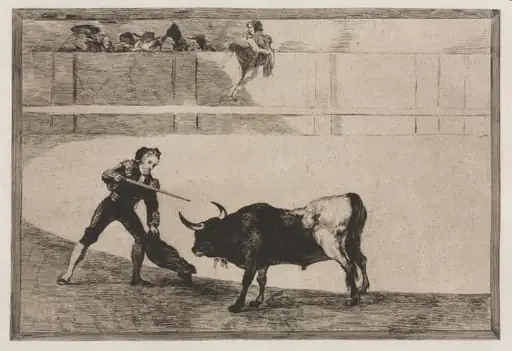 Bullfights: Pedro Romeo Killing the Halted Bull
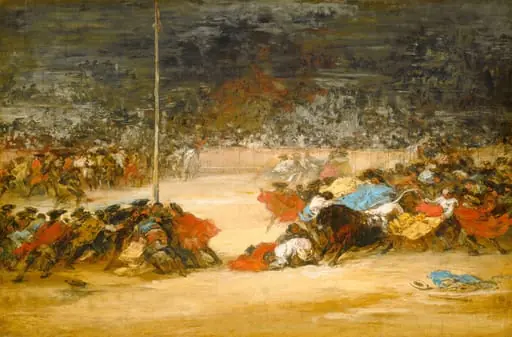 The Bullfight
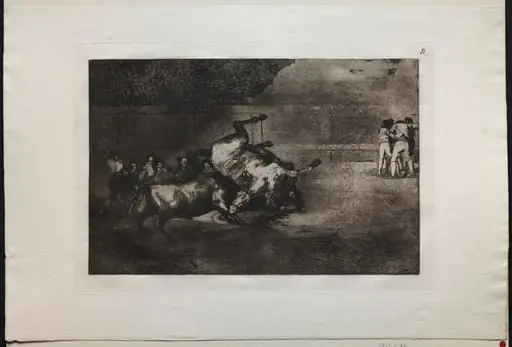 Bullfights: A Horse Thrown by the Bull
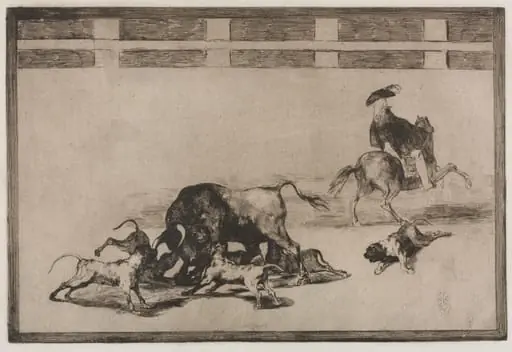 Bullfights: They Loose Dogs on the Bull