Artwork
The Bulls of Bordeaux: Spanish Entertainment
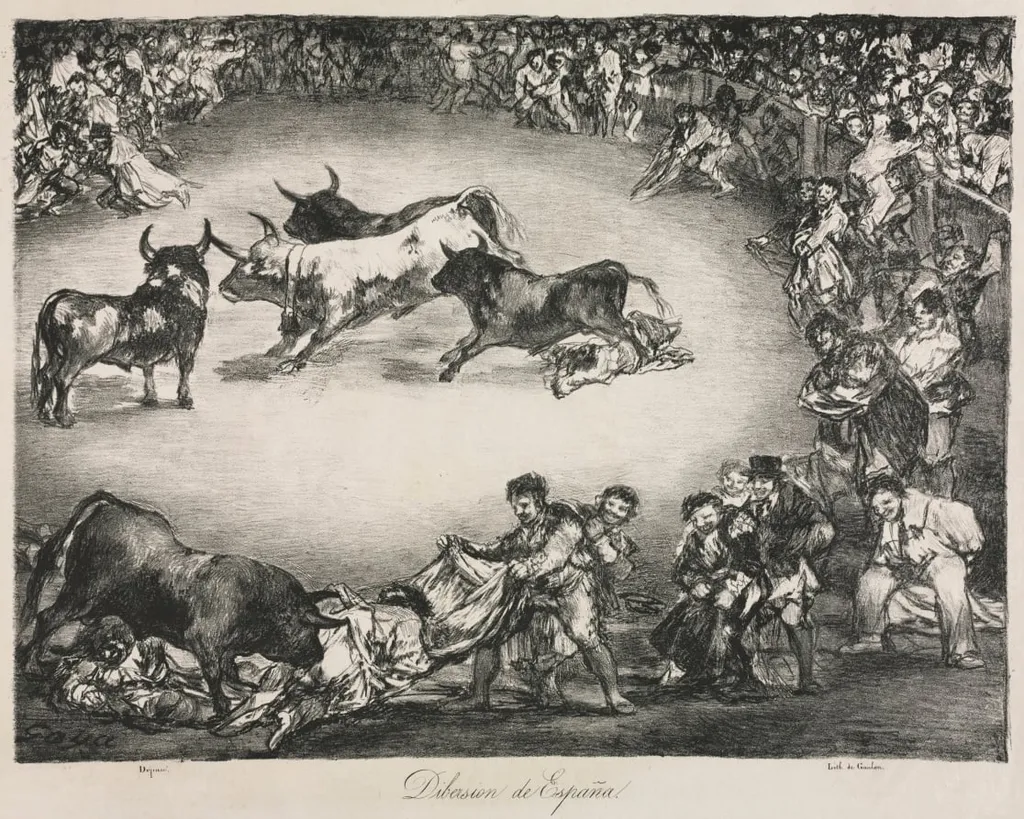
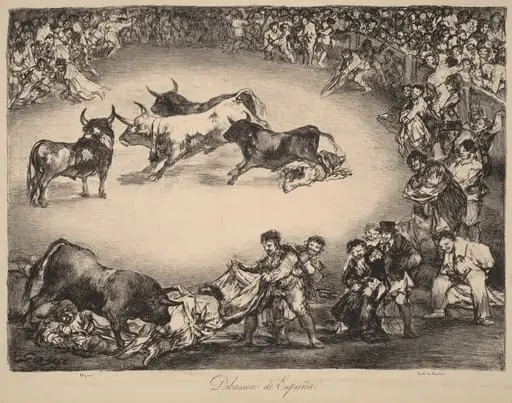
The Bulls of Bordeaux: Spanish Entertainment is a print by the Romanticist artist Francisco Goya. It dates from 1825 and is held in the collection of the Cleveland Museum of Art.
About this work
Overview
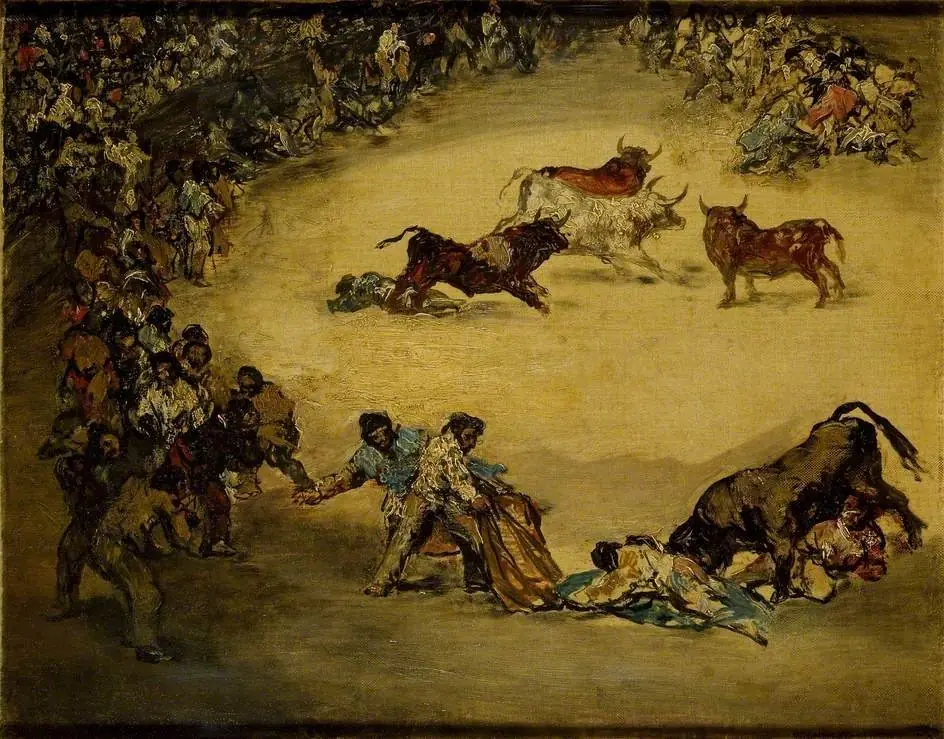
Francisco de Goya’s 1825 print, The Bulls of Bordeaux: Spanish Entertainment, is part of the Cleveland Museum of Art’s collection. The image captures a moment from a bullfight, focusing on three bulls positioned centrally, while a mixed audience of standing and seated spectators observes from the background. The composition conveys a palpable sense of movement and anticipation.
Subject & Meaning
The work presents a vivid tableau of a Spanish bullfight, emphasizing the raw energy of the animals and the collective attention of the crowd. By placing a charging bull near the viewer’s line of sight, Goya draws the audience into the spectacle, highlighting the cultural fascination with bravery and danger inherent in the tradition.
Technique & Style
Executed as a print, the piece relies on a restrained palette of browns and grays, employing strong chiaroscuro to model forms and suggest depth. The contrast between illuminated figures and surrounding shadows enhances the three‑dimensionality of the bulls and the massed spectators, reinforcing the tension that pervades the scene.
History & Provenance
Created in the later period of Goya’s career, the print was produced in 1825 and eventually entered the holdings of the Cleveland Museum of Art. Its acquisition reflects the museum’s interest in European graphic works and provides a representative example of Goya’s engagement with popular Spanish subjects during his final years.
Artist & collection
Artist
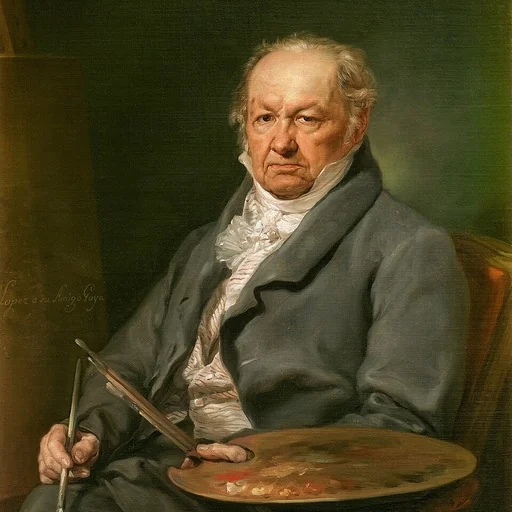
Francisco José de Goya y Lucientes (; Spanish: ; 30 March 1746 – 16 April 1828) was a Spanish romantic painter and printmaker.