Artwork
Tantalus, Plate 9
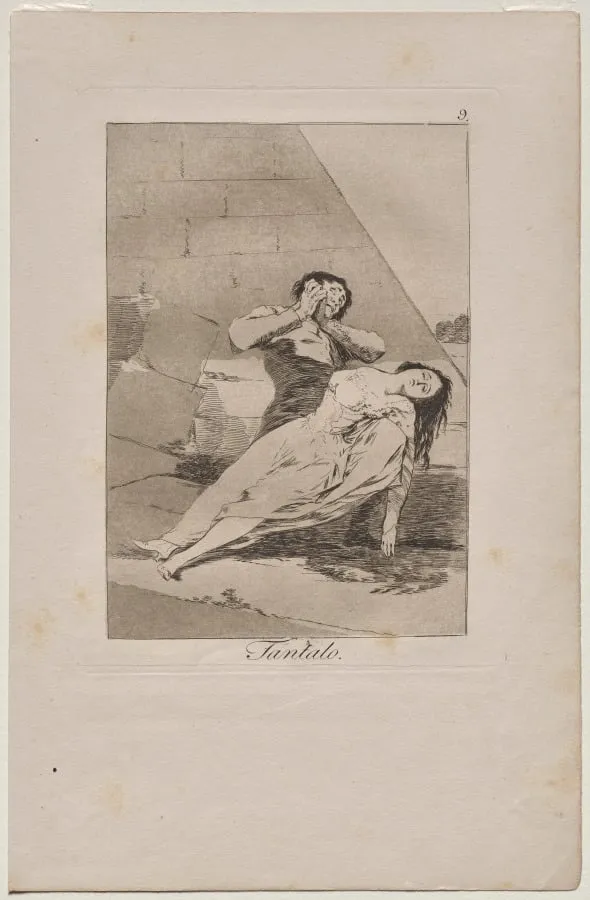
Tantalus, Plate 9 is a print by the Romanticist artist Francisco Goya. It dates from 1799 and is held in the collection of the Cleveland Museum of Art.
About this work
Overview
Tantalus, Plate 9, a print by Francisco de Goya (c. 1799), is part of The Cleveland Museum of Art's collection. The work depicts a desolate scene of two figures on a rocky shoreline, conveying a sense of despair.
Subject & Meaning
The print illustrates a man overcome with anguish, bent over with his head in his hands, alongside a limp, recumbent woman. The title references the myth of Tantalus, symbolizing unattainable longing and eternal punishment, underscoring themes of suffering and unfulfilled desire.
Technique & Style
Goya employs simple, expressive lines and nuanced shading to create a dramatic atmosphere, characteristic of the emerging Romantic style, which emphasized emotional depth and mythological themes.
History & Provenance
Created around 1799, the print's history prior to its acquisition by The Cleveland Museum of Art is not detailed here, highlighting a gap in the provided provenance.
Context
Emerging within the late 18th century, Tantalus, Plate 9 reflects the shift towards Romanticism, a movement that valued intense emotion, the sublime, and classical mythology as sources of inspiration.
Legacy
As part of Goya's oeuvre, Tantalus, Plate 9 contributes to the artist's exploration of human suffering and the psychological, influencing subsequent artistic explorations of emotional depth and mythological narrative.
Artist & collection
Artist
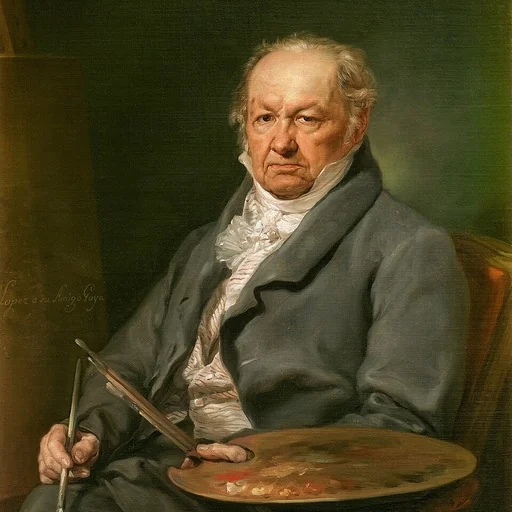
Francisco José de Goya y Lucientes (; Spanish: ; 30 March 1746 – 16 April 1828) was a Spanish romantic painter and printmaker.

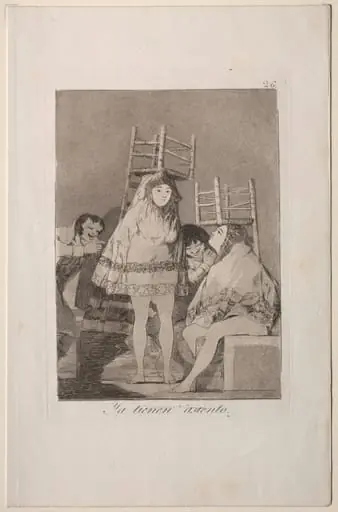 They've Already Got a Seat, Plate 26
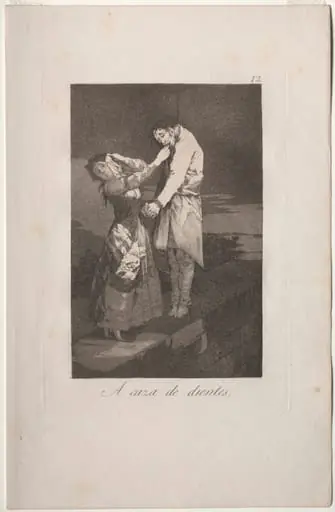 Out Hunting for Teeth, Plate 12
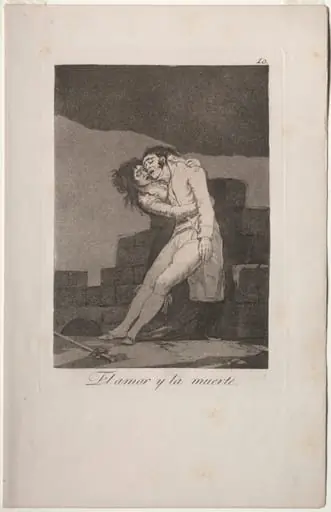 Love and Death, Plate 10
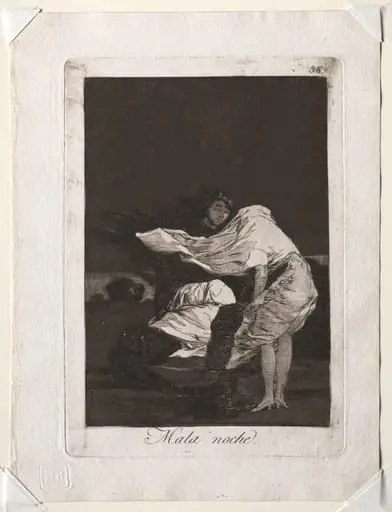 A Bad Night, Plate 36
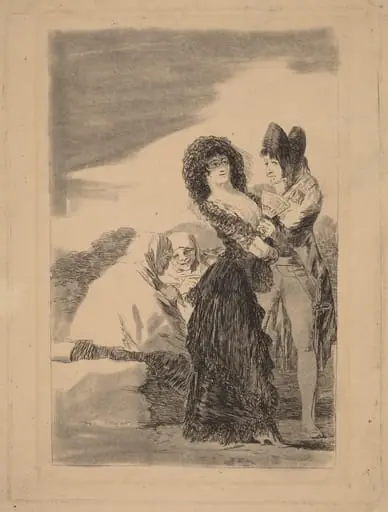 Tal para qual (Two of a Kind)
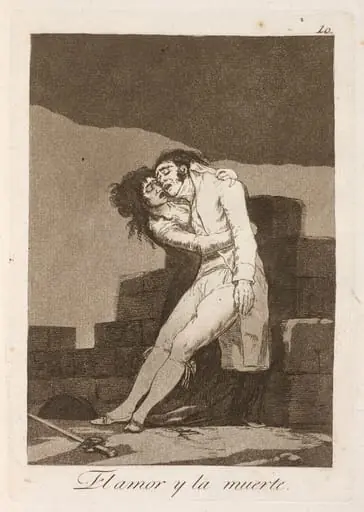 El amour y la muerte (Love and Death)
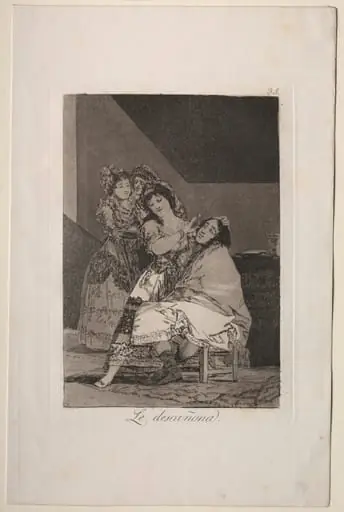 She Fleeces Him, Plate 35
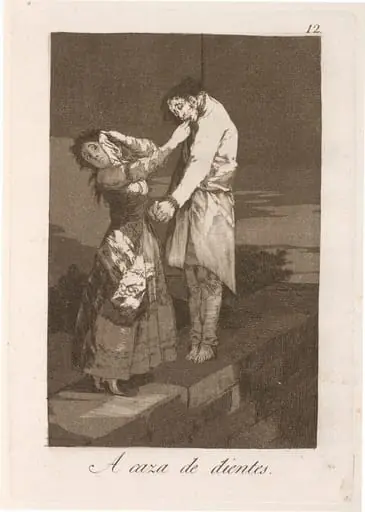 A caza de dientes (Out Hunting for Teeth)
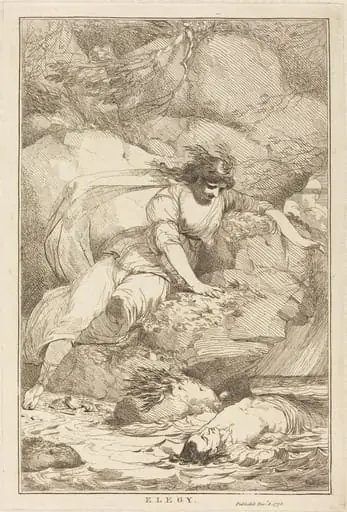 Elegy
Elegy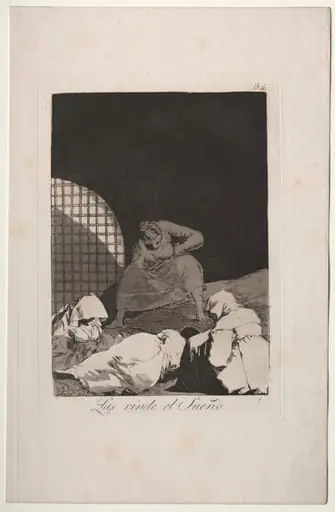 Sleep Overcomes Them, Plate 34
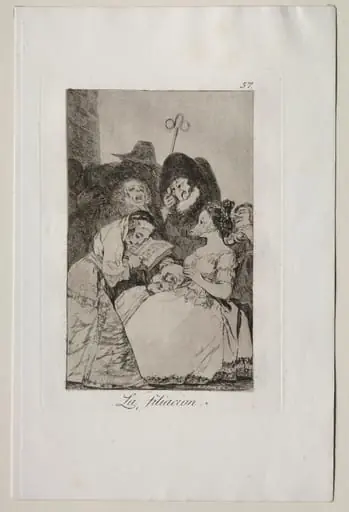 The Filiation, Plate 57
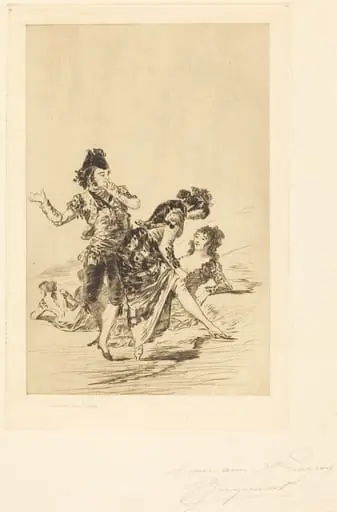 Spanish Scene (Scène espagnole)