Artwork
Blind Man's Bluff
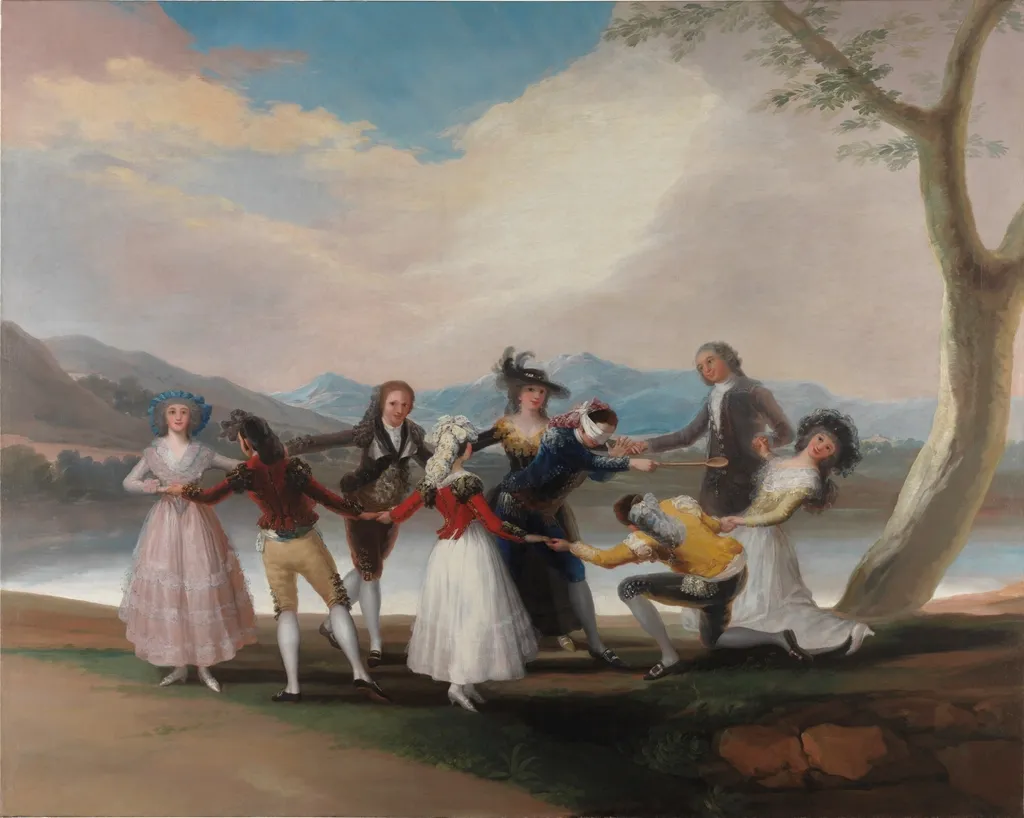
Blind Man's Bluff is an oil painting by the Rococo painting artist Francisco Goya. It dates from 1794 and is held in the collection of the Museo del Prado.
About this work
Overview
Francisco de Goya’s oil‑on‑linen work titled *Blind Man’s Bluff* presents a light‑hearted outdoor gathering of eight figures engaged in the children’s game of the same name. The participants, dressed in elaborate eighteenth‑century attire, form a circle around a blindfolded man who clutches a spoon, suggesting a playful, communal activity set against a bright, pastoral landscape.
Subject & Meaning
The composition captures a moment of social amusement, with the blindfolded participant symbolically ‘searching’ while the others, hand‑in‑hand, move around him. The inclusion of a spoon as his prop adds a whimsical touch, emphasizing the informal, festive atmosphere typical of aristocratic leisure scenes in the late eighteenth century.
Technique & Style
Executed in oil on linen, the piece reflects the Rococo sensibility favored by the Spanish court, employing soft, pastel hues and fluid brushwork. Goya’s handling of light renders the sky a clear blue dotted with pink clouds, while the detailed rendering of clothing and foliage demonstrates his skill in translating a tapestry cartoon into a vivid, painterly image.
History & Provenance
Originally designed as a cartoon for a tapestry intended for the Royal Palace of El Pardo, the work remained in Goya’s studio before entering the collection of the Museo del Prado in Madrid, where it is displayed alongside the preparatory sketch that informed its final execution.
Own this work as a print
Artist & collection
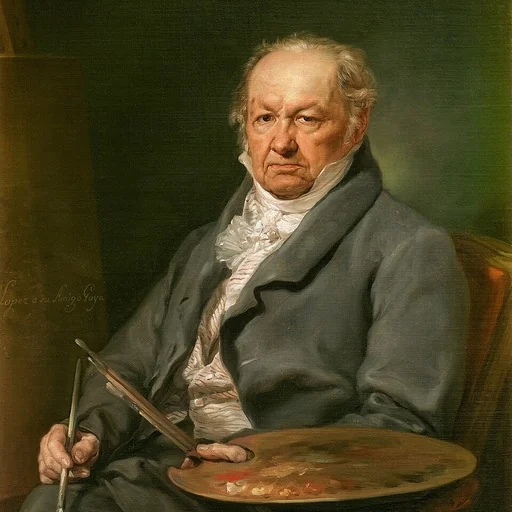
Artist
Francisco José de Goya y Lucientes (; Spanish: ; 30 March 1746 – 16 April 1828) was a Spanish romantic painter and printmaker.