Artwork
La maja desnuda
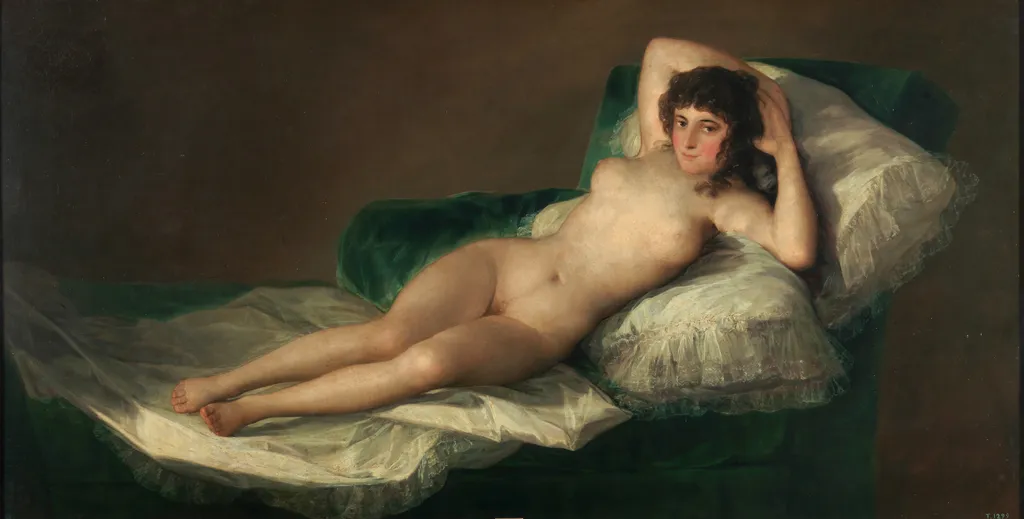
La maja desnuda is an oil painting by the Early Baroque Italian artist Francisco Goya. It dates from 1798 and is held in the collection of the Museo del Prado. Created circa 1797–1800, this oil-on-canvas work by Francisco de Goya depicts a reclining female figure on a cushion-laden surface.
About this work
Overview
Created circa 1797–1800, this oil-on-canvas work by Francisco de Goya depicts a reclining female figure on a cushion-laden surface. The painting has been part of the Museo del Prado’s collection in Madrid since the early twentieth century, arriving there in 1901.
Subject & Meaning
The figure is identified as a "maja," a term for a fashionable woman from the lower‑class districts of Madrid, recognizable by the attire she wears in the companion piece. In this version she is shown nude, emphasizing the sensuality of the pose rather than narrative content.
Technique & Style
Goya employs a rich, deep palette typical of oil paint, rendering flesh tones with subtle gradations of light and shadow. The composition is straightforward, centering the body against a neutral background, allowing the viewer’s focus to remain on the anatomical form and its tactile presence.
History & Provenance
The work is believed to have been commissioned by Manuel de Godoy, a prominent Spanish statesman, for a private cabinet dedicated to erotic or nude artworks. It was kept in Godoy’s personal collection before entering the Prado, where it has remained for more than a century.
Context
Goya produced a matching painting of the same woman clothed, known as La maja vestida. The two canvases were intended as pendants, traditionally displayed side by side, offering a contrast between clothed modesty and unabashed nudity within the same compositional framework.
Own this work as a print
Artist & collection
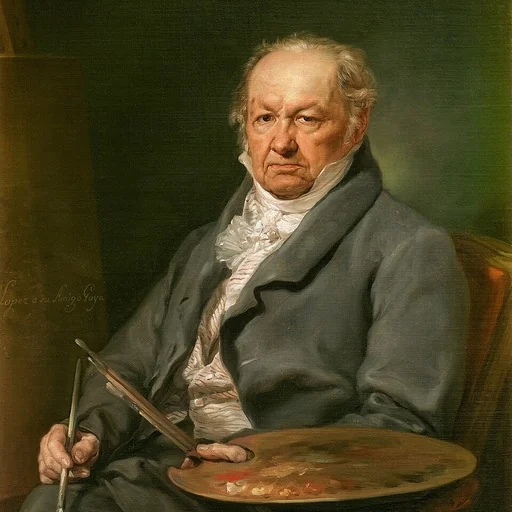
Artist
Francisco José de Goya y Lucientes (; Spanish: ; 30 March 1746 – 16 April 1828) was a Spanish romantic painter and printmaker.