Artwork
Queen of Spain Maria Louisa, née Bourbon-Parma
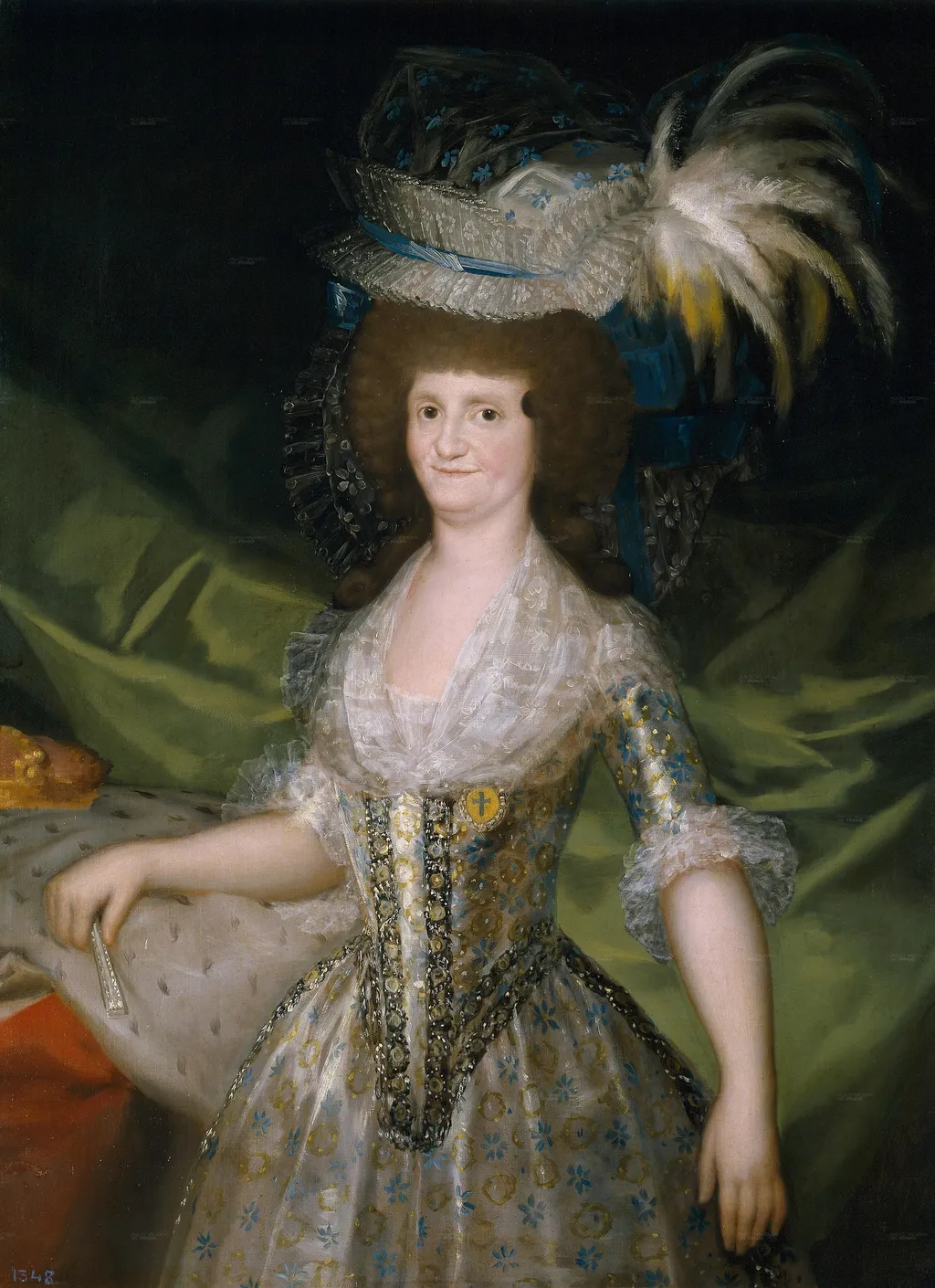
Queen of Spain Maria Louisa, née Bourbon-Parma is an oil painting by the Early Baroque Italian artist Francisco Goya. It dates from 1796 and is held in the collection of the Museo del Prado.
About this work
Overview
Francisco Goya’s 1796 oil portrait presents Maria Luisa of Parma, queen consort of Spain, in regal attire. She is shown against a dark background that accentuates her white dress with blue‑gold patterning, a feathered hat, and a delicate fan in her left hand. The composition balances the figure with a dark table and a red fruit bowl, creating a formal yet intimate courtly scene.
Subject & Meaning
The work records the queen’s status through the inclusion of a royal mantle and crown, symbols of her authority within the Spanish monarchy. By placing her in a poised, contemplative pose, Goya underscores both her personal elegance and her role as a political figure during a period of shifting European alliances.
Technique & Style
Goya employs soft, layered brushwork to render the queen’s skin and fabrics, achieving a subtle texture that catches light. The dark, almost tenebristic backdrop recalls early Baroque Italian portraiture, while the luminous dress and intricate details reflect the artist’s synthesis of traditional master techniques with his emerging personal style.
History & Provenance
Created in 1796, the portrait entered the Spanish royal collection and later became part of the Museo del Prado’s holdings in Madrid. It remains a key example of Goya’s early court commissions, illustrating his role as a painter to the Spanish monarchy before his later, more politically charged works.
Own this work as a print
Artist & collection
Artist
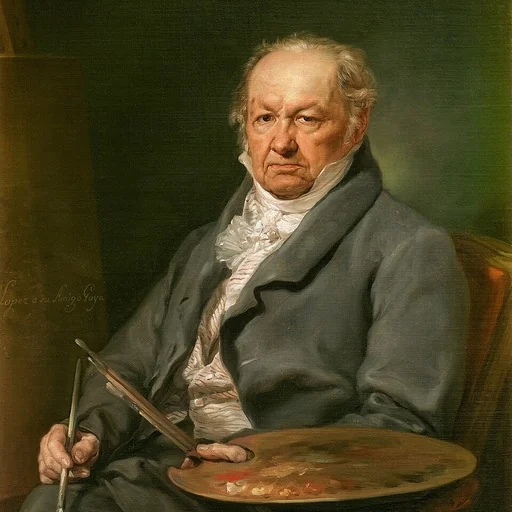
Francisco José de Goya y Lucientes (; Spanish: ; 30 March 1746 – 16 April 1828) was a Spanish romantic painter and printmaker.