Artwork
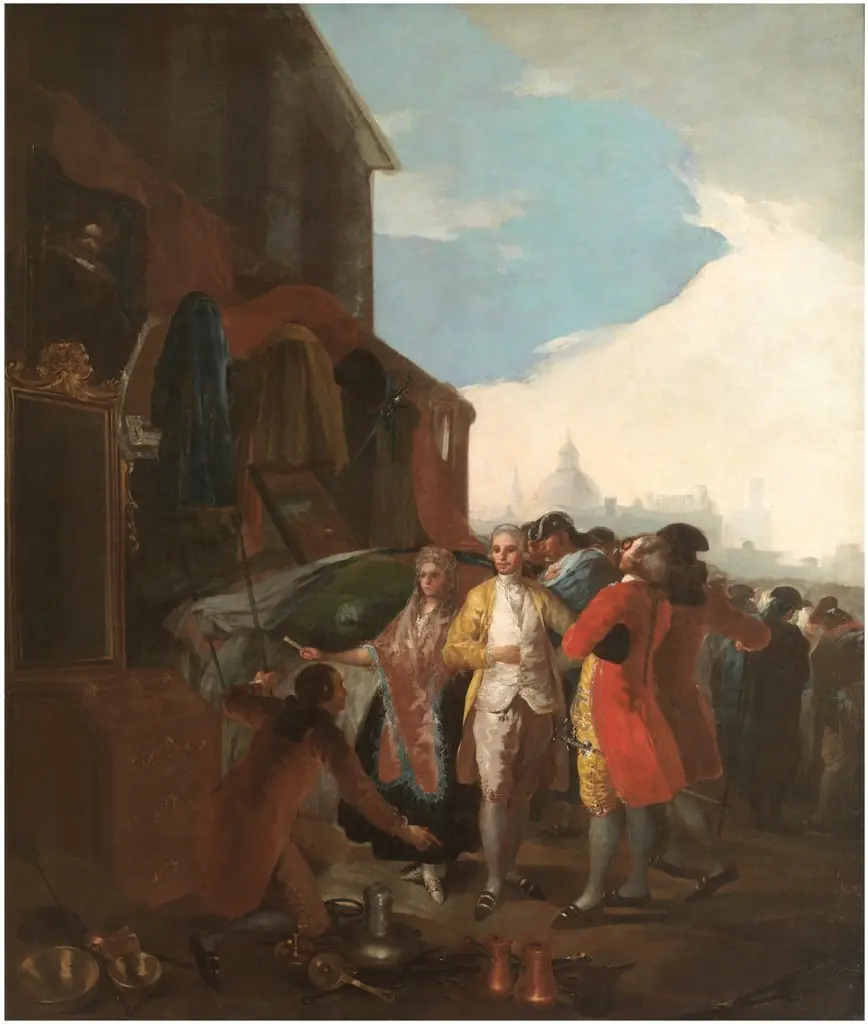
The Crockery Vendor
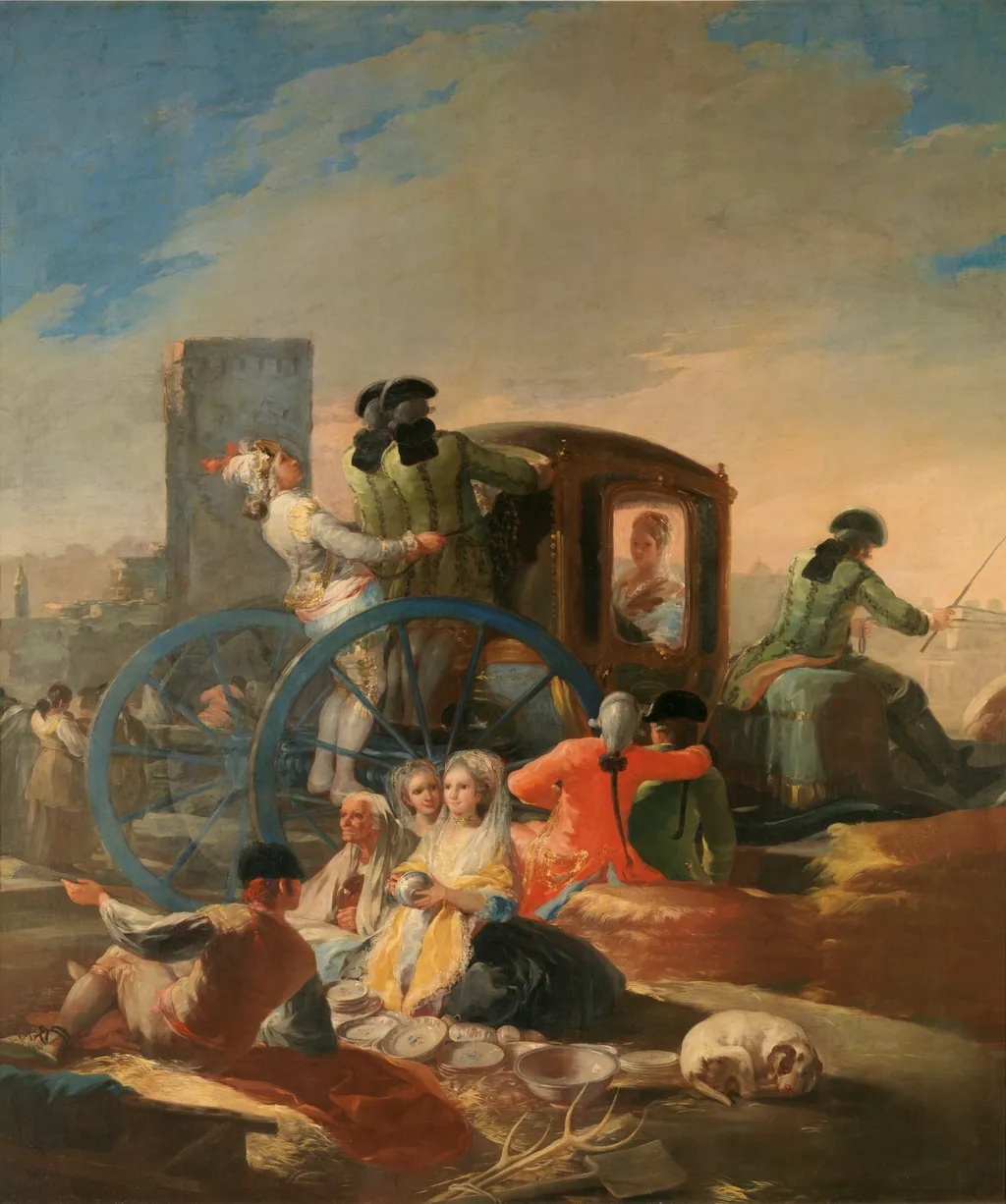
The Crockery Vendor is an oil painting by the Rococo painting artist Francisco Goya. It dates from 1790 and is held in the collection of the Museo del Prado.
About this work
Overview
Francisco Goya painted *The Crockery Vendor* in 1790, employing oil on canvas. The work belongs to the Rococo period and is currently part of the Museo del Prado’s collection. It presents an animated street scene populated by figures in period dress, a carriage, and an assortment of pottery and tableware, all set against a clear sky and a stone edifice in the distance.
Subject & Meaning
The composition captures a bustling market moment: a man in a green coat clings to a carriage while a woman in a white dress and yellow shawl holds a small bowl, surrounded by onlookers and vendors arranging dishes and ceramics on the ground. The lively arrangement suggests everyday commerce and social interaction, reflecting the ordinary life of late‑18th‑century Spain.
Technique & Style
Goya’s handling of oil paint is marked by a bright palette of blues, yellows, and greens that animate the scene. Loose brushwork and soft modeling convey movement, while the Rococo sensibility appears in the decorative treatment of the pottery and the airy, light‑filled atmosphere. The artist balances detail in the figures with broader, impressionistic background elements.
History & Provenance
Created during Goya’s early career, the painting exemplifies his transition from traditional Spanish academic training toward a more personal visual language. After remaining in private hands, it entered the national collection and is now displayed at Madrid’s Museo del Prado, where it contributes to the museum’s representation of Goya’s formative period.
Own this work as a print
Artist & collection
Artist
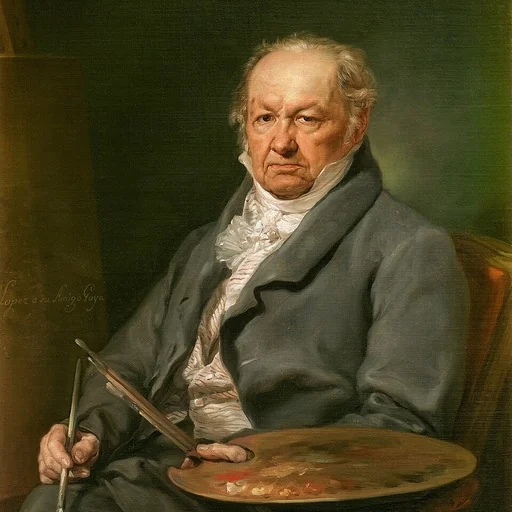
Francisco José de Goya y Lucientes (; Spanish: ; 30 March 1746 – 16 April 1828) was a Spanish romantic painter and printmaker.