Artwork
Saint Jerome
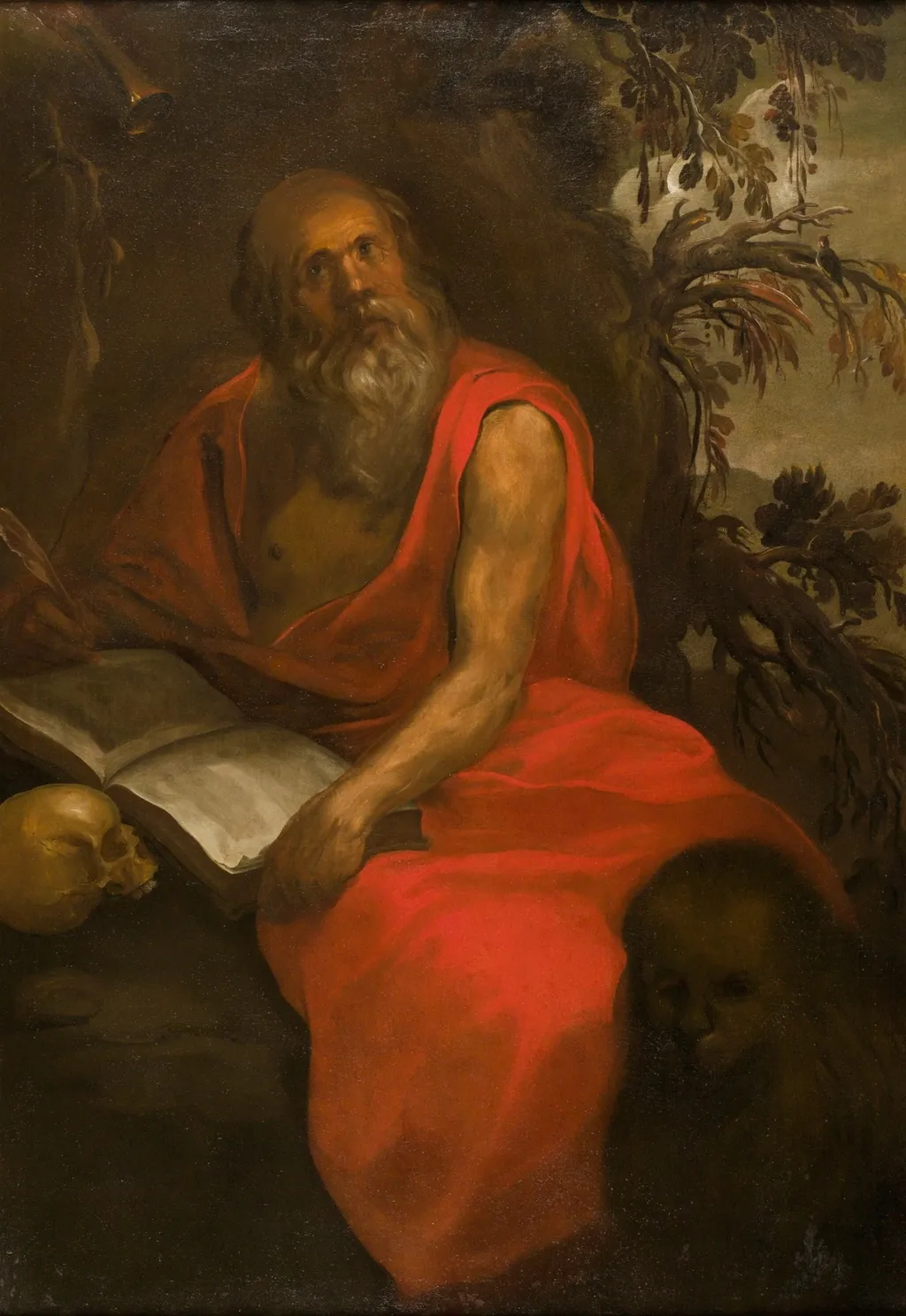
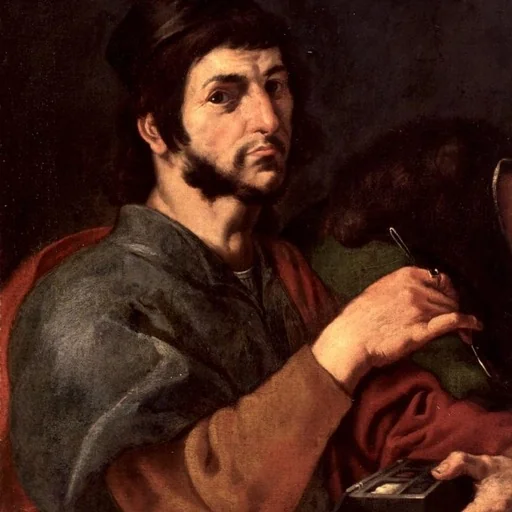
Saint Jerome is an oil painting by the Early Baroque Italian artist Francisco Herrera the Elder. It dates from 1640 and is held in the collection of the Museo del Prado.
About this work
Overview
Created in 1640 by the Sevillian painter Francisco Herrera the Elder, this oil on canvas portrays Saint Jerome in a contemplative pose. The composition centers the aged saint, whose white beard and furrowed visage convey a sense of scholarly gravity, set against a muted, shadowy backdrop that emphasizes his solitary presence.
Subject & Meaning
Jerome is shown seated with an open book in one hand, a traditional symbol of his biblical translations, while a skull rests on the table beside him, alluding to mortality and the transience of earthly life. The juxtaposition of the scholarly text and the memento mori invites reflection on spiritual devotion and the fleeting nature of human existence.
Technique & Style
The painting employs the chiaroscuro technique characteristic of early Baroque art, using strong contrasts between the luminous red of the saint’s robe and the surrounding darkness. Herrera’s handling of light renders the textures of the beard, fabric, and skull with tactile realism, while the subdued background recedes, focusing attention on the figure.
History & Provenance
After its completion, the work entered the Spanish royal collections and eventually became part of the Museo del Prado’s holdings. It remains a representative example of Herrera the Elder’s contribution to the Seville school, illustrating the city’s engagement with broader Italian Baroque influences during the mid‑17th century.
Own this work as a print
Artist & collection
Artist
Francisco Herrera (1576–1656) was a Spanish painter, born in Seville. He was the founder of the Seville school. He is known as El viejo, "the elder," to distinguish him from his son Francisco Herrera the Younger, also a noted painter.