Artwork
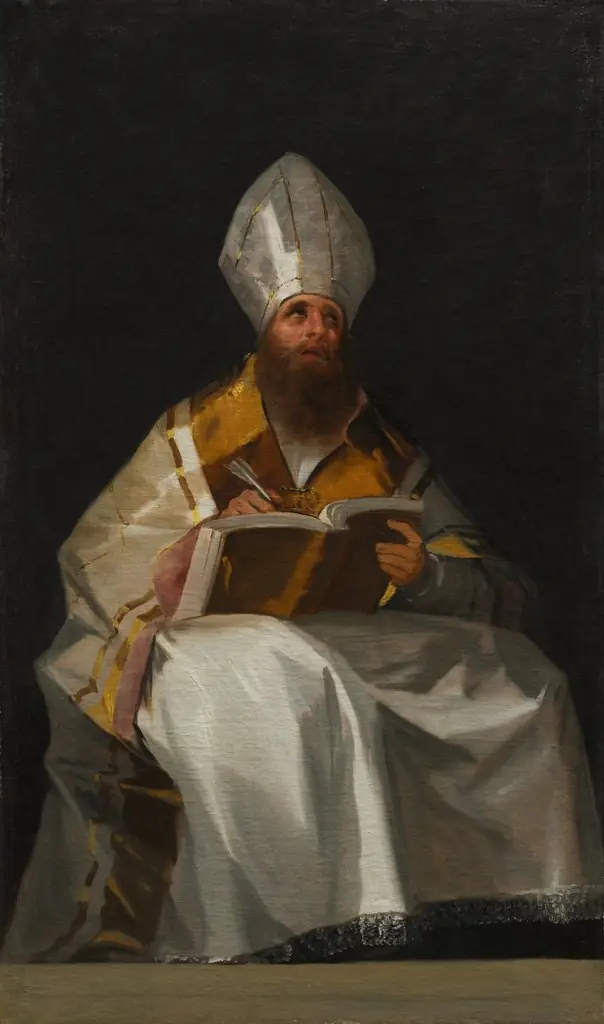
El papa San León I Magno
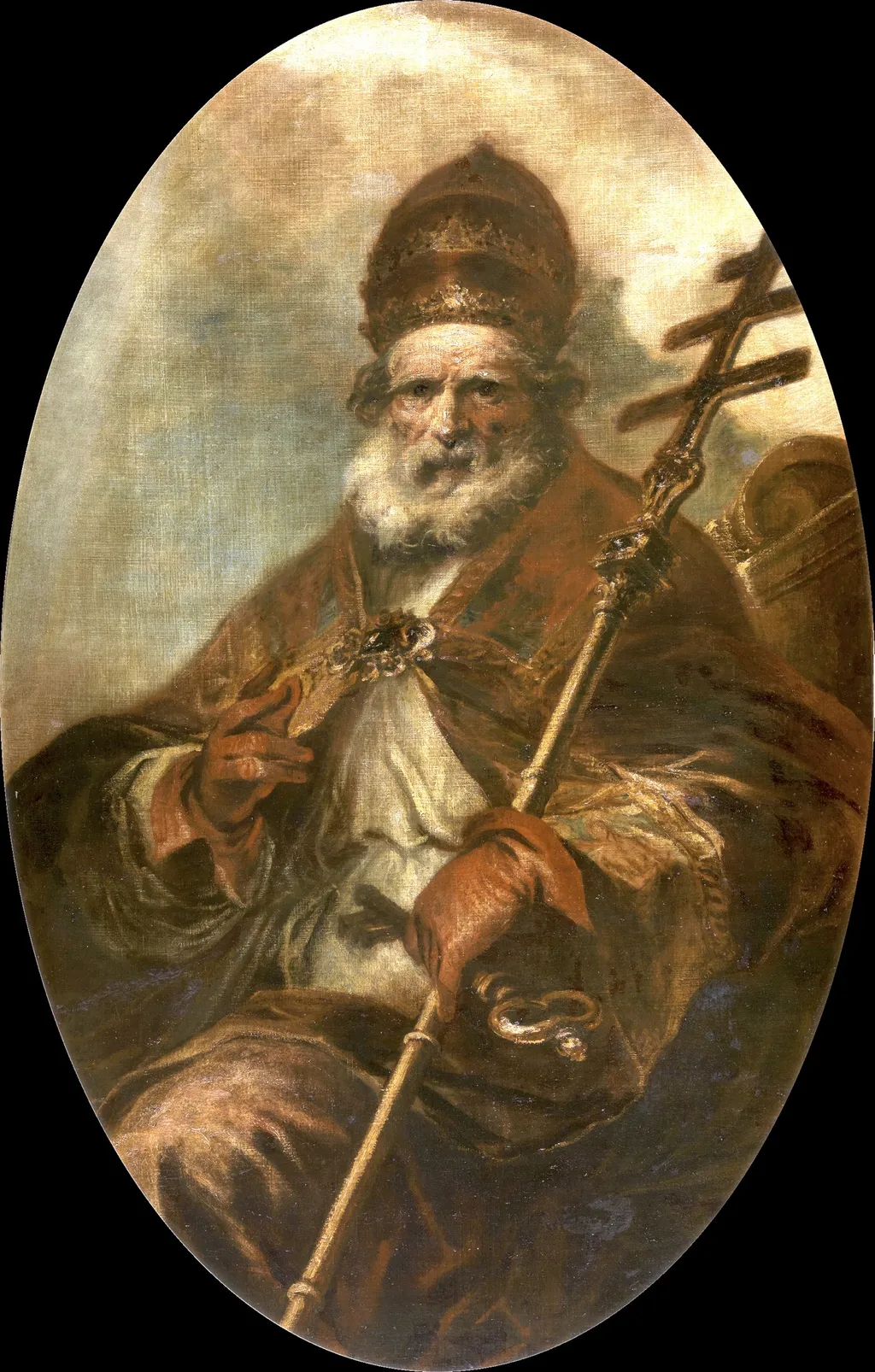
El papa San León I Magno is an oil painting by the Early Baroque Italian artist Francisco Herrera the Younger. It dates from 1601 and is held in the collection of the Museo del Prado.
About this work
Overview
Created in 1601, this oil on canvas by Francisco Herrera the Younger portrays Pope Leo I. The work is part of the collection of the Museo del Prado, where it remains on public display.
Subject & Meaning
The figure is a solemn, bearded man wearing a tall, pointed mitre and heavy, earth‑toned robes. He holds a curved crosier in his right hand and a large, chained key draped around his neck, symbols traditionally associated with papal authority and the keys of Saint Peter.
Technique & Style
Herrera employs a restrained chiaroscuro, allowing a soft, focused light to illuminate the pope’s face while the surrounding space recedes into shadow. The muted palette of browns and grays reinforces the work’s contemplative mood and emphasizes the texture of the fabrics and metal.
History & Provenance
The painting entered the Spanish royal collection in the early 17th century and was later transferred to the Museo del Prado, where it has been catalogued since the museum’s foundation. Its attribution to Herrera the Younger has been consistently affirmed by scholars.
Context
Executed during the Counter‑Reformation, the portrait reflects the era’s emphasis on papal authority and the visual reinforcement of Catholic hierarchy. Herrera the Younger, active in Madrid, often painted religious subjects for royal patrons, aligning his work with contemporary devotional art.
Artist & collection
Artist
Francisco Herrera the Younger filled Spanish church walls with oil paintings of saints and holy visions.