Artwork
The Sack of Rome
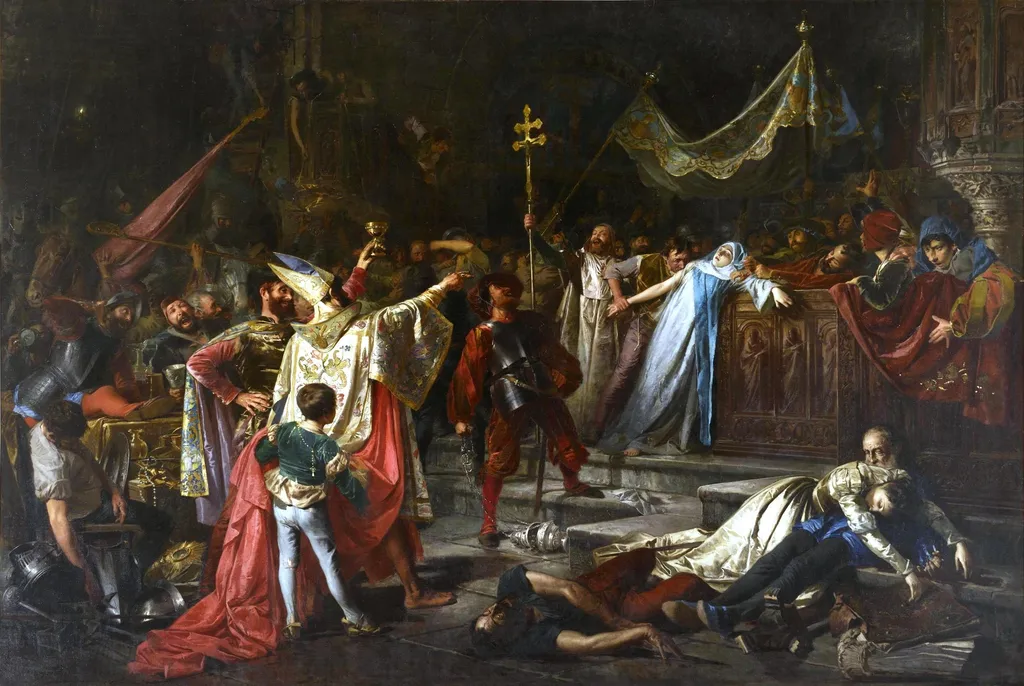
The Sack of Rome is an oil painting by Francisco Javier Amérigo y Aparici. It dates from 1894 and is held in the collection of the Museo del Prado.
About this work
Overview
Francisco Javier Amérigo y Aparici’s 1894 oil painting *The Sack of Rome* portrays a tumultuous episode of violence and disorder. The canvas is dominated by a crowded foreground where figures lie wounded or scramble to escape, while a mass of armed individuals looms in the distance. The overall composition conveys a palpable sense of panic and urgency.
Subject & Meaning
The work assembles emblematic relics of the historical assault—discarded armor, a fallen chalice, a crosier, and a rosary—suggesting both the physical devastation and the spiritual loss inflicted upon the city. By juxtaposing these objects with the chaotic human drama, the painting reflects on the collision of martial aggression and religious sanctity during the sack.
Technique & Style
Amérigo employs a pronounced chiaroscuro, using stark contrasts of light and shadow to model forms and heighten tension. The illumination spotlights the suffering figures, while deeper shadows recede into the background, creating depth and a dramatic atmosphere. The brushwork balances detailed rendering of objects with looser handling of the crowd, reinforcing the sense of upheaval.
History & Provenance
Completed in 1894, *The Sack of Rome* entered the collection of Spain’s Museo del Prado, where it remains on display. The painting exemplifies Amérigo’s focus on historic narratives, aligning with the 19th‑century Spanish tradition of dramatizing national and European events through academic oil painting.
Own this work as a print
Artist & collection
Artist
Francisco Javier Amérigo y Aparici
Francisco Javier Amérigo y Aparici (2 June 1842, Valencia - 28 March 1912, Madrid) was a Spanish painter who specialized in historical scenes.
