Artwork
Bodegón
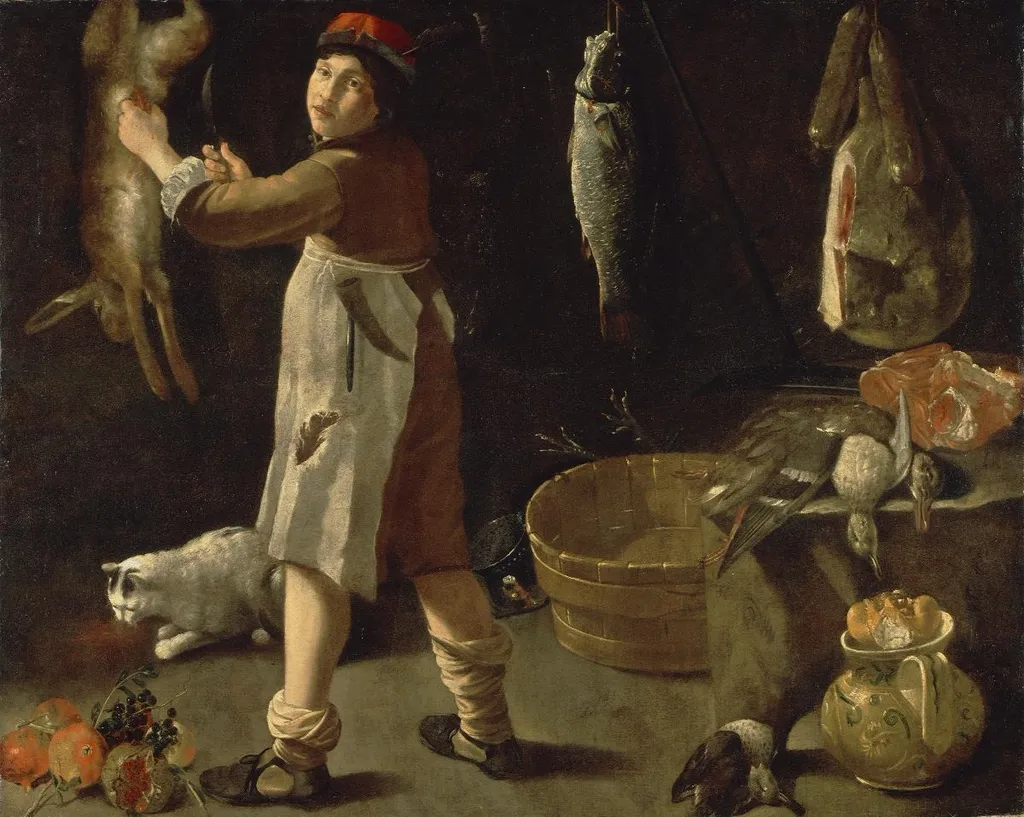
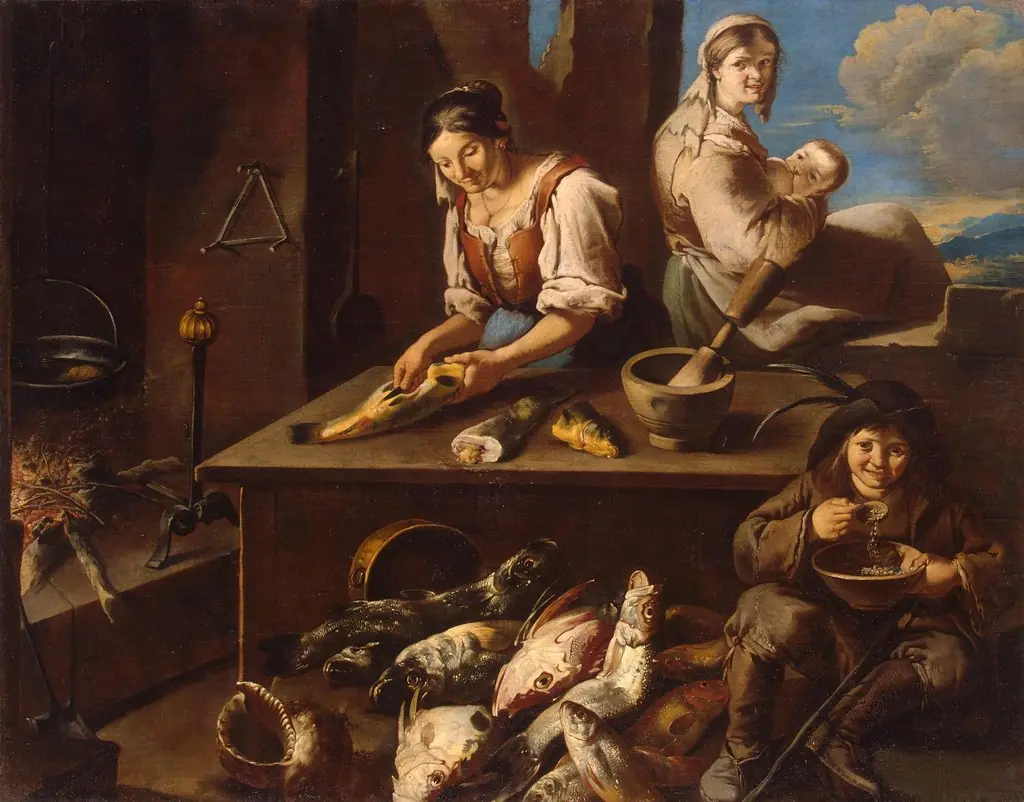
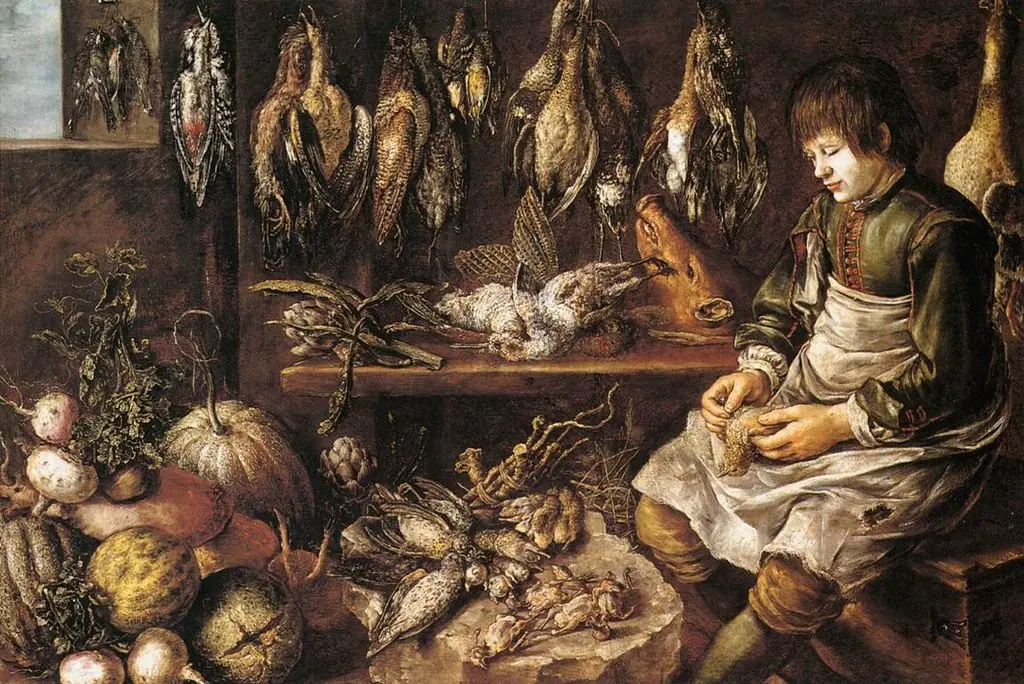
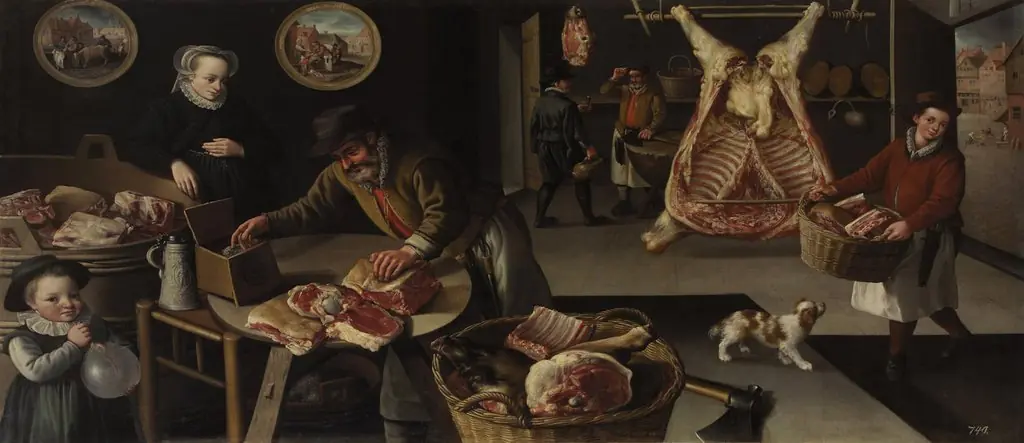
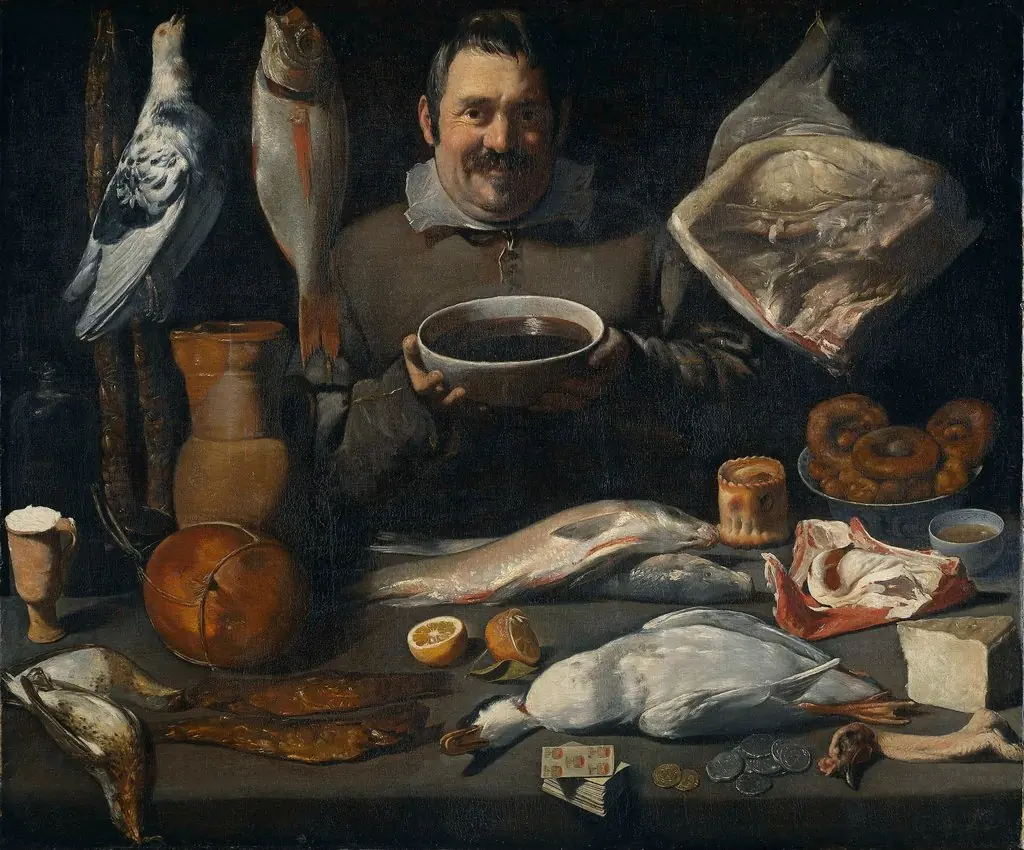
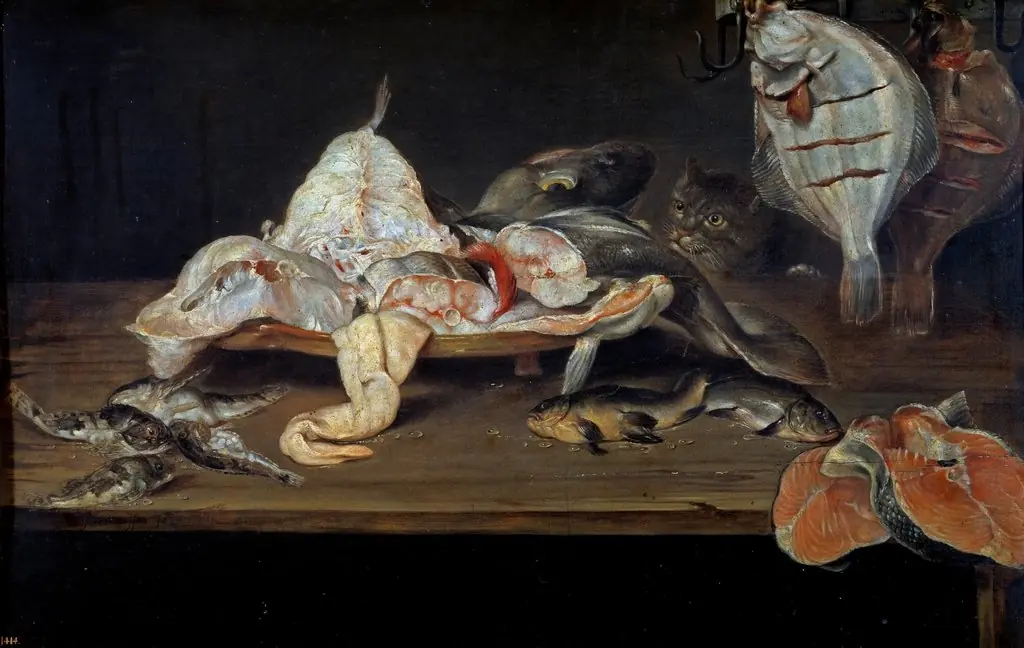
Bodegón is an oil painting by the Early Baroque Italian artist Francisco Lopez Caro. It dates from 1625 and is held in the collection of the Kunsthaus Zürich.
About this work
Overview
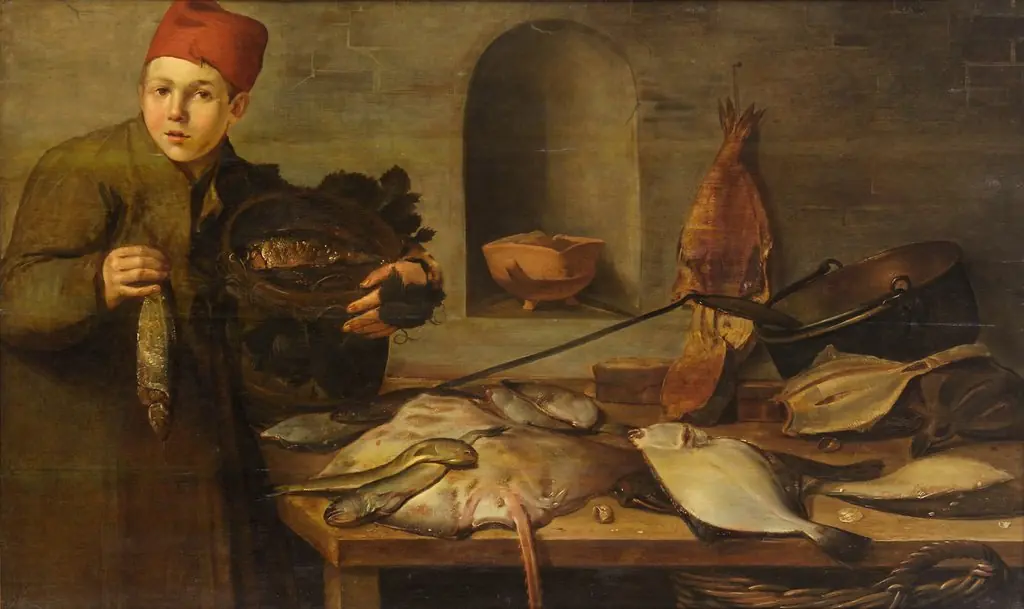
Bodegón is a 1625 oil painting by Spanish Baroque artist Francisco López Caro, characterized by its depiction of a young boy engaged in a task amidst everyday objects in a dimly lit room.
Subject & Meaning
The painting focuses on a youthfully neutral boy, clad in a brown shirt, white apron, and red hat, holding a knife and meat. His calm, task-oriented posture and the surrounding still-life elements (basket, cat, floral vase) evoke a sense of quiet, introspective domesticity.
Technique & Style
López Caro employs chiaroscuro to create dramatic depth and tension, with a warm, singular light source illuminating the scene from the left. This contrasts with the overall subdued atmosphere, highlighting the artist's early Baroque influences.
History & Provenance
Created in 1625, Bodegón is now part of the Kunsthaus Zürich collection. López Caro, a pupil of Juan de las Roelas, later shifted his focus from portraits to other subjects after moving to Madrid around 1660, before his death in 1662.
Context
While primarily a portrait painter earlier in his career, López Caro's work on Bodegón reflects his engagement with the still-life and everyday scene traditions common in early Baroque, particularly influenced by his Spanish and Italian contemporaries.
Legacy
As a relatively lesser-documented work by López Caro, Bodegón's significance lies in its representation of the artist's stylistic evolution and his contribution to the broader early Baroque movement in Spain, though its direct influence on subsequent art is not prominently recorded.
Artist & collection
Artist
Francisco López Caro (1578–1662) was a Spanish painter of the Baroque period. Born in Seville, he was a pupil of Juan de las Roelas. He painted with indifferent success in Seville until about 1660, when he went to…