Artwork
Santa Catalina
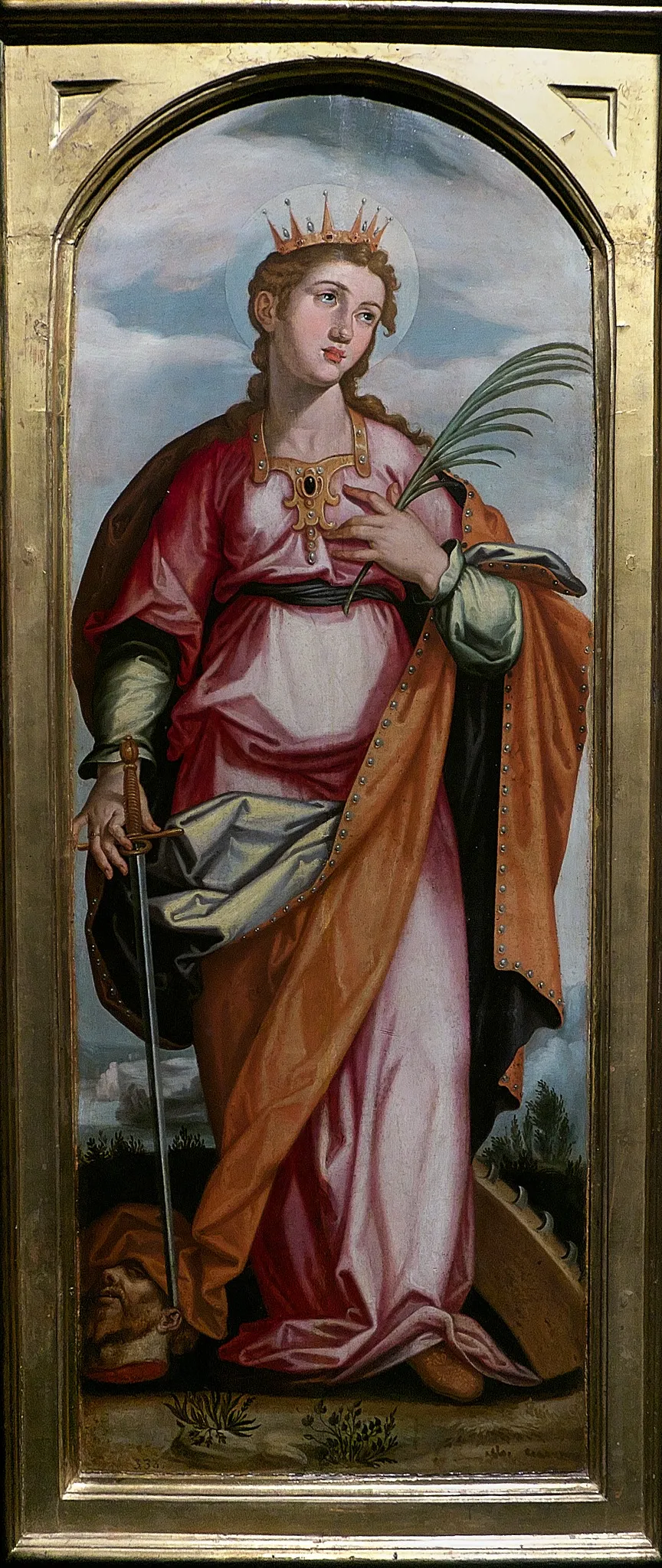
Santa Catalina is an oil painting by the Early Baroque Italian artist Francisco Pacheco. It dates from 1608 and is held in the collection of the Museo del Prado.
About this work
Overview
Created in 1608 by the Sevillian painter Francisco Pacheco, this oil on canvas presents a devotional image of Saint Catherine of Alexandria. The composition places the saint in a serene, sky‑filled setting, her calm gaze directed forward, while a kneeling figure at her feet emphasizes her elevated status.
Subject & Meaning
The saint is identified by traditional symbols: a crown denoting her royal lineage, a sword referencing her martyrdom, a palm frond signifying victory over death, and a spoked wheel alluding to the instrument of her attempted execution. These attributes collectively convey Catherine’s steadfast faith and intellectual virtue.
Technique & Style
Pacheco employs the early Baroque language of chiaroscuro, contrasting illuminated flesh tones with deeper shadows to model form and suggest depth. The pink robe, orange cape, and blue‑clouded background are rendered with layered oil glazes that enhance texture and a subtle three‑dimensionality.
History & Provenance
The painting is part of the collection of the Museo del Prado in Madrid. It reflects Pacheco’s dual role as a practicing artist and a theoretician; his treatise *Arte de la pintura* later codified Spanish painting practices of the 17th century.
Context
Executed during a period when Spanish artists were assimilating Italian Baroque influences, the work illustrates the devotional genre favored by Counter‑Reformation patrons. Pacheco’s emphasis on accurate iconography aligns with the era’s demand for clear, didactic religious imagery.
Artist & collection
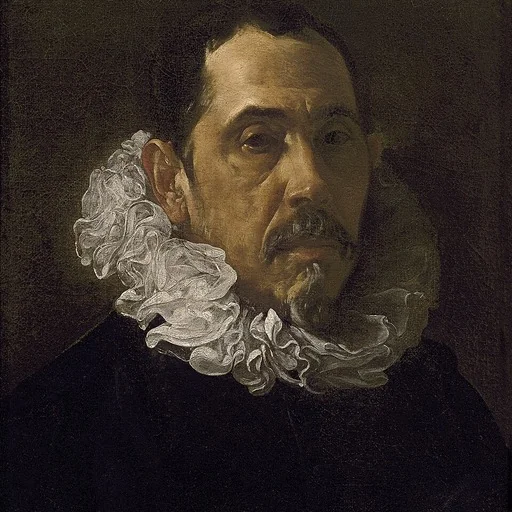
Artist
Francisco Pérez del Río (bap. 3 November 1564 – 27 November 1644), known by his pseudonym Francisco Pacheco, was a Spanish painter, best known as the teacher of Alonso Cano and Diego Velázquez, as well as the latter's…
