Artwork
Cleopatra's Needle
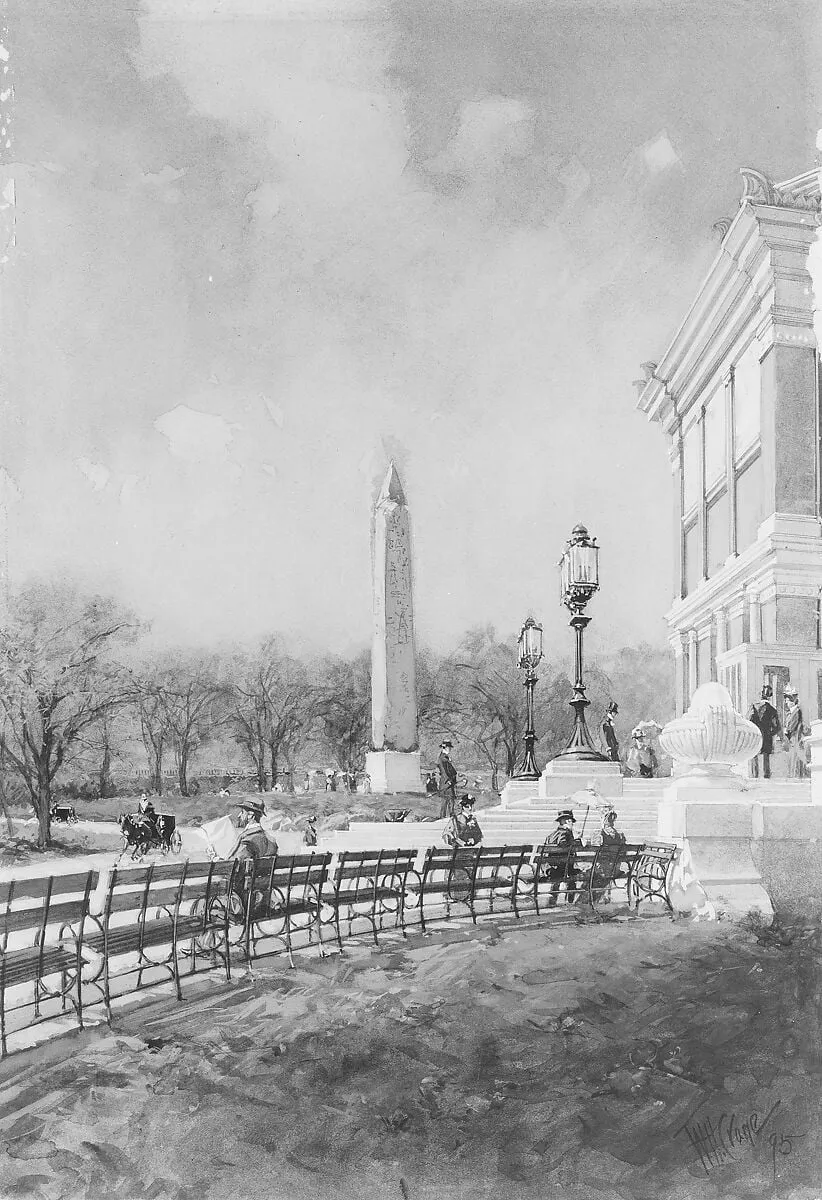
Cleopatra's Needle is a watercolor work on paper by the American Impressionist artist Frank Crane. It dates from 1895 and is held in the collection of the Metropolitan Museum of Art.
About this work
Overview
Frank Crane’s 1895 work, rendered in graphite, watercolor and gouache on off‑white wove paper, records a winter scene in New York’s Central Park. The composition centers on the ancient Egyptian obelisk known as Cleopatra’s Needle, surrounded by leafless trees, a light dusting of snow, and a few bundled pedestrians.
Subject & Meaning
The painting juxtaposes a three‑thousand‑year‑old monument with a contemporary urban landscape, highlighting the curiosity and wonder that the obelisk inspired when it was installed in the park in the late nineteenth century. The quiet, snow‑filled setting underscores the monument’s timeless presence amid everyday city life.
Technique & Style
Crane employs a delicate watercolor wash to convey the muted winter light, while graphite and gouache add definition to the stone shaft and surrounding foliage. The restrained palette and soft edges create a hushed atmosphere, allowing the obelisk’s stark geometry to dominate the composition.
History & Provenance
Cleopatra’s Needle was one of three Egyptian obelisks relocated to major Western cities during the 1800s. Arriving in Central Park in 1881, it quickly became a focal point for visitors. Crane’s rendering, produced a few years after the monument’s installation, reflects the period’s fascination with antiquities displayed in public spaces.
Context
The work belongs to the American Wing’s collection of late‑nineteenth‑century American watercolors, a genre that often documented urban development and public monuments. Its subject aligns with contemporary interests in archaeology, imperial artifacts, and the integration of historic objects into modern civic environments.
Artist & collection

