Artwork
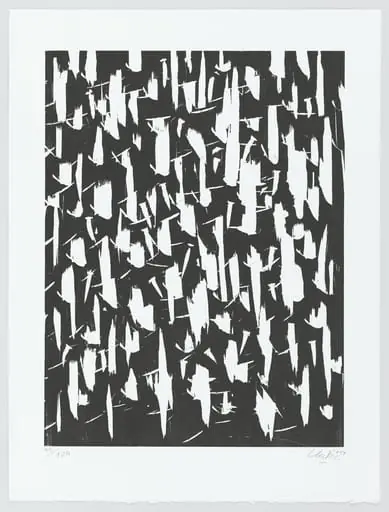
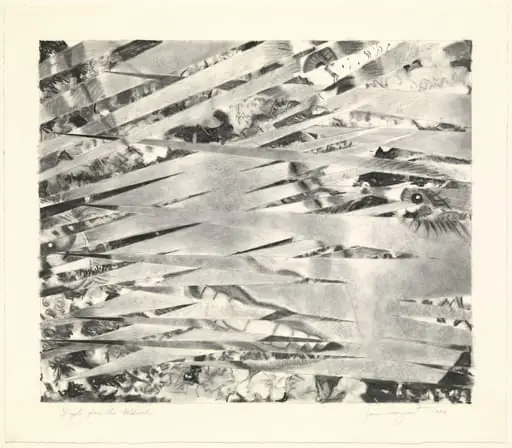
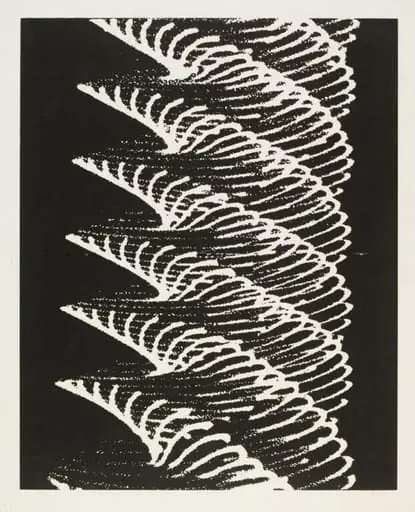
Analog-Grafik P1 (Pendular Oscillogram)
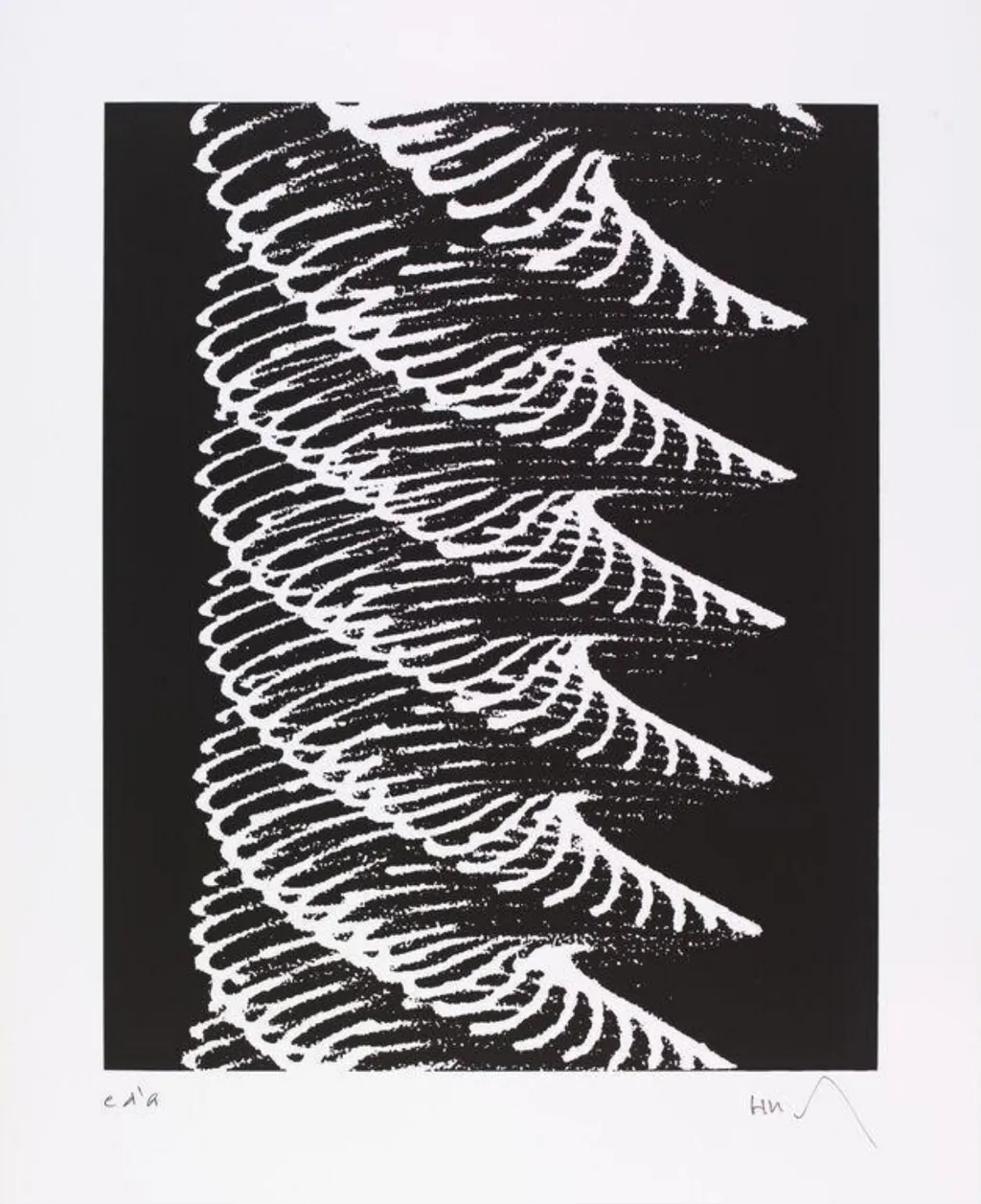
Analog-Grafik P1 (Pendular Oscillogram) is a print by Herbert W. Franke. It dates from 1970 and is held in the collection of the Victoria and Albert Museum.
About this work
Herbert Franke made graphic prints using early computer parts. An analogue device drew curves on a tiny screen. The pictures came out blurry and soft.
He darkened the room and moved his camera while shooting. That spread the lines into wider shapes. The museum calls this work a silkscreen print from 1970.
The same museum keeps the original print today.
Look up Franke, Herbert W.
Overview
Analog-Grafik P1 (Pendular Oscillogram) is a 1970 silkscreen print derived from photographic records of electronic signals generated by an analog computer. Created by Herbert Franke between 1955 and 1956, the work translates transient visual outputs from a cathode-ray oscillograph into a stable printed form, bridging early computational experimentation with traditional printmaking.
Subject & Meaning
The image captures the motion of pendular oscillations—mathematical waveforms generated by an analog device designed by Franke’s collaborator Franz Raimann. These abstract patterns reflect the behavior of mechanical systems, not symbolic narratives. The work embodies a fascination with invisible processes made visible, prioritizing scientific form over expressive intent.
Technique & Style
These photographic results were later transferred to silkscreen, preserving the motion-induced softness and geometric rhythm of the original electronic output.
Franke projected electronic signals onto a small oscillograph screen, producing faint, blurred lines. To amplify and stabilize the imagery, he photographed the screen in a darkened room while moving the camera, creating elongated, fan-like traces. These photographic results were later transferred to silkscreen, preserving the motion-induced softness and geometric rhythm of the original electronic output.
History & Provenance
The original analog-generated images were produced between 1955 and 1956. The silkscreen version, made in 1970, was selected for exhibition at the Venice Biennale that year. The print remains in the museum’s collection, serving as a physical artifact of an experimental phase in computer-generated art that predated widespread digital technology.
Context
Franke’s work emerged during a period when artists and scientists began exploring computers as creative tools. Analog systems, though rudimentary, offered new ways to visualize mathematical relationships. His approach stood apart from later digital art by relying on continuous physical signals rather than discrete data, situating his practice at the intersection of physics, engineering, and visual culture.
Legacy
Analog-Grafik P1 represents an early instance of algorithmic image-making using non-digital hardware. Though obscure at the time, Franke’s method influenced later generations interested in the aesthetics of machine-generated form. The work remains a quiet testament to the material constraints and inventive solutions of pre-digital computational art.
Artist & collection
Artist