Artwork
Untitled
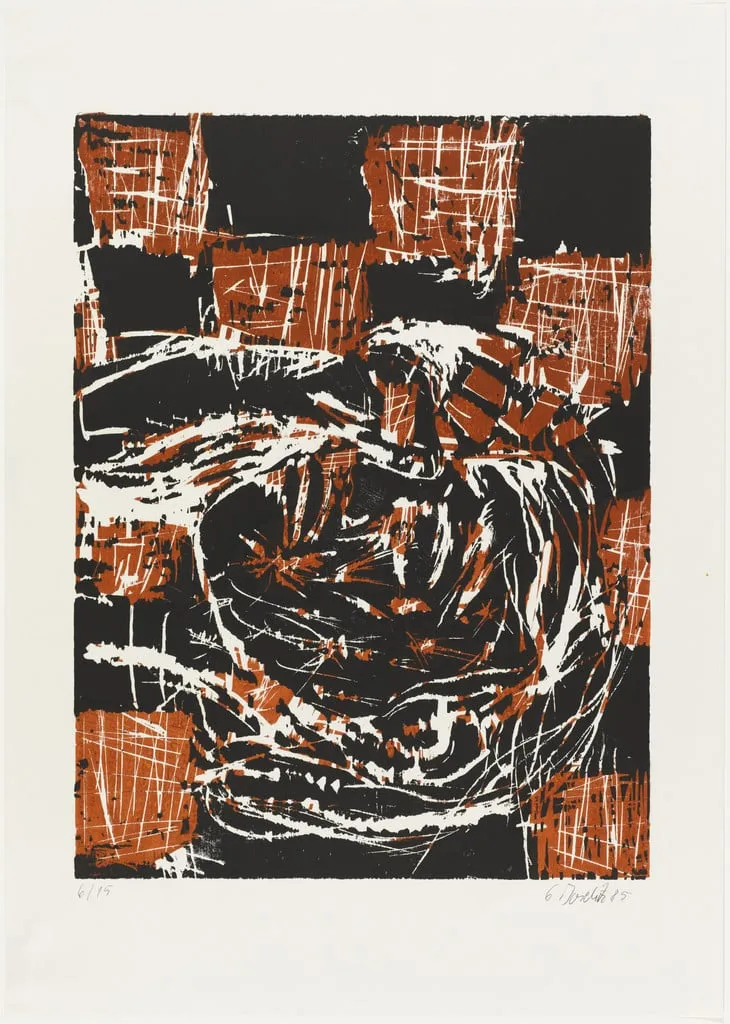
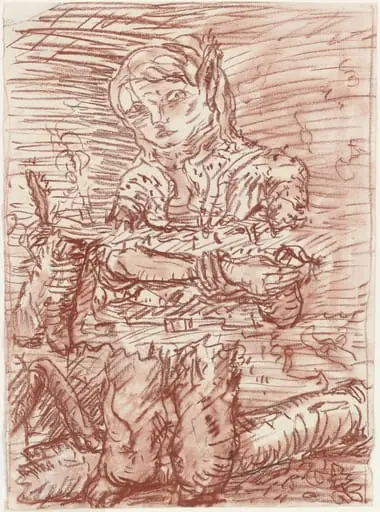
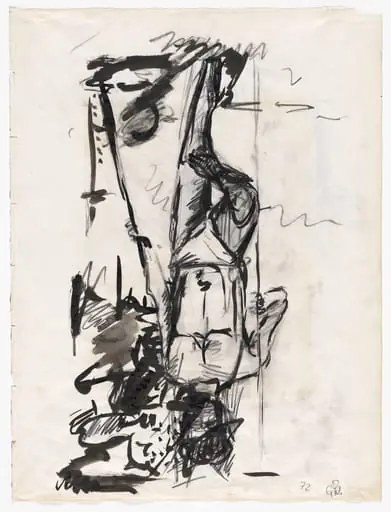
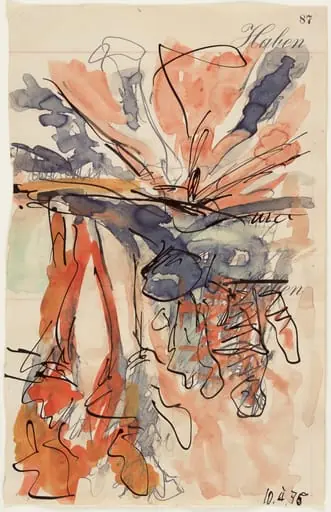
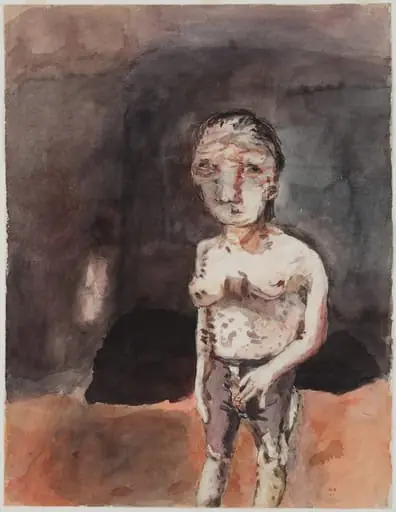
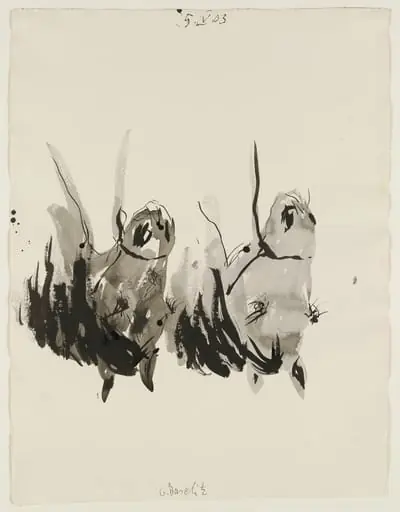
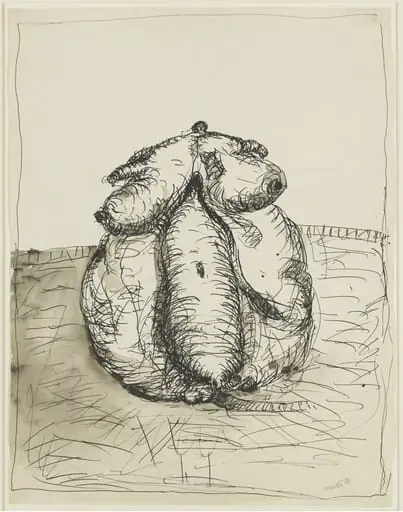
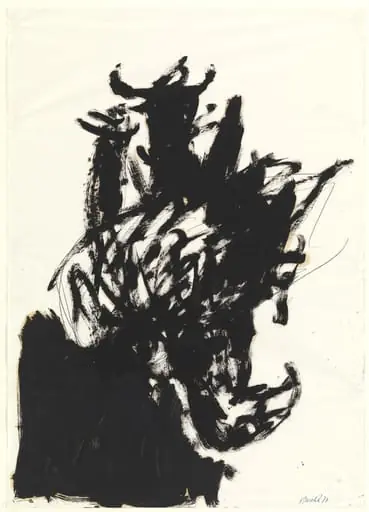
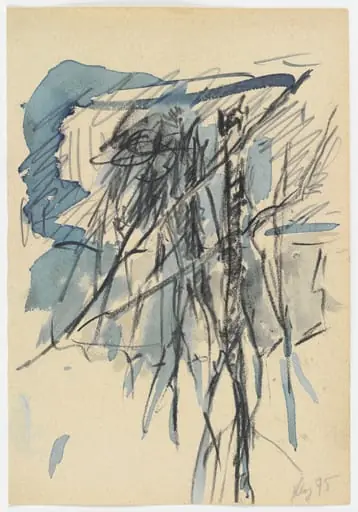
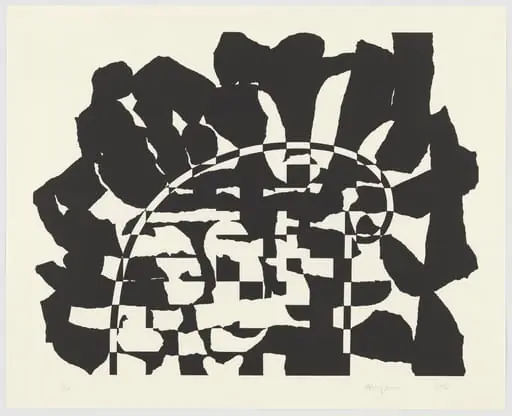
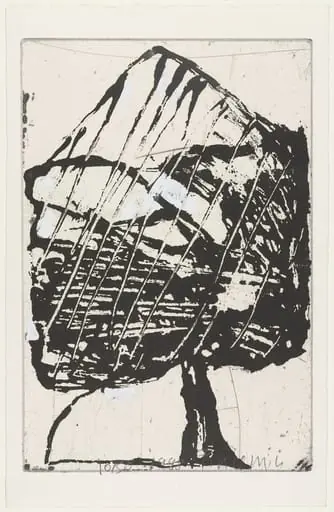
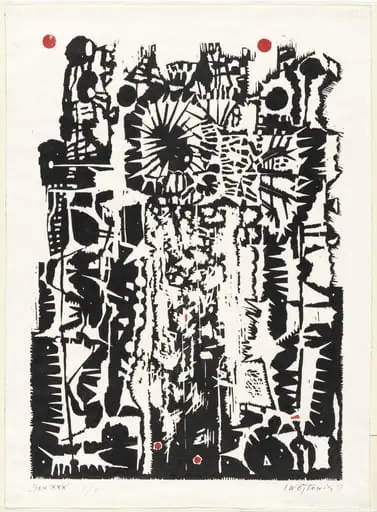
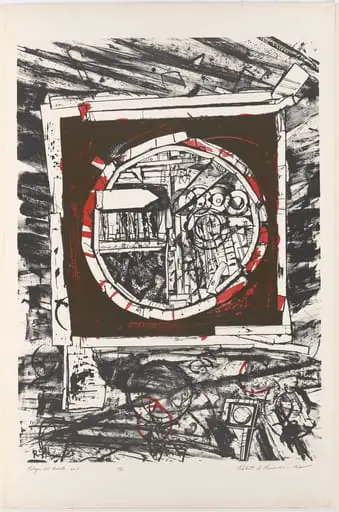
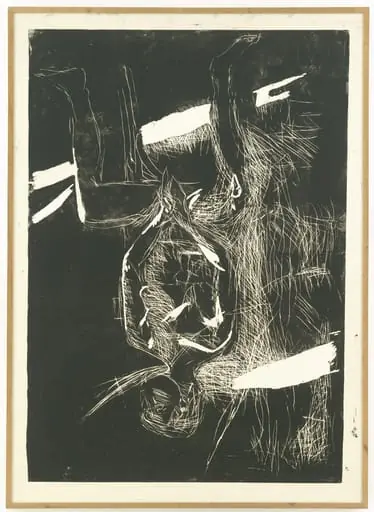
Untitled is an ink print by Georg Baselitz. It dates from 1985 and is held in the collection of the Museum of Modern Art.
About this work
Overview
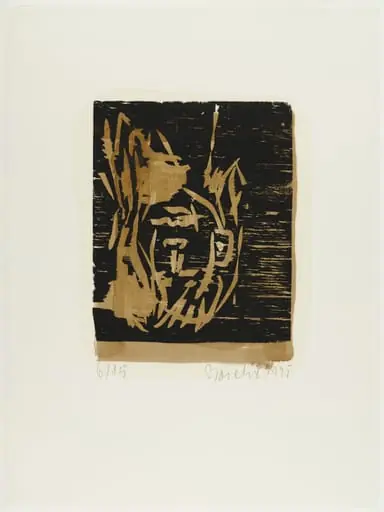
Created in 1985, this woodcut by Georg Baselitz is part of The Museum of Modern Art’s collection. It is a black-and-rusty-orange print made by carving into a wooden block and pressing ink onto paper. The image presents a distorted human face rendered with abrupt, angular forms. The technique emphasizes texture and contrast, characteristic of Baselitz’s approach to printmaking during this period.
Subject & Meaning
Here, the face lacks clear features, instead appearing compressed and reassembled, evoking unease rather than portraiture.
The figure is a face rendered in a fractured, inverted manner, suggesting psychological tension or physical disruption. Baselitz often reversed his subjects to challenge conventional representation. Here, the face lacks clear features, instead appearing compressed and reassembled, evoking unease rather than portraiture. The distortion resists narrative clarity, inviting contemplation of identity and perception.
Technique & Style
The work employs traditional woodcut methods: lines are carved directly into the wood surface, creating bold, incised edges. Ink is applied to the raised areas, producing stark contrasts between black and the warm, oxidized orange. The rough, uneven textures result from the grain of the wood and the force of carving, giving the image a raw, tactile quality that aligns with Baselitz’s expressive aesthetic.
History & Provenance
This print was made in 1985 during a phase when Baselitz was intensively exploring print media alongside painting. It entered The Museum of Modern Art’s collection through acquisition, likely as part of a broader effort to document postwar German art. No prior ownership history beyond institutional acquisition is publicly documented, and it remains part of the museum’s permanent holdings.
Context
In the mid-1980s, Baselitz was engaged in redefining figurative art after decades of abstraction in European modernism. His inverted figures questioned traditional composition and emotional expression. This woodcut reflects broader artistic debates in postwar Germany about memory, trauma, and the limits of representation, positioning the work within a critical dialogue on identity and form.
Legacy
The print contributes to Baselitz’s sustained investigation into the instability of the human image. Its raw technique and deliberate disorientation influenced subsequent generations of printmakers who embraced materiality and psychological intensity. While not widely reproduced, it remains a key example of how woodcut could be adapted to convey contemporary existential concerns.
Artist & collection

Artist
Georg Baselitz was a German-Austrian painter, sculptor and graphic artist. In the 1960s he became well known for his figurative, expressive paintings. In 1969 he began painting his subjects upside down in an effort to…