Artwork
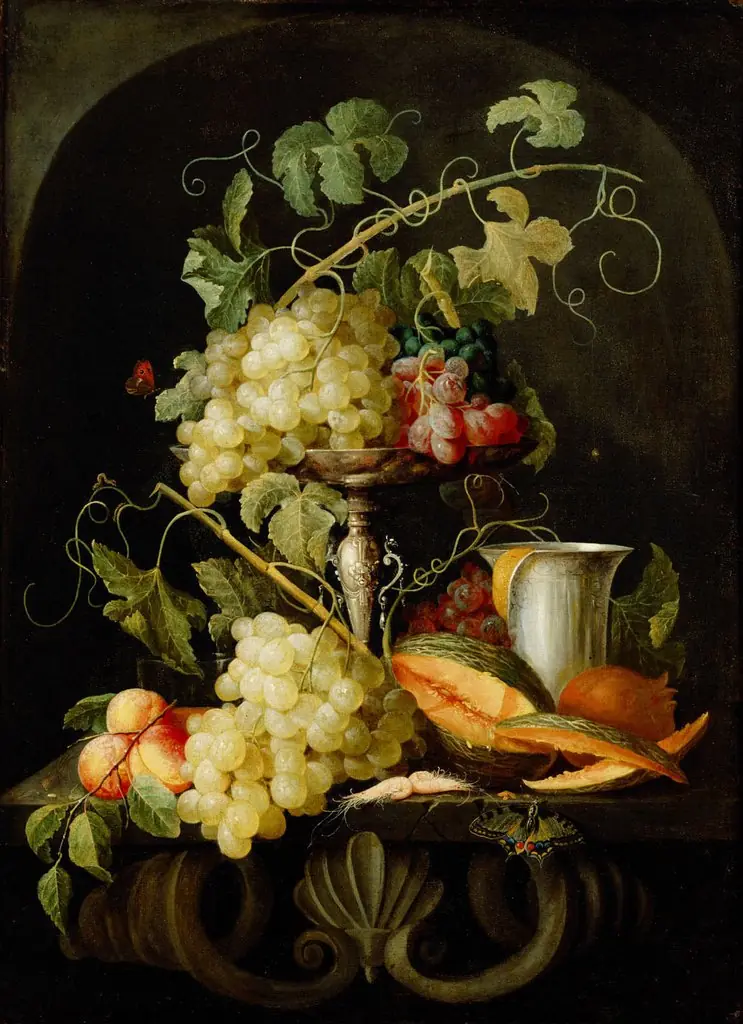
Grapes, Peaches and Quinces in a Niche
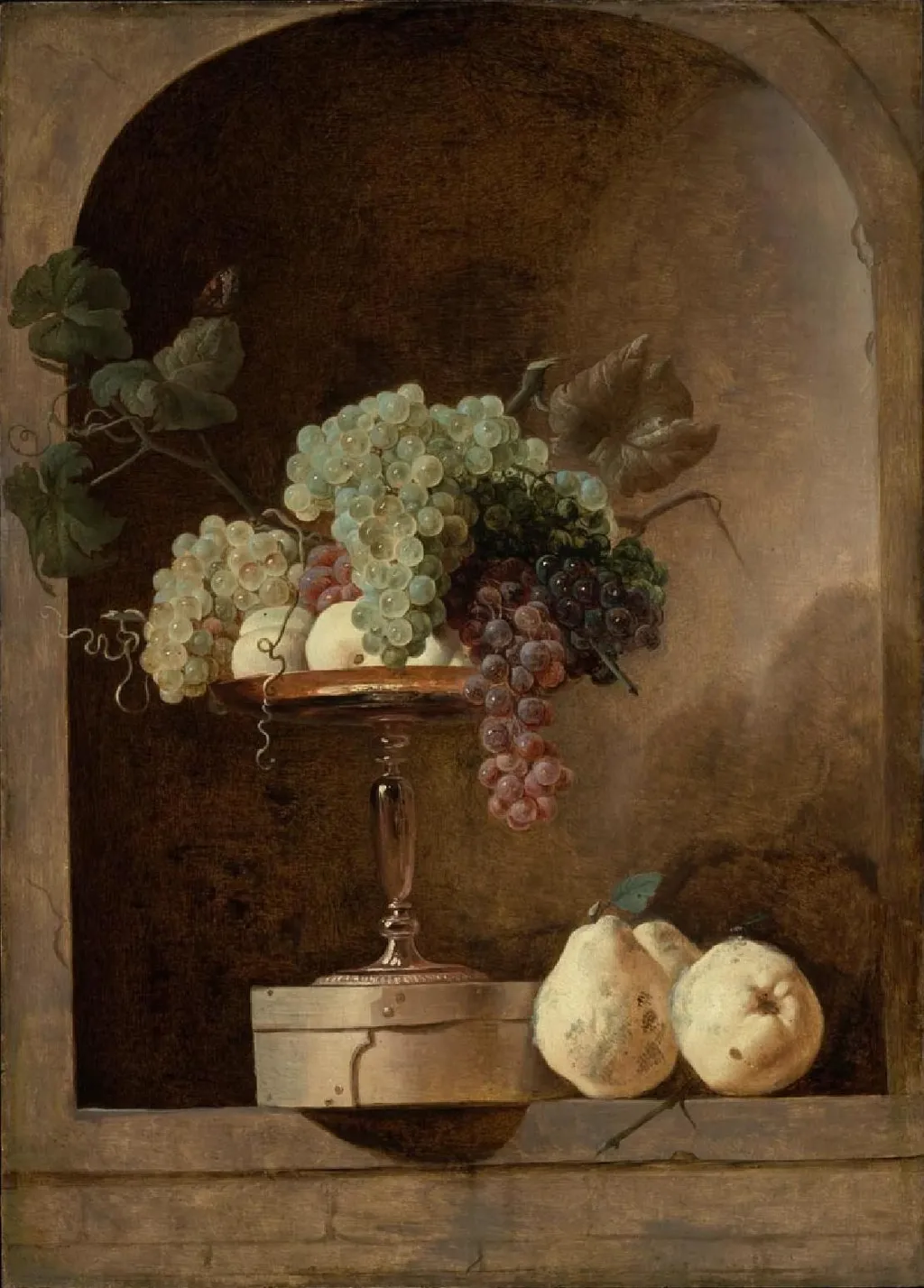
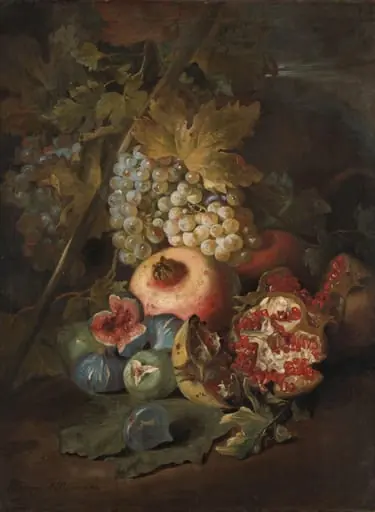
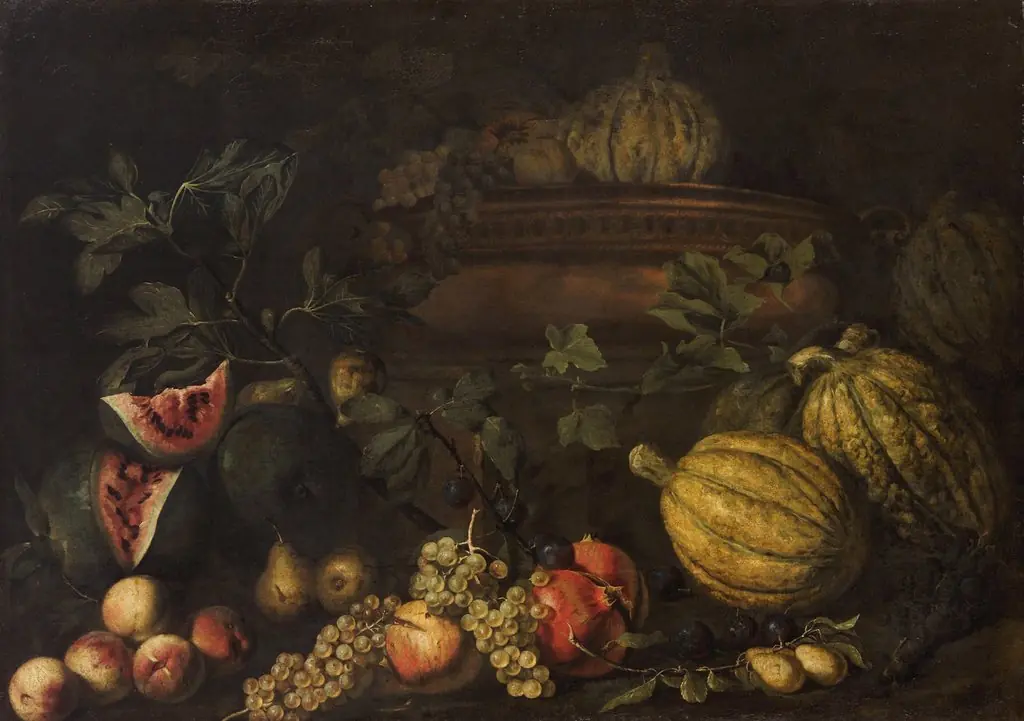
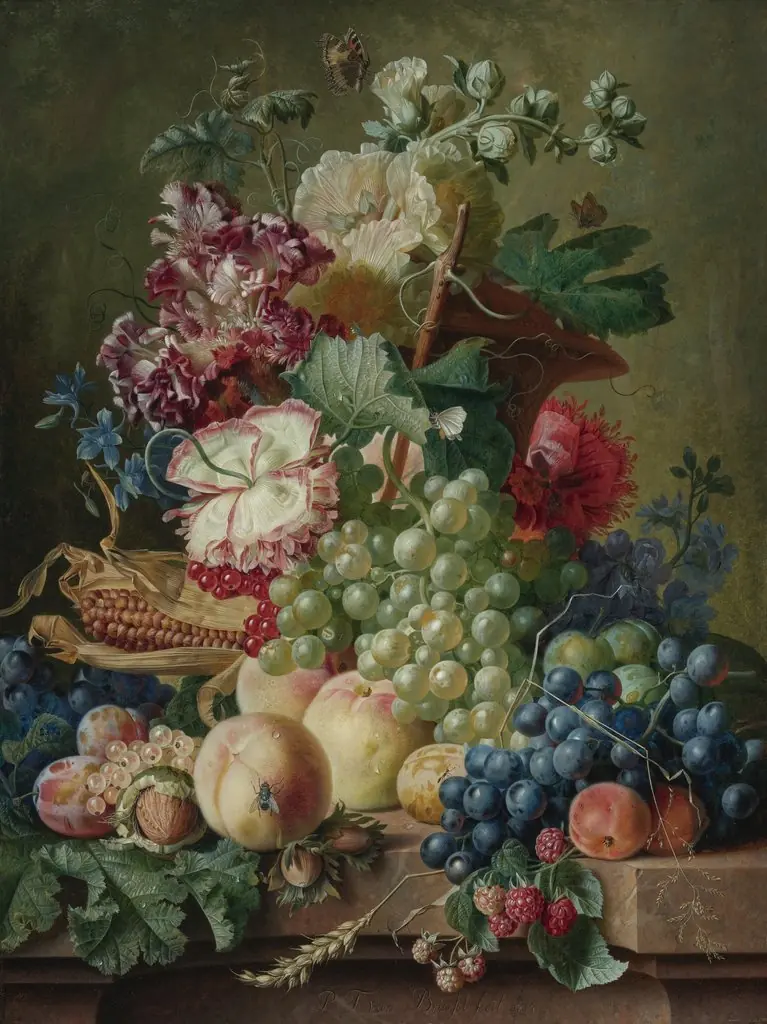
Grapes, Peaches and Quinces in a Niche is an oil painting by the Flemish Baroque painting artist Frans Snyders. It dates from 1650 and is held in the collection of the Museum of Fine Arts Boston.
About this work
Overview
The composition extends beyond the niche’s edge, with some fruit spilling onto a ledge below, suggesting a momentary pause in the act of harvesting or serving.
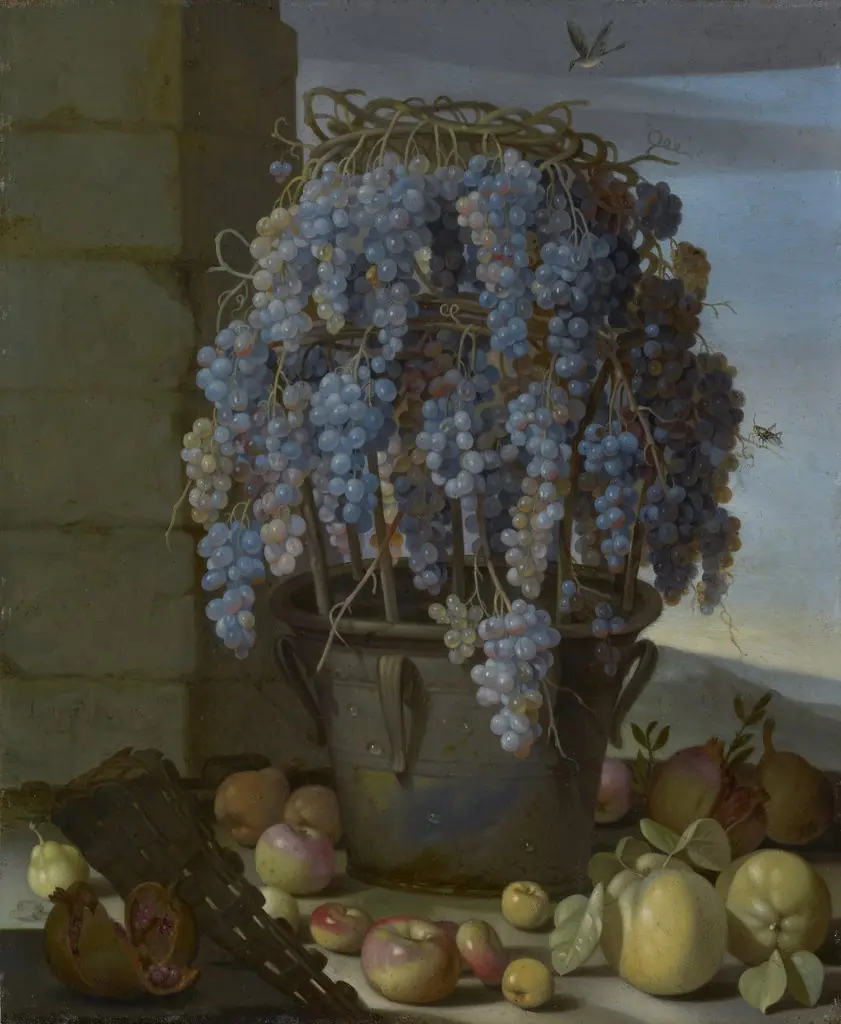
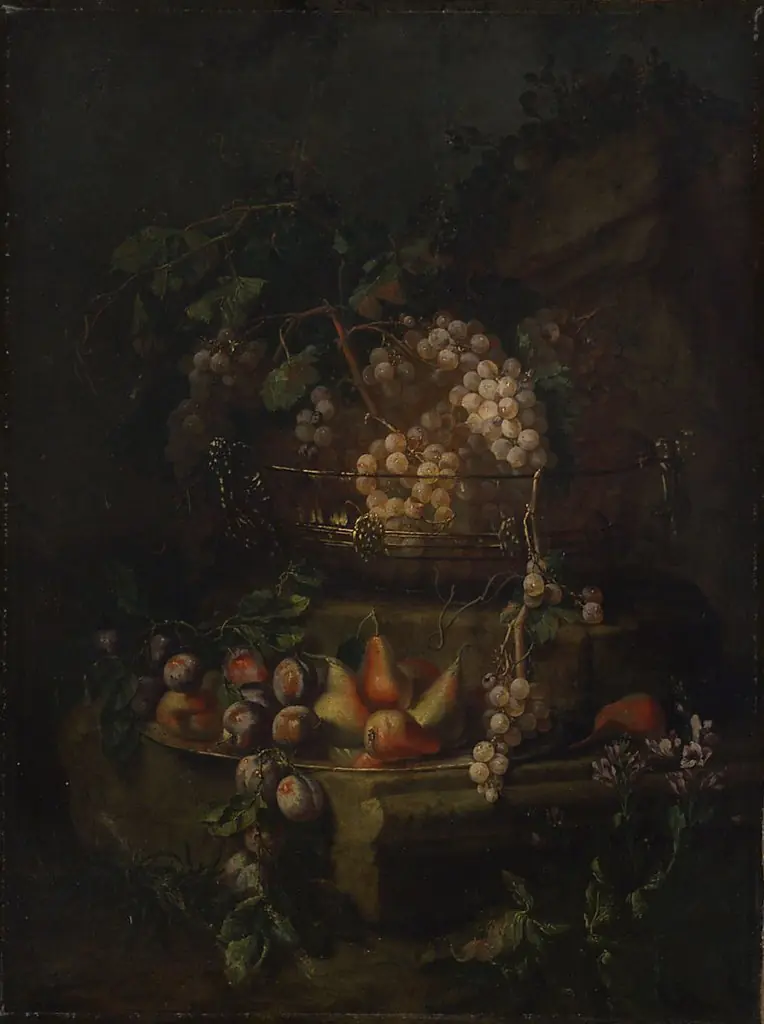
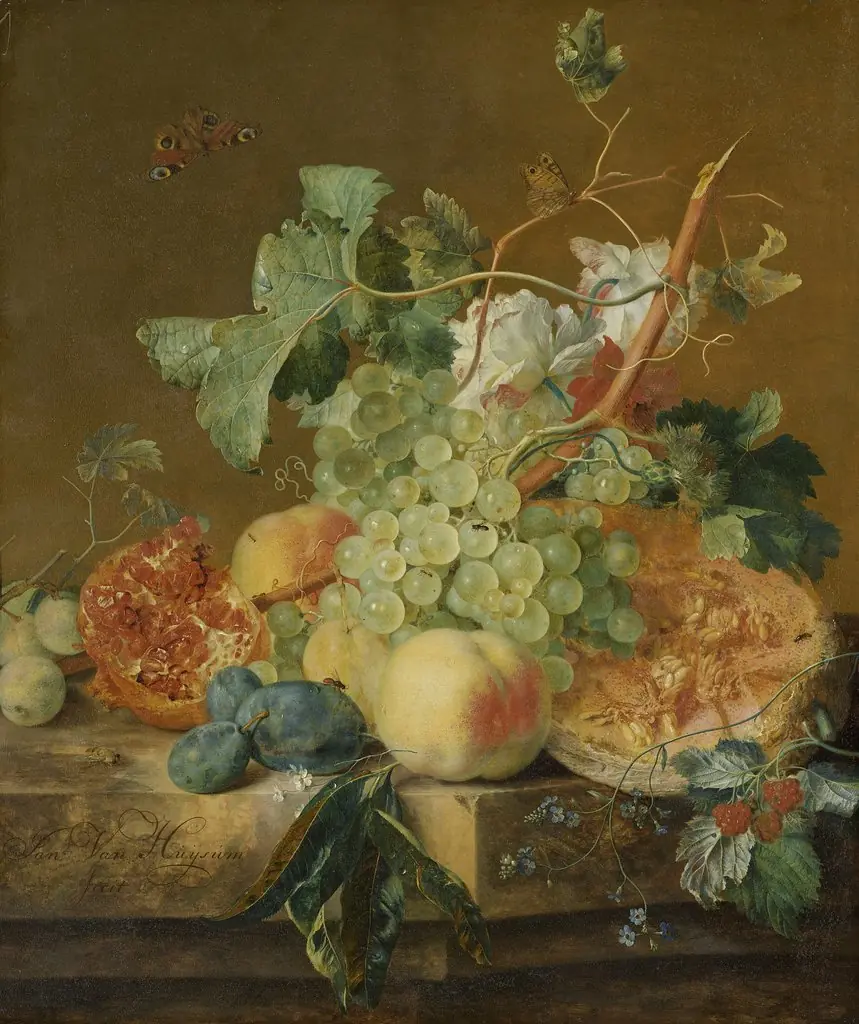
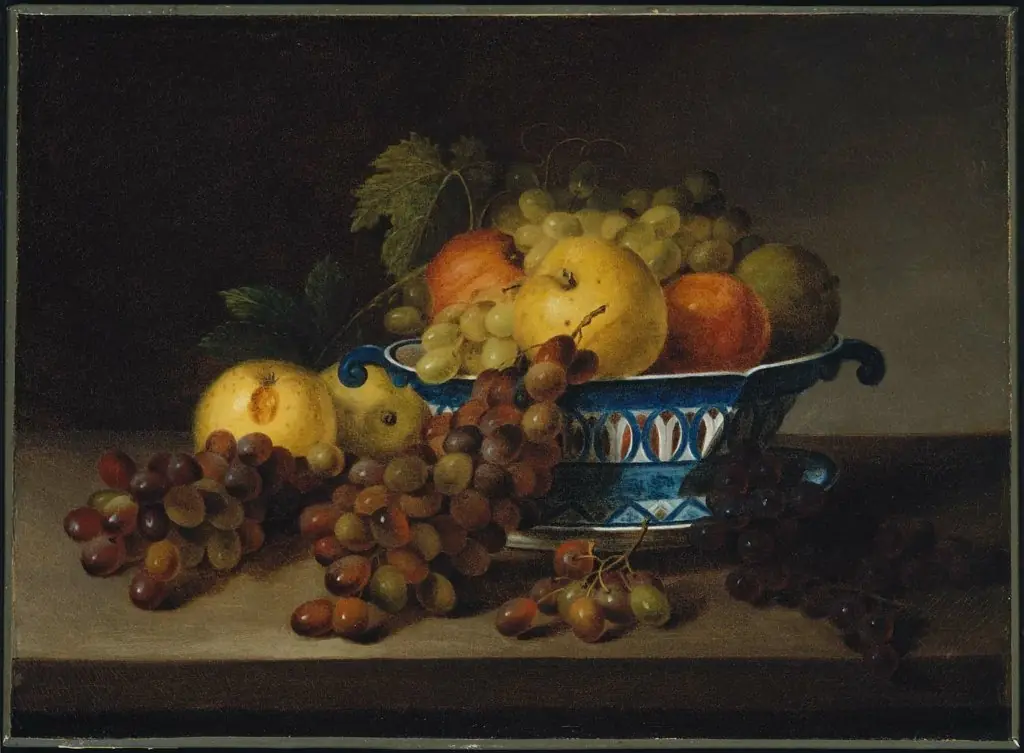
Painted around 1650, this oil still life by Frans Snyders presents a carefully arranged collection of grapes, peaches, and quinces within a shallow architectural niche. The composition extends beyond the niche’s edge, with some fruit spilling onto a ledge below, suggesting a momentary pause in the act of harvesting or serving. The work exemplifies the Flemish Baroque tradition of detailed naturalism, emphasizing tactile presence over symbolic allegory.
Subject & Meaning
The selection of fruit—grapes, peaches, and quinces—reflects seasonal abundance and the cultivated bounty of Flemish orchards. Unlike allegorical still lifes of the period, this work avoids overt moralizing; its focus remains on the physical qualities of the produce. The arrangement conveys a quiet celebration of nature’s variety, grounded in observation rather than metaphor, aligning with the era’s growing interest in empirical representation.
Technique & Style
Snyders employs chiaroscuro to model each fruit with precision, enhancing volume through subtle gradations of light and shadow. The surfaces of the peaches and quinces are rendered with delicate brushwork to suggest fuzz and waxy skin, while the grapes’ translucence and clustered forms are captured with layered glazes. The niche’s stone ledge and shadowed recesses anchor the composition, reinforcing spatial depth without artificial perspective.
History & Provenance
The painting entered the collection of the Museum of Fine Arts, Boston, in the early 20th century, acquired as part of a broader effort to expand holdings of Northern European Baroque art. Its attribution to Snyders has remained consistent since its inclusion, supported by stylistic parallels with his other known still lifes from the 1640s–1650s. No earlier documented ownership records are publicly available.
Context
In mid-17th-century Antwerp, still life painting flourished as a distinct genre, with artists like Snyders specializing in lush, naturalistic depictions of food and game. This work reflects the city’s thriving art market and the rising demand among wealthy patrons for depictions of domestic abundance. Snyders’ approach, rooted in close observation, distinguished him from more symbolic or decorative contemporaries.
Legacy
Snyders’ still lifes influenced later Dutch and Flemish painters through their emphasis on material fidelity and compositional balance. While not widely reproduced in popular culture, this painting remains a key example of how Baroque artists elevated everyday objects into subjects worthy of sustained visual study. Its presence in Boston underscores its role in shaping Western museum collections of European still life.
Artist & collection
Artist
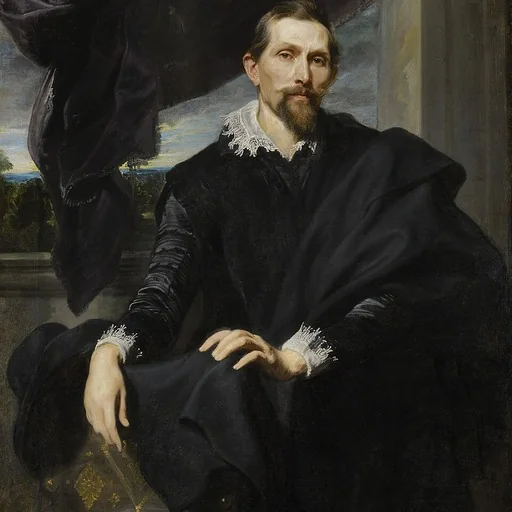
Frans Snyders or Frans Snijders was a Flemish painter of animals, hunting scenes, market scenes, and still lifes.

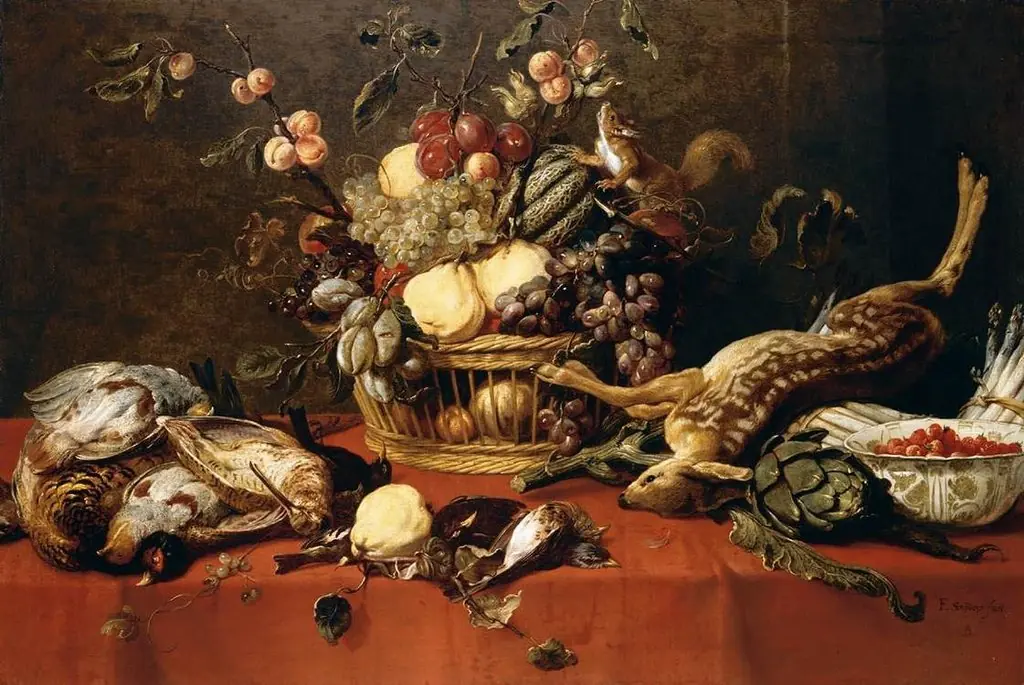 Still life of fruit in a basket together with game, a bowl of fraises-de-bois, artichokes, asparagus and a squirrel upon a table draped with a red cloth
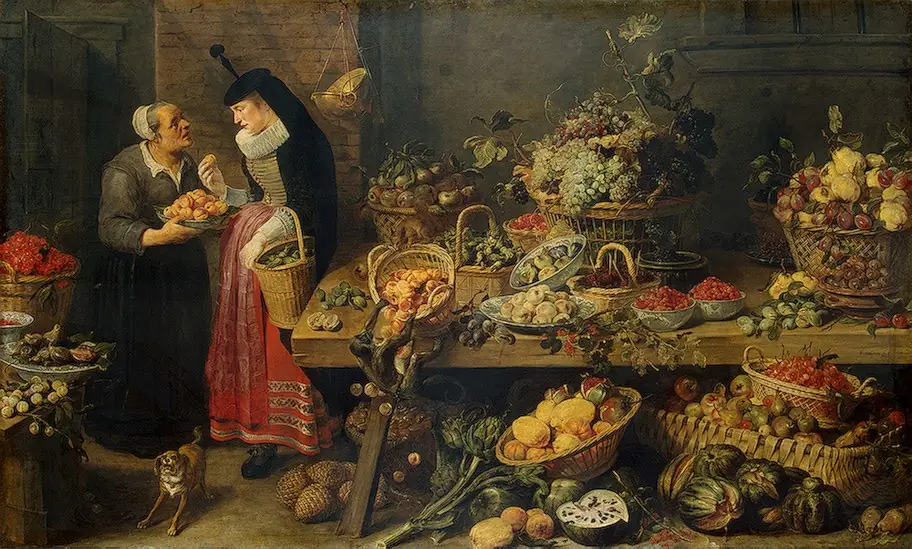 The Fruit Shop
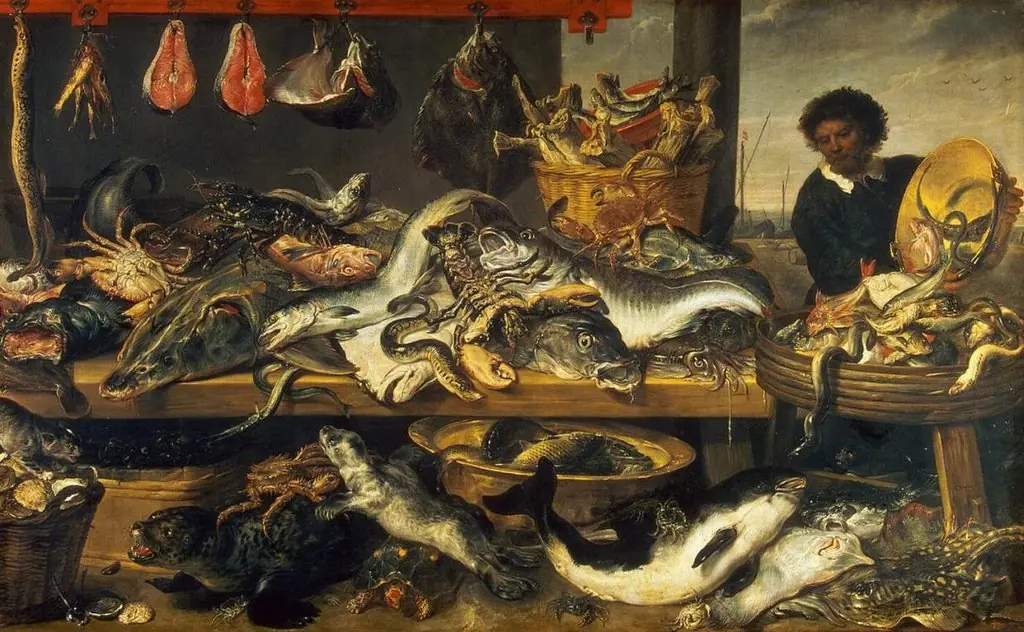 Fish Market
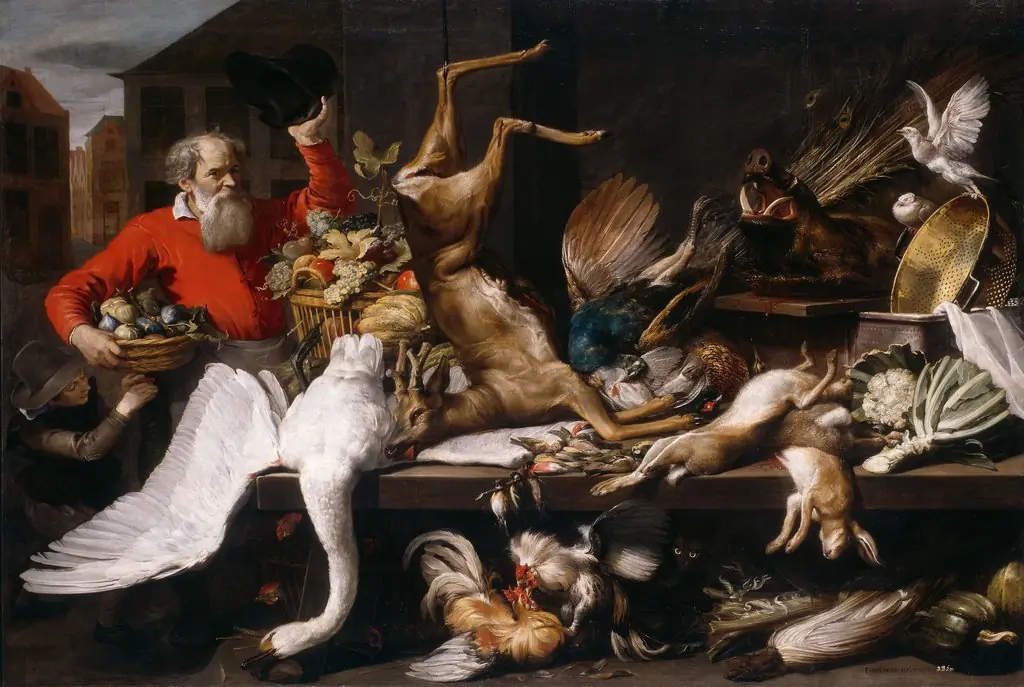 Still Life with Dead Game, Fruits, and Vegetables in a Market
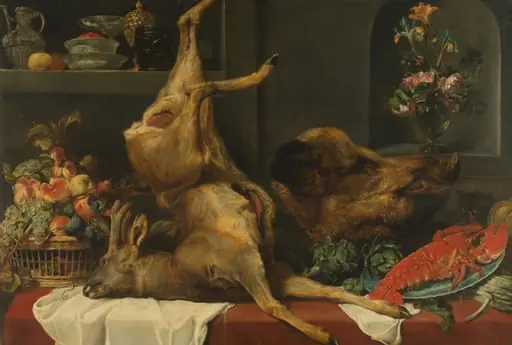 Larder Still life
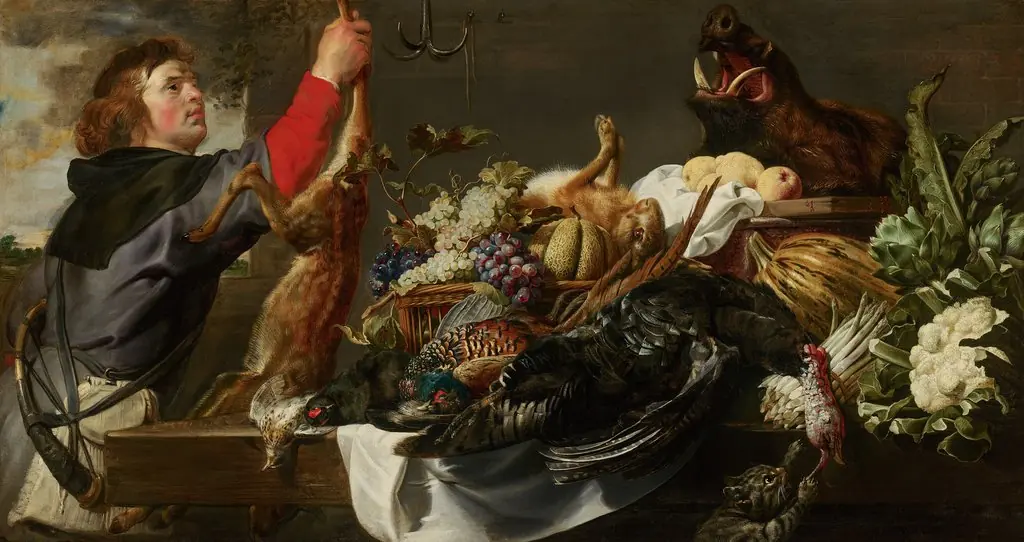 Still Life with Huntsman
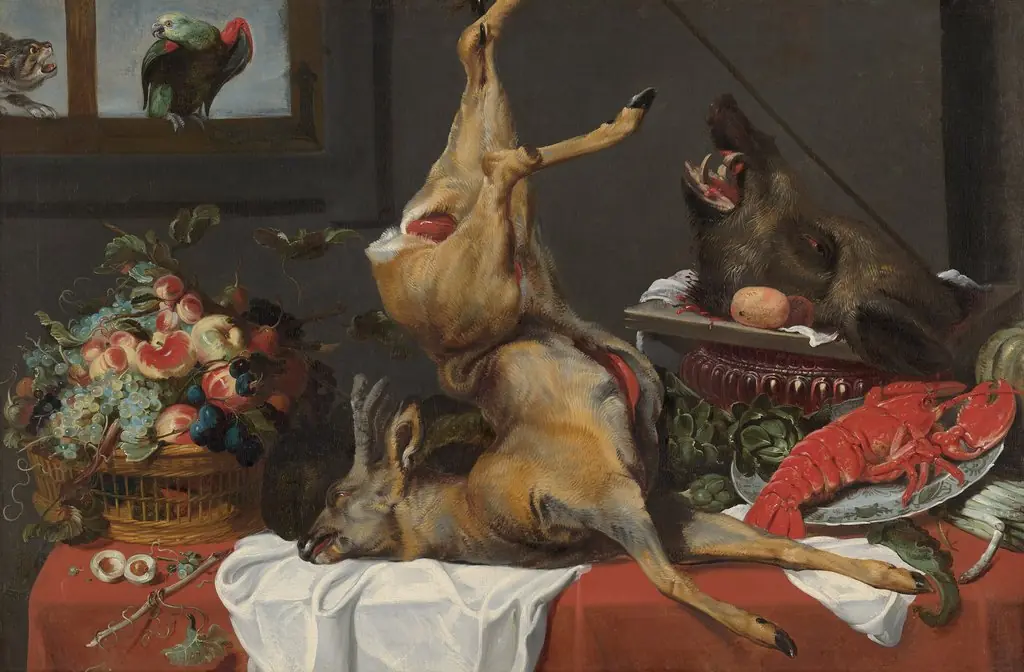 Still Life with a Dead Stag
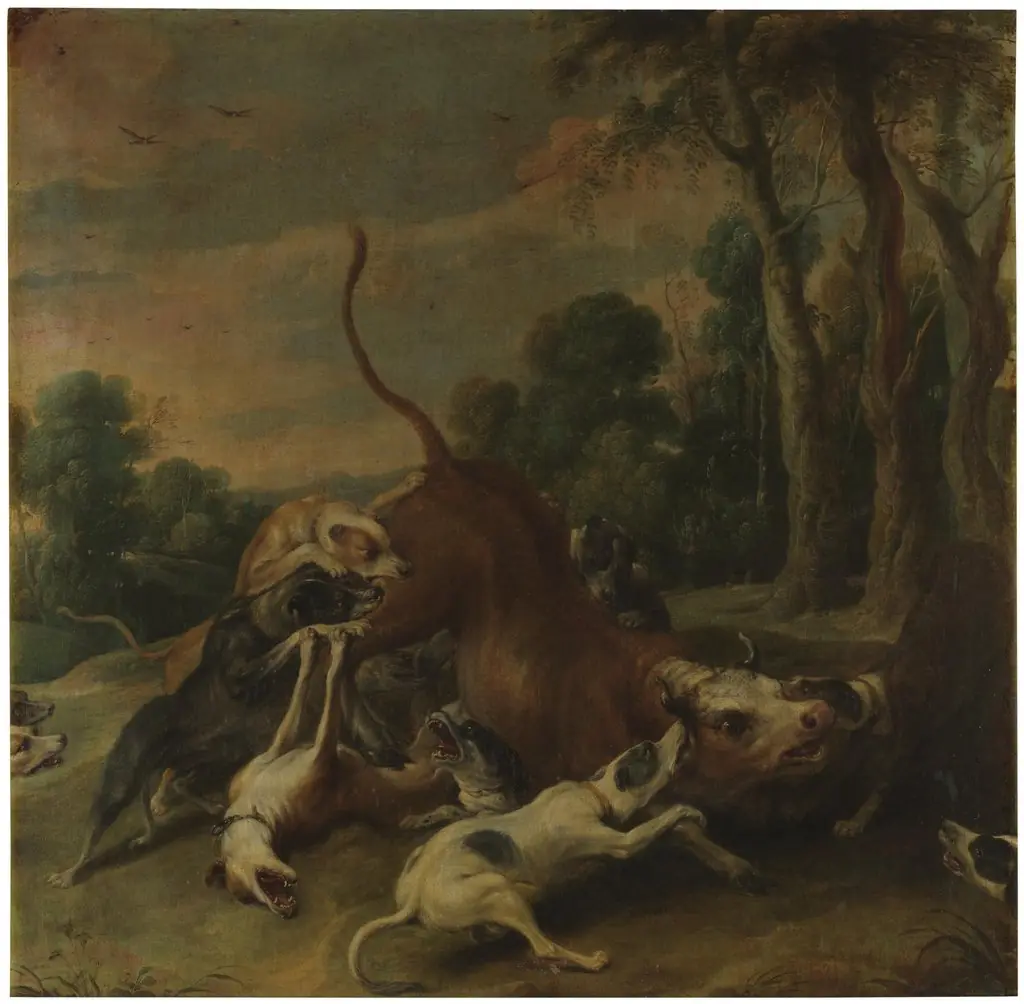 A bull overpowered by dogs