Artwork
Still-life with a Spaniel and her Pups
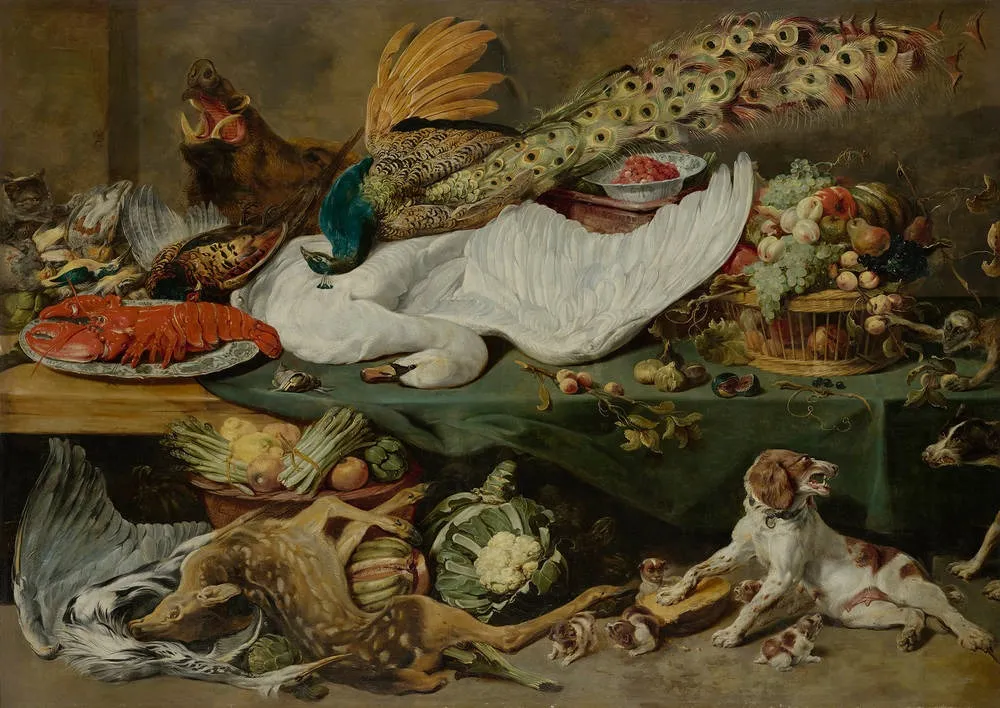
Still-life with a Spaniel and her Pups is an oil painting by the Flemish Baroque painting artist Frans Snyders. It dates from 1618 and is held in the collection of the Staatliche Kunstsammlungen Dresden.
About this work
Overview
Painted in 1618 by Frans Snyders, this oil on canvas work presents a lavish arrangement of hunted game, seafood, and fruit, arranged on a wooden surface.
Painted in 1618 by Frans Snyders, this oil on canvas work presents a lavish arrangement of hunted game, seafood, and fruit, arranged on a wooden surface. A spaniel lies at the lower foreground, her gaze directed toward unseen pups. The composition blends elements of still life and animal painting, emphasizing abundance and the natural world’s bounty through meticulous detail and dynamic arrangement.
Subject & Meaning
The painting combines dead game—rooster, peacock, rabbits, and birds—with fresh seafood and fruit, suggesting a wealthy household’s larder. The presence of the mother dog and her unseen puppies introduces a theme of nurture and protection, subtly contrasting the violence of the hunt with domestic care. This duality may reflect contemporary ideals of order, sustenance, and the cycle of life within aristocratic life.
Technique & Style
Snyders employs rich, saturated hues—deep reds, emerald greens, and earthy browns—enhanced by strong chiaroscuro to model textures with precision. Feathers, scales, and fur are rendered with near-tactile realism, each element distinct yet integrated into a cohesive, cluttered whole. The brushwork is controlled yet lively, capturing the weight of meat, the sheen of shellfish, and the softness of fur without sentimentality.
History & Provenance
The painting entered the collection of the Gemäldegalerie Alte Meister in Dresden, likely through the Saxon royal acquisitions of the 18th century. It has remained in the museum’s holdings since, documented in early inventories as a representative example of Flemish still-life tradition. Its preservation reflects its status as a significant work within the school of Antwerp naturalism.
Context
Created during the height of Flemish still-life painting, the work aligns with trends in Antwerp where artists like Snyders specialized in elaborate depictions of food and animals. These paintings catered to urban elites who valued displays of wealth and control over nature. The inclusion of live animals within a scene of slaughter subtly commented on the moral and sensory tensions of consumption.
Legacy
Snyders’ integration of animals into still life influenced later Dutch and Flemish painters, expanding the genre beyond static arrangements. This painting exemplifies a shift toward narrative and emotional nuance within the form. Its enduring presence in a major European collection underscores its role in defining the boundaries of naturalistic representation in early 17th-century painting.
Artist & collection
Artist
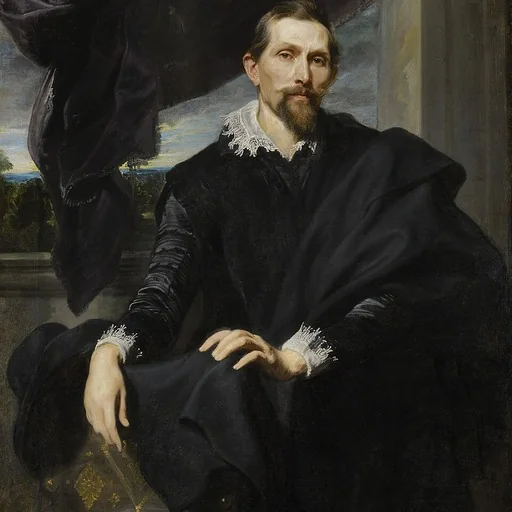
Frans Snyders or Frans Snijders was a Flemish painter of animals, hunting scenes, market scenes, and still lifes.

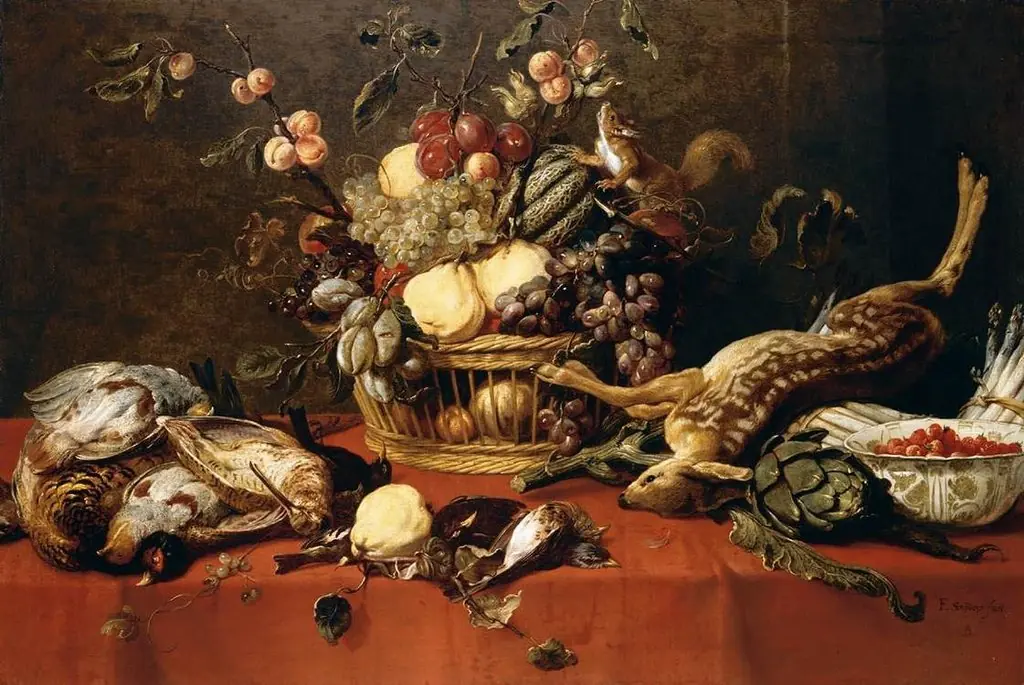 Still life of fruit in a basket together with game, a bowl of fraises-de-bois, artichokes, asparagus and a squirrel upon a table draped with a red cloth
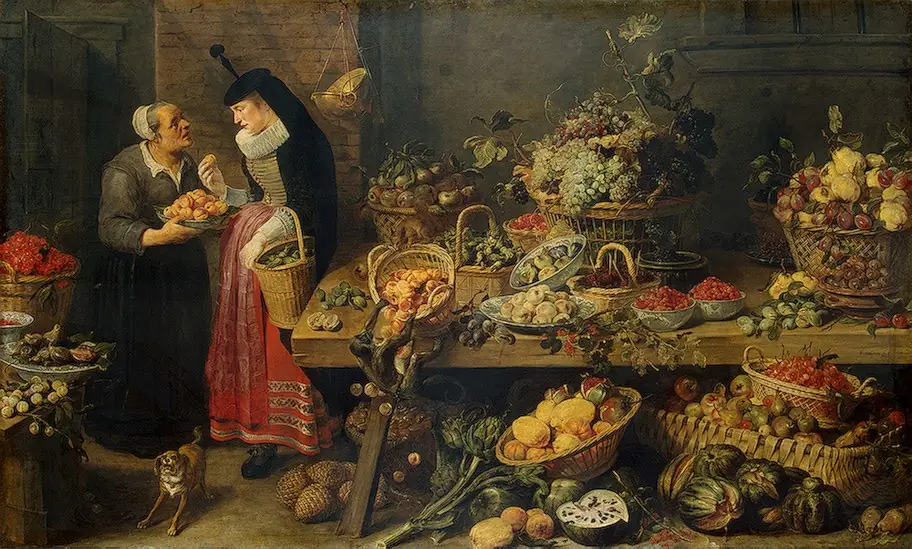 The Fruit Shop
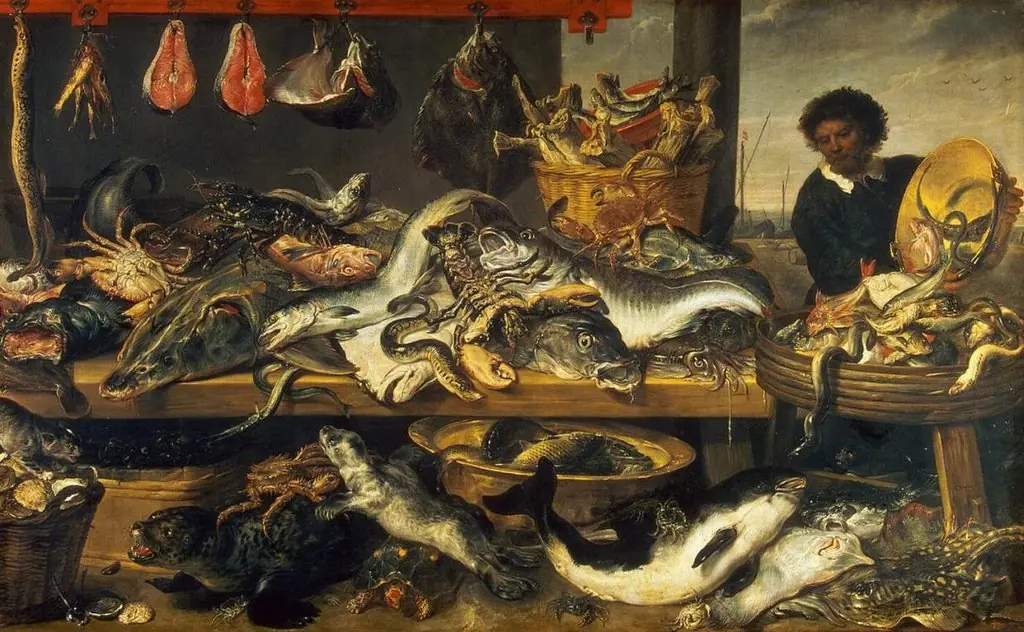 Fish Market
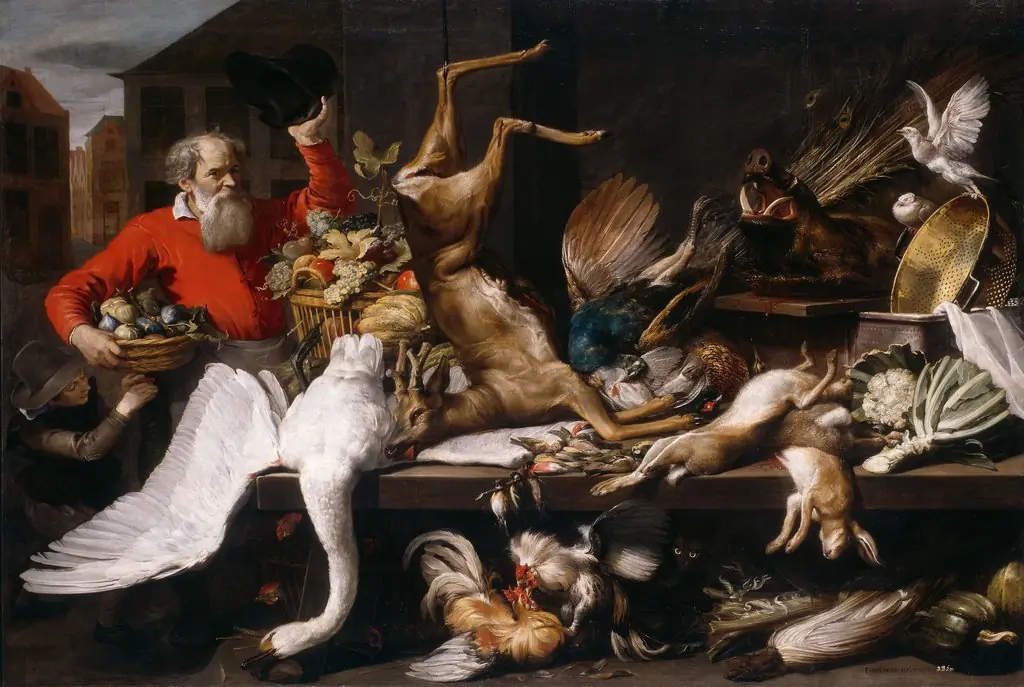 Still Life with Dead Game, Fruits, and Vegetables in a Market
 Larder Still life
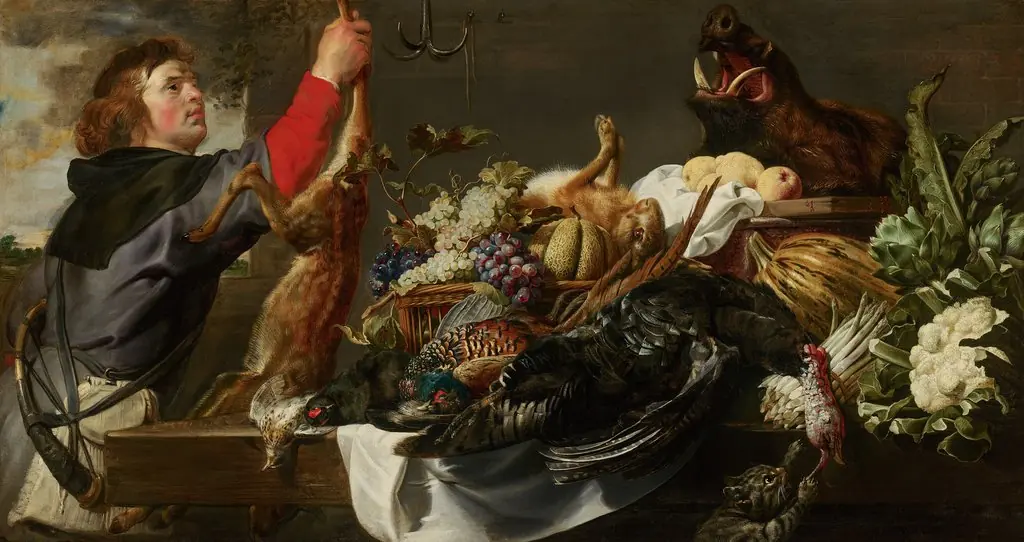 Still Life with Huntsman
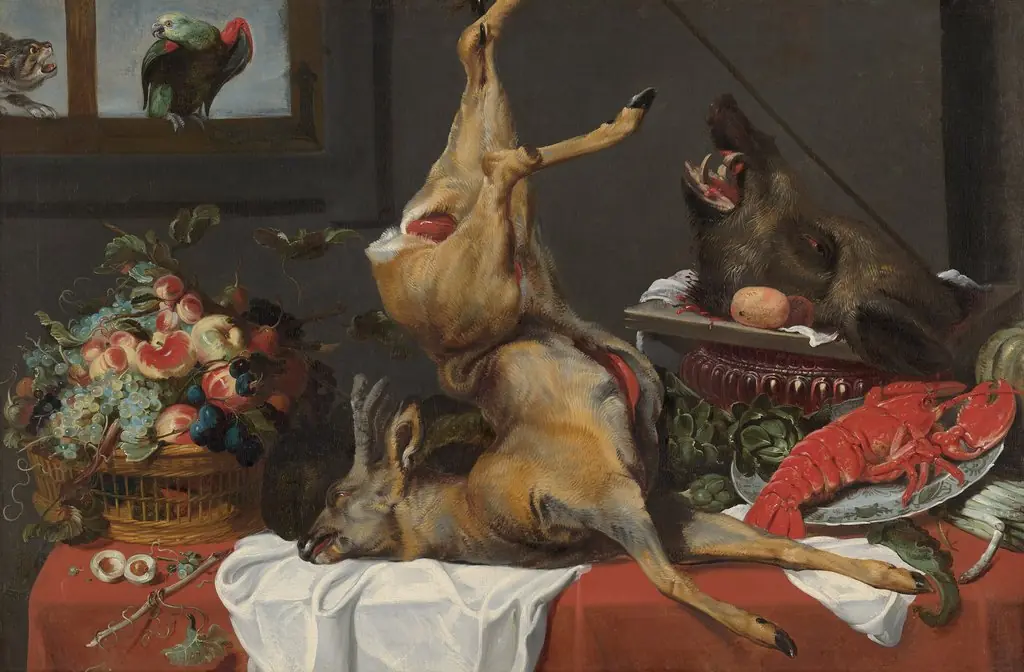 Still Life with a Dead Stag
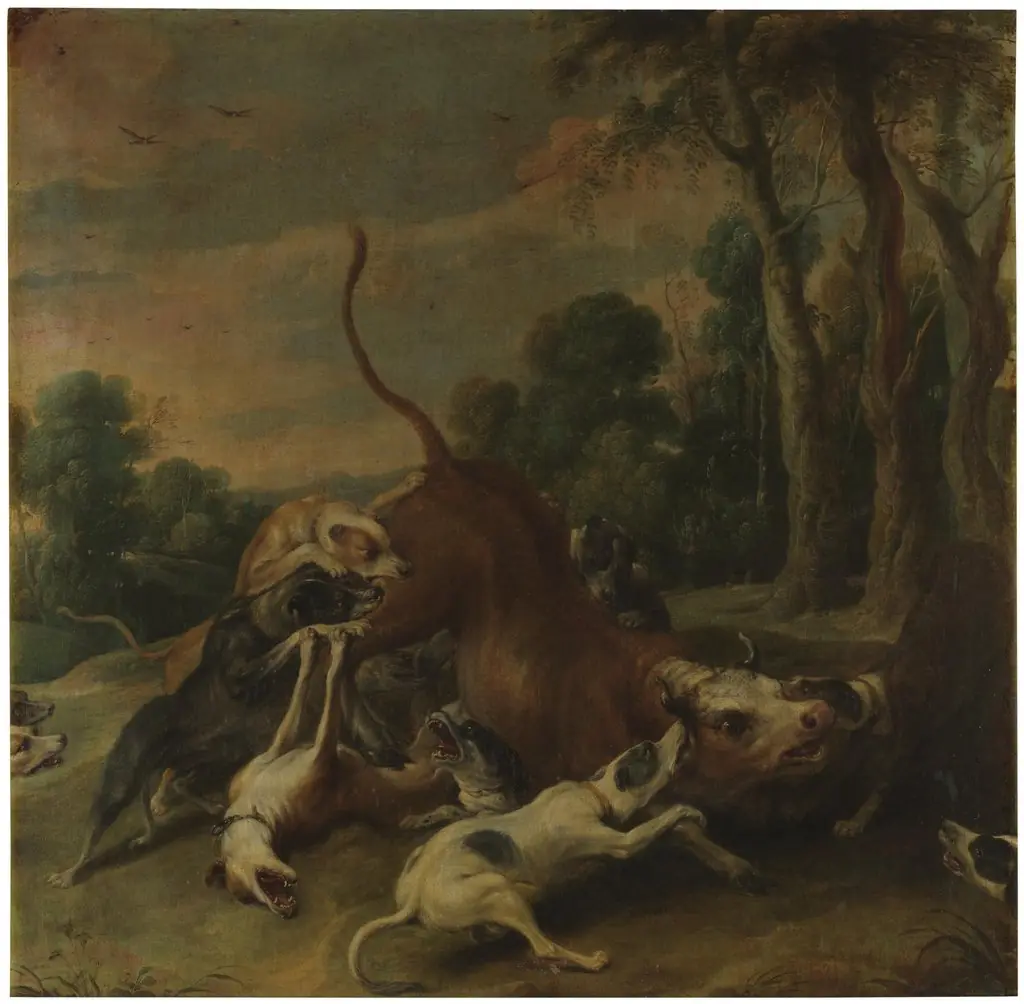 A bull overpowered by dogs
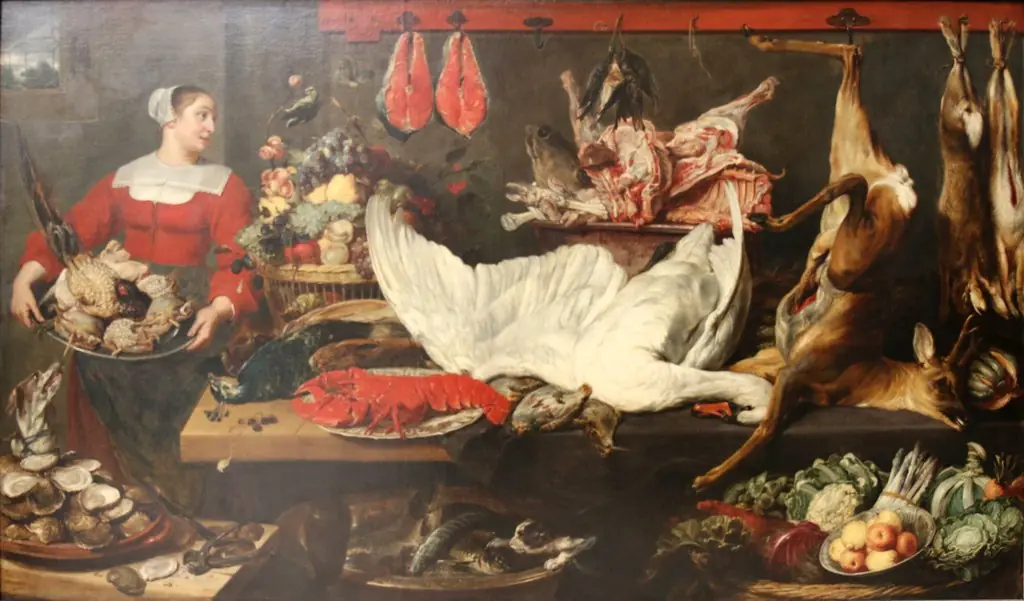 Kitchen interior with a servant girl holding a plate with poultry and a table with an abundance of game, fish, fruit and vegetables
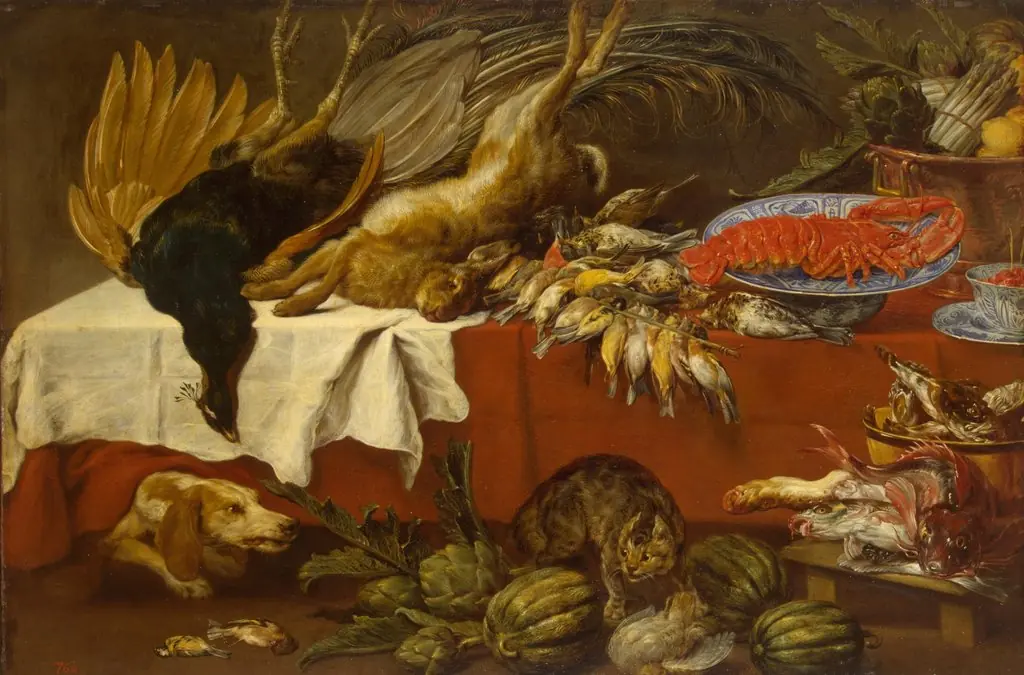 Still Life with Dead Game and Lobster
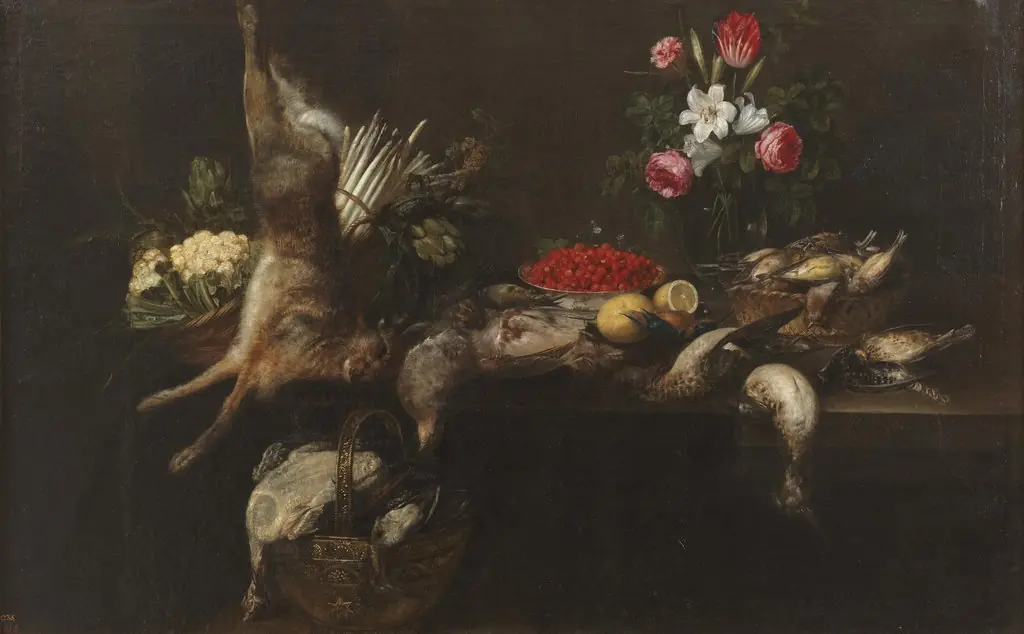
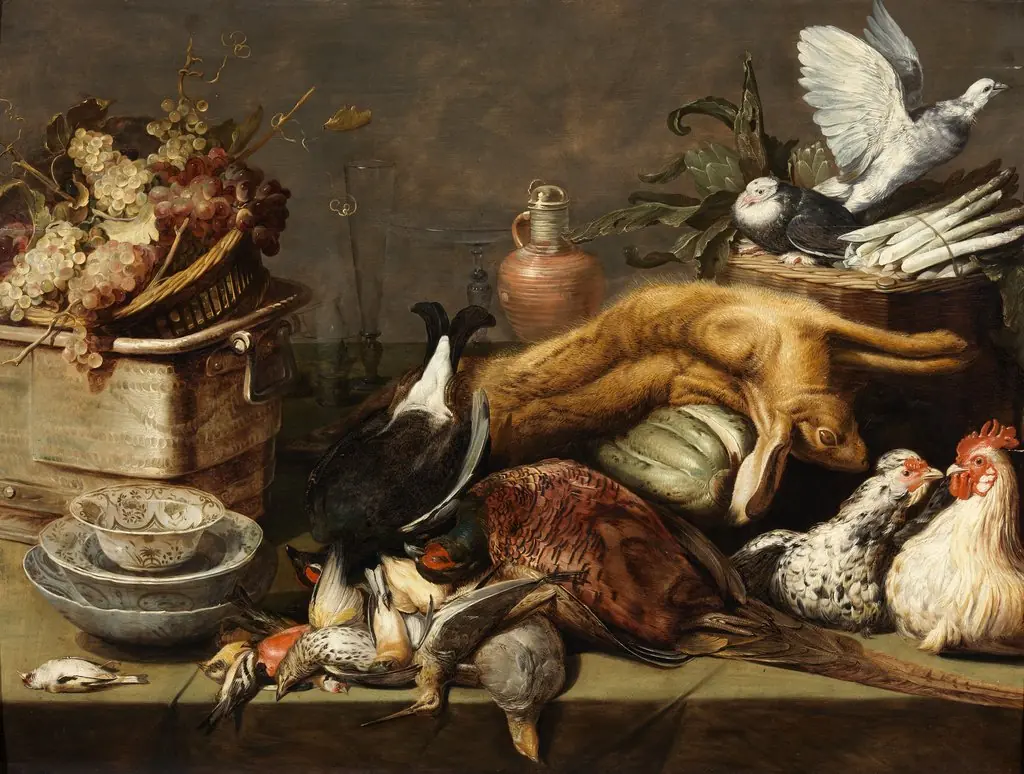 A Still Life with Dead Birds and a Hare
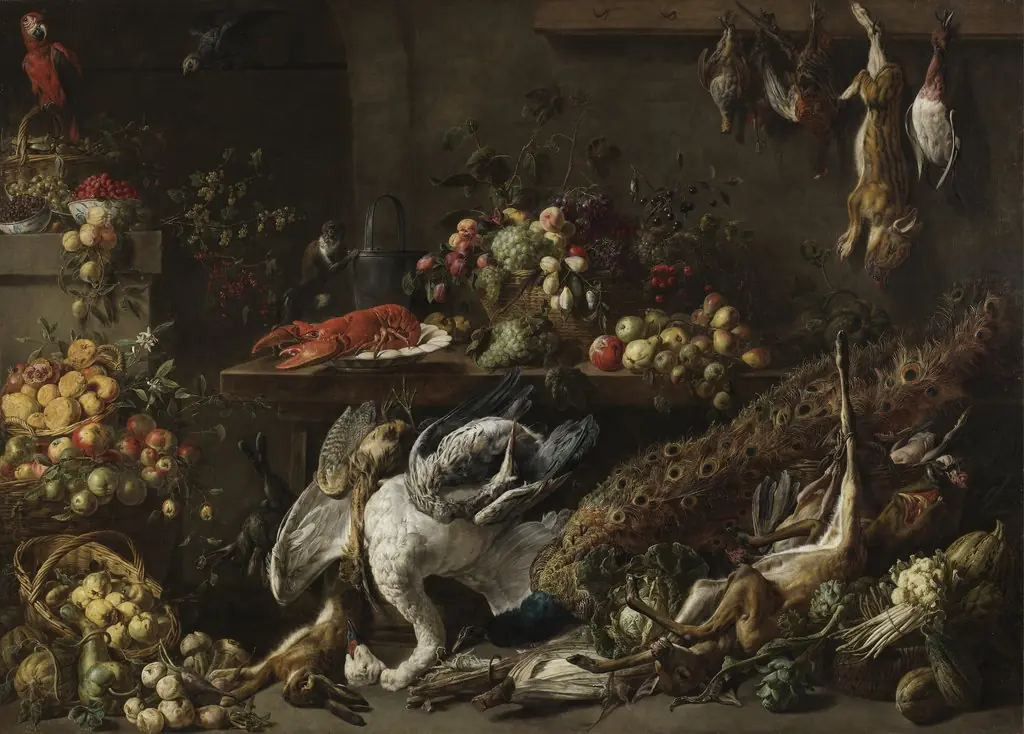 A Larder
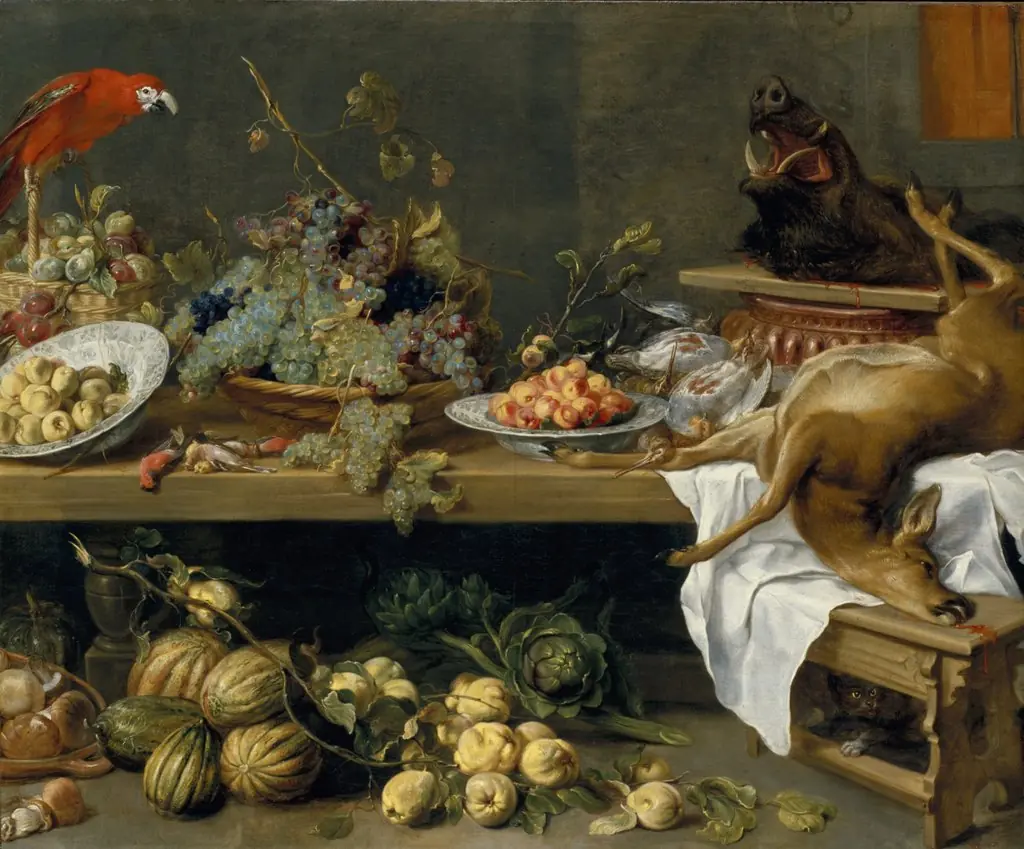 Still Life with Fruit, Vegetables and Dead Game
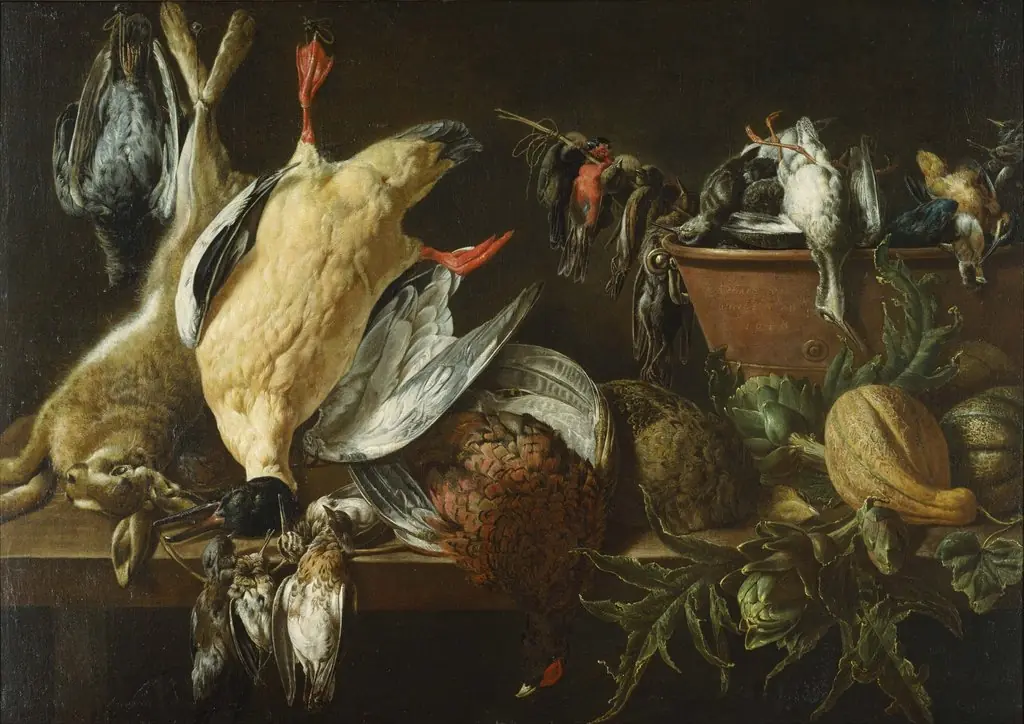 Still Life with Games and Vegetables
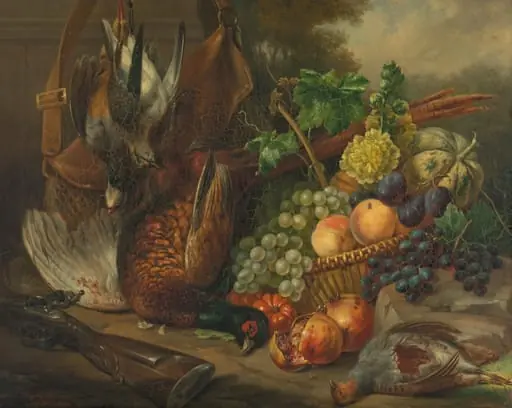 Still life
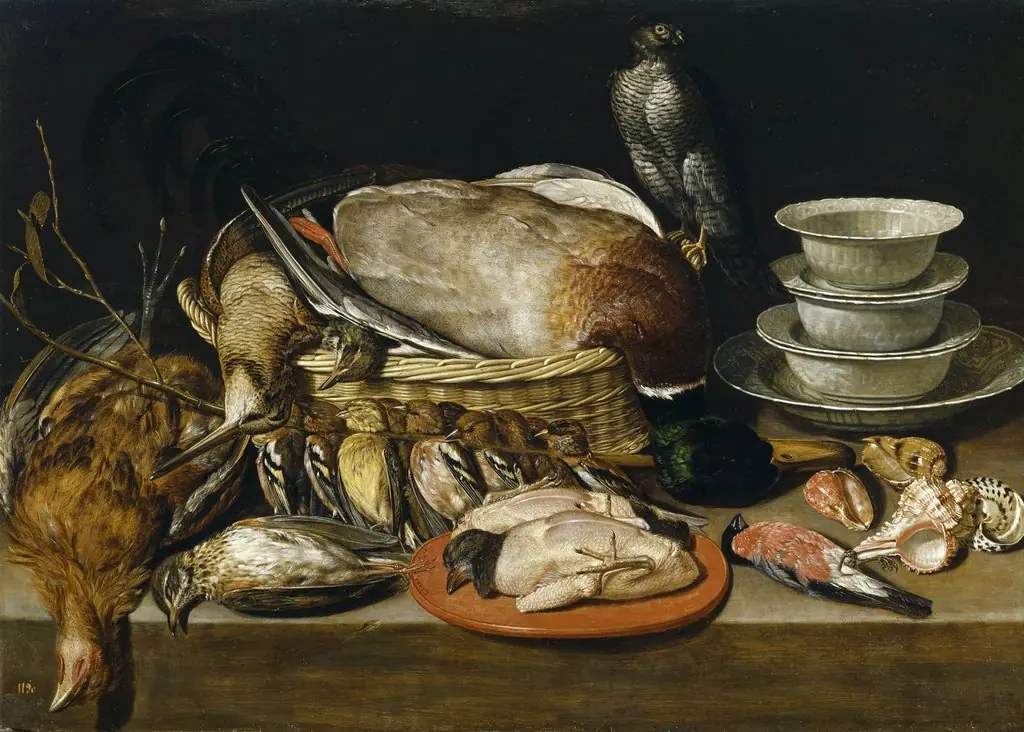 Game piece with poultry
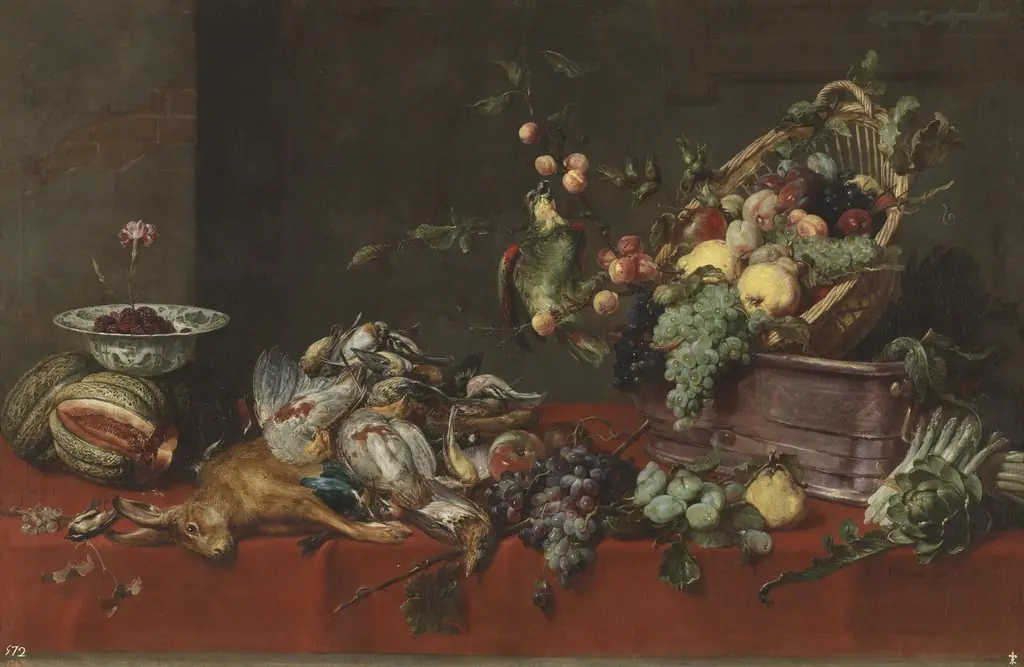 A still life with game, vegetables and fruit on a table, with a parrot on a branch
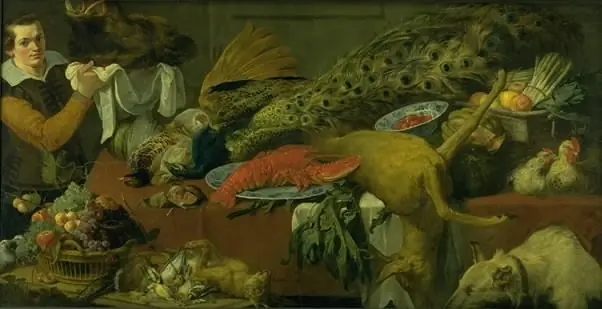 Køkkenstykke med en køkkenkarl
 Pantry