Artwork
Pilgrimage in Diegem
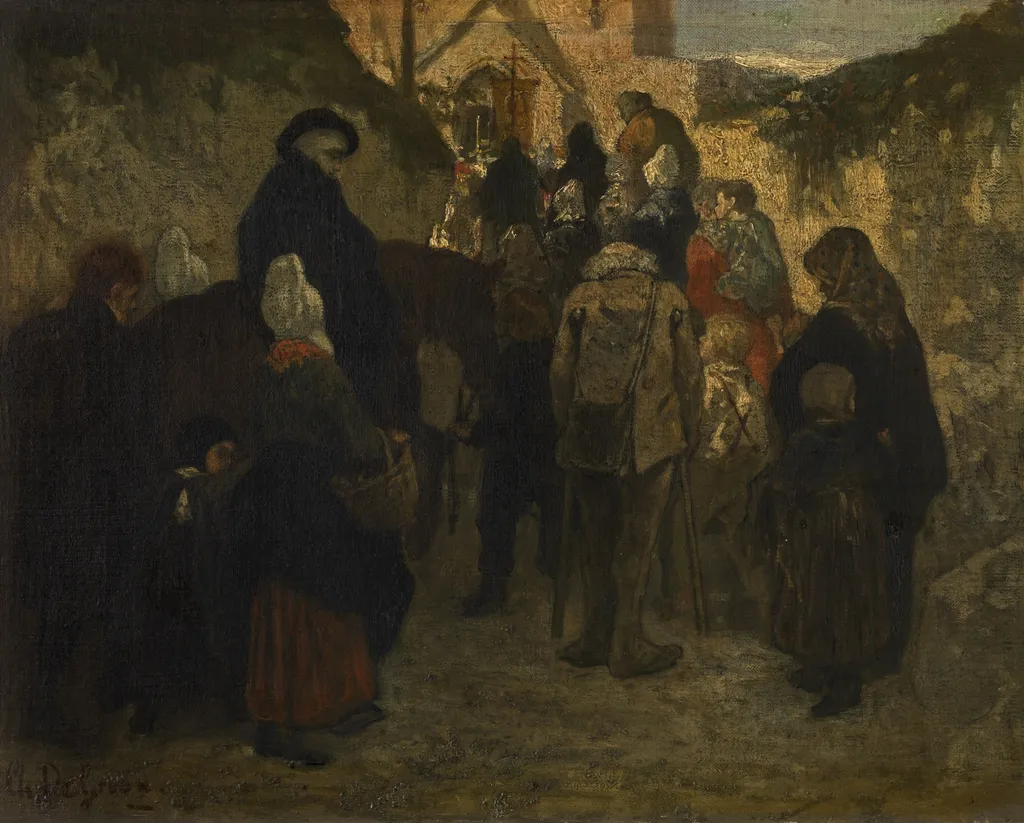
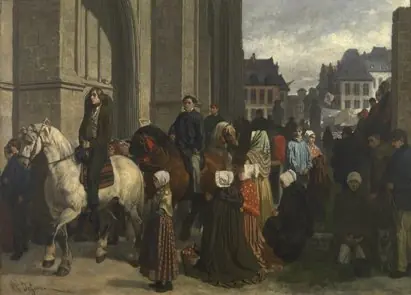
Pilgrimage in Diegem is an oil painting by the Realist artist Charles de Groux. It dates from 1857 and is held in the collection of the Royal Museum of Fine Arts Antwerp.
About this work
Overview
Charles de Groux’s 1857 oil painting *Pilgrimage in Diegem* portrays a small gathering of villagers before a stone structure that appears to be a church. The composition is set on a simple dirt track, and the figures are rendered in muted, dark garments, their faces indistinct, contributing to a restrained, somber mood.
Subject & Meaning
The work reflects de Groux’s interest in the everyday experiences of the lower classes, depicting a communal moment of pilgrimage or religious observance. By focusing on ordinary people in a modest setting, the painting underscores themes of collective devotion and the quiet dignity of rural life.
Technique & Style
Executed in a realist manner, the artist employs strong chiaroscuro to model the stone and earth, creating depth through contrasts of light and shadow. Thick impasto in the foreground adds a tactile surface, while the overall palette of subdued tones reinforces the work’s melancholic atmosphere.
History & Provenance
*Pilgrimage in Diegem* is part of the collection of the Royal Museum of Fine Arts in Antwerp. Created during de Groux’s Belgian period, the painting aligns with his broader oeuvre that foregrounded social realism in the mid‑19th century.
Context
De Groux, originally from France but active in Belgium, is regarded as a pioneer of Belgian social realism, preceding artists such as Constantin Meunier and Eugène Laermans. This painting exemplifies his early commitment to representing the hardships and rituals of the working class within a realistic visual language.
Own this work as a print
Artist & collection
Artist
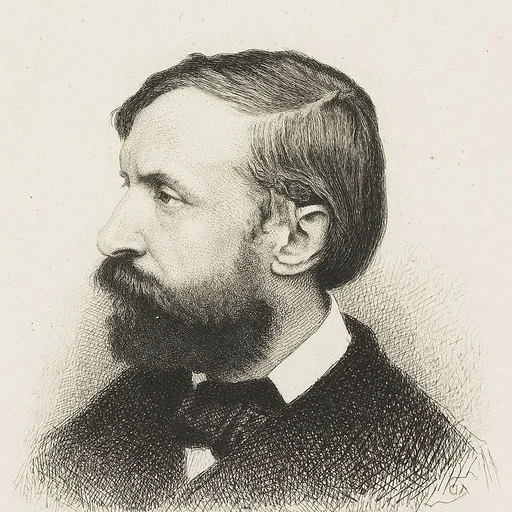
Charles de Groux (French pronunciation: ) or Charles Degroux (25 August 1825 – 30 March 1870) was a French painter, engraver, lithographer and illustrator.

 In Front of a Church
 Arrival of the Procession
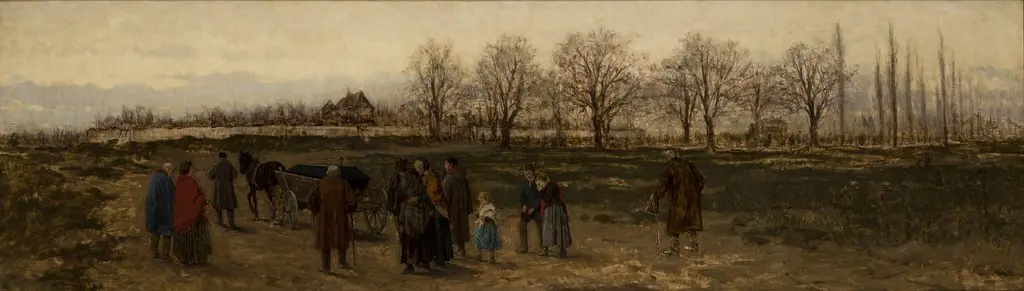 Funeral of a Pauper in Germany
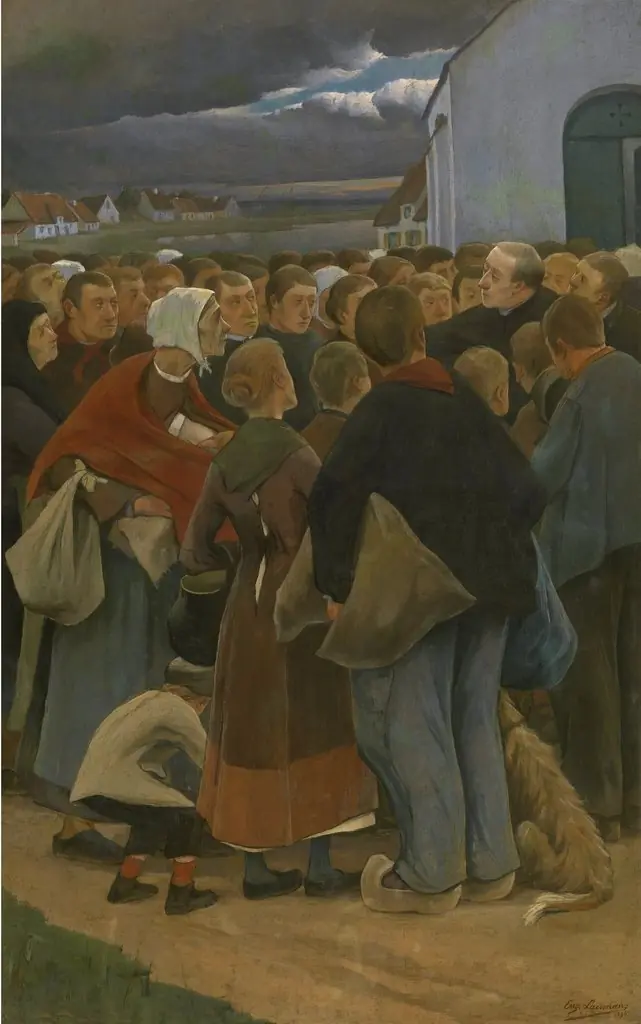 Emigrants - To the port
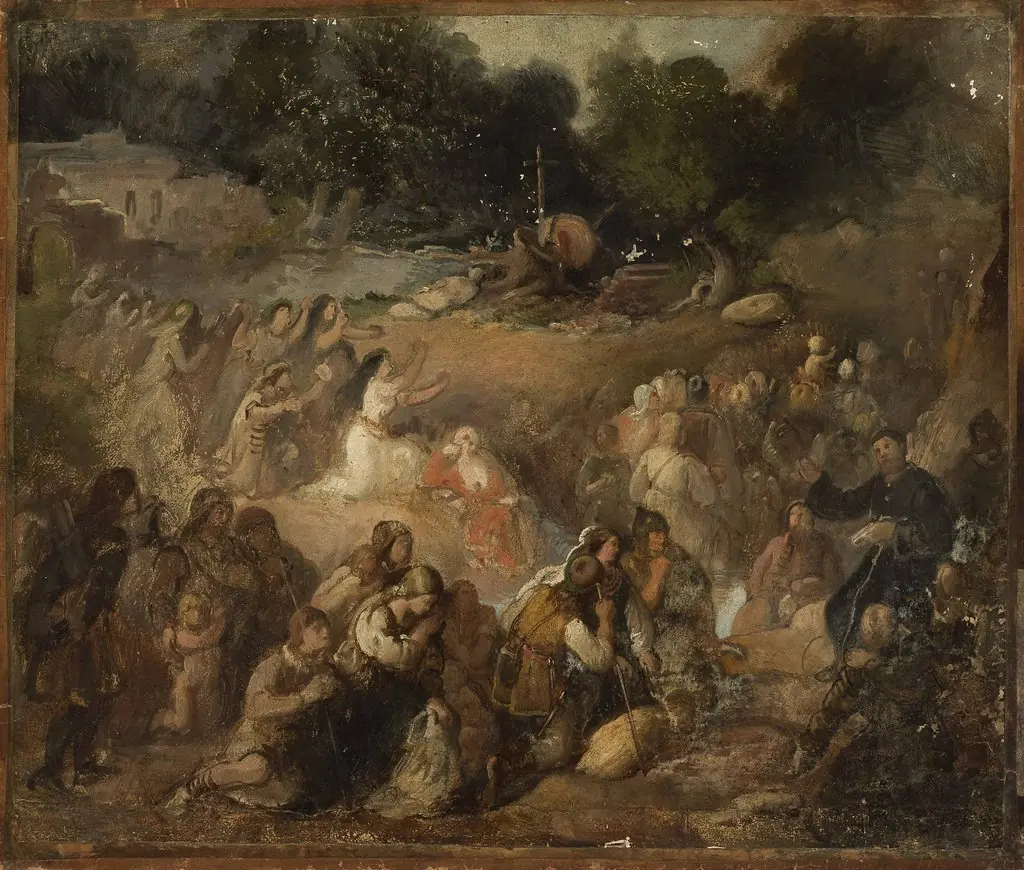 Baptism of Lithuania
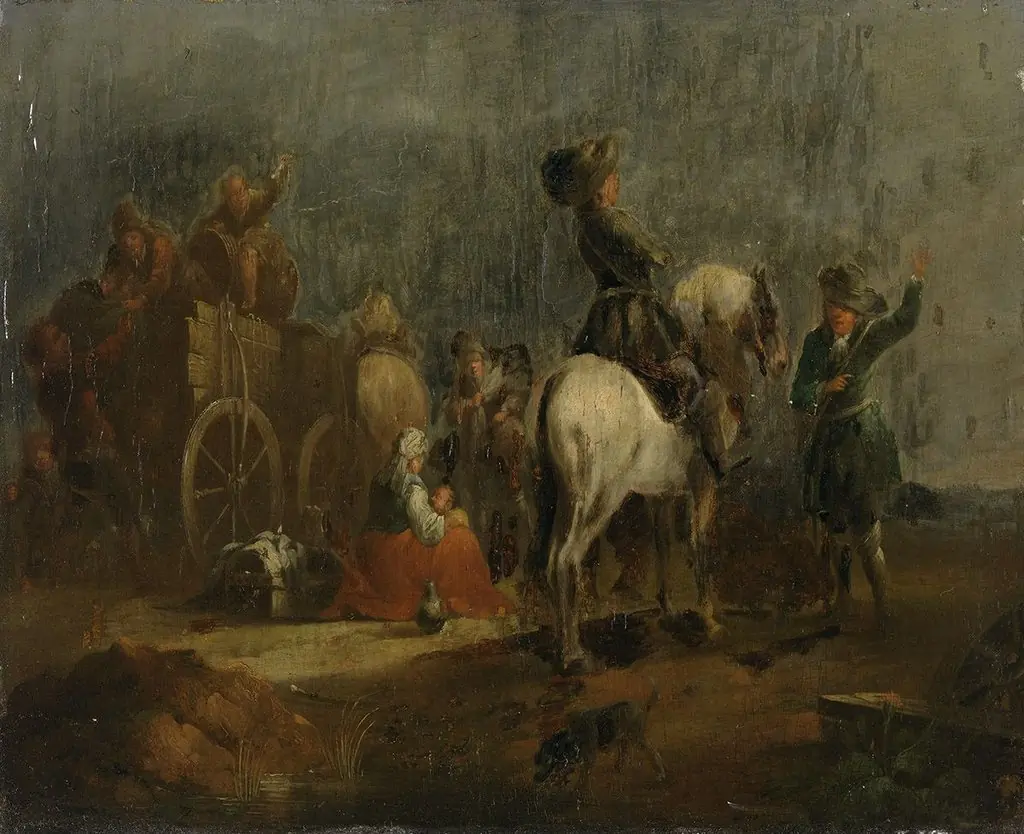 Fahrendes Volk mit Reiter bei der Rast (Nachfolger)
 Fair in Nowy Targ
 Don Quijote en el carro saliendo de la venta
 Fair in a Small Town
 Sisäkuva koulusta, luonnos
 Peasants in a barn
 Pilgrimage in the Kempen