Artwork
Oyster Eaters
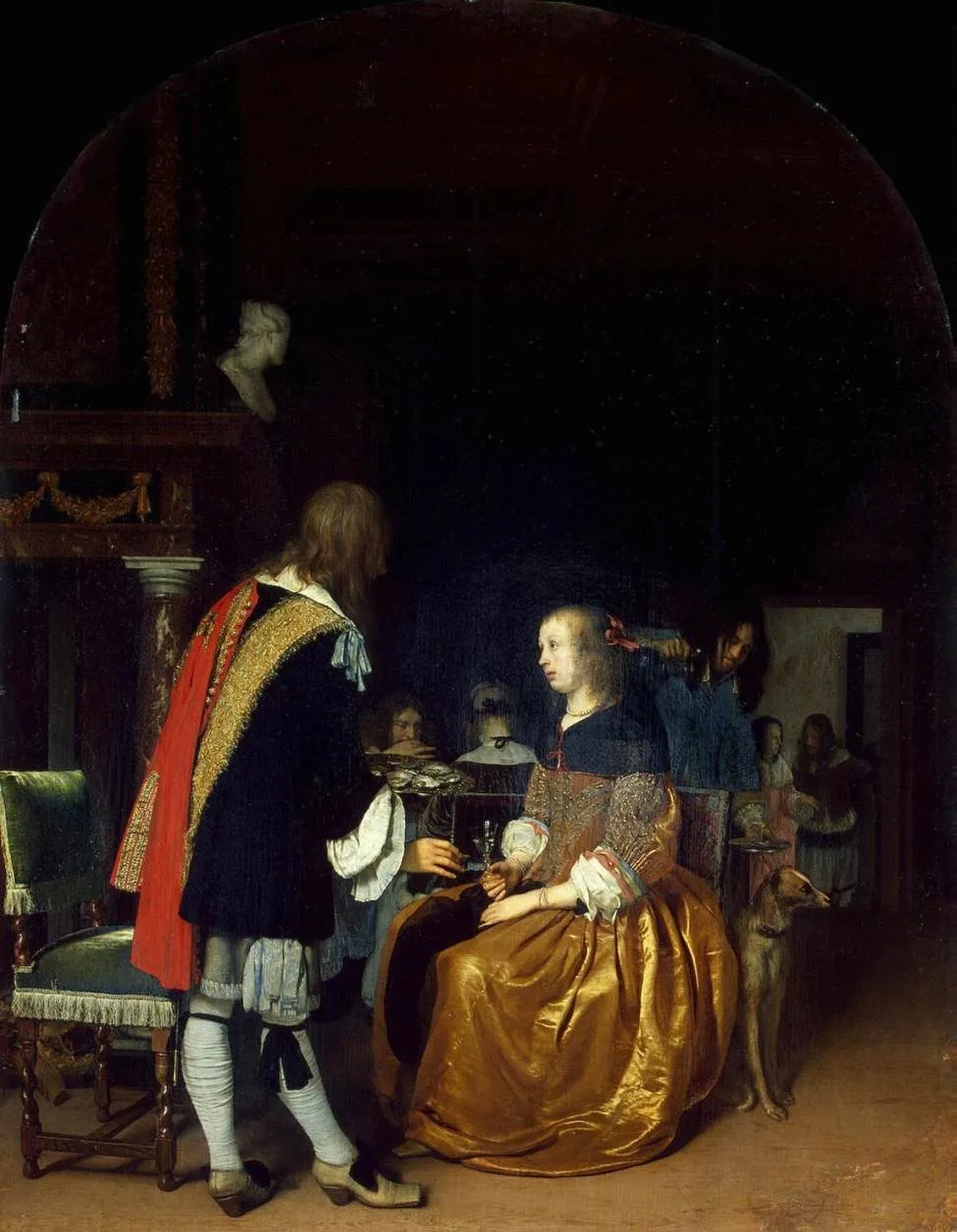
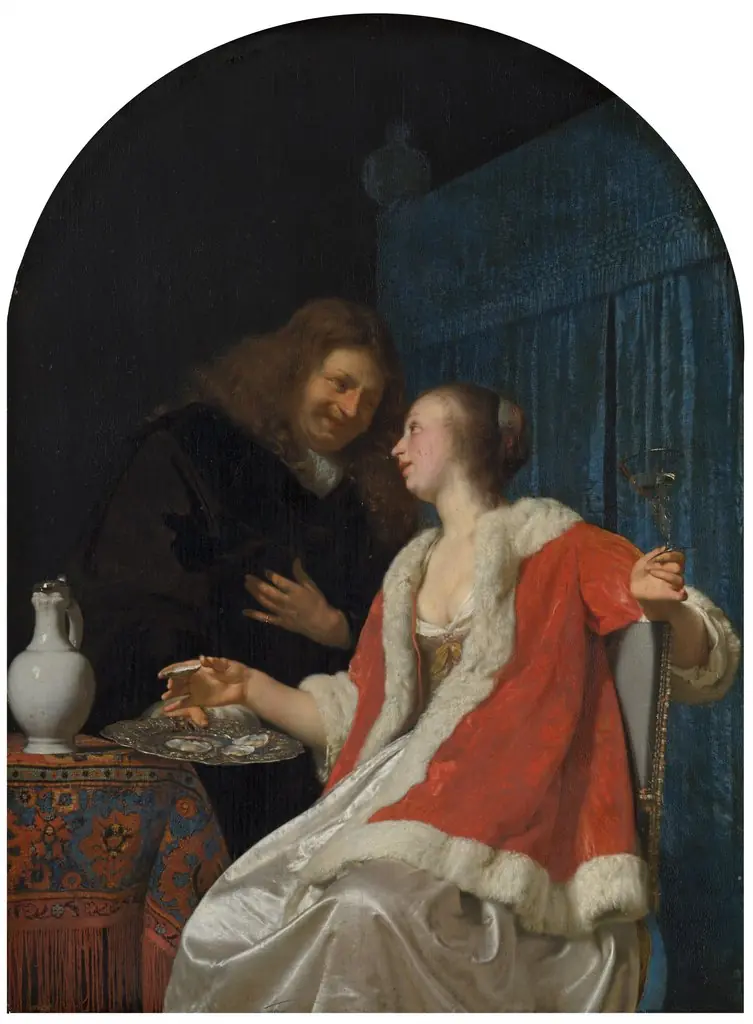
Oyster Eaters is an oil painting by the Dutch Golden Age artist Frans van Mieris the Elder. It dates from 1659 and is held in the collection of the Hermitage Museum.
About this work
Overview
Frans van Mieris the Elder, a prominent Leiden painter of the Dutch Golden Age, completed the panel painting *Oyster Eaters* in 1659. The work belongs to his series of genre scenes that capture intimate domestic moments. Today the piece is part of the State Hermitage Museum’s collection, where it is displayed among other 17th‑century Dutch artworks.
Subject & Meaning
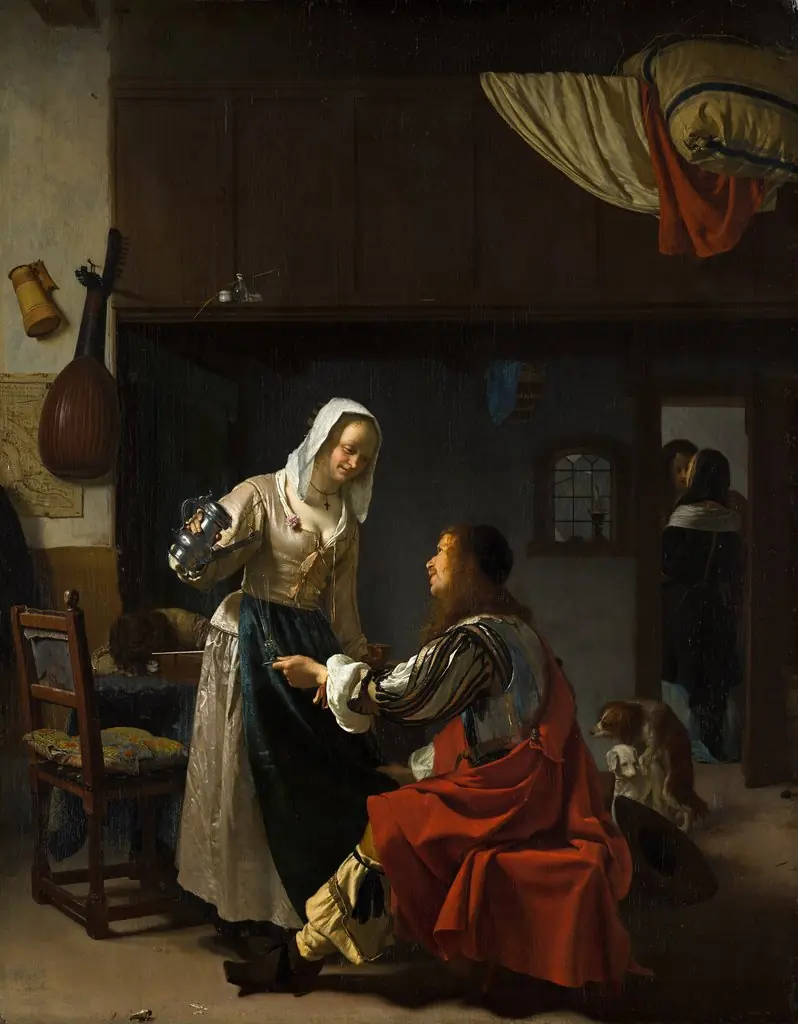
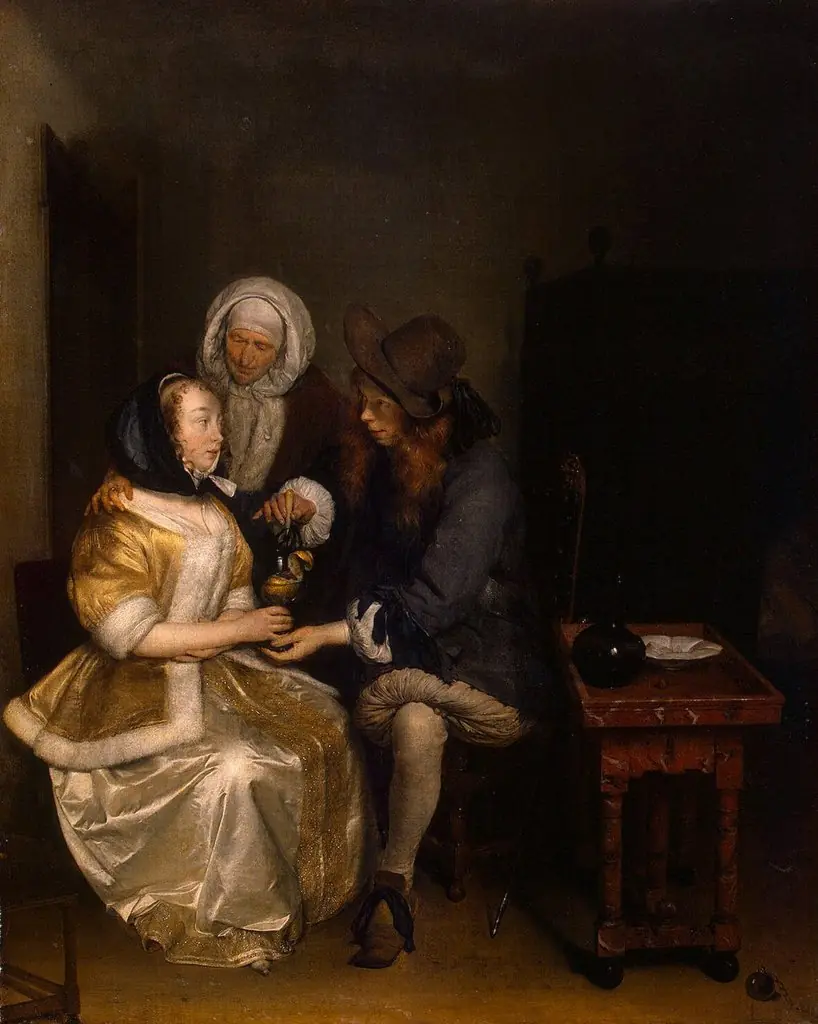
The composition presents a couple sharing oysters, a delicacy associated with luxury and sensuality in 17th‑century Dutch culture. The man, dressed in a dark coat accented by a red sash, leans toward a woman in a gleaming gold dress who holds a small dish. A dog lies nearby, and additional figures linger in shadow, suggesting a convivial yet private gathering.
Technique & Style
Mieris employs a pronounced chiaroscuro, allowing the illuminated faces and the metallic sheen of the woman’s dress to emerge from a dimly lit interior. The careful rendering of textures—fabric, metal, and flesh—demonstrates his meticulous approach to detail, a hallmark of his family’s painting tradition.
History & Provenance
Created during the height of the Dutch genre‑painting tradition, *Oyster Eaters* reflects the artist’s established reputation in Leiden. The painting entered the State Hermitage Museum’s holdings in the 20th century, where it has remained a representative example of Mieris’s refined domestic scenes.
Artist & collection
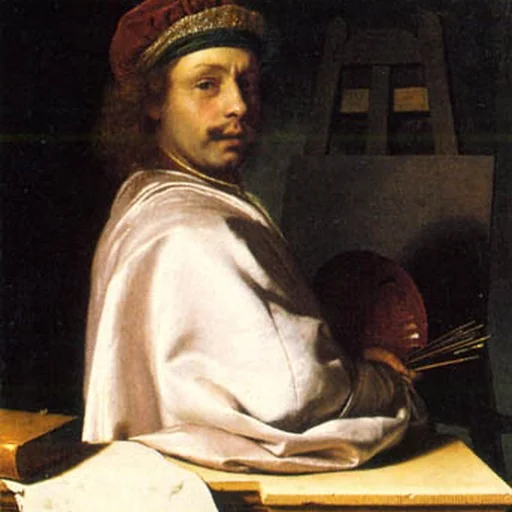
Artist
Frans van Mieris the Elder (16 April 1635 – 12 March 1681), was a Dutch Golden Age genre and portrait painter.