Artwork
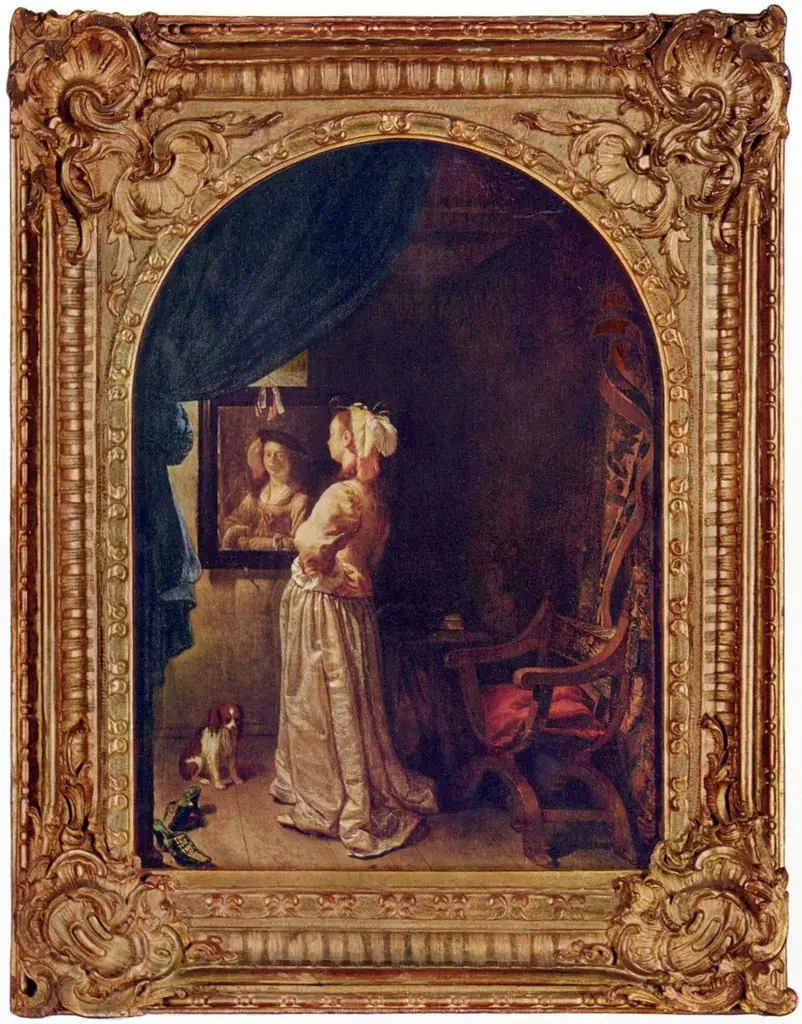
Young Woman at her Toilet
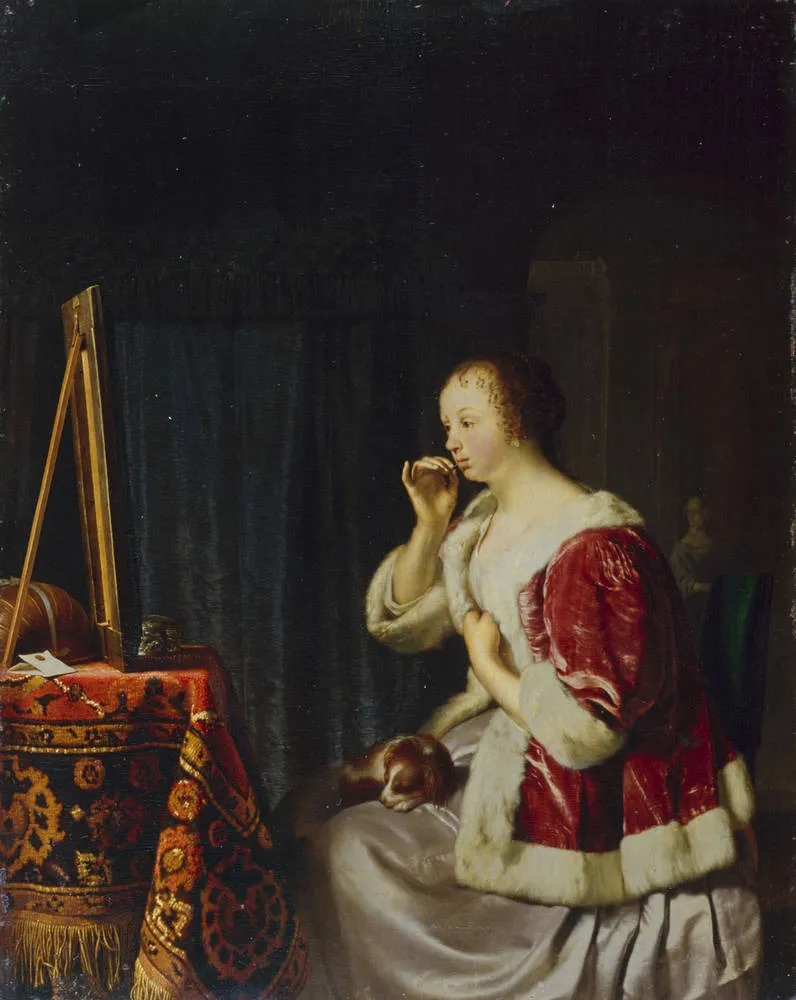
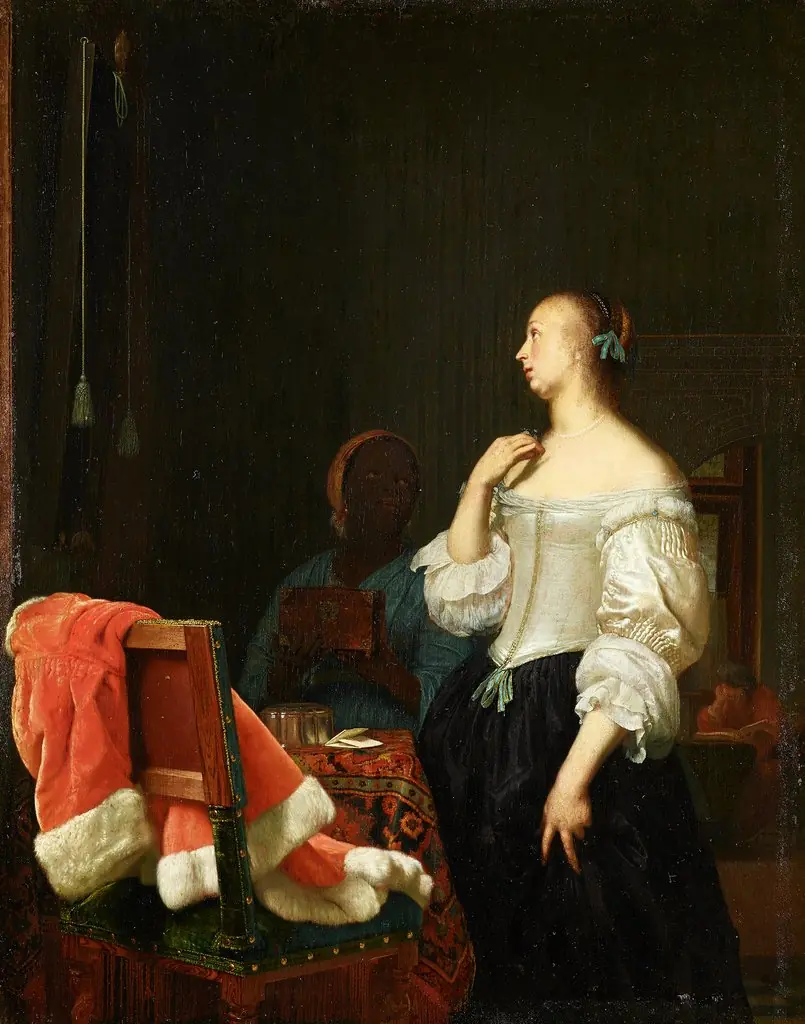
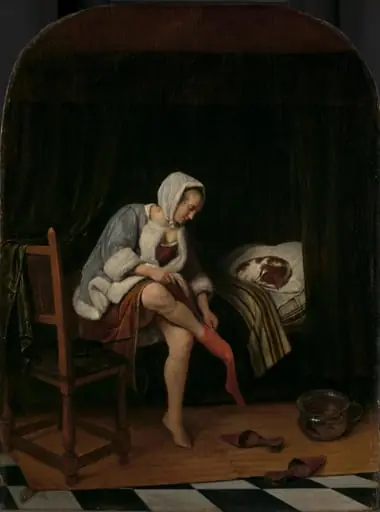
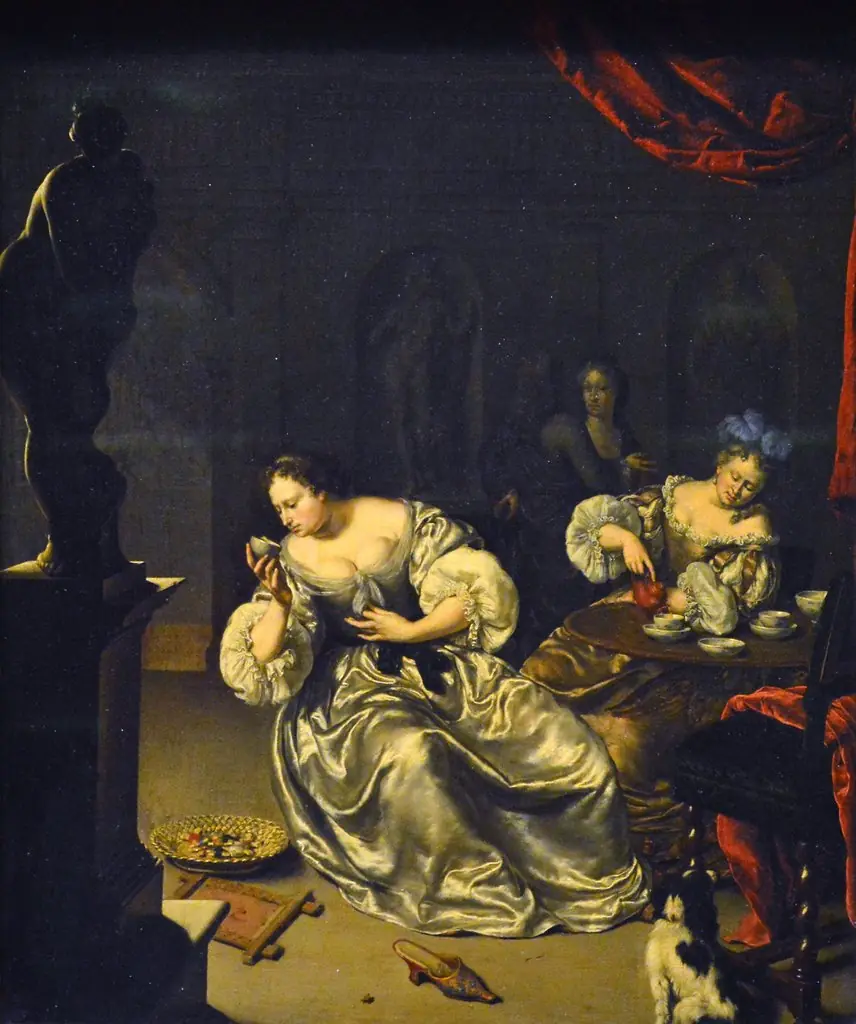
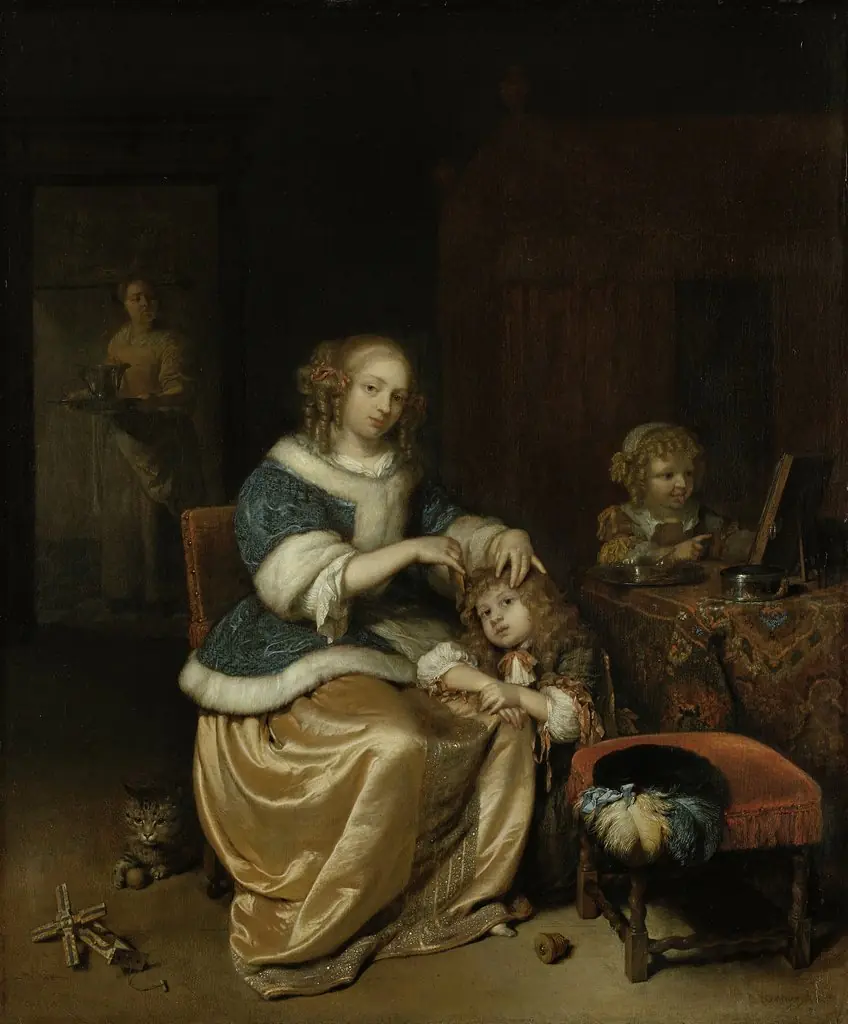
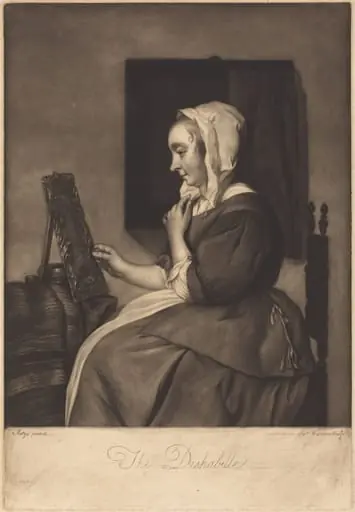
Young Woman at her Toilet is an oil painting by the Dutch Golden Age artist Frans van Mieris the Elder. It dates from 1667 and is held in the collection of the Staatliche Kunstsammlungen Dresden.
About this work
Overview
A refined example of Dutch Golden Age genre painting, it reflects the artist’s precision in rendering domestic interiors and quiet, introspective figures.
Painted in 1667 by Frans van Mieris the Elder, this oil-on-canvas work captures a private moment of a young woman engaged in her morning ritual. A refined example of Dutch Golden Age genre painting, it reflects the artist’s precision in rendering domestic interiors and quiet, introspective figures. The piece resides today in the Gemäldegalerie Alte Meister in Dresden, part of a broader tradition of intimate scene-painting cultivated in Leiden.
Subject & Meaning
The woman, seated before a mirror, gazes at her reflection with subdued attention, her hand near her mouth in a gesture of quiet self-awareness. The presence of a small dog resting on her lap suggests companionship and domestic tranquility. Rather than portraying vanity, the scene emphasizes introspection—her stillness invites contemplation of inner life, not external adornment, aligning with the era’s nuanced view of feminine solitude.
Technique & Style
Mieris employed fine brushwork to render textures with exceptional clarity: the plush velvet of her coat, the sheen of the mirror, the soft fur trim, and the intricate pattern of the tablecloth. Chiaroscuro modulates the light to model form and deepen spatial depth, while subtle highlights on metal and glass objects enhance realism. The palette remains restrained, dominated by deep reds and muted tones, reinforcing the painting’s intimate mood.
History & Provenance
Created during the height of Mieris’s career in Leiden, the painting entered the Dresden collection in the 18th century, likely through the Saxon royal acquisitions of Dutch art. It has remained in the Gemäldegalerie Alte Meister since, with no documented changes in ownership or significant restoration. Its preservation reflects its early recognition as a work of technical distinction within the Dutch tradition.
Context
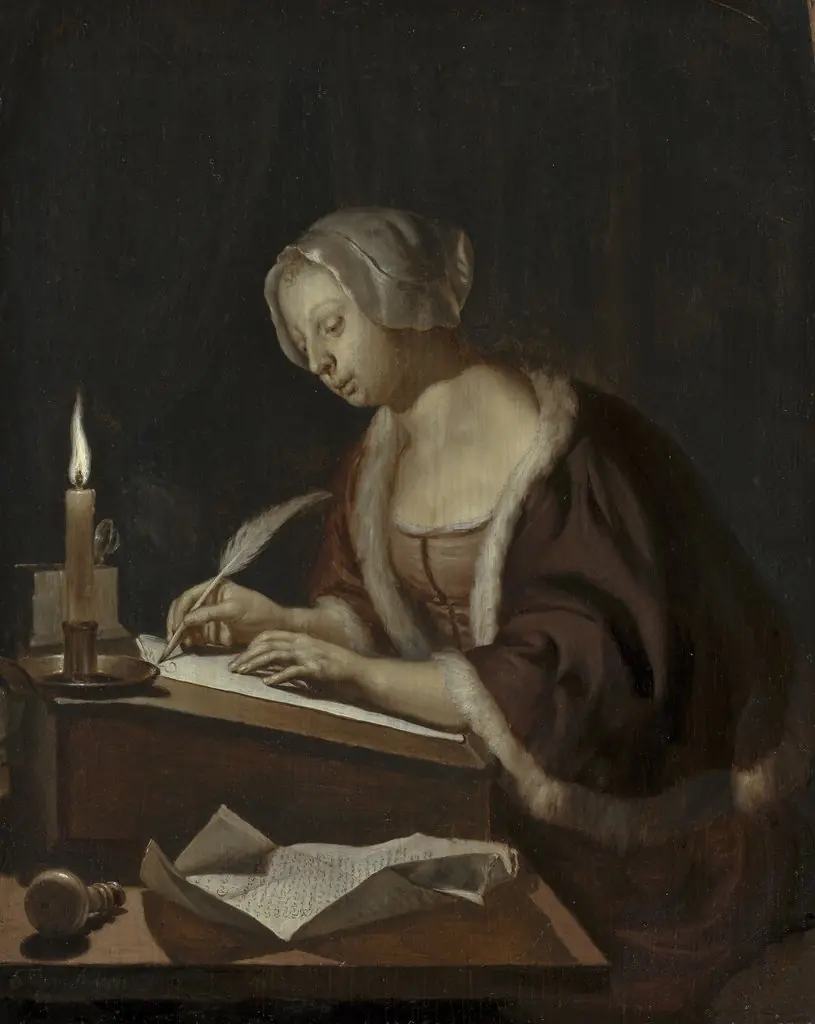
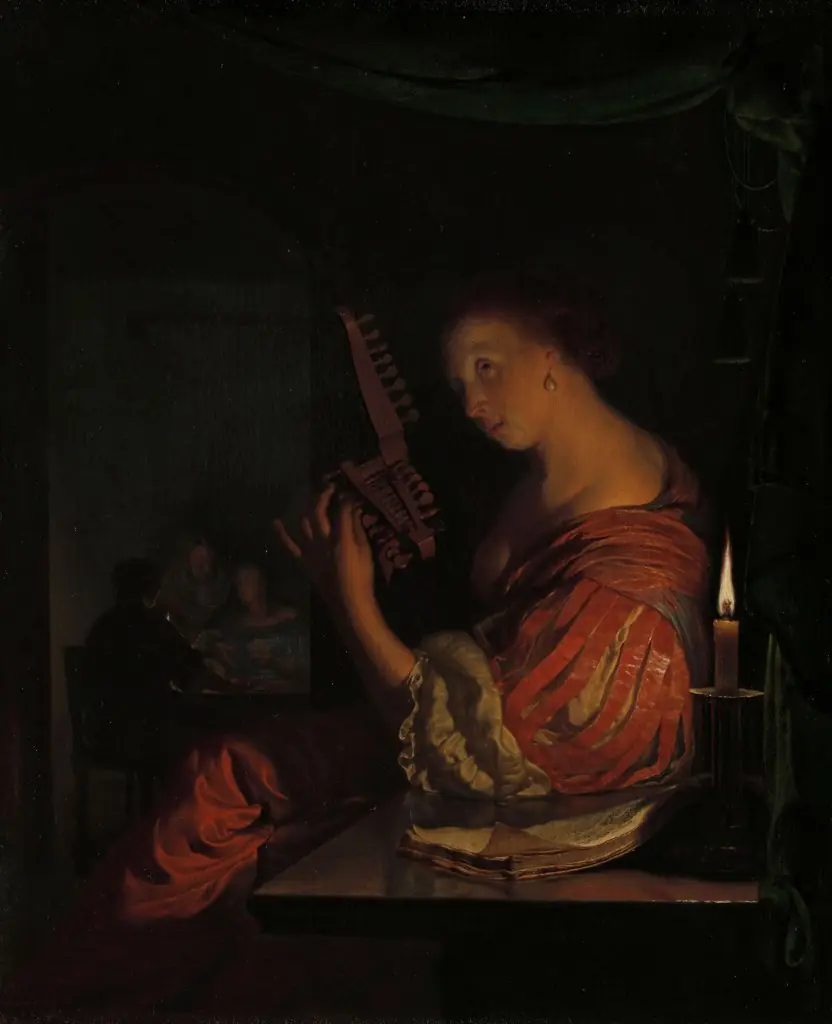
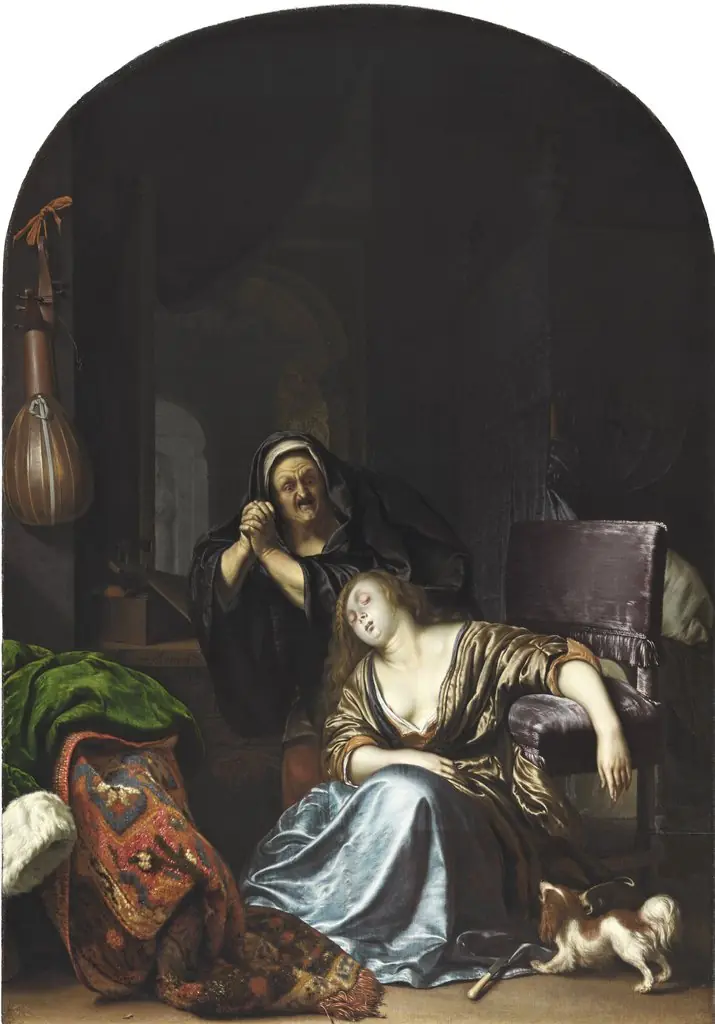
This painting belongs to a genre popular in 17th-century Holland, where artists depicted private moments of women in domestic settings—dressing, writing, or playing music. Unlike overtly moralizing scenes, Mieris’s work avoids narrative judgment, instead offering a calm observation of daily ritual. His family’s artistic lineage, spanning three generations, reinforced a style focused on detail, elegance, and psychological subtlety.
Legacy
Mieris’s influence extended through his descendants and contemporaries who refined the Leiden fijnschilder tradition. While later movements favored broader brushwork, this painting endures as a benchmark of precision and restraint. Its quiet dignity and technical control continue to inform scholarly study of Dutch genre painting, particularly in how everyday moments are rendered with emotional gravity.
Artist & collection
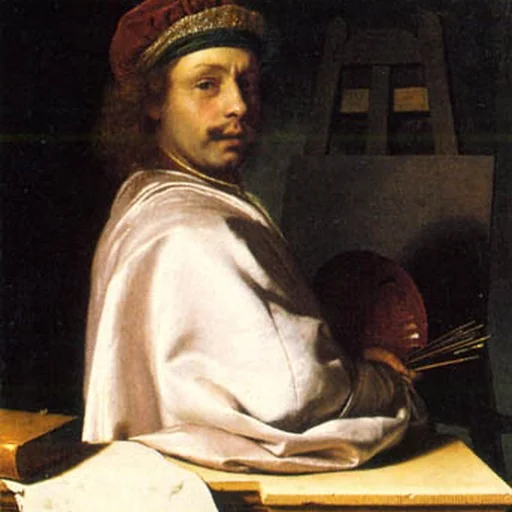
Artist
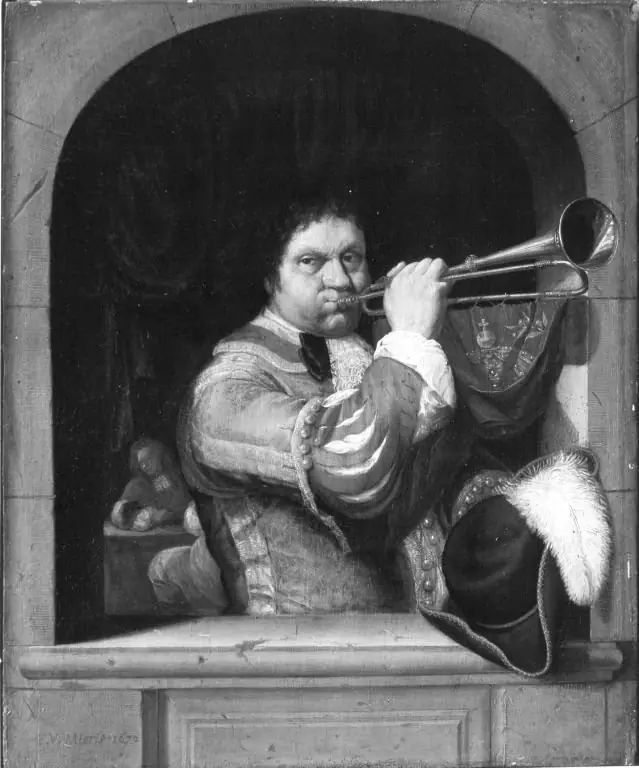
Frans van Mieris the Elder (16 April 1635 – 12 March 1681), was a Dutch Golden Age genre and portrait painter.