Artwork
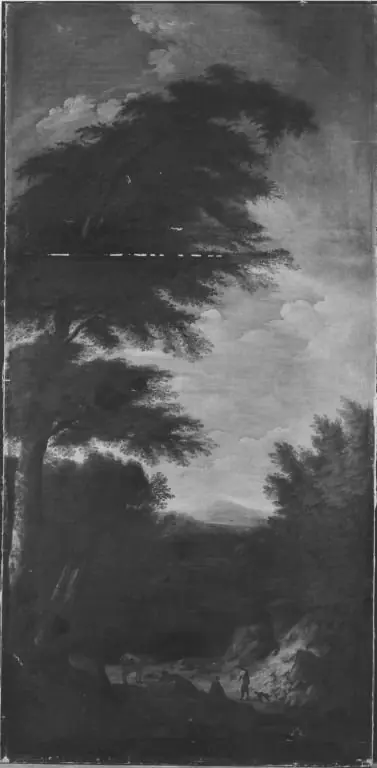
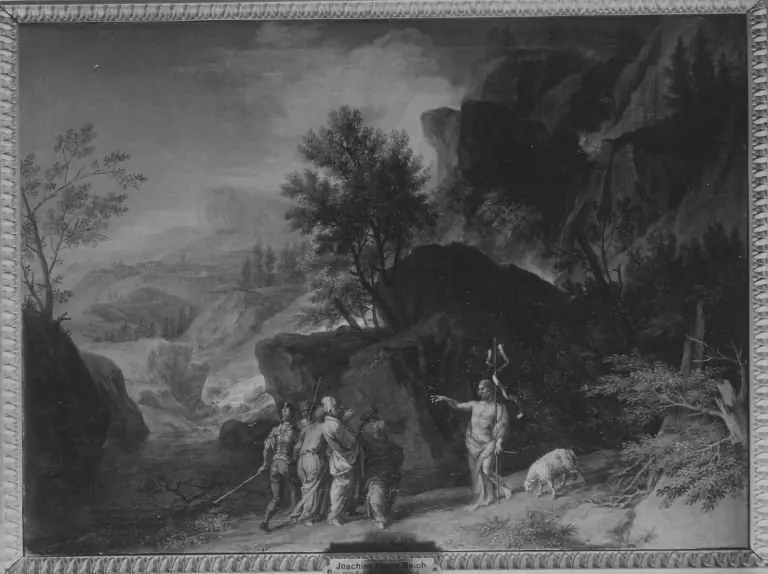
Felsenlandschaft mit Eustachiuslegende
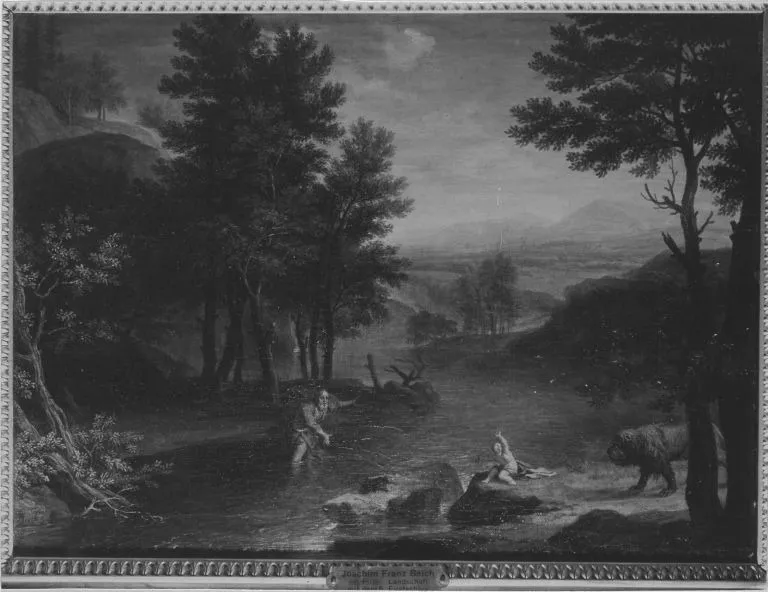
Felsenlandschaft mit Eustachiuslegende is an unspecified painting by the Rococo painting artist Franz Joachim Beich. It dates from 1730 and is held in the collection of the Bavarian State Painting Collections.
About this work
Overview
It resides in the Alte Pinakothek in Munich, where it is cataloged as part of the museum’s 18th-century German and Austrian holdings.
Painted in 1730 by Franz Joachim Beich, this landscape work integrates a biblical narrative into a naturalistic setting. It resides in the Alte Pinakothek in Munich, where it is cataloged as part of the museum’s 18th-century German and Austrian holdings. The composition balances serene scenery with an underlying moment of tension, reflecting Beich’s interest in merging devotional themes with topographical detail.
Subject & Meaning
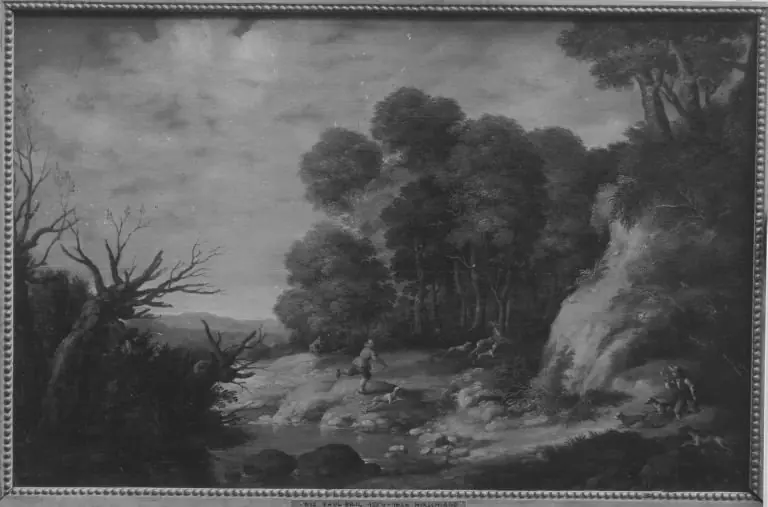
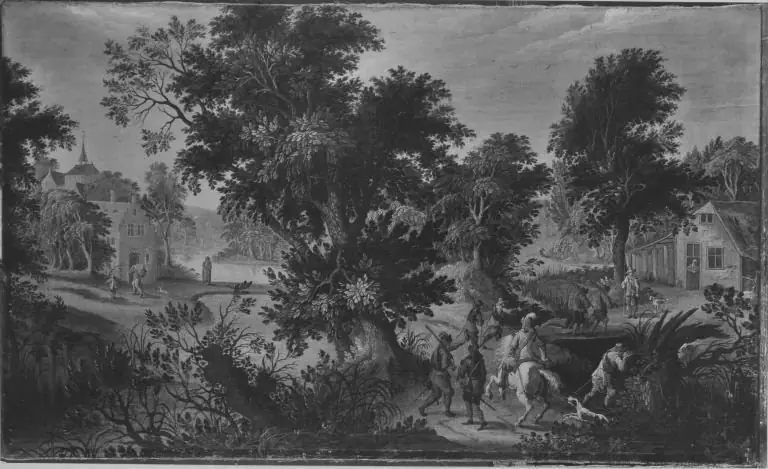
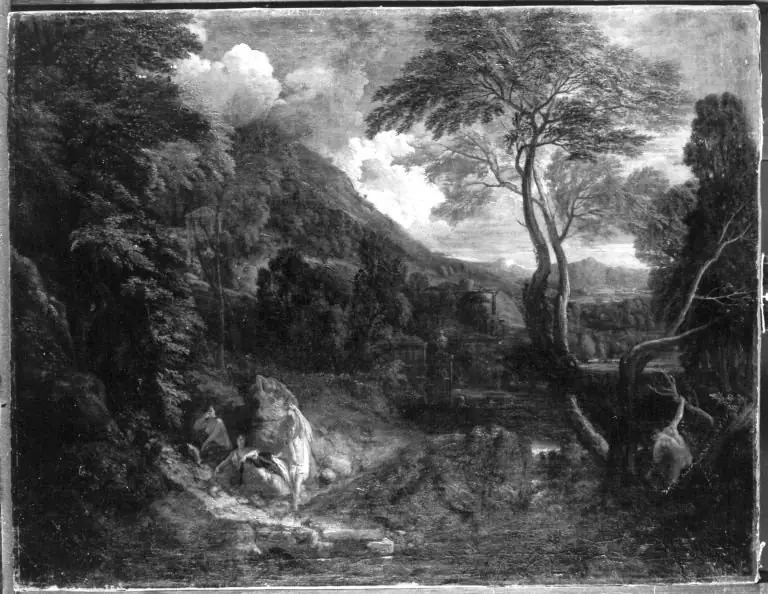
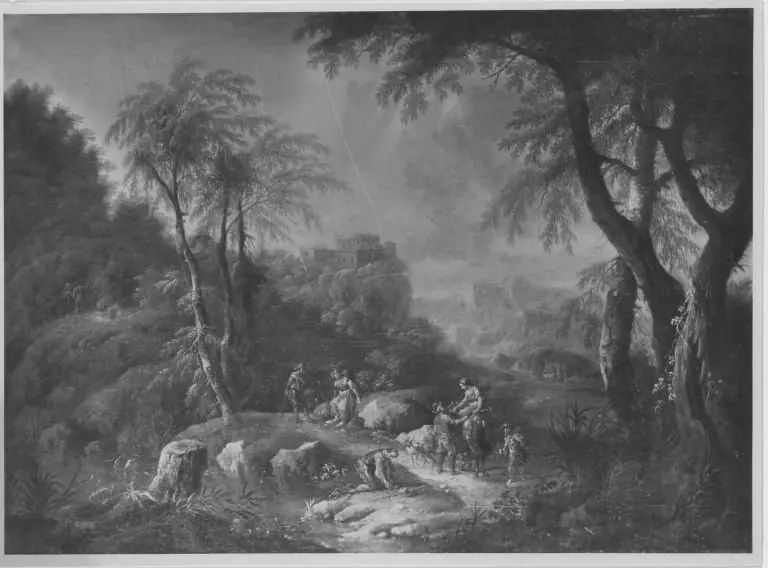
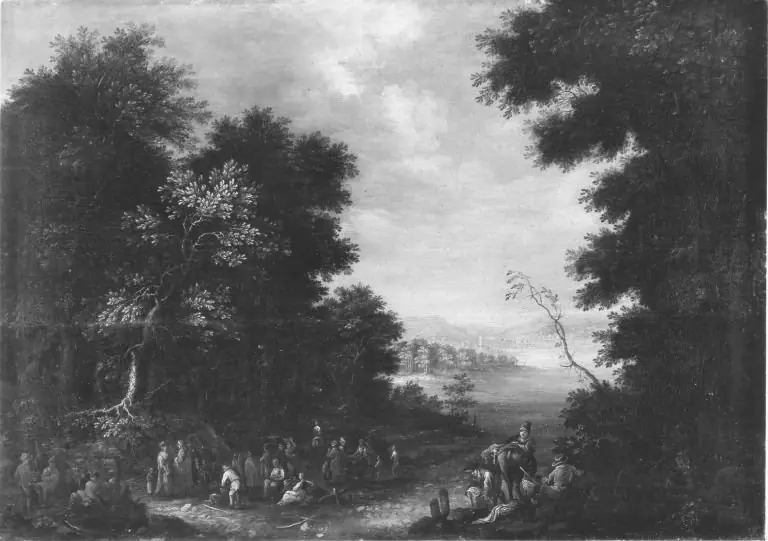
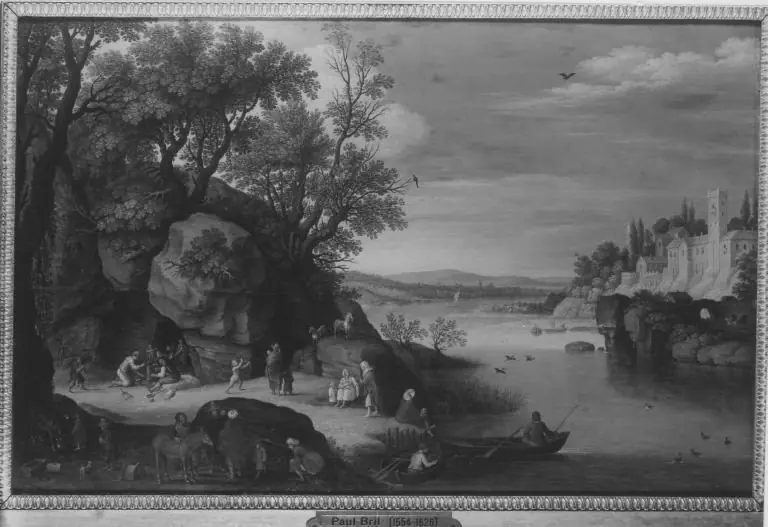
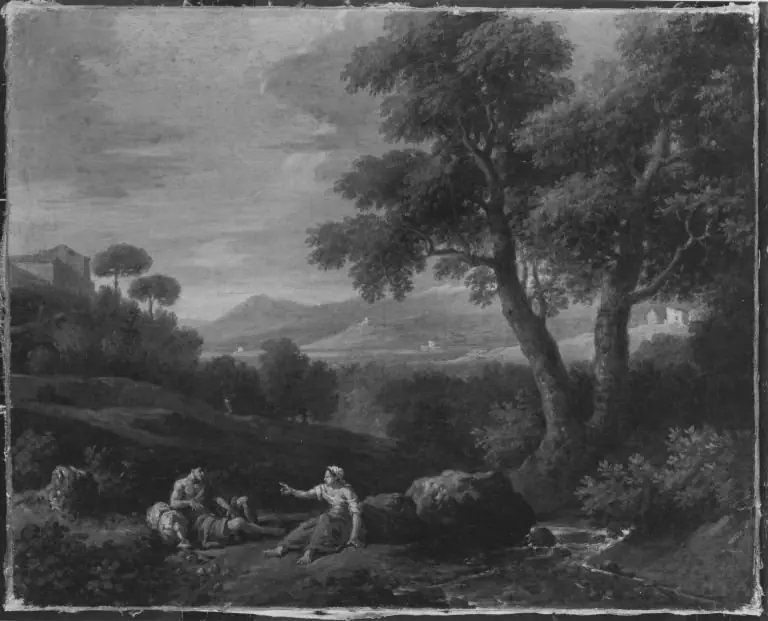
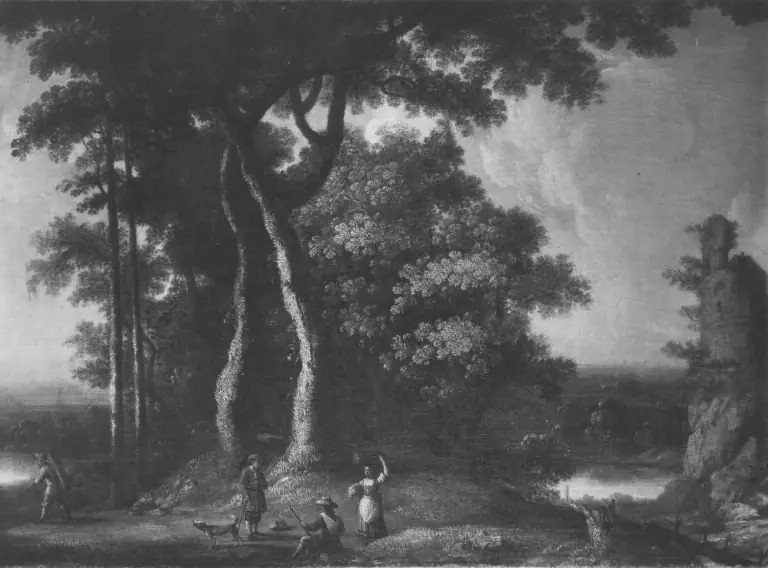
The scene illustrates the legend of Saint Eustace, a Roman general who, while hunting, encountered a stag with a crucifix between its antlers—a divine revelation that led to his conversion. The bear approaching the figures symbolizes the perilous wilderness through which Eustace traveled, while the figures on the riverbank represent his transformed life. The moment captures spiritual awakening amid nature’s quietude and danger.
Technique & Style
Beich employs soft chiaroscuro to model the terrain and figures, enhancing spatial depth without dramatic contrast. Brushwork is precise yet unobtrusive, favoring atmospheric cohesion over textural flourish. The sky, lightly rendered with muted clouds, unifies the composition, while the river’s reflective surface adds a subtle rhythm. His style aligns with German landscape traditions that prioritize mood over theatricality.
History & Provenance
The painting entered the Alte Pinakothek’s collection in the 19th century, likely through the Bavarian royal acquisitions that expanded the museum’s holdings of Northern European art. Its attribution to Beich has been consistently supported by stylistic analysis and archival records. No significant alterations or restorations are documented, preserving its original tonal balance and compositional intent.
Context
In early 18th-century Germany, religious narratives were often embedded in landscape painting as a means of moral reflection. Beich’s work reflects this trend, aligning with contemporaries who favored tranquil scenes infused with spiritual symbolism. Unlike Italianate idealized vistas, his approach remains grounded in observed nature, reflecting regional tastes for authenticity over grandeur.
Legacy
Though not widely known outside German-speaking regions, Beich’s integration of hagiography into landscape painting contributes to a broader understanding of how religious themes persisted in secular art forms. His work offers insight into the quiet devotional culture of 18th-century Bavaria, where nature served as both setting and symbol for sacred experience.
Artist & collection