Artwork
Two Hens and a Cock
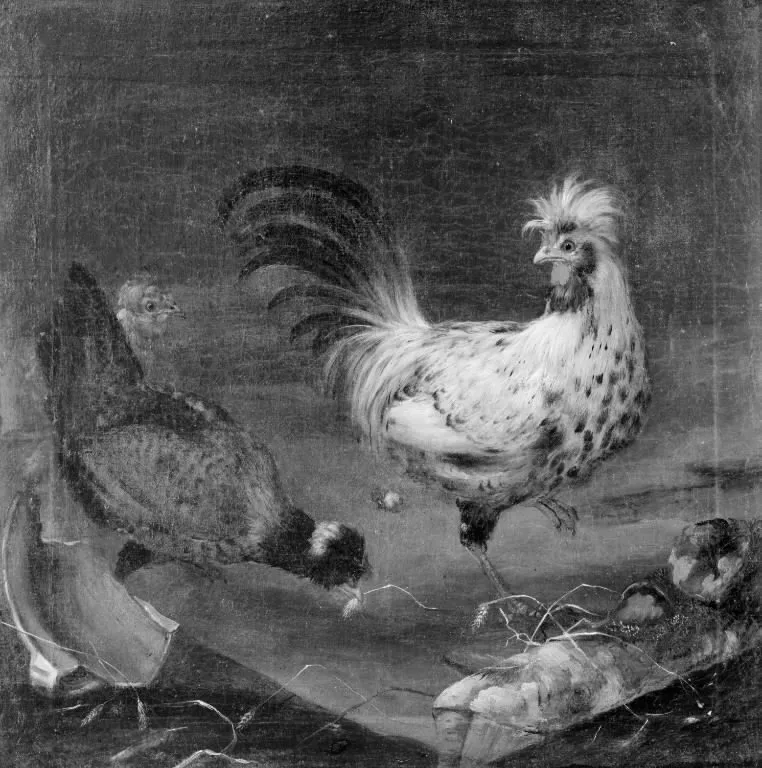
Two Hens and a Cock is an oil painting by the Rococo painting artist Franz Roos. It dates from 1704 and is held in the collection of the Statens Museum for Kunst.
About this work
Overview
Franz Roos’s oil painting Two Hens and a Cock, executed in 1704, presents a modest still‑life of three domestic fowl. The work is part of the collection of Denmark’s Statens Museum for Kunst, where it is displayed among other examples of early‑18th‑century animal painting.
Subject & Meaning
The composition features a white‑spotted rooster and two hens of differing size and plumage. The rooster’s bright comb and fluffy feathers dominate the scene, while the smaller hen appears plain and the larger one shows a more unkempt texture, suggesting a study of variety within a single species.
Technique & Style
Roos renders the birds with a tactile brushwork that emphasizes the roughness of feathers, especially on the rooster. A dark, indistinct background creates a chiaroscuro effect, allowing the illuminated birds to emerge sharply from the surrounding gloom, a common device in Baroque animal studies.
History & Provenance
Painted in the early 1700s, the work entered the Statens Museum for Kunst’s holdings during the museum’s early acquisitions of European Baroque art. Its provenance prior to the museum’s purchase is not extensively documented, but the painting has remained in public collections since the 19th century.
Context
Roos, a German‑born artist active in the Austrian court, produced numerous animal subjects for aristocratic patrons. Two Hens and a Cock reflects the period’s interest in naturalistic observation and the decorative potential of everyday creatures within a refined, academic framework.
Artist & collection

 Two Hens and a Cock
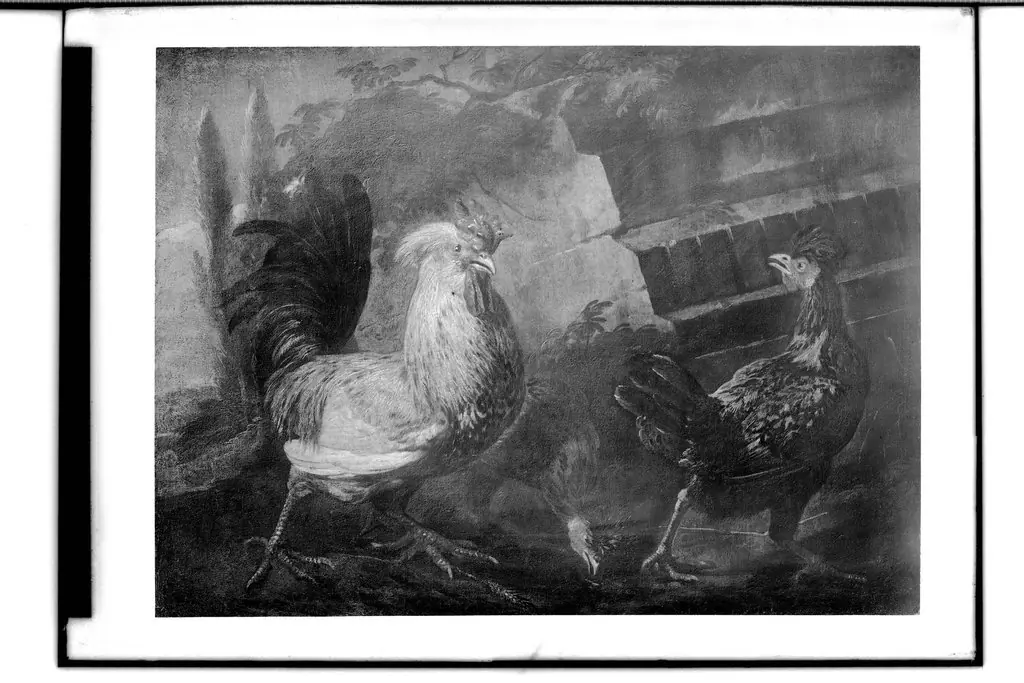 Rooster and hens
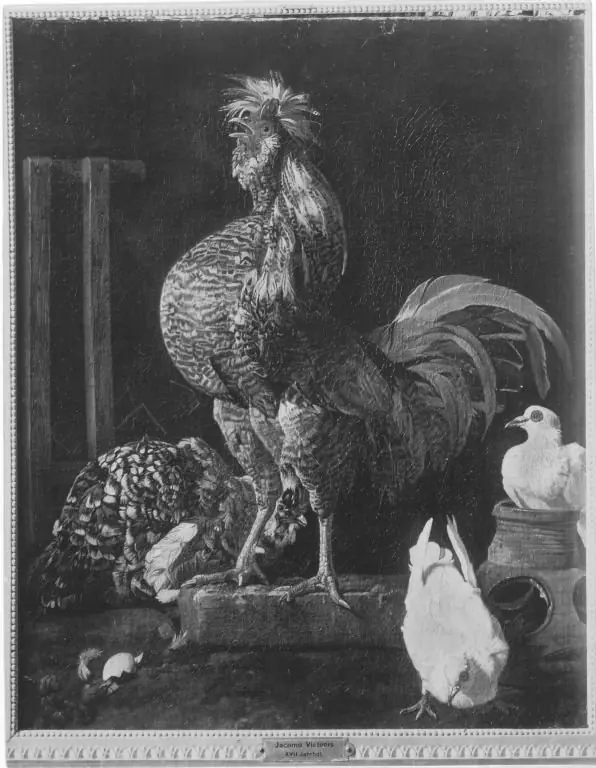 Rooster, Hen and Pigeons
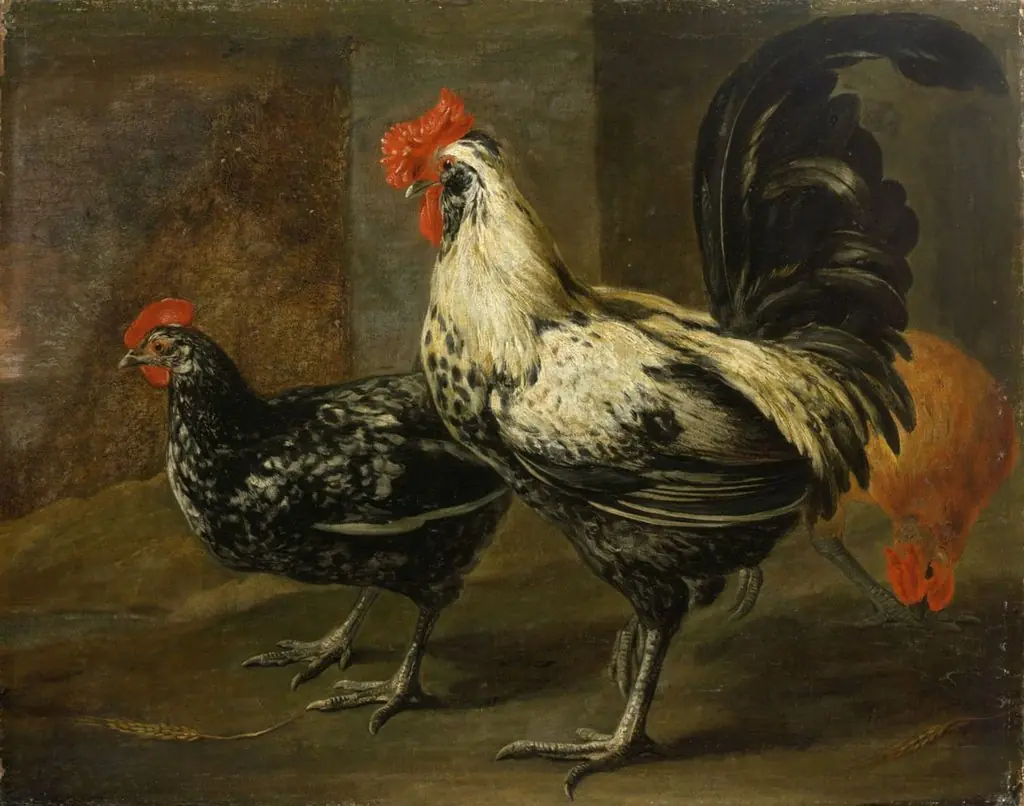 Cockerel and Hens
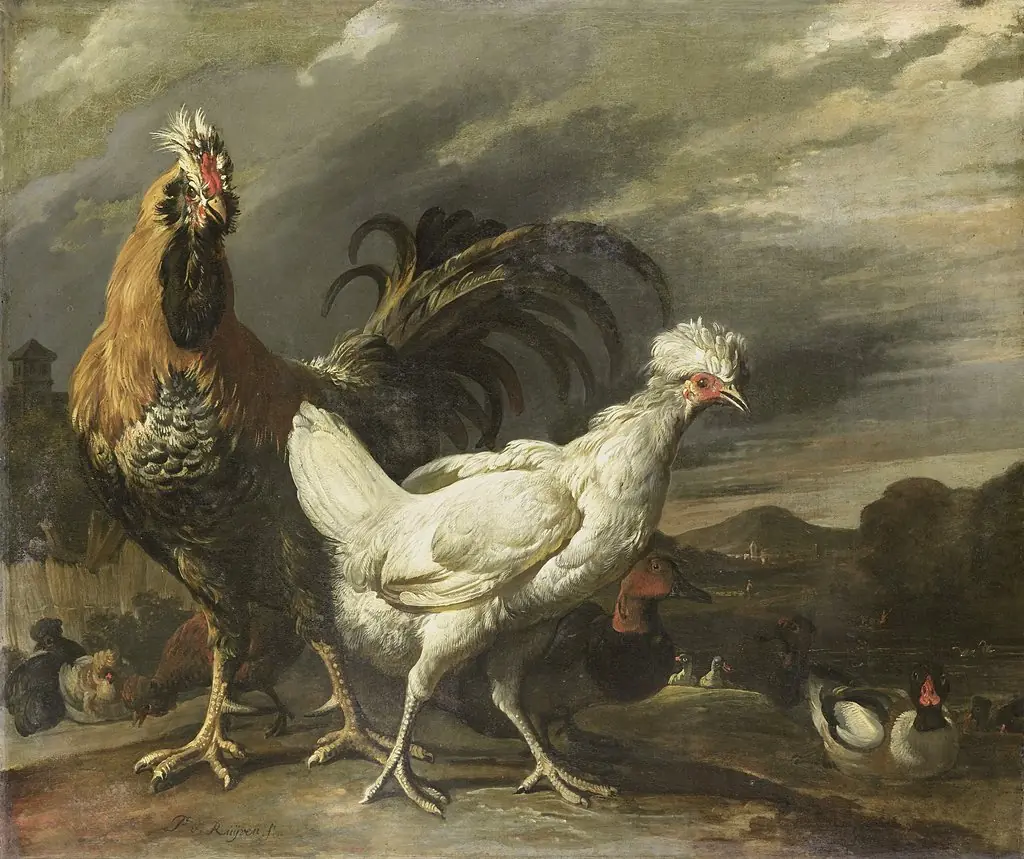 Cock, a Hen and other Poultry
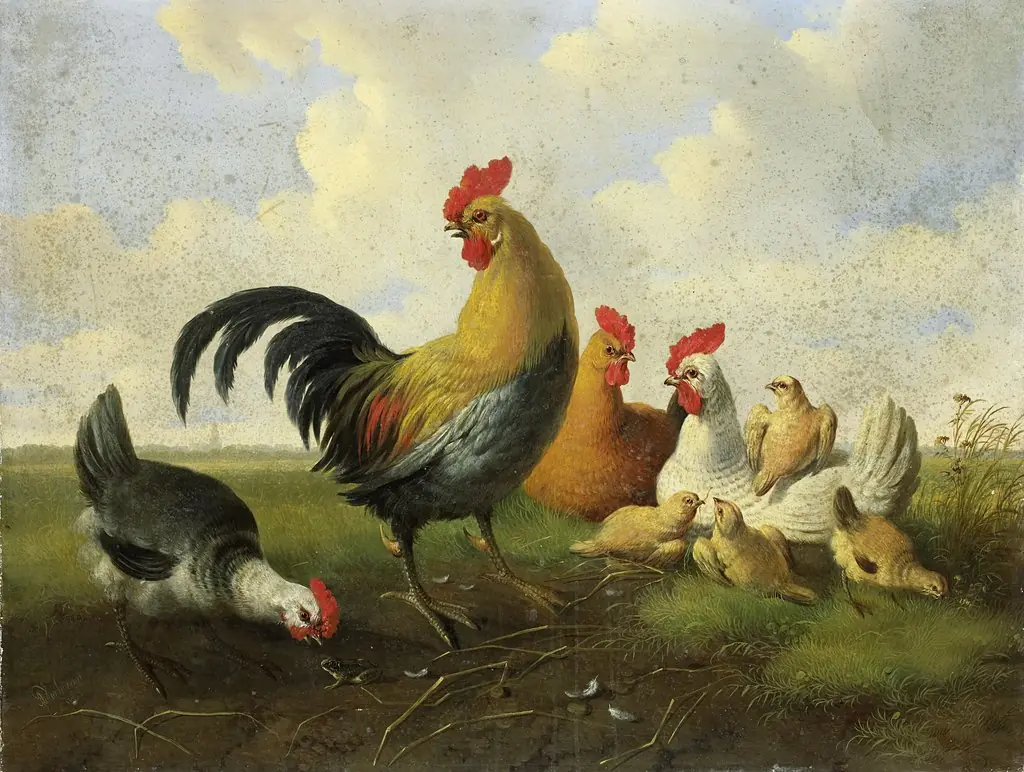 A rooster with Hens and Chicks
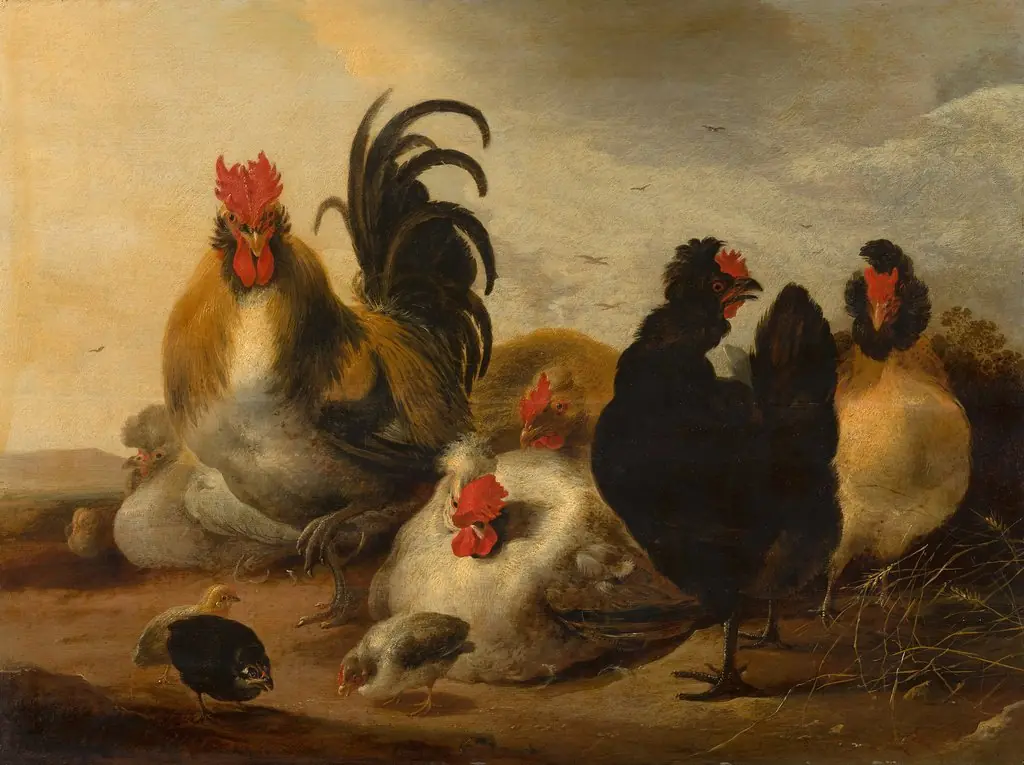 Cock and Hens in a Landscape
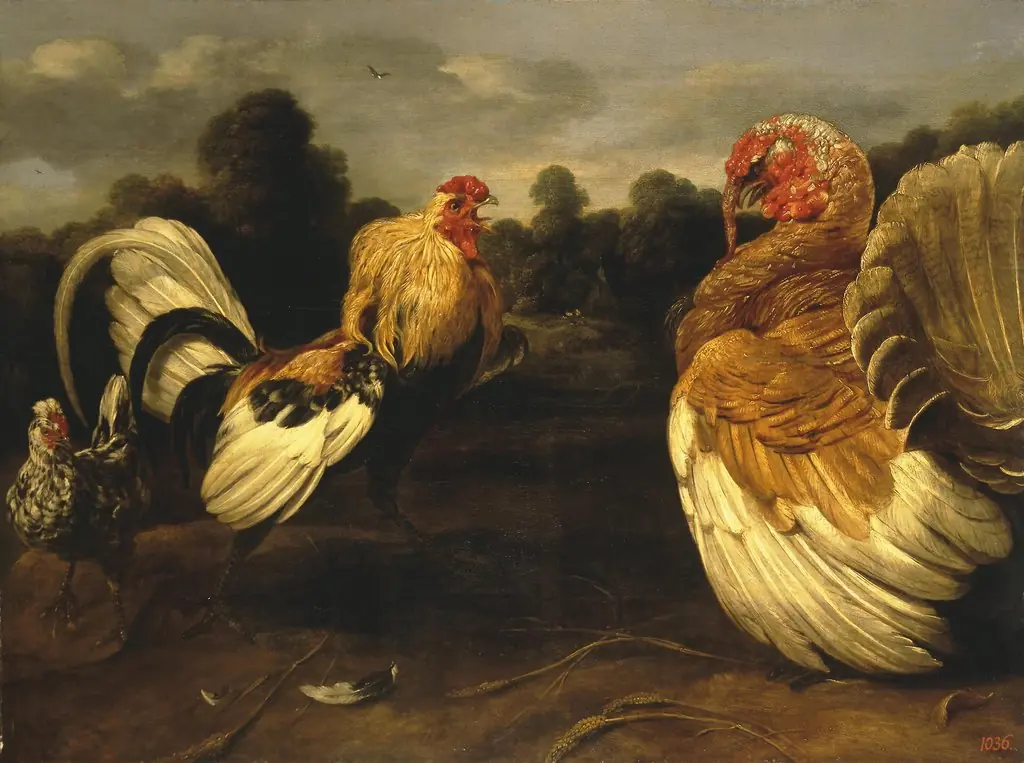 Fight of a Rooster and a Turkey Cock
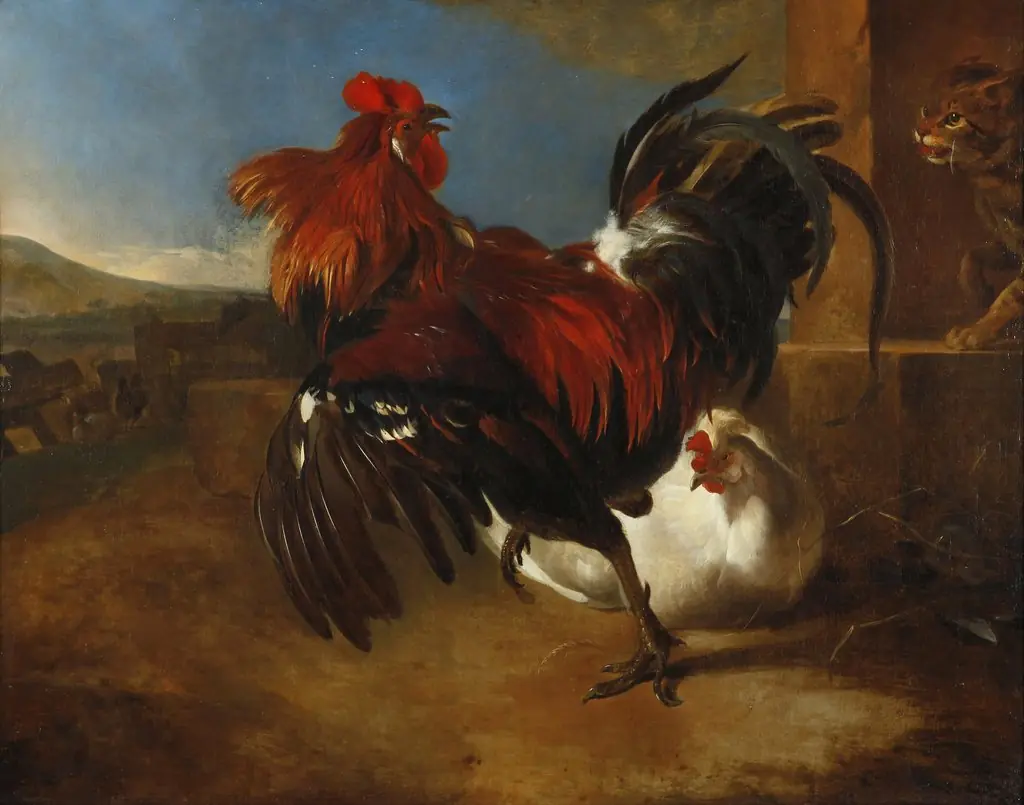 Poultry-yard with angered cock
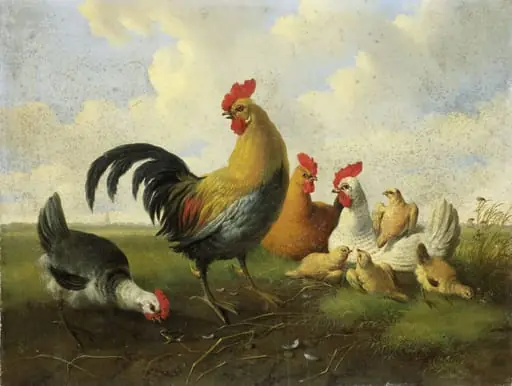 A rooster with Hens and Chicks
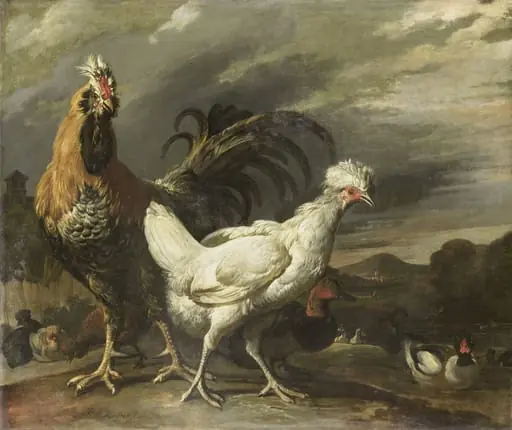 Cock, a Hen and other Poultry
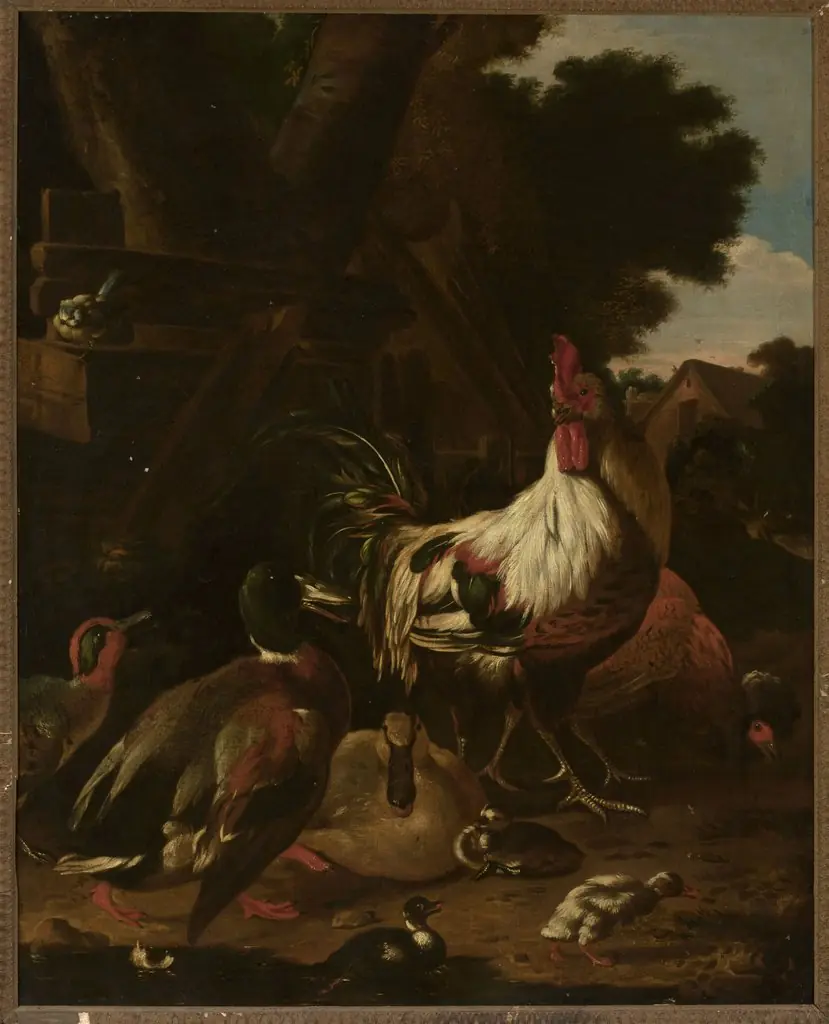 Rooster and ducks