Artwork
Jagdstillleben
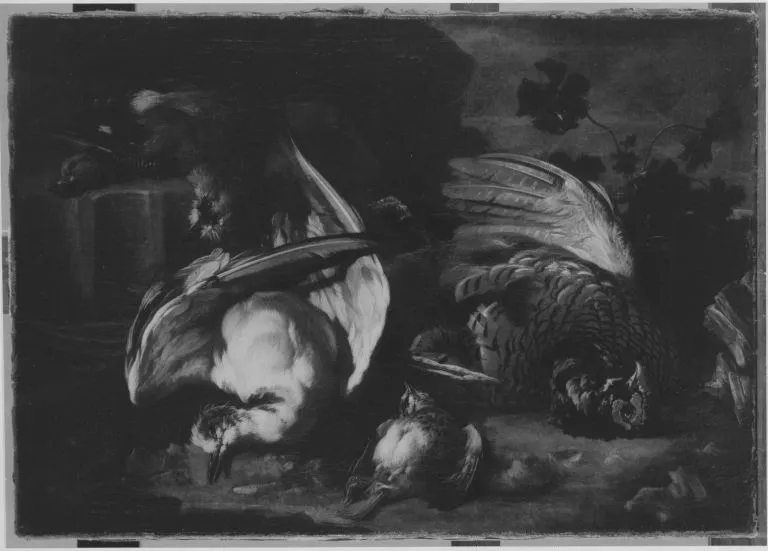
Jagdstillleben is an unspecified painting by the Rococo painting artist Franz Werner Tamm. It dates from 1705 and is held in the collection of the Bavarian State Painting Collections.
About this work
Overview
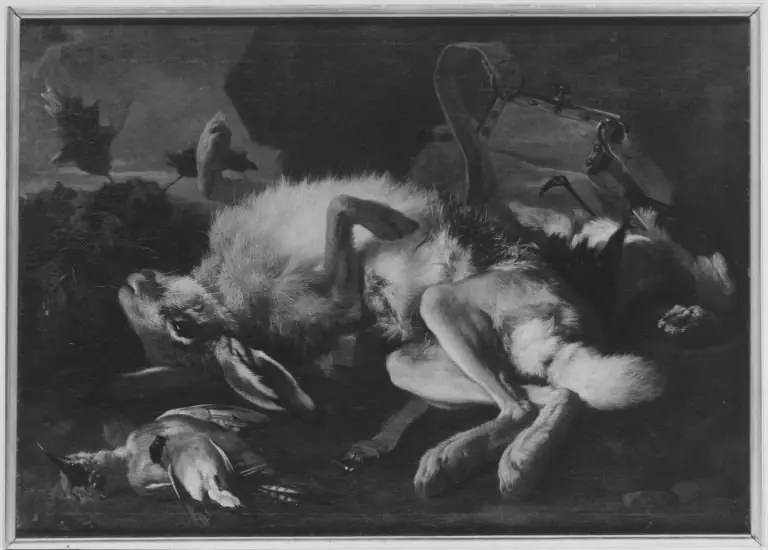
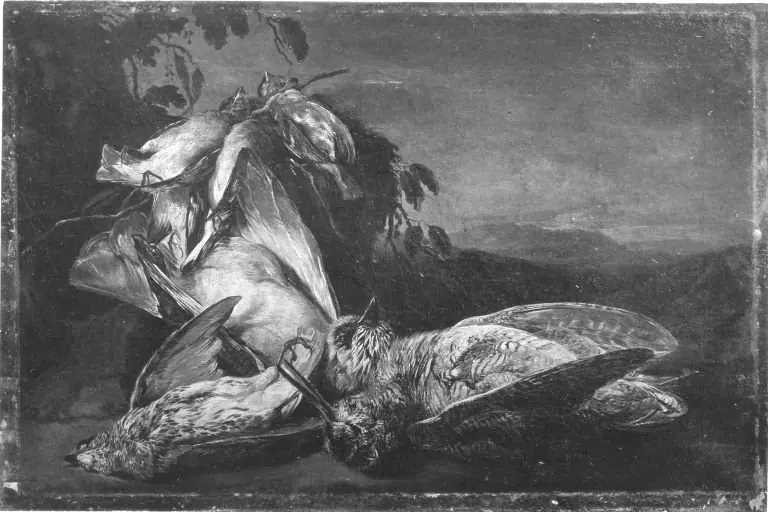
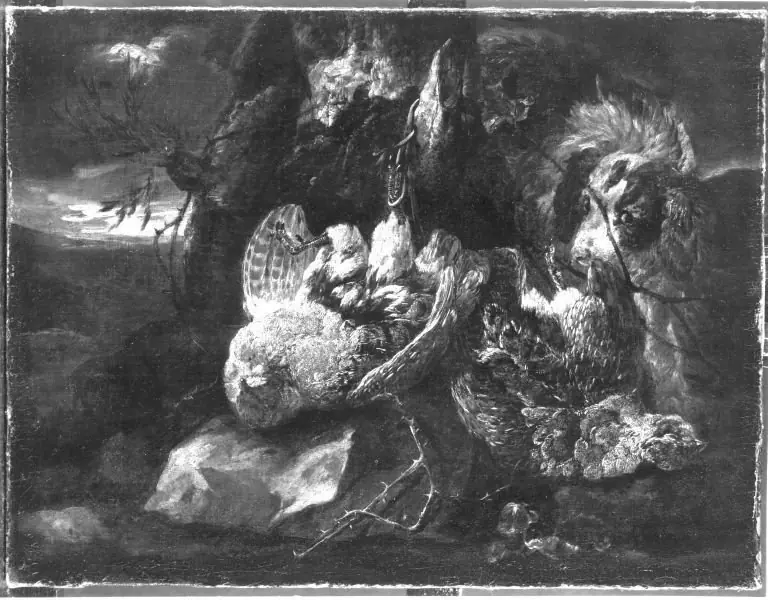
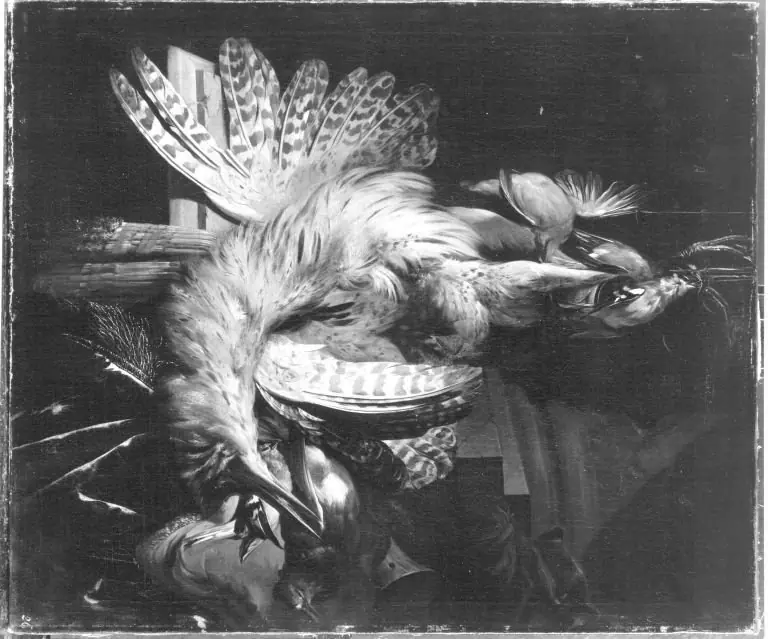
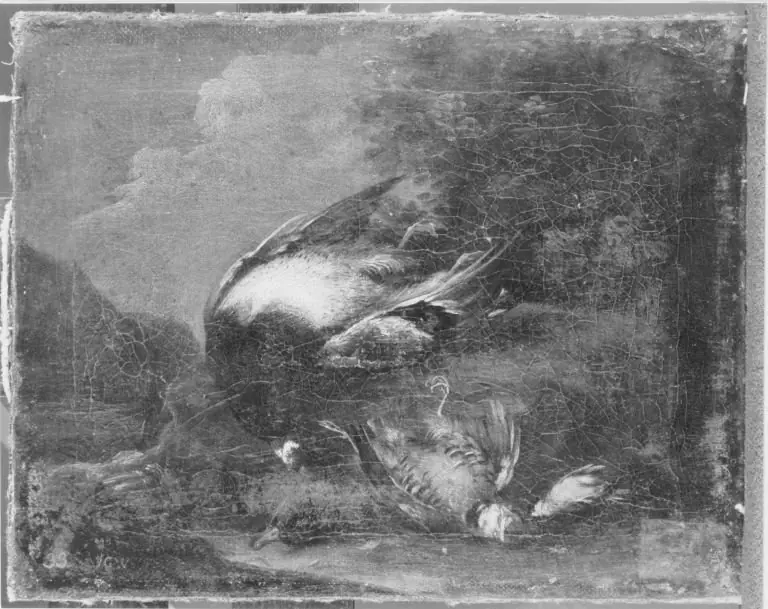
The work presents a quiet, somber tableau of three game birds lying on the ground, rendered with meticulous attention to the surface of their plumage.
Jagdstillleben, executed in 1705 by the German painter Franz Werner Tamm, is an oil painting in the collection of Munich’s Alte Pinakothek. The work presents a quiet, somber tableau of three game birds lying on the ground, rendered with meticulous attention to the surface of their plumage. The composition is anchored by a dark, indistinct backdrop that hints at a distant building and sparse vegetation.
Subject & Meaning
The painting depicts three dead birds, their feathers ranging from deep gray to lighter tones, punctuated by subtle white highlights on the wings. By focusing on the lifeless forms, Tamm invites contemplation of the fleeting nature of the hunt and the materiality of the natural world, a common theme in early‑18th‑century still‑life traditions.
Technique & Style
Tamm’s handling of the feathered subjects emphasizes texture, achieving a near‑tactile realism through fine brushwork and layered glazing. The work employs a strong chiaroscuro scheme: illuminated areas on the birds contrast sharply with the enveloping shadows of the background, creating a dramatic three‑dimensional effect that heightens the sense of immediacy.
History & Provenance
Created in 1705, Jagdstillleben entered the holdings of the Alte Pinakothek, one of Germany’s foremost art museums, where it remains on display. The painting’s provenance prior to its acquisition by the museum is not extensively documented, but its presence in the collection reflects the institution’s commitment to representing Baroque German still‑life painting.
Context
During the early 1700s, German still‑life painters often explored themes of hunting and abundance, using meticulous detail to convey both wealth and the transience of life. Tamm’s work aligns with this tradition, drawing on the visual language of the Baroque period while focusing on the quiet aftermath of the hunt rather than its action.
Artist & collection