Artwork
The Monastery of San Pedro (Our Lady of the Snows)
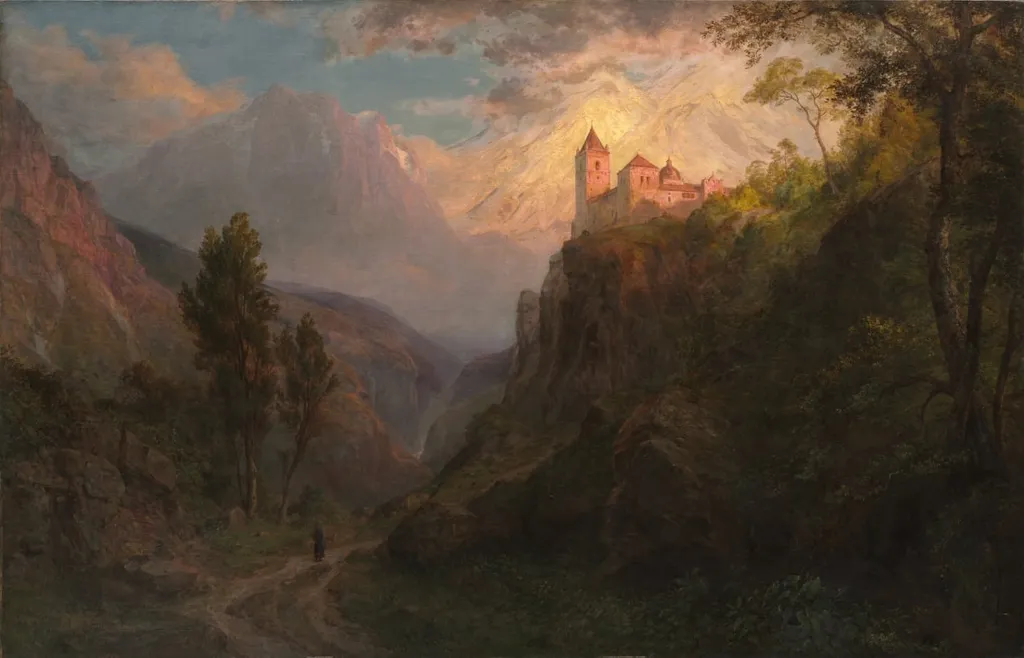
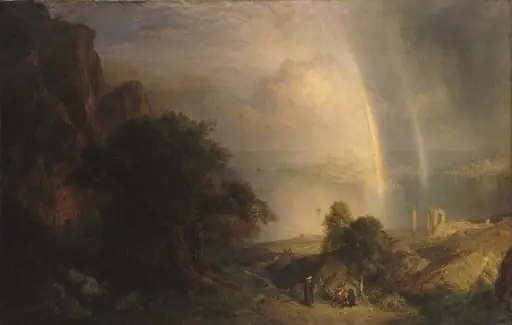
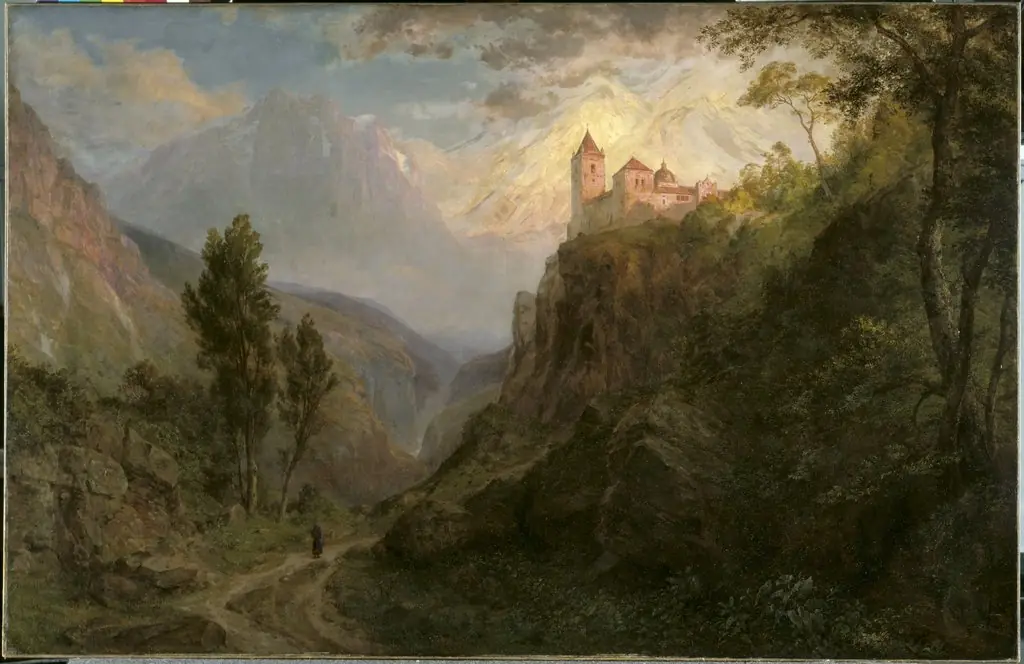
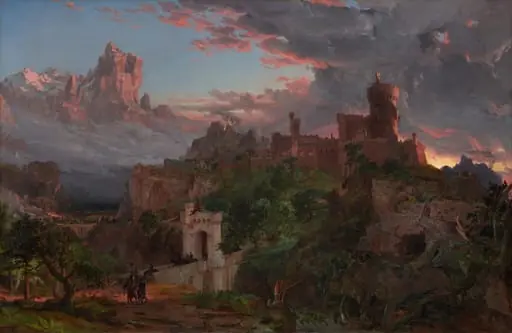
The Monastery of San Pedro (Our Lady of the Snows) is an unspecified painting by the Hudson River School artist Frederic Edwin Church. It dates from 1879 and is held in the collection of the Cleveland Museum of Art.
About this work
Overview
The composition centers on a luminous monastery clinging to a precipice, its glow contrasting with the deep shadows of the valley below.
Painted decades after his journey through the Andes, Frederic Edwin Church’s The Monastery of San Pedro (Our Lady of the Snows) reflects memory rather than direct observation. Though the site’s real-world counterpart remains unconfirmed, the scene evokes a spiritual landscape shaped by recollection. The composition centers on a luminous monastery clinging to a precipice, its glow contrasting with the deep shadows of the valley below.
Subject & Meaning
The painting presents a solitary figure traversing a dark, uneven path beneath the radiant monastery. This contrast suggests a narrative of spiritual ascent—human struggle below, divine presence above. The architecture, though not tied to a specific location, functions as a symbol of faith enduring in isolation, offering quiet hope against the weight of earthly hardship.
Technique & Style
Church employs a controlled chiaroscuro to heighten emotional tension. The monastery, bathed in intense, directional light, emerges from the surrounding gloom, while the foreground remains muted and textured. Brushwork is precise yet atmospheric, balancing topographical detail with symbolic lighting to guide the viewer’s gaze upward, reinforcing the theme of transcendence.
History & Provenance
Created in the 1870s, the work stems from Church’s earlier travels in Ecuador during the 1850s. Though he never painted this exact view on site, the composition synthesizes his impressions of Andean topography and architecture. The painting entered private collections soon after completion and later found a home in a major American museum, where it remains as part of his late-period oeuvre.
Context
In the decades following the Civil War, American audiences sought art that conveyed moral clarity and renewal. Church’s landscape, stripped of narrative figures beyond the solitary walker, aligned with a cultural yearning for spiritual solace. The work resonates with contemporary religious and philosophical currents that viewed nature as a vessel for divine presence.
Legacy
The Monastery of San Pedro exemplifies Church’s shift from grand spectacle to introspective symbolism in his later years. While less celebrated than his earlier panoramas, the painting influenced later American artists who used light not for realism but as emotional and metaphysical language. Its quiet power endures in discussions of spiritual landscape painting in the 19th century.
Artist & collection

Artist
Frederic Edwin Church was an American landscape painter born in Hartford, Connecticut.