Artwork
The Advance-Guard, or The Military Sacrifice (The Ambush)
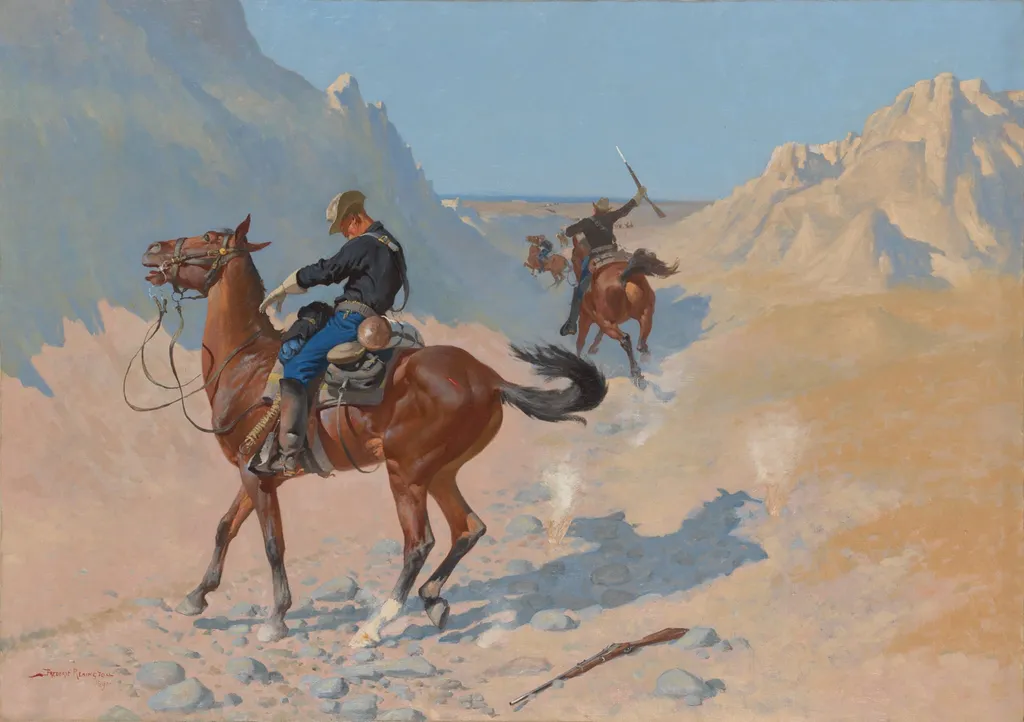
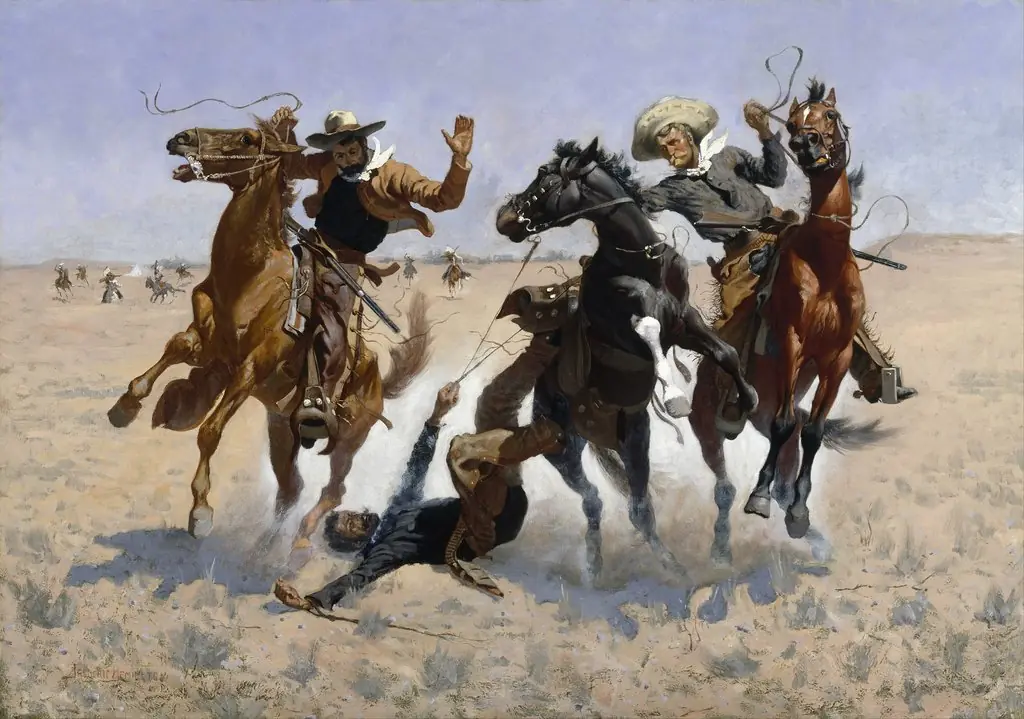
The Advance-Guard, or The Military Sacrifice (The Ambush) is an oil painting by the American Impressionist artist Frederic Remington. It dates from 1890 and is held in the collection of the Art Institute of Chicago.
About this work
Overview
Though grounded in the visual language of frontier conflict, the composition was conceived in Remington’s New York studio, not on the ground.
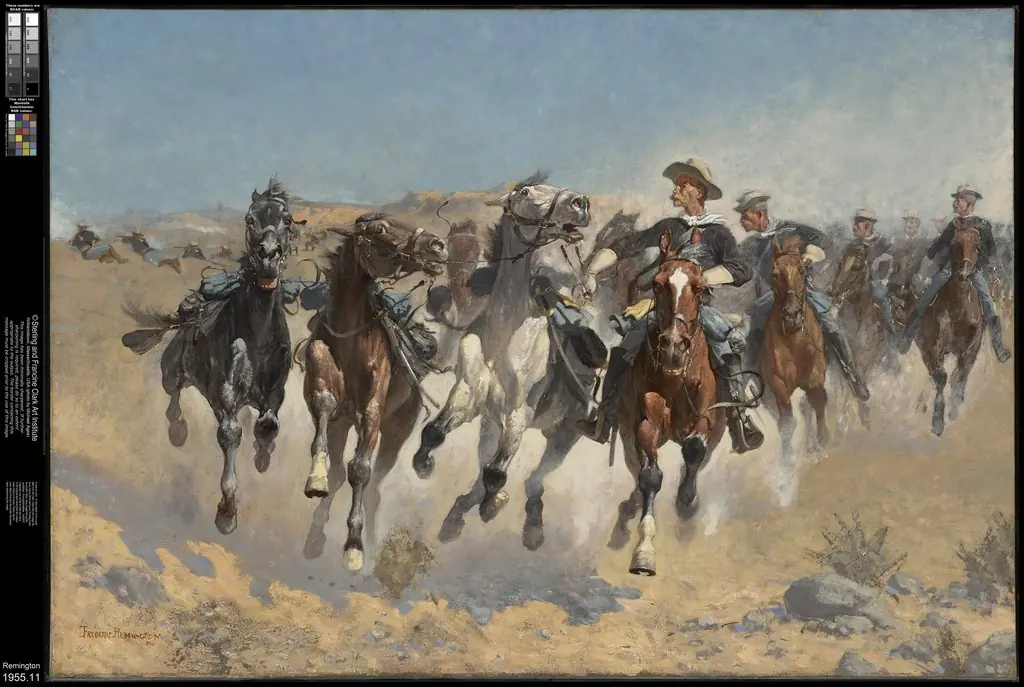
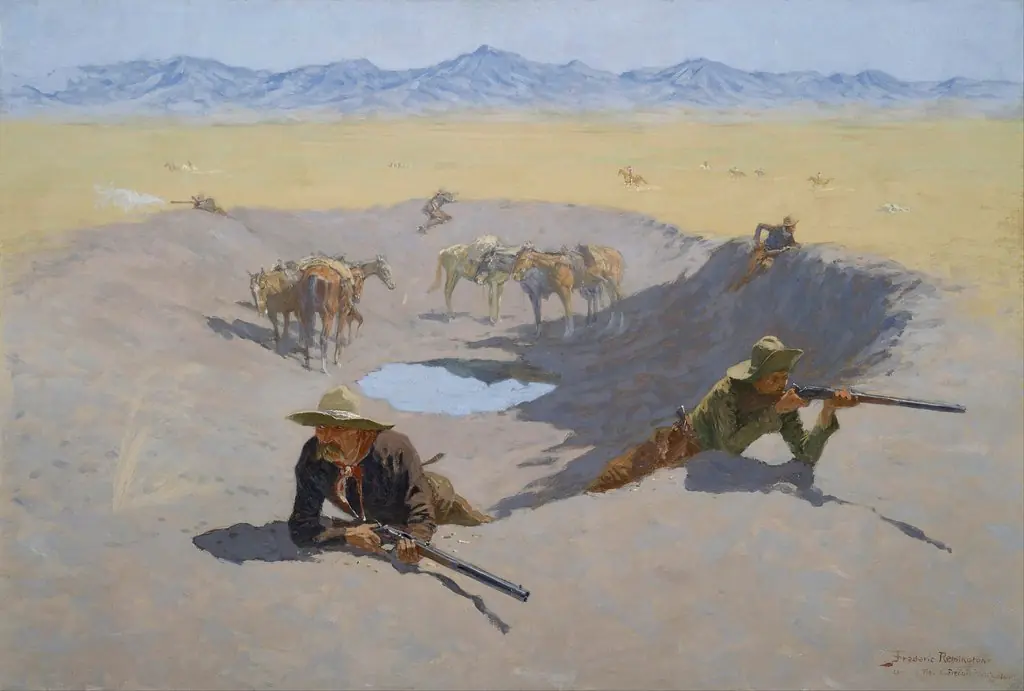
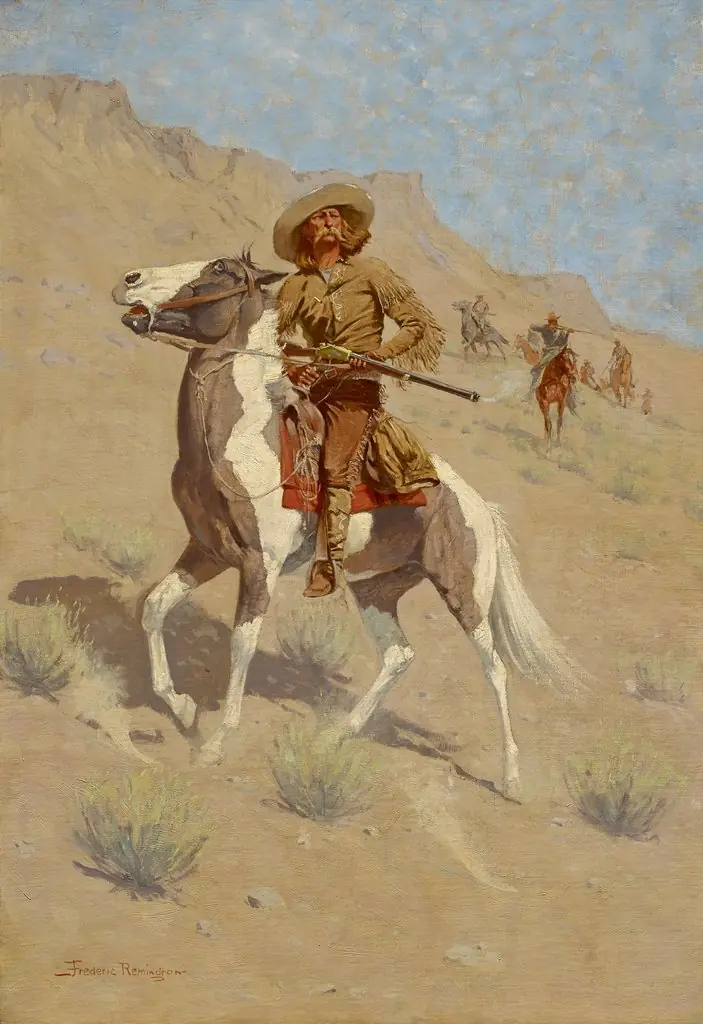
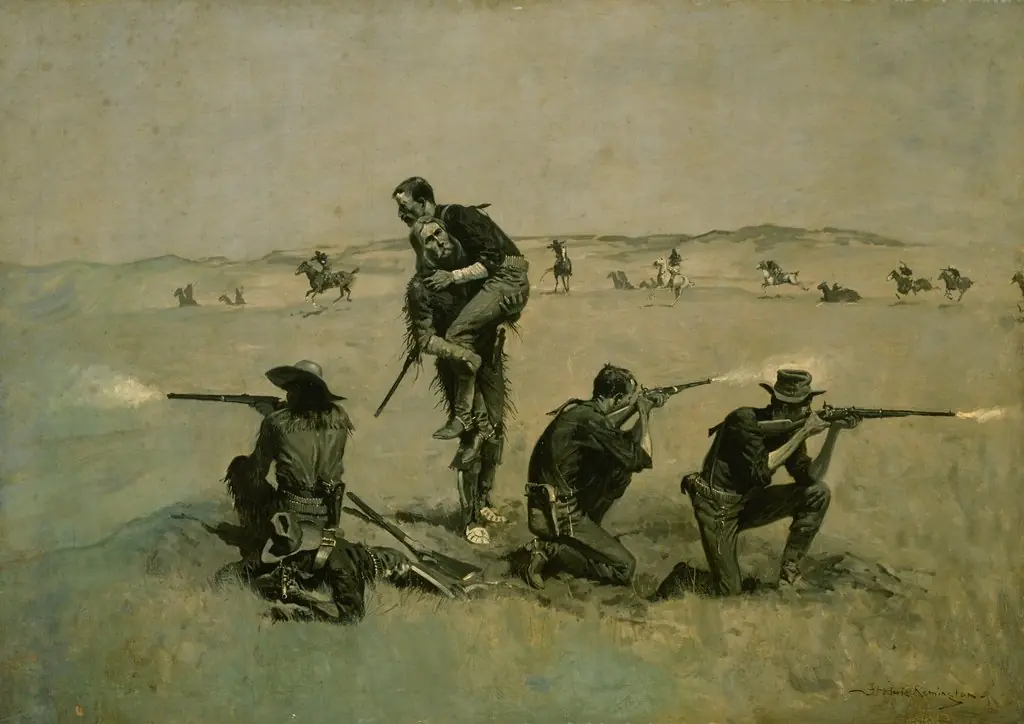
Painted by Frederic Remington in 1890, this oil on canvas depicts a sudden ambush during a western cavalry patrol. The scene captures a moment of chaos: one scout lies slumped over his horse, shot from concealment, while his comrades react in disarray. Though grounded in the visual language of frontier conflict, the composition was conceived in Remington’s New York studio, not on the ground. It was later reproduced in Harper’s Weekly, reaching a broad Eastern audience eager for dramatized visions of the West.
Subject & Meaning
The painting portrays an unseen Native American warrior firing from the brush, a silent threat that disrupts the cavalry’s advance. The fallen scout, caught mid-fall, becomes the focal point of vulnerability, while the fleeing soldiers convey panic rather than valor. Remington’s depiction leans into a narrative of sudden, asymmetric violence, reinforcing contemporary Eastern perceptions of the West as a lawless frontier where settlers faced unpredictable danger from Indigenous resistance.
Technique & Style
Remington employed thick, textured brushwork—particularly in the horses’ coats—to heighten the sense of motion and physicality. The use of impasto gives the animals’ musculature a tactile urgency, while the dark, shadowed brushline where the attacker hides contrasts with the bright, chaotic movement of the soldiers. His background as an illustrator informs the clarity of gesture and dramatic framing, prioritizing emotional impact over topographical accuracy.
History & Provenance
Created in 1890, the painting was completed in Remington’s New York studio using sketches and field notes gathered during earlier western trips. It was published in Harper’s Weekly with an accompanying article by the artist, cementing its role in shaping public perception. The work entered the broader circulation of illustrated periodicals, becoming one of many images that framed western conflict as spectacle for urban audiences unfamiliar with the actual terrain or Indigenous perspectives.
Context
In the late 19th century, Eastern media often portrayed Native peoples as lurking threats to westward expansion. Remington’s imagery aligned with this narrative, offering visually compelling but historically unverified scenes that justified military presence. His work emerged amid the closing of the frontier and the forced displacement of Indigenous nations, serving as both documentation and mythmaking for audiences who saw the West through the lens of romanticized peril.
Legacy
The painting contributed to a visual canon that equated the American West with violent confrontation and heroic sacrifice. While celebrated for its dynamism and technical skill, its legacy is now critically examined for its role in perpetuating one-sided narratives of conquest. Remington’s studio-made scenes, though influential, reflect more about the anxieties of their time than the realities of the frontier they purported to depict.
Own this work as a print
Artist & collection

Artist
Frederic Sackrider Remington was an American painter, illustrator, sculptor, and writer who specialized in the genre of Western American Art.