Artwork
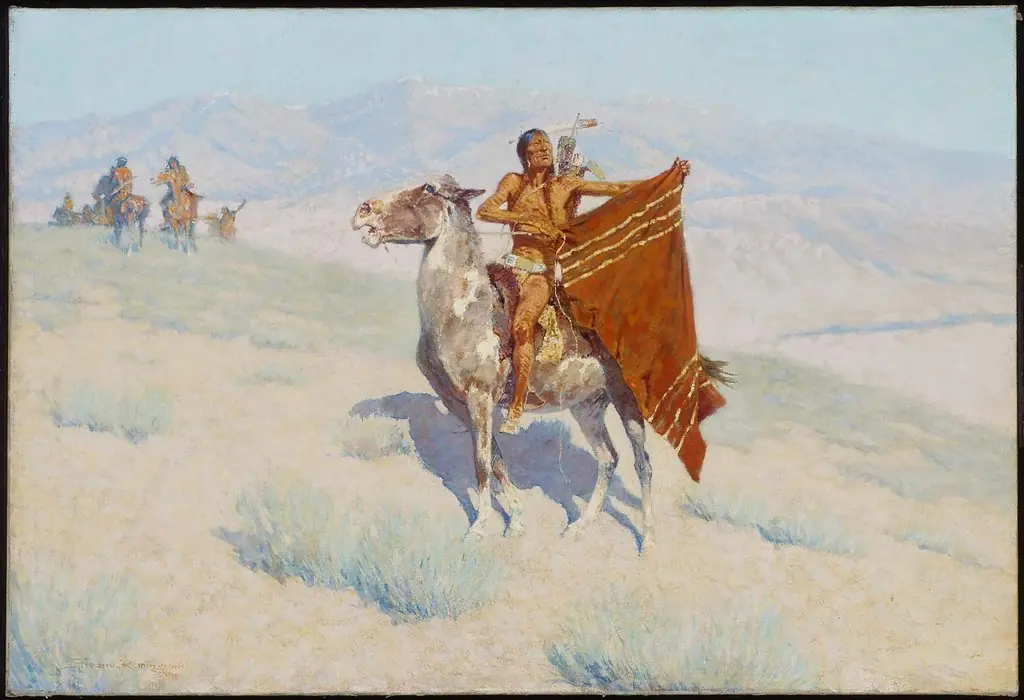
The Blanket Signal
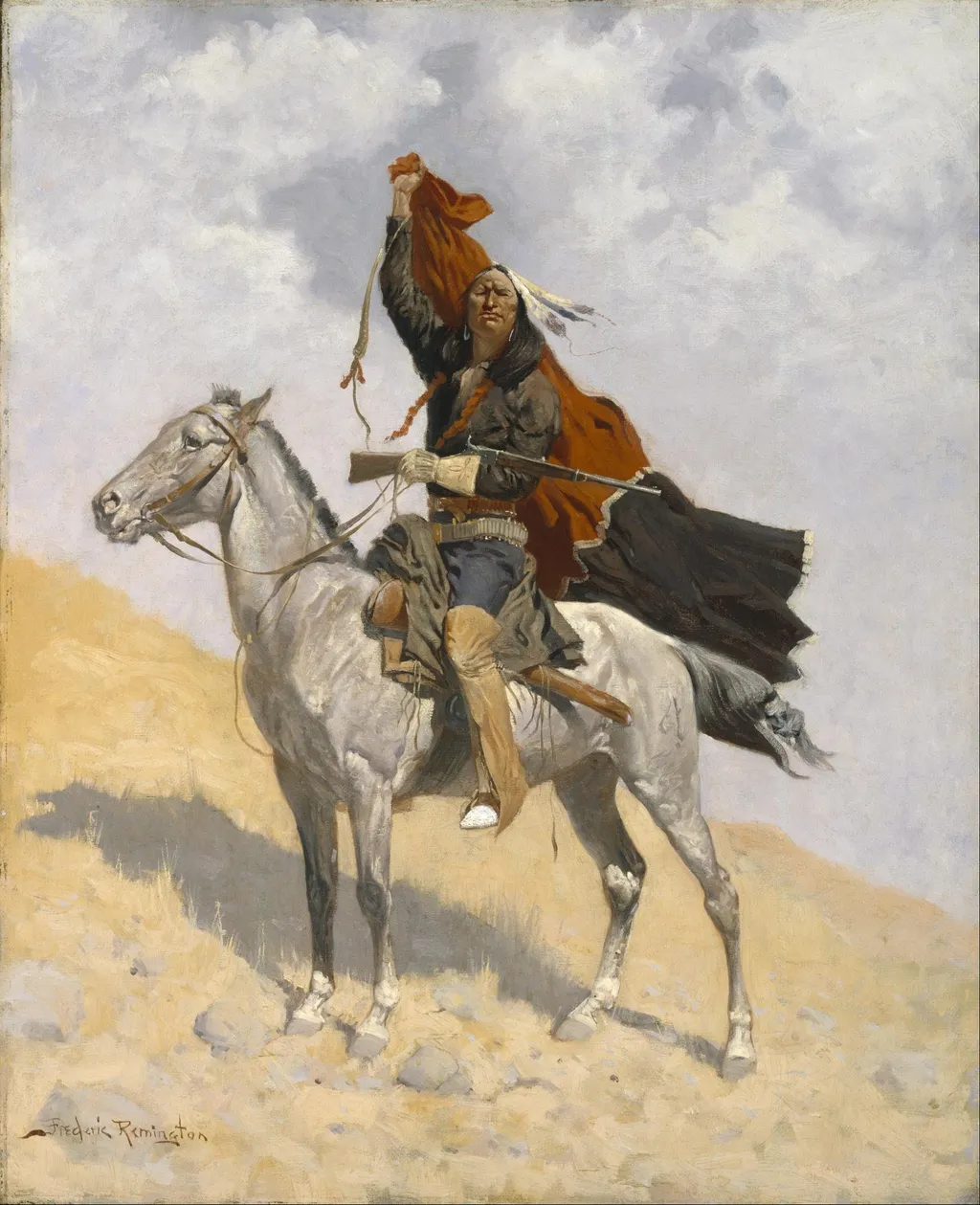
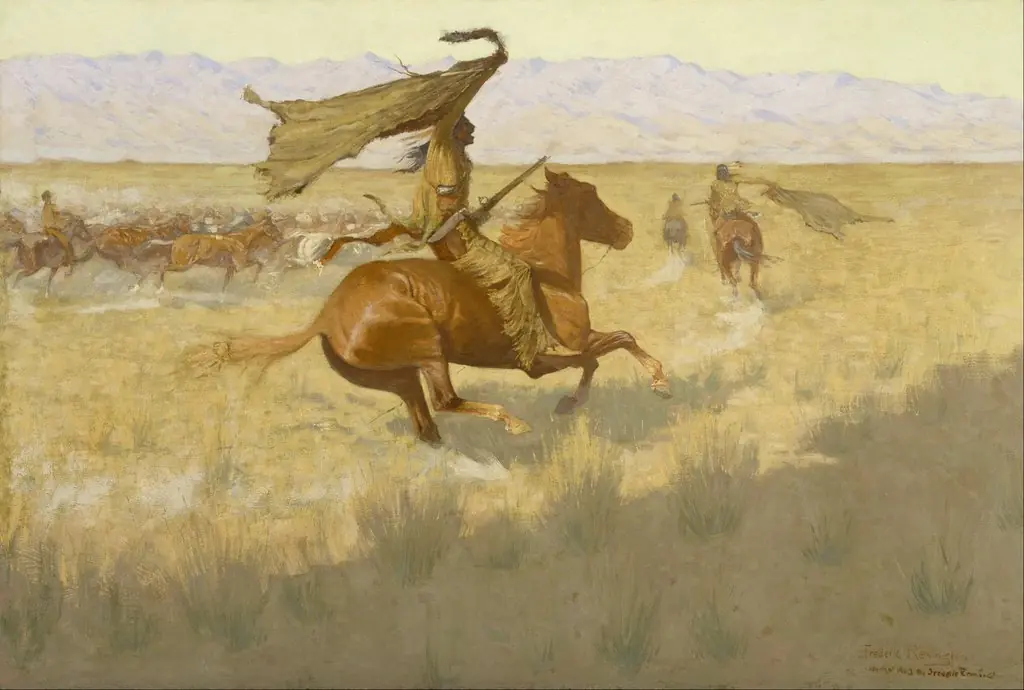
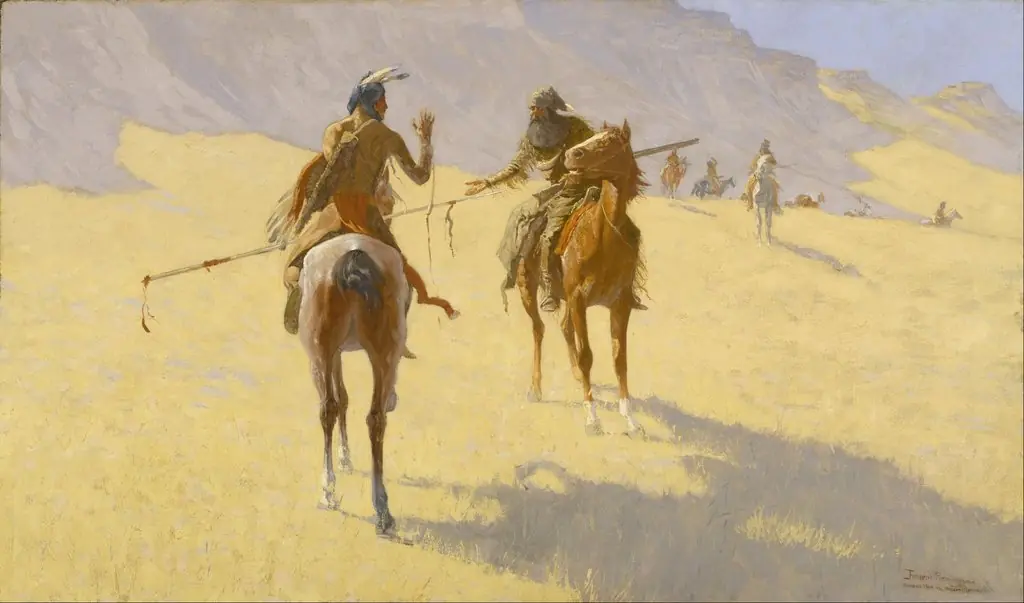
The Blanket Signal is an oil painting by the American Impressionist artist Frederic Remington. It dates from 1898 and is held in the collection of the Museum of Fine Arts, Houston.
About this work
Overview
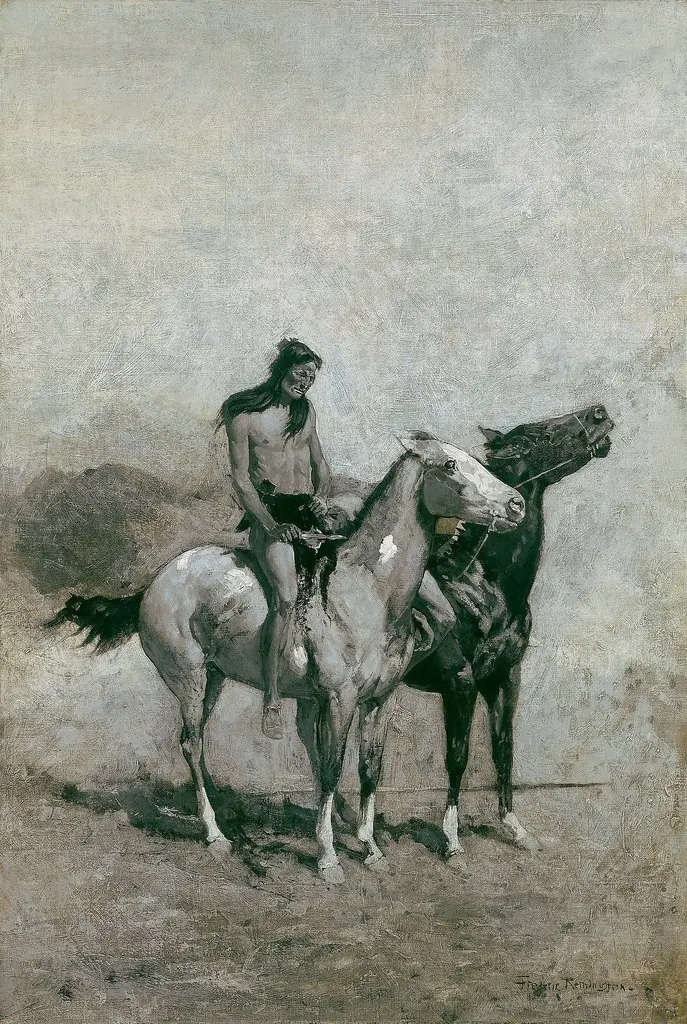
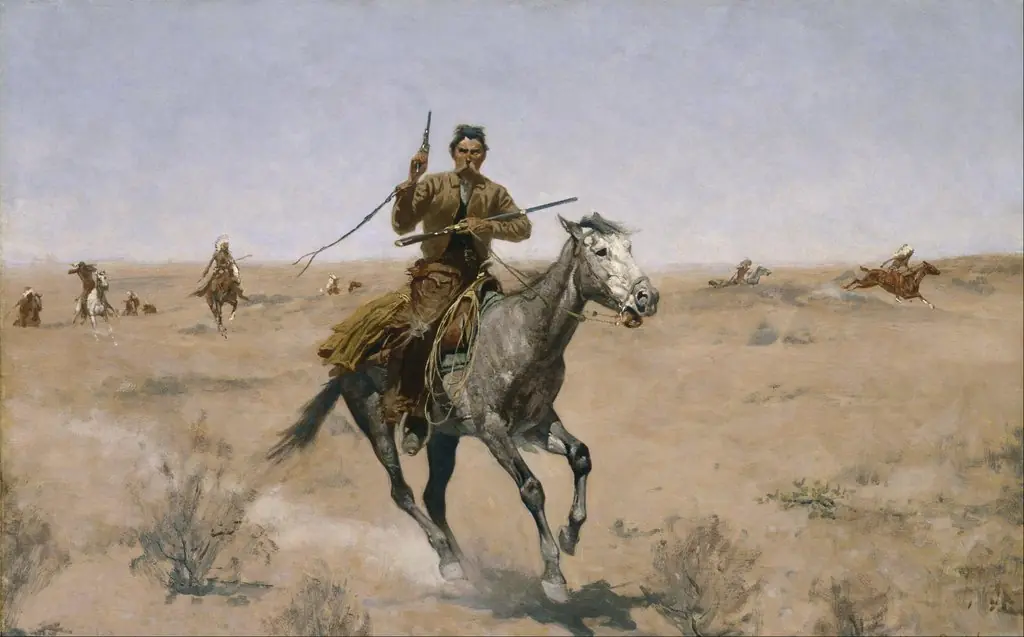
Painted in 1898 by Frederic Remington, The Blanket Signal is an oil-on-canvas work depicting a solitary Native American figure on horseback.
Painted in 1898 by Frederic Remington, The Blanket Signal is an oil-on-canvas work depicting a solitary Native American figure on horseback. The painting is part of the permanent collection at the Museum of Fine Arts, Houston. It captures a moment of deliberate action, framed within a landscape that emphasizes isolation and quiet tension. Remington’s focus on a single figure in motion reflects his broader interest in documenting life on the American frontier.
Subject & Meaning
The central figure, dressed in traditional regalia including a headdress and dark coat, holds a red blanket aloft as a signal. His serious expression and still posture suggest a moment of strategic communication, possibly in a military or ceremonial context. The blanket, a common tool for visual signaling among Plains peoples, transforms a simple object into a symbol of intention and agency, resisting stereotypical portrayals of passivity.
Technique & Style
Remington employs chiaroscuro to heighten the drama of the scene, contrasting the illuminated figure against a shadowed landscape and overcast sky. The horse’s white coat and dark mane are rendered with swift, textured brushwork, while the terrain is suggested rather than detailed. The composition directs focus to the central figure through directional lighting and minimal background detail, reinforcing the painting’s atmospheric tension.
History & Provenance
Created during a period when Remington was actively documenting Western life, The Blanket Signal was completed shortly after his return from covering the Spanish-American War. It entered the Museum of Fine Arts, Houston’s collection in the 20th century, where it remains today. The work reflects Remington’s shift from journalistic illustration toward more contemplative, emotionally charged compositions.
Context
In the late 19th century, images of Native Americans were often shaped by romanticized or colonial narratives. Remington’s work, while still filtered through a non-Indigenous lens, occasionally conveyed nuance—here, portraying a figure engaged in deliberate, skilled communication. The painting aligns with broader cultural interests in frontier life but avoids overt melodrama, favoring restraint and observation.
Legacy
The Blanket Signal contributes to a body of work that helped define visual perceptions of the American West. While later scholarship has critiqued Remington’s perspective, the painting endures for its compositional discipline and quiet dignity. It stands as a record of an artist’s attempt to capture moments of agency within a rapidly changing landscape, offering a counterpoint to more sensationalized depictions of the era.
Own this work as a print
Artist & collection

Artist
Frederic Sackrider Remington was an American painter, illustrator, sculptor, and writer who specialized in the genre of Western American Art.