Artwork
An Italian Landscape with Muleteers
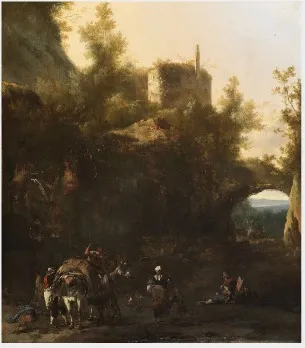
An Italian Landscape with Muleteers is an unspecified painting by the Dutch Golden Age artist Frederik de Moucheron. It dates from 1669 and is held in the collection of the National Gallery of Ireland.
About this work
Overview
The painting reflects a broader trend among Northern European artists who sought to evoke the romanticized essence of Italy through landscape.
Painted around 1669 by the Dutch artist Frederik de Moucheron, this landscape captures a tranquil moment in the Italian countryside. Though Dutch by training and residence, de Moucheron was known for his idealized renderings of Italian scenery, blending observed topography with imaginative composition. The painting reflects a broader trend among Northern European artists who sought to evoke the romanticized essence of Italy through landscape.
Subject & Meaning
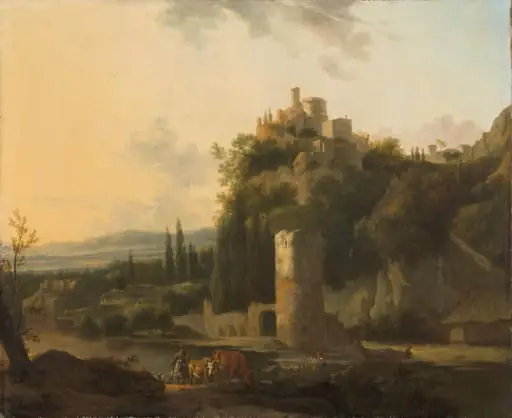
The scene portrays muleteers resting beside a riverbank, their pack mule tethered nearby, laden with goods. Their posture suggests a pause in transit, a quiet interlude amid travel. The figures are not idealized heroes but working individuals, their presence grounding the landscape in daily life. The painting conveys neither grandeur nor drama, but the quiet rhythm of rural labor and movement across the Italian terrain.
Technique & Style
De Moucheron employed soft, diffused light to model the rolling hills and distant tower, creating a sense of atmospheric depth. The foliage and rock formations are rendered with delicate brushwork, avoiding sharp definition in favor of gentle tonal transitions. His technique emphasizes harmony over detail, aligning with the Dutch Golden Age’s preference for serene, balanced compositions that evoke mood rather than narrative.
History & Provenance
The painting entered the collection of the National Gallery of Ireland, where it remains today. While specific details of its early ownership are not fully documented, its style and date align with de Moucheron’s mature period, when he frequently collaborated with figure painters to complete his landscapes. Such collaborations were common among Dutch artists who specialized in particular elements of a composition.
Context
In the mid-17th century, Dutch artists often depicted Italianate scenes as expressions of cultural curiosity and travel fantasy, even without visiting the region. De Moucheron’s works responded to a market that prized evocative, picturesque views of southern Europe. These landscapes served as visual souvenirs, blending factual observation with artistic convention to satisfy Northern European tastes for the exotic and serene.
Legacy
De Moucheron’s Italianate landscapes contributed to a lasting genre within Dutch painting, influencing how northern Europe imagined the Italian countryside. His emphasis on quiet, everyday moments helped shift landscape painting away from mythological or biblical themes toward a more observational, human-centered approach. Though less celebrated than contemporaries, his work remains a quiet testament to the cross-cultural exchange of the era.
Artist & collection
Artist
Frederik de Moucheron (1633 – 5 January 1686) was a Dutch Golden Age landscape painter and draughtsman. He mainly produced (Italianate) landscapes that were furnished with human and animal figures by various colleagues.

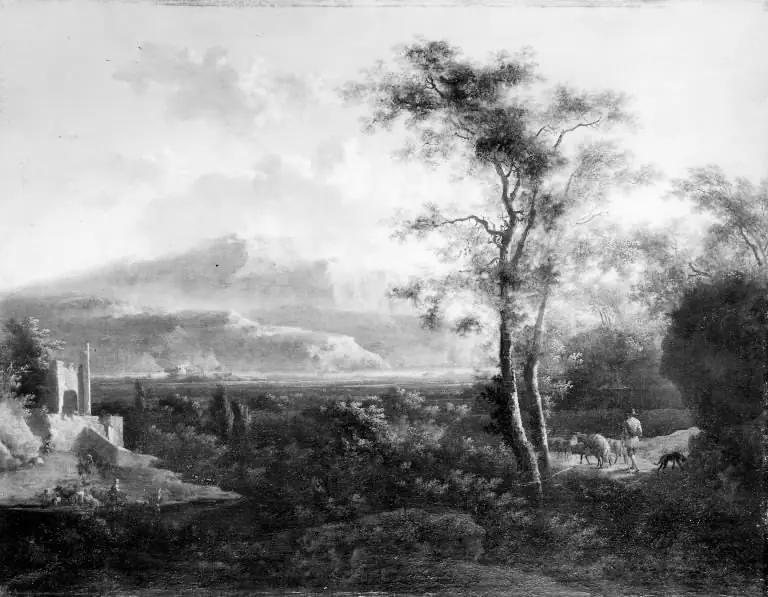
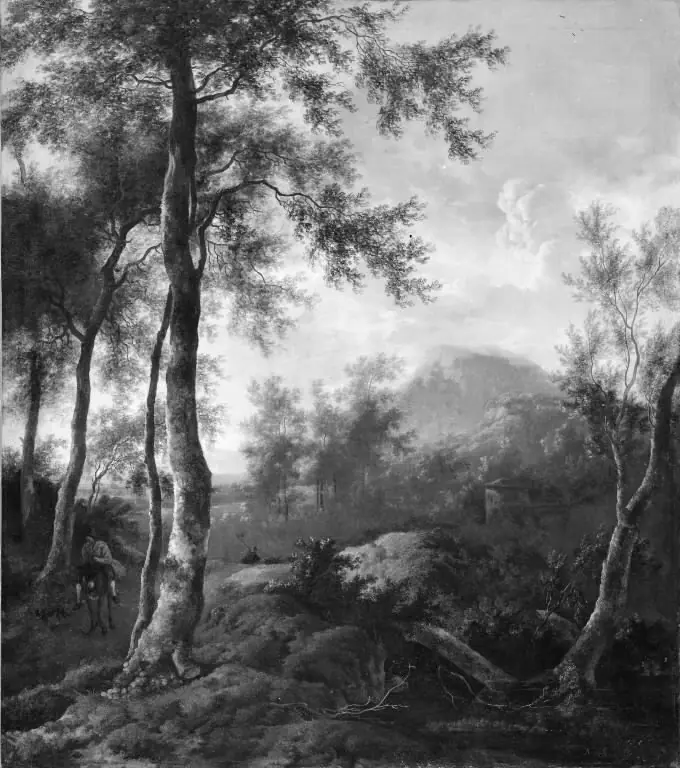
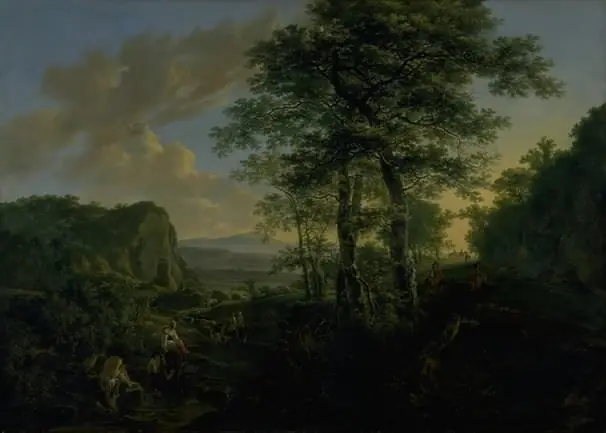 Italian Landscape
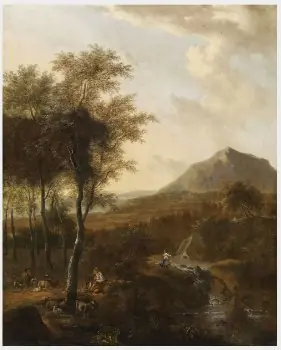 An Italianate Landscape
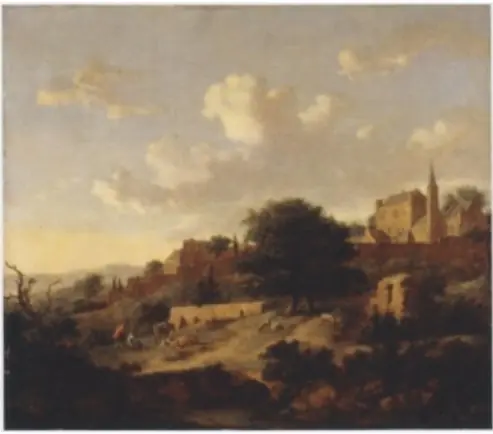 View of a Fortified City
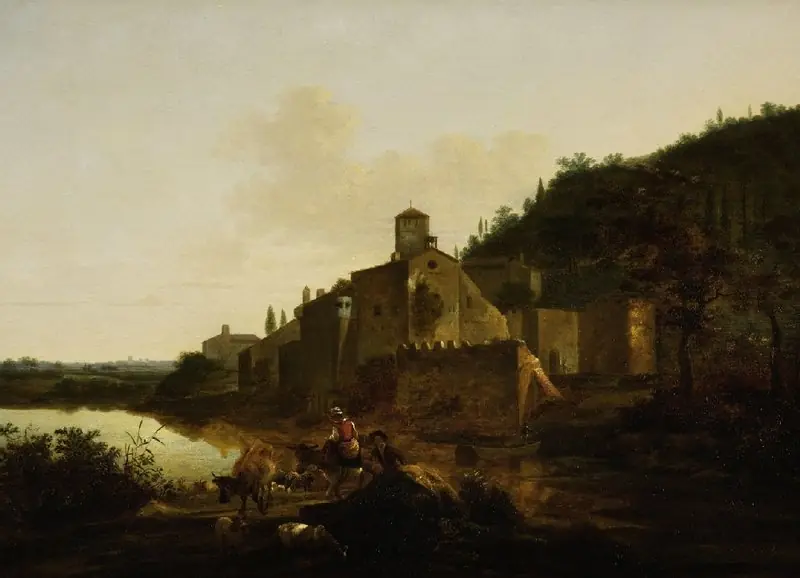 Italian landscape with a Monastery
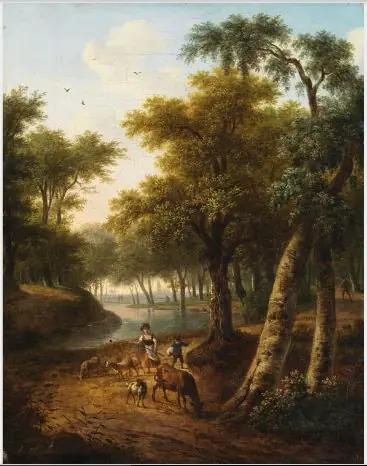 A Landscape
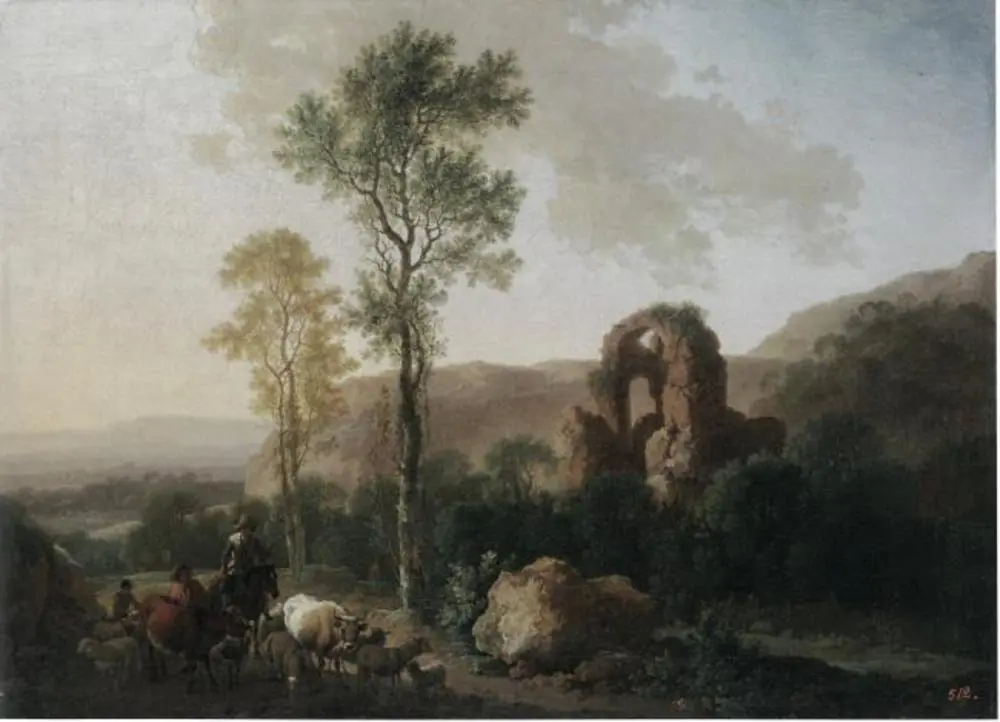 View of the Roman Campagna
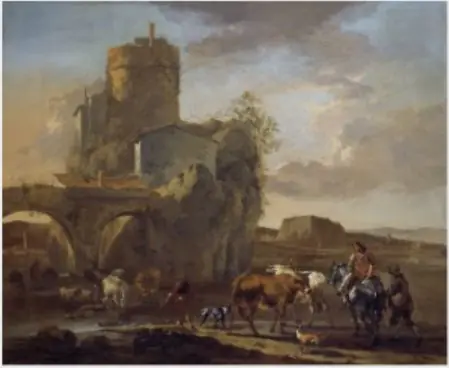 An Italianate Landscape
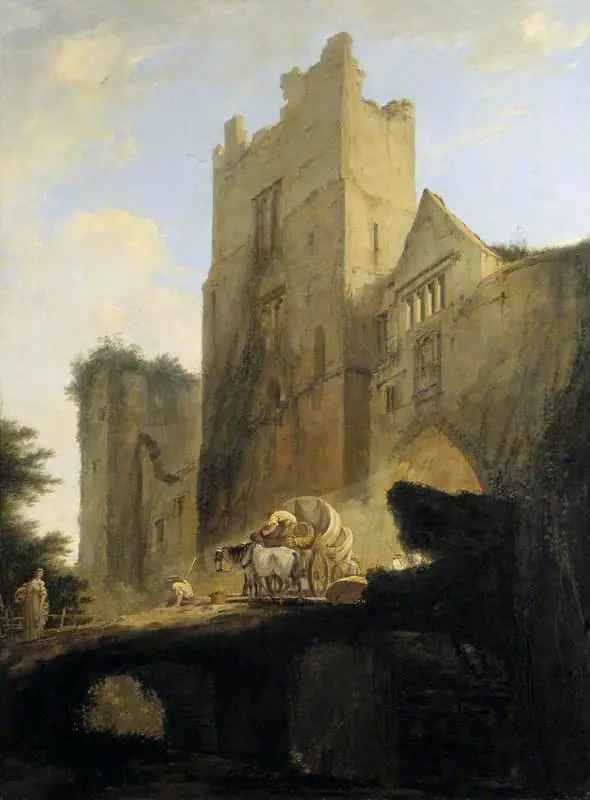 Ludlow Castle, Shropshire
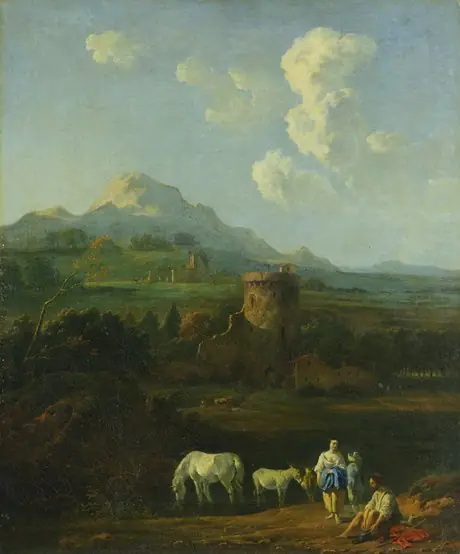 Landscape with figures.
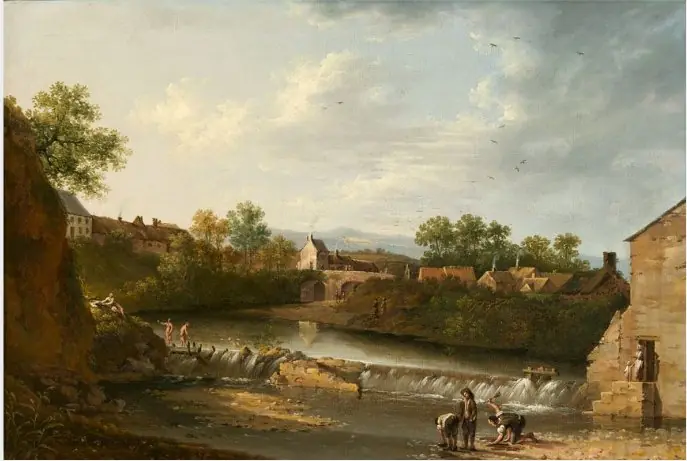 A View of Clonskeagh, County Dublin with Figures Bathing
 Pastoral Landscape with Girl and Goats
 The Ferry Boat