Artwork
Pastoral Landscape with Girl and Goats
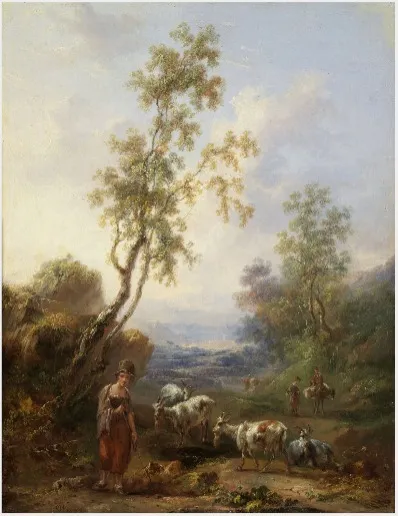
Pastoral Landscape with Girl and Goats is an unspecified painting by Solomon Williams. It dates from 1800 and is held in the collection of the National Gallery of Ireland.
About this work
Overview
Its composition emphasizes harmony between human presence and natural elements, reflecting a common 19th-century interest in tranquil, agrarian life.
Painted around 1800, Pastoral Landscape with Girl and Goats is a quiet rural scene by Solomon Williams, now in the collection of the National Gallery of Ireland. The work presents a moment of stillness in the countryside, where a young girl stands among grazing goats beneath a soft sky. Its composition emphasizes harmony between human presence and natural elements, reflecting a common 19th-century interest in tranquil, agrarian life.
Subject & Meaning
The central figure is a girl in a simple tunic, observing the goats with calm attention. She is neither engaged in labor nor depicted as idealized, suggesting an unembellished view of rural childhood. The goats, scattered and at ease, reinforce the theme of quiet coexistence. The scene avoids narrative drama, instead offering a contemplative glimpse into everyday rural existence, grounded in observation rather than symbolism.
Technique & Style
Williams employs soft, blended brushwork to render the landscape, avoiding sharp edges or dramatic contrasts. The palette favors muted earth tones and pale sky hues, enhancing the sense of serenity. Light is diffused evenly, suggesting late afternoon, and the textures of grass, wool, and bark are rendered with subtle variation rather than detail. The style aligns with contemporary British and Irish landscape traditions that favored atmospheric calm over theatricality.
History & Provenance
The painting entered the National Gallery of Ireland’s collection in the 19th century, likely through a private donation or acquisition from a local collector. Its attribution to Solomon Williams, a lesser-known artist of the period, suggests it was valued for its quiet aesthetic rather than its creator’s fame. No significant exhibition history or documented ownership prior to the gallery’s acquisition is recorded.
Context
Created during a time when rural life was being reimagined in art amid industrial change, the painting reflects a broader cultural nostalgia for the countryside. Similar themes appear in works by contemporaries like John Constable and Irish landscape painters who sought to capture the dignity of ordinary rural scenes. Williams’s work fits within this trend, offering a personal, intimate vision rather than a grand ideal.
Legacy
Though not widely reproduced or studied, the painting remains a quiet example of early 19th-century Irish landscape painting. It contributes to the understanding of regional artistic practices that prioritized tranquility and observation over spectacle. Its continued presence in the National Gallery of Ireland underscores its role as a representative, if modest, voice in the nation’s artistic heritage.
Artist & collection

 A Landscape
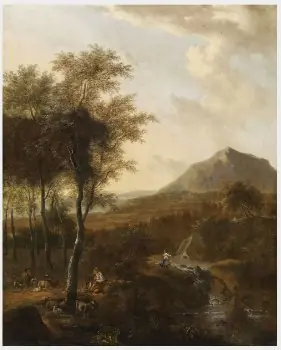 An Italianate Landscape
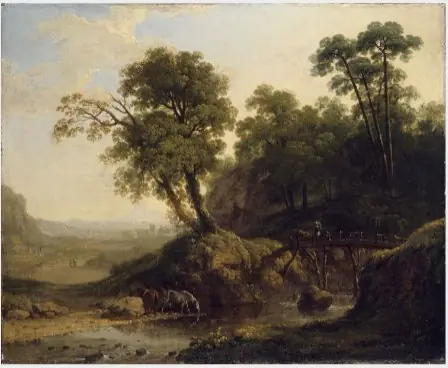 Landscape with a River and Horses by a Wooden Bridge
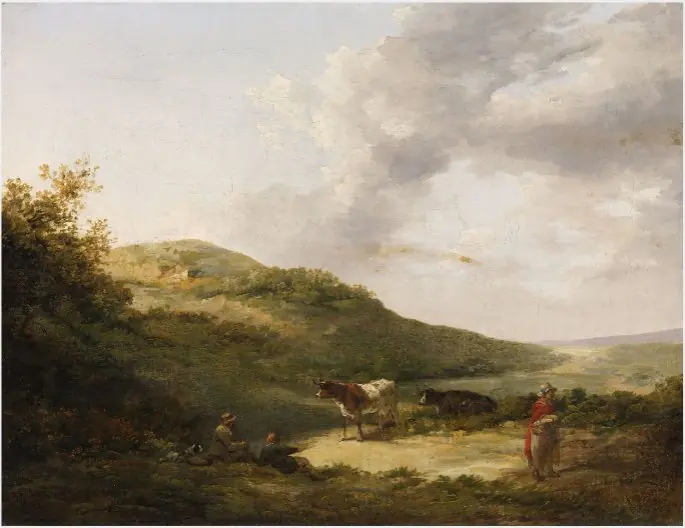 A Landscape with Figures and Cattle
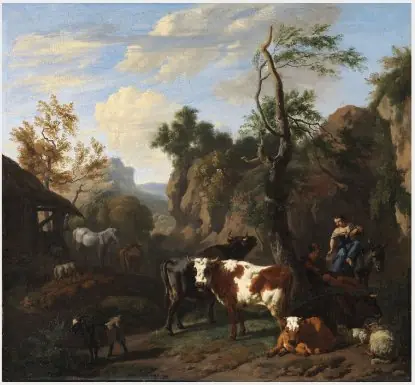 Cattle in a Rocky Landscape
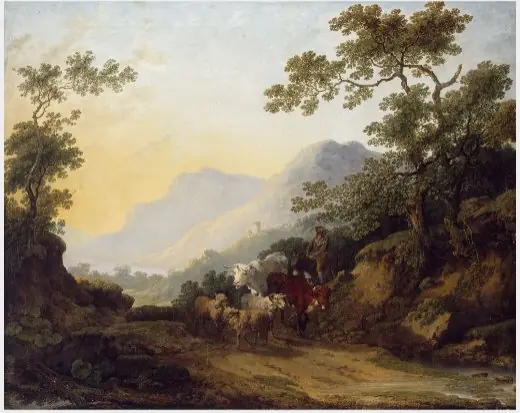 A Landscape
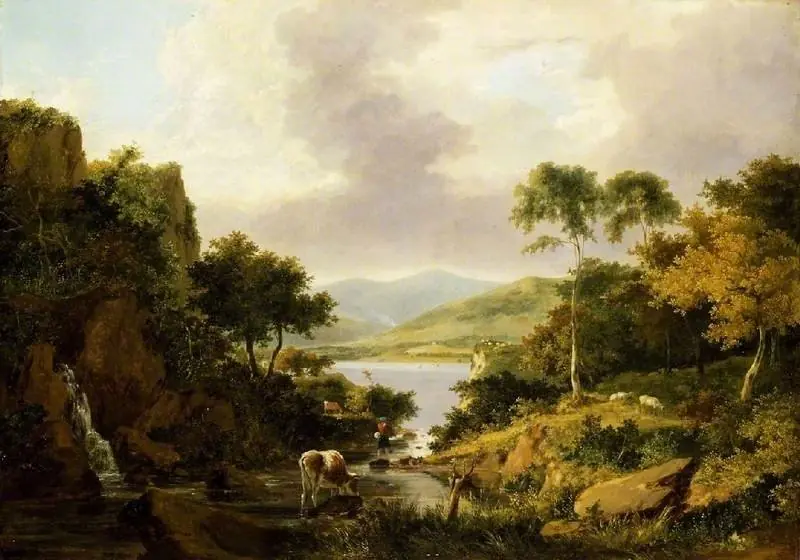 Loch Etive, Argyllshire
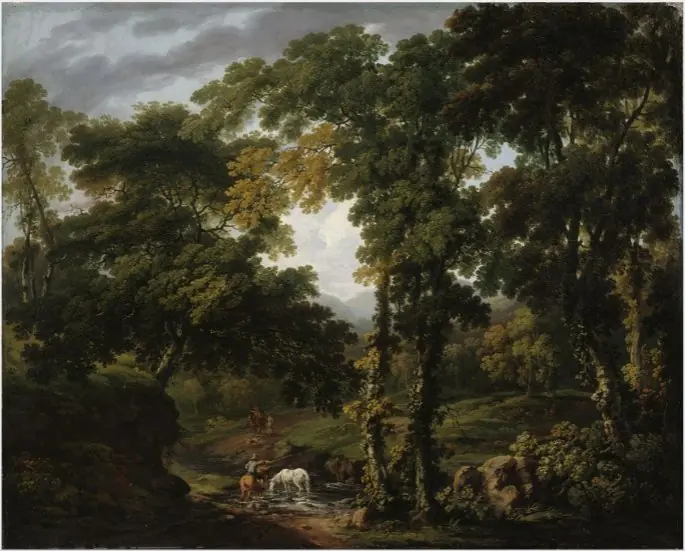 A Wooded River Landscape with Figures and Horses at a Ford and Fallow Deer in a Clearing
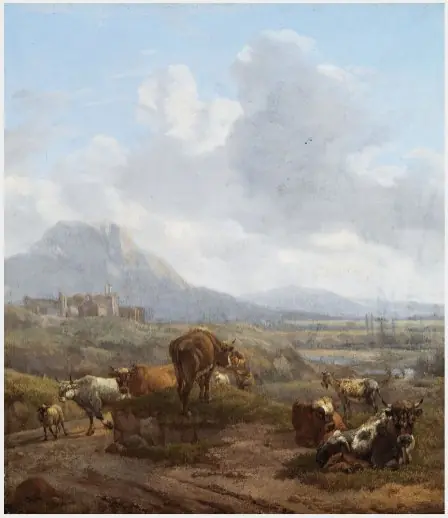 Landscape with Cattle
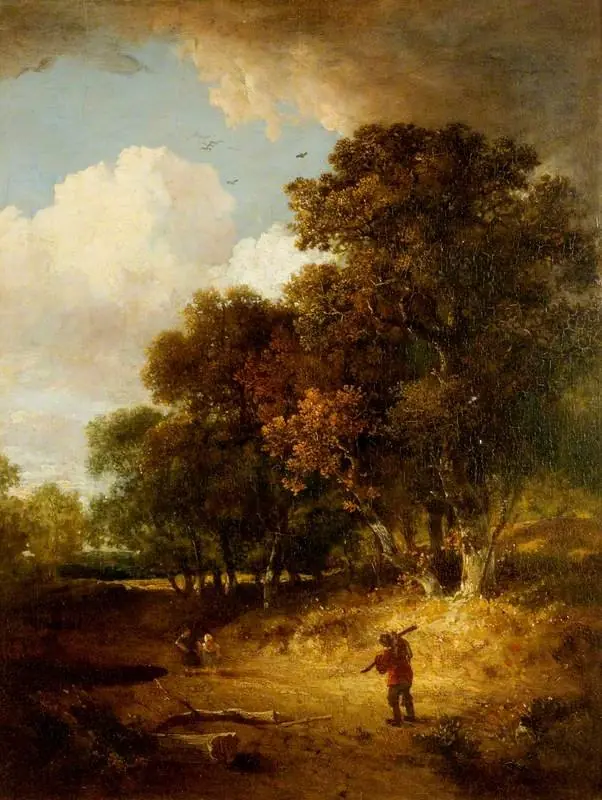 A Woody Landscape
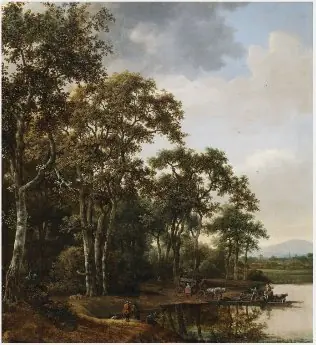 The Ferry Boat
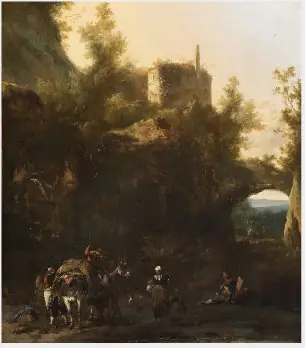 An Italian Landscape with Muleteers