Artwork
At the Dram Well
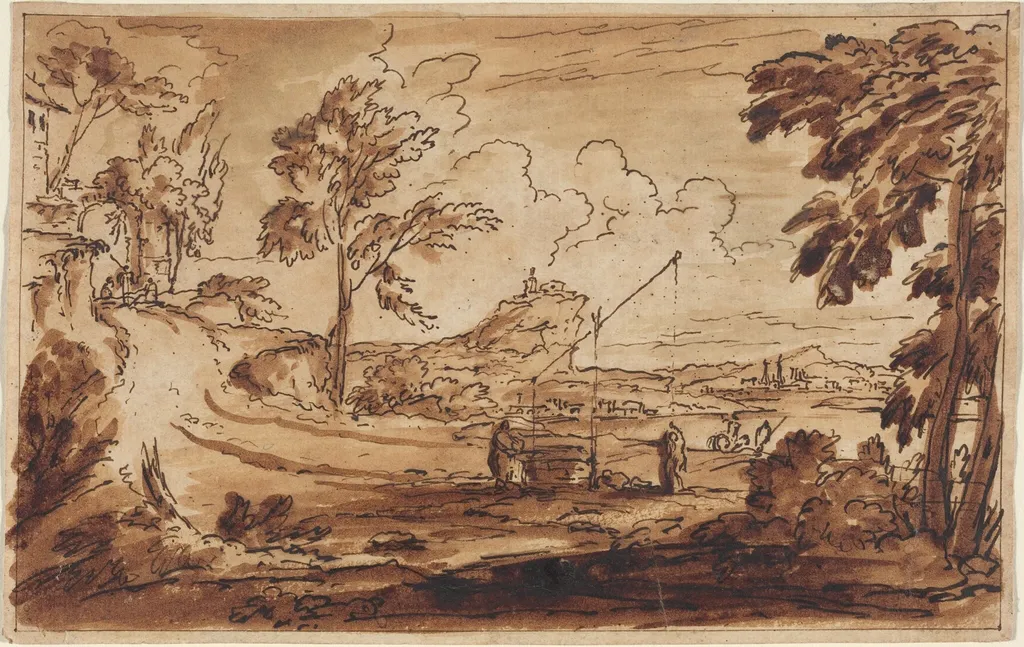
At the Dram Well is an ink drawing by the Baroque artist French 17th Century. It dates from 1601 and is held in the collection of the National Gallery of Art.
About this work
Overview
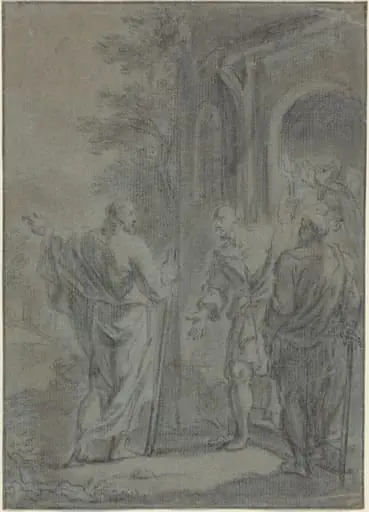
The work titled “At the Dram Well” is a pen drawing executed with brown ink and a brown wash. Rendered on paper, the composition presents a tranquil riverside setting where two figures occupy the foreground beside a small boat and a leaning pole. A line of trees and shrubs borders the water’s edge, while a low hill rises in the distance, all rendered in muted, earthy tones.
Subject & Meaning
The standing figure near the boat suggests readiness or departure, whereas the figure leaning on the pole conveys a more relaxed, contemplative stance.
The scene captures a moment of quiet repose by the water, emphasizing the relationship between the figures and their natural surroundings. The standing figure near the boat suggests readiness or departure, whereas the figure leaning on the pole conveys a more relaxed, contemplative stance. Together they evoke a simple, everyday encounter with the landscape, inviting viewers to sense the calm of the locale.
Technique & Style
The artist employs swift, loose lines to delineate forms, using cross‑hatching and subtle washes to model light and shadow. This approach builds depth without relying on intricate detail, allowing tonal variation to suggest volume. The brown ink and wash create a warm, cohesive atmosphere, while the economy of line conveys movement and mood with immediacy.
History & Provenance
The drawing is catalogued as a pen and brown ink work, though specific dates of creation and ownership are not recorded in the available documentation. It remains part of a collection of studies that illustrate the artist’s interest in rural scenery and everyday life, reflecting a broader practice of sketching on location.
Own this work as a print
Artist & collection

Artist
Seventeenth-century French printmakers turned ink into story. Their tools were burin and acid, paper their stage. Look at the Beggar Woman with Rosary (1622), etched on laid paper, her hands folded around faith, or The…


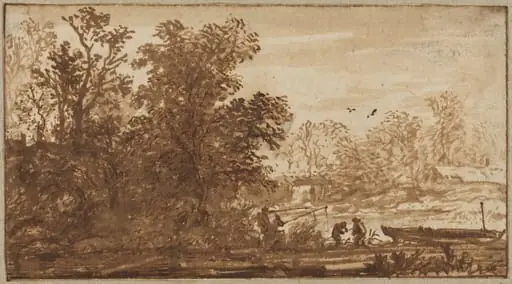 Fisherman in a River Landscape
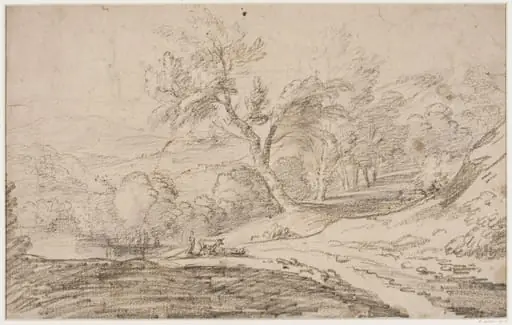 Landscape with lake
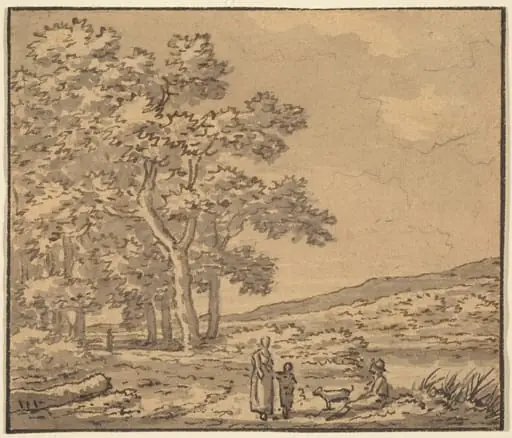 A Landscape with Three Figures and a Dog
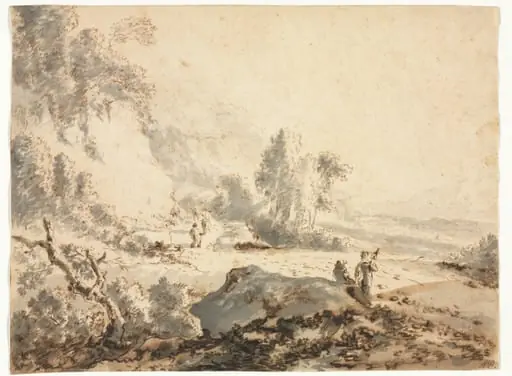 Landscape
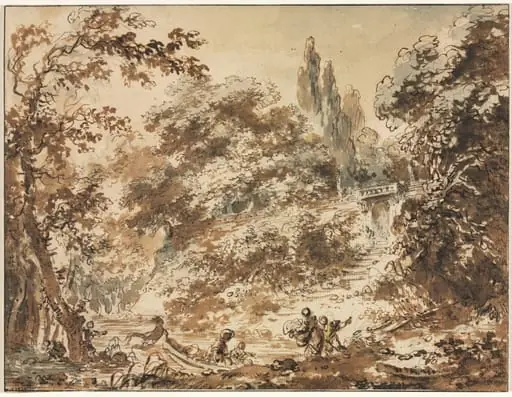 Scene in a Park
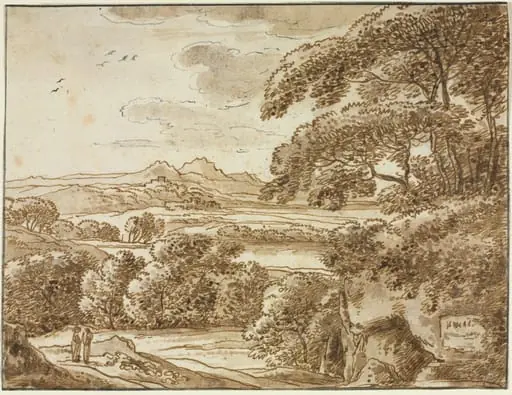 Landscape
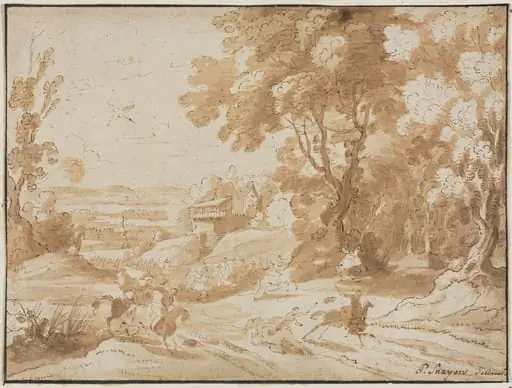 Landscape with Horsemen
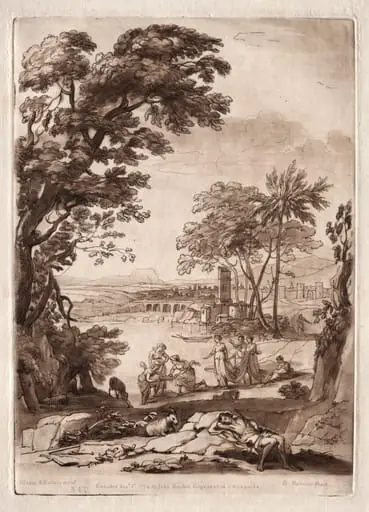 Liber Veritatis: No. 47, A River Scene with the Finding of Moses
 Two Figures Fishing in a Landscape
 Diana and Her Companions in a Landscape
 Landscape with Small Group of Buildings
 A Clearing in a Forest