Artwork
Return from Egypt; St. Apollinaire; St. Julian and Basilissa; St. Paul the Hermit
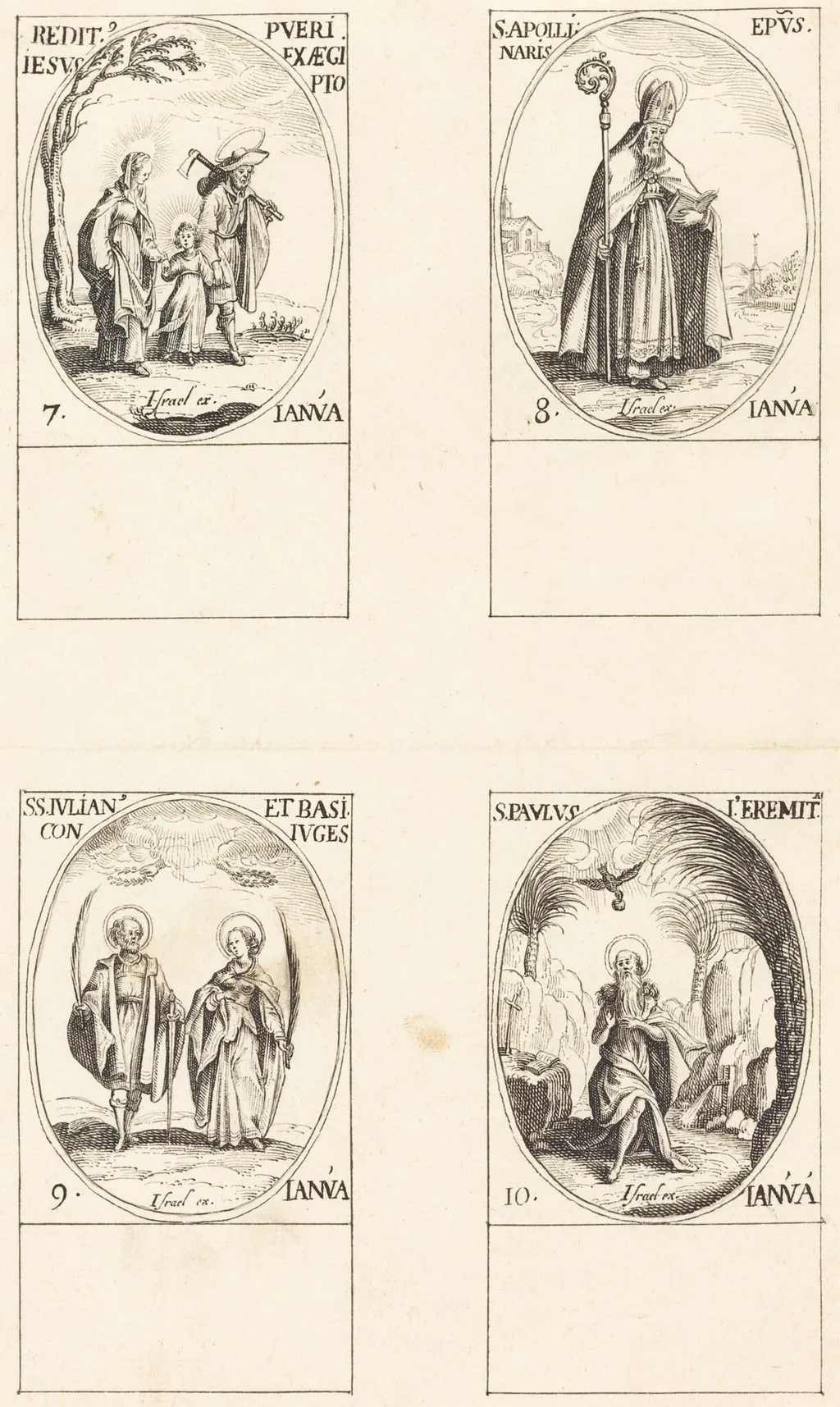
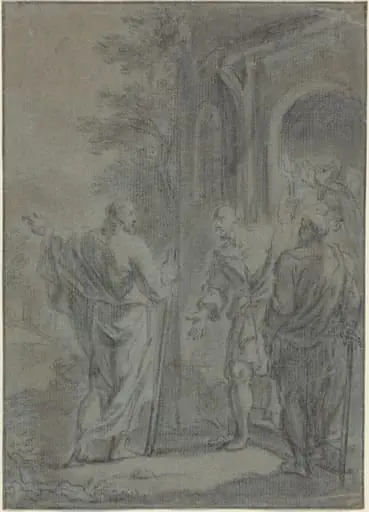
Return from Egypt; St. Apollinaire; St. Julian and Basilissa; St. Paul the Hermit is an ink drawing by the Baroque artist French 17th Century. It dates from 1635 and is held in the collection of the National Gallery of Art. This drawing, executed in pen and black ink on laid paper, depicts multiple saints and a narrative landscape.
About this work
Overview
The work belongs to a group of religious figures rendered with restrained line work, emphasizing clarity over ornamentation.
This drawing, executed in pen and black ink on laid paper, depicts multiple saints and a narrative landscape. The work belongs to a group of religious figures rendered with restrained line work, emphasizing clarity over ornamentation. Despite the simplicity of its medium, the composition conveys a sense of movement and spatial depth, suggesting careful planning and familiarity with ecclesiastical iconography.
Subject & Meaning
The scene includes St. Apollinaire, St. Julian and Basilissa, and St. Paul the Hermit, figures associated with early Christian asceticism and pilgrimage. Their grouping may reference a collective journey, possibly the Holy Family’s return from Egypt, with the hermit saint symbolizing spiritual solitude. The figures’ postures and interactions suggest a shared narrative of faith and endurance, common in devotional imagery of the period.
Technique & Style
The artist employed fine, controlled pen strokes to define forms, using cross-hatching to suggest volume and shadow without pigment or wash. Facial expressions and drapery folds are rendered with economical lines, revealing an emphasis on legibility over realism. The choice of ink on laid paper reflects a working method suited to preparatory studies or small-scale devotional objects, prioritizing precision over grandeur.
History & Provenance
The drawing’s origin is tied to a Northern European workshop active in the late medieval or early Renaissance period, likely used for liturgical or educational purposes. Its survival suggests it was preserved within a religious institution or private collection. No definitive record of its commission or early ownership exists, but its condition indicates careful handling over centuries.
Context
Created during a time when devotional imagery was increasingly accessible beyond church walls, this drawing reflects the growing demand for portable religious subjects. Similar ink drawings circulated among monastic communities and lay patrons as aids to meditation. The inclusion of lesser-known saints points to regional cults or local hagiographic traditions influencing its iconography.
Legacy
Though not widely published or exhibited, the drawing contributes to understanding how religious narratives were distilled into intimate, linear formats. Its survival offers insight into the working practices of artists who relied on ink and paper for study and dissemination. It stands as a quiet example of how spiritual themes were sustained through modest, hand-drawn means.
Artist & collection

Artist
Seventeenth-century French printmakers turned ink into story. Their tools were burin and acid, paper their stage. Look at the Beggar Woman with Rosary (1622), etched on laid paper, her hands folded around faith, or The…

![Two Reclining Figures [verso], by French 17th Century](https://artifactworldgallery.com/img/french-17th-century--two-reclining-figures-verso--06163eb1c0b367f2-w320.webp)
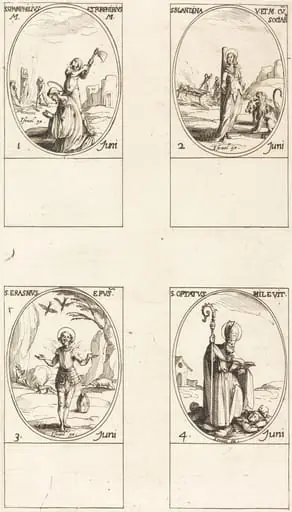 Sts. Pamphilius and Porphyrius; St. Blandina and Companions; St. Erasmus; St. Optatus
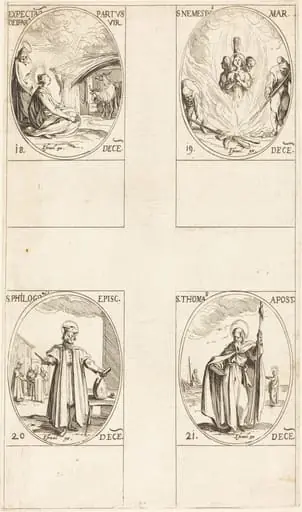 Waiting for the Virgin to Give Birth; St. Nemesius; St. Philogonius; St. Thomas
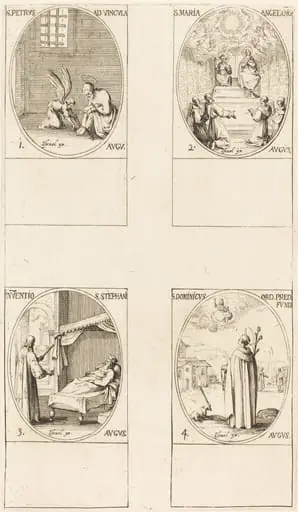 St. Peter, Apostle; St. Mary of Angels; Discovery of the Body of St. Stephen; St. Dominicus
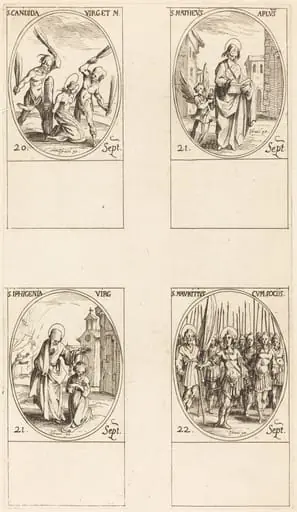 St. Canida; St. Matthew; St. Ipigenia; St. Maurice and Companions
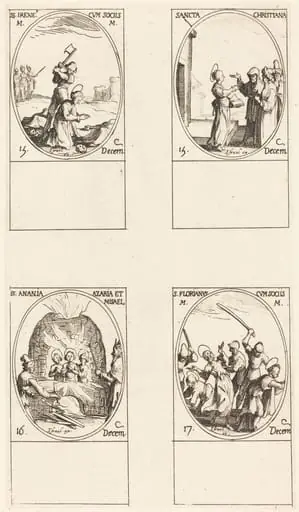 St. Irene & Companions; St. Christiana; Sts. Anania, Azaria & Misael; St. Florianus & Companions
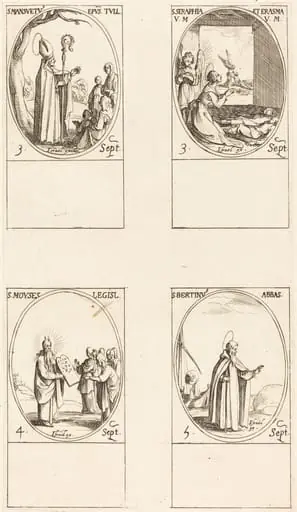 St. Mansuetus; Sts. Serapia and Erasma; Moses; St. Bertin, Abbot
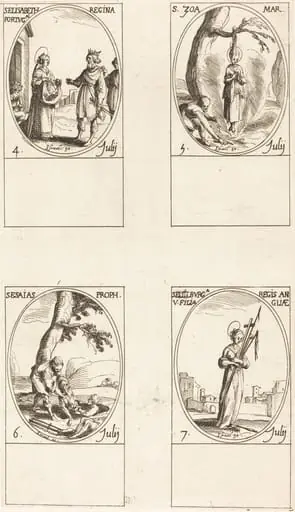 St. Elizabeth of Portugal; St. Zoe; St. Isaiah, Prophet; St. Edelburge
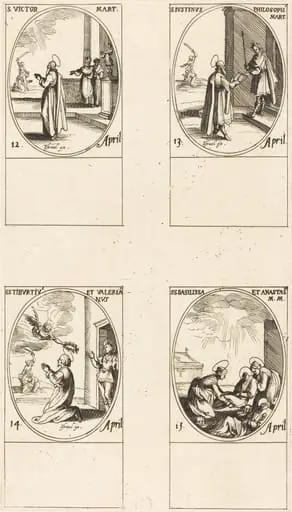 St. Victor; St. Justinus; Sts. Tiburtius and Valerianus; Sts. Basilissa and Anastasia
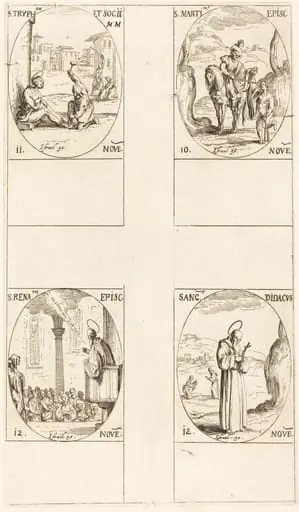 St. Martin; St. Tryphon and Companions; St. Renatus; St. Didacus