Artwork
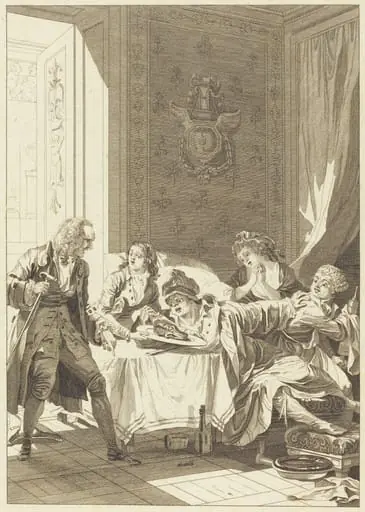
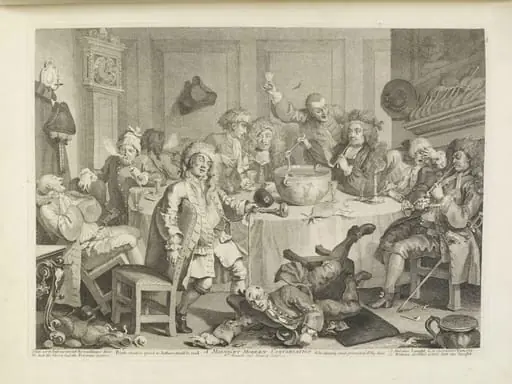
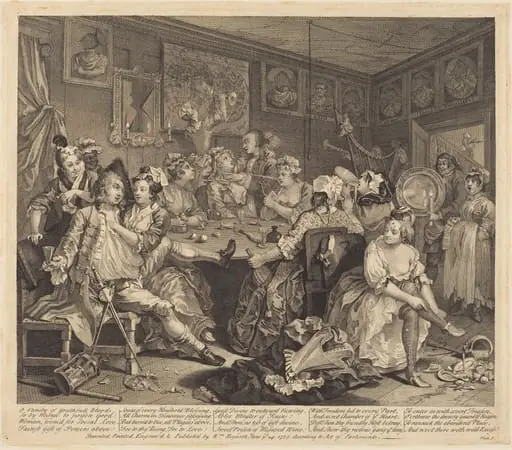
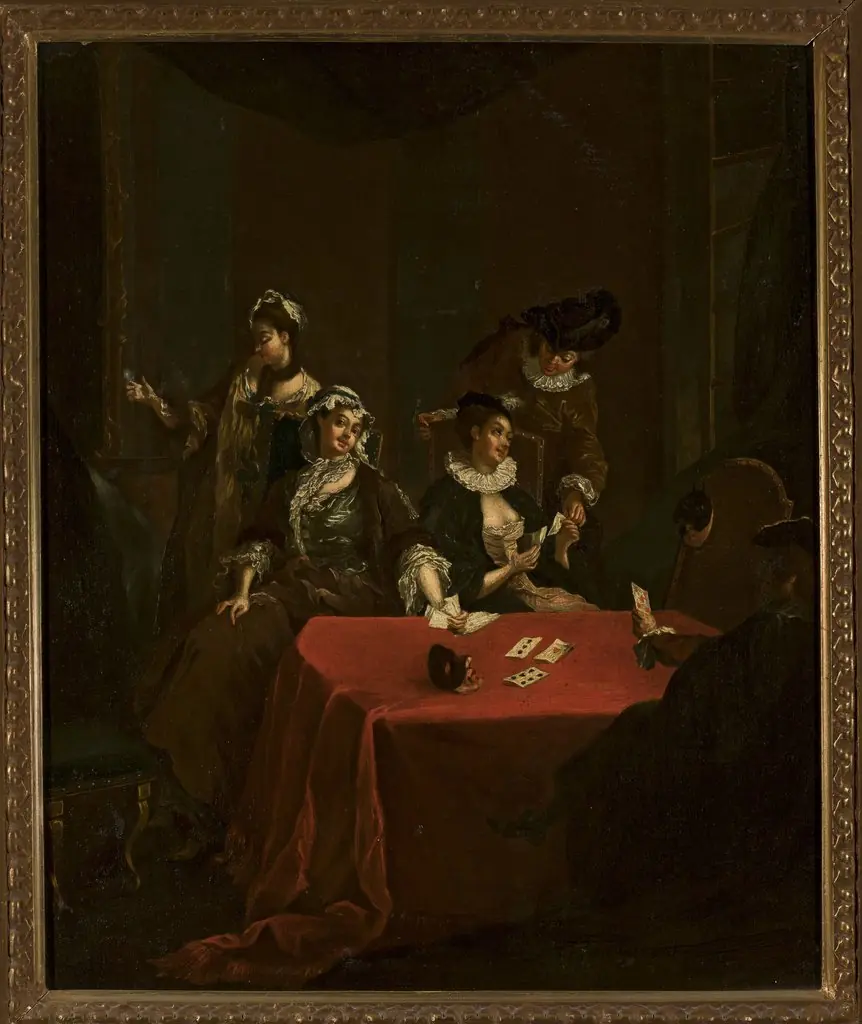
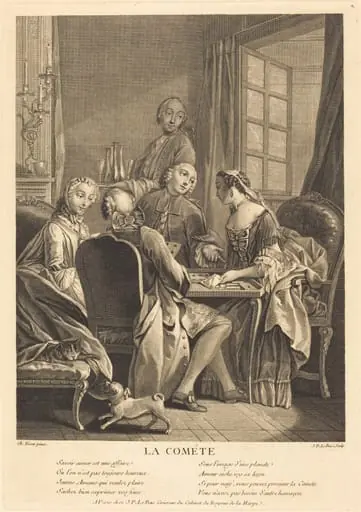
The Card Players
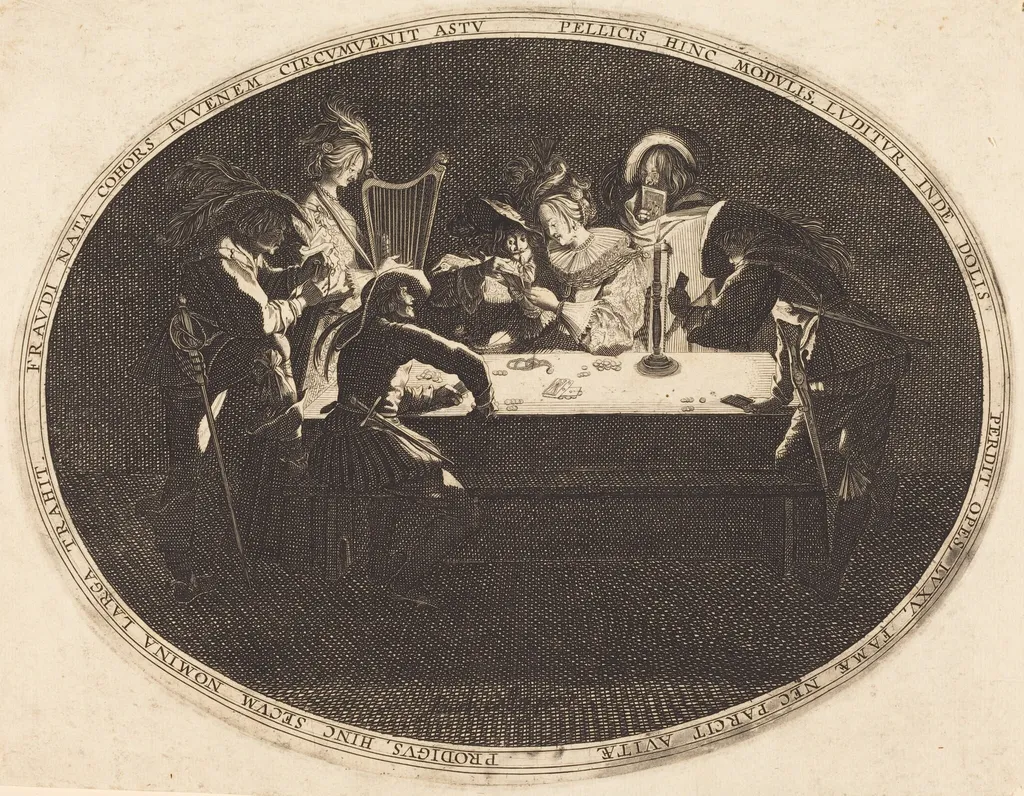
The Card Players is an ink print by the Baroque artist French 17th Century. It dates from 1628 and is held in the collection of the National Gallery of Art. This print is an etching on laid paper, created by scratching lines into a metal plate and applying ink to capture fine, expressive marks.
About this work
Overview
This print is an etching on laid paper, created by scratching lines into a metal plate and applying ink to capture fine, expressive marks. The composition centers on two figures seated at a table, engaged in a quiet card game. The technique combines etching with drypoint, yielding a tactile, uneven line quality that suggests immediacy rather than polish.
Subject & Meaning
Two men face each other across a wooden table, one clutching his cards tightly against his chest while shadows obscure part of his face. The scene conveys quiet concentration, possibly tension, without overt drama. The focus on gesture and posture implies a private, unspoken exchange, typical of intimate domestic moments in printmaking of the period.
Technique & Style
The artist employed etching and drypoint to create a loose, hand-drawn aesthetic. Fine lines, some irregular and textured, were incised directly into the plate, producing a sense of spontaneity. The shadows are built through dense, uneven hatching, enhancing the mood without relying on smooth tonal gradients.
History & Provenance
The work is part of a broader tradition of 17th-century Dutch printmaking, where everyday scenes were rendered with observational precision. While specific ownership history is not documented here, similar prints by contemporaries were collected by institutions like the National Gallery of Art, Washington, which holds comparable examples.
Context
During the 17th century, Dutch artists increasingly turned to scenes of ordinary life, reflecting a cultural shift toward secular subjects. Etching allowed for rapid, personal expression, making it ideal for capturing quiet moments like card games. This print aligns with broader trends in genre scenes that valued authenticity over idealization.
Legacy
The work exemplifies how etching and drypoint could convey psychological nuance through line alone. Its informal style influenced later artists seeking emotional depth without theatricality. Such prints helped establish the legitimacy of genre subjects in print collections, shaping museum holdings well into the modern era.
Artist & collection

Artist
Seventeenth-century French printmakers turned ink into story. Their tools were burin and acid, paper their stage. Look at the Beggar Woman with Rosary (1622), etched on laid paper, her hands folded around faith, or The…