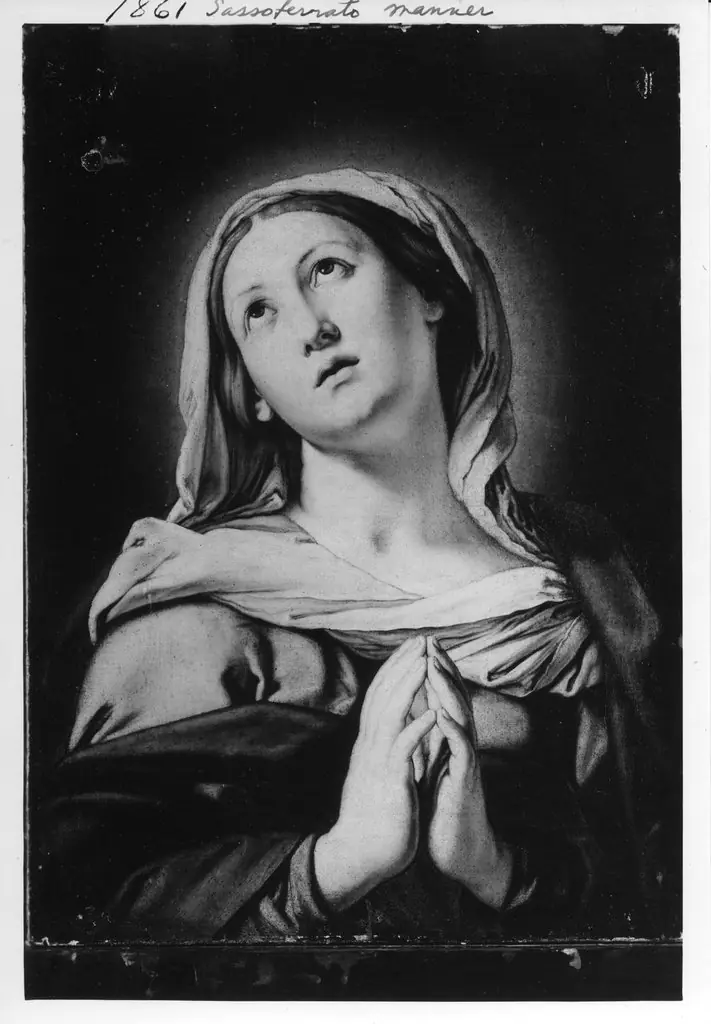
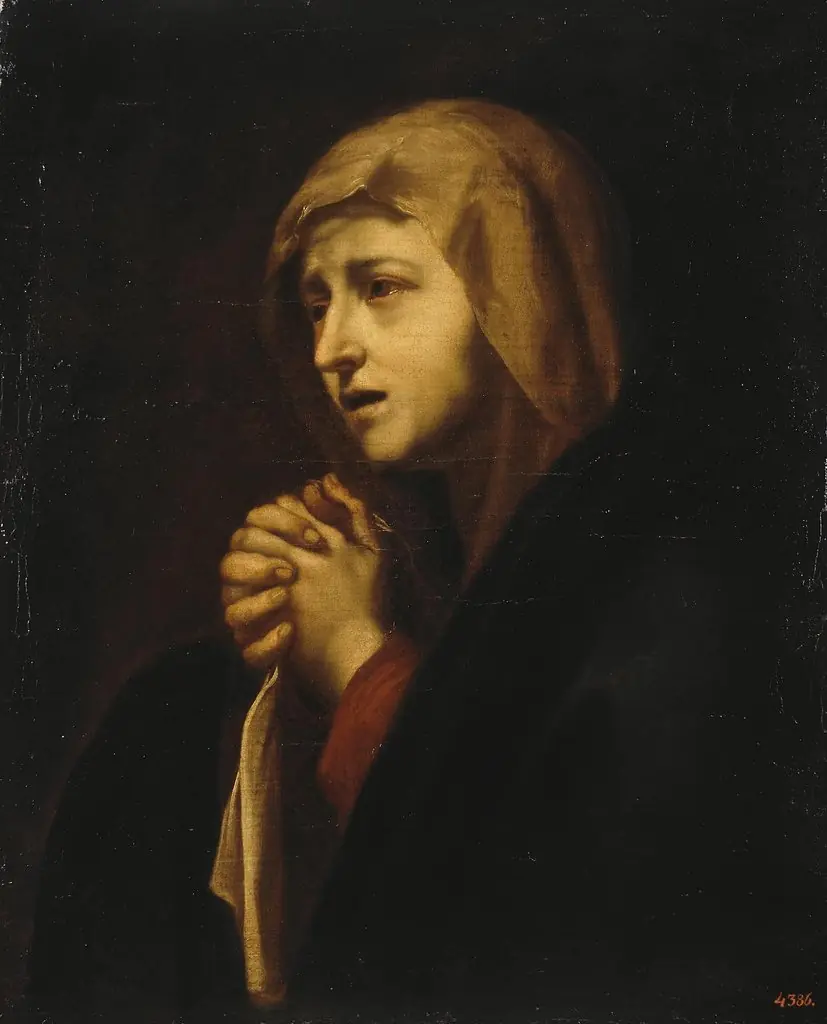
Artwork
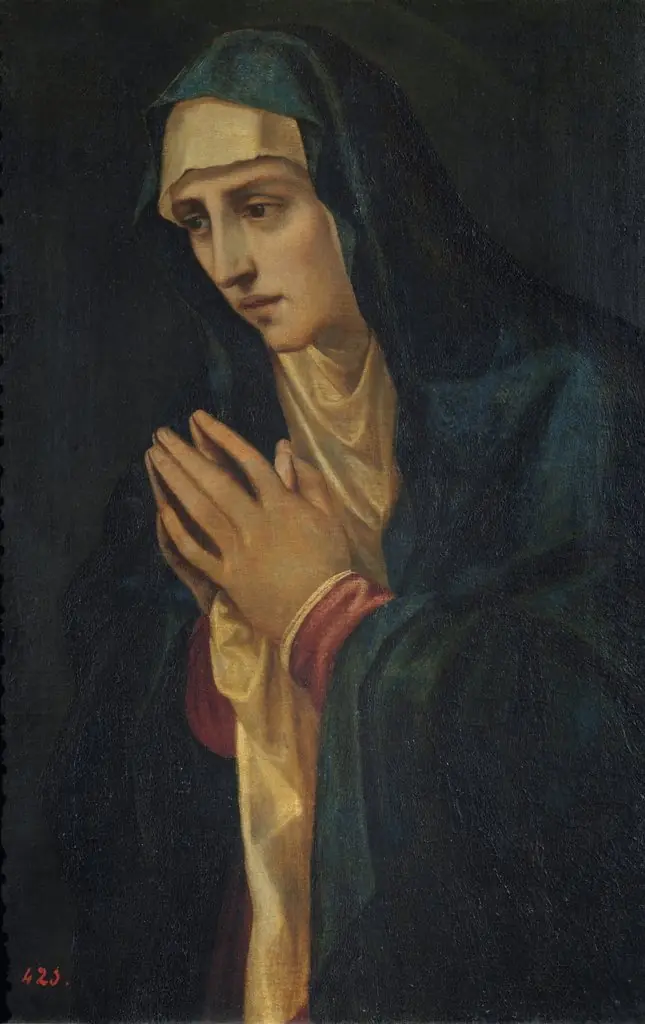
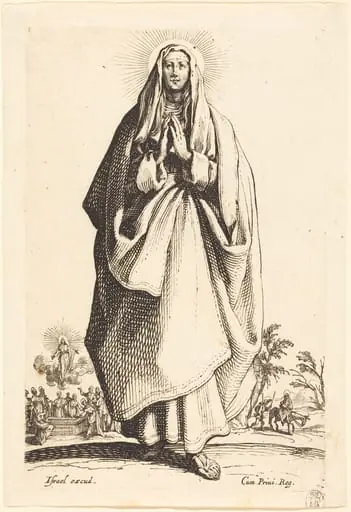
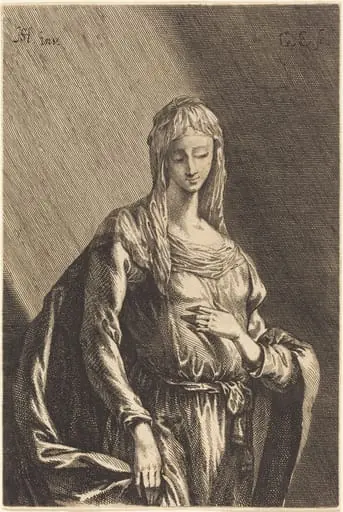
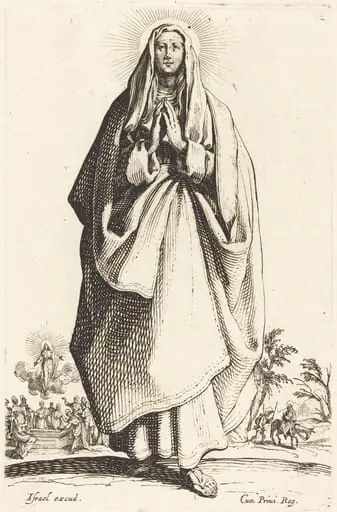
The Grieving Virgin Contemplating Instruments of the Passion
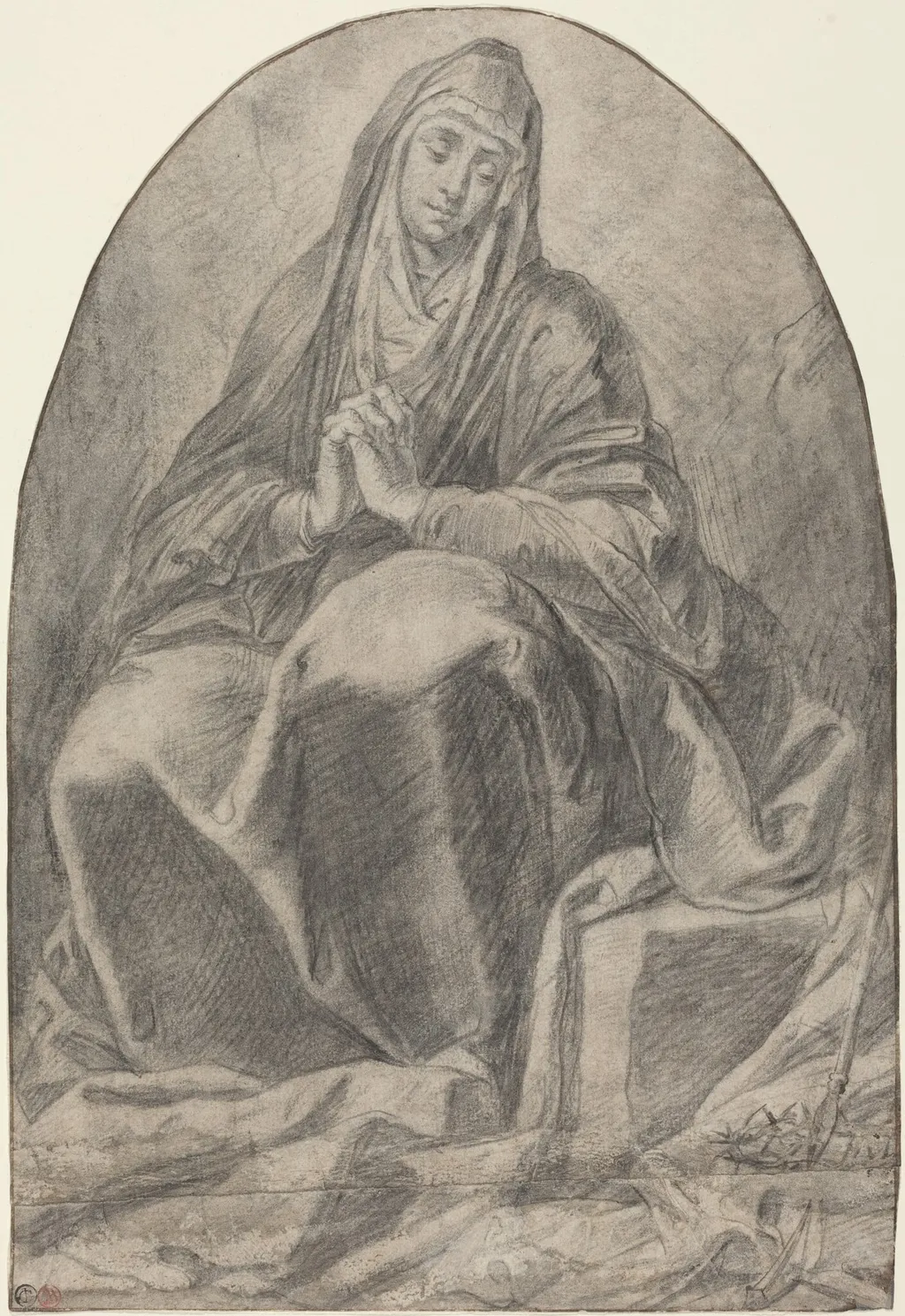
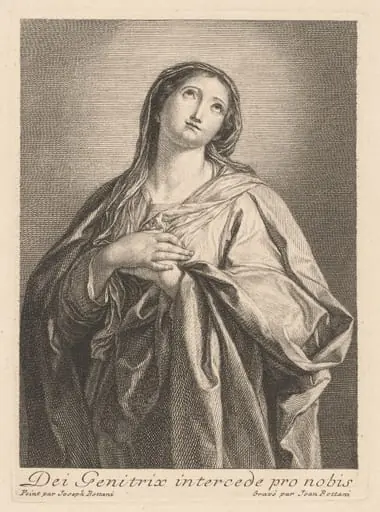
The Grieving Virgin Contemplating Instruments of the Passion is a chalk drawing by the Baroque artist French 17th Century. It dates from 1644 and is held in the collection of the National Gallery of Art. The drawing, executed in black chalk with stumping and a gray wash on laid paper, depicts a solitary woman seated on a rock beside water.
About this work
Overview
The drawing, executed in black chalk with stumping and a gray wash on laid paper, depicts a solitary woman seated on a rock beside water. A modest boat drifts near the shore, while a faint horizon line suggests sky. The figure’s posture, with hands folded in her lap, conveys a contemplative stillness, and the overall composition is rendered with a restrained palette and delicate tonal modeling.
Subject & Meaning
The woman is presented as a grieving Virgin, an iconographic theme that links her sorrow to the Passion of Christ. Her calm yet sorrowful expression, the subdued setting, and the proximity of the boat—often a symbol of the journey to salvation—invite reflection on loss and spiritual anticipation, aligning the figure’s personal mourning with the broader narrative of redemption.
Technique & Style
The artist employs black chalk for precise line work, enhanced by stumping to soften edges and create atmospheric depth. A gray wash adds tonal variation, while the use of chiaroscuro—contrasting dark outlines with subtle shading—produces a three‑dimensional effect on the robe and rock. The addition of a second sheet at the bottom indicates a compositional adjustment during the drawing process.
History & Provenance
The work is a single‑sheet drawing, its date and creator remain unidentified in the available documentation. The paper’s laid texture and the technique of adding a second piece suggest a 19th‑century practice of reworking studies. Its provenance traces through private collections before entering the museum’s holdings, where it has been catalogued as an example of devotional preparatory drawing.
Context
Depictions of the grieving Virgin were common in European religious art, serving both as meditative aids and as preparatory studies for larger altarpieces. This drawing reflects the period’s interest in intimate, emotional portrayals of sacred figures, aligning with a broader shift toward personal piety and the use of chiaroscuro to evoke spiritual depth.
Artist & collection

Artist
Seventeenth-century French printmakers turned ink into story. Their tools were burin and acid, paper their stage. Look at the Beggar Woman with Rosary (1622), etched on laid paper, her hands folded around faith, or The…