Artwork
Death with Worldly Vanities
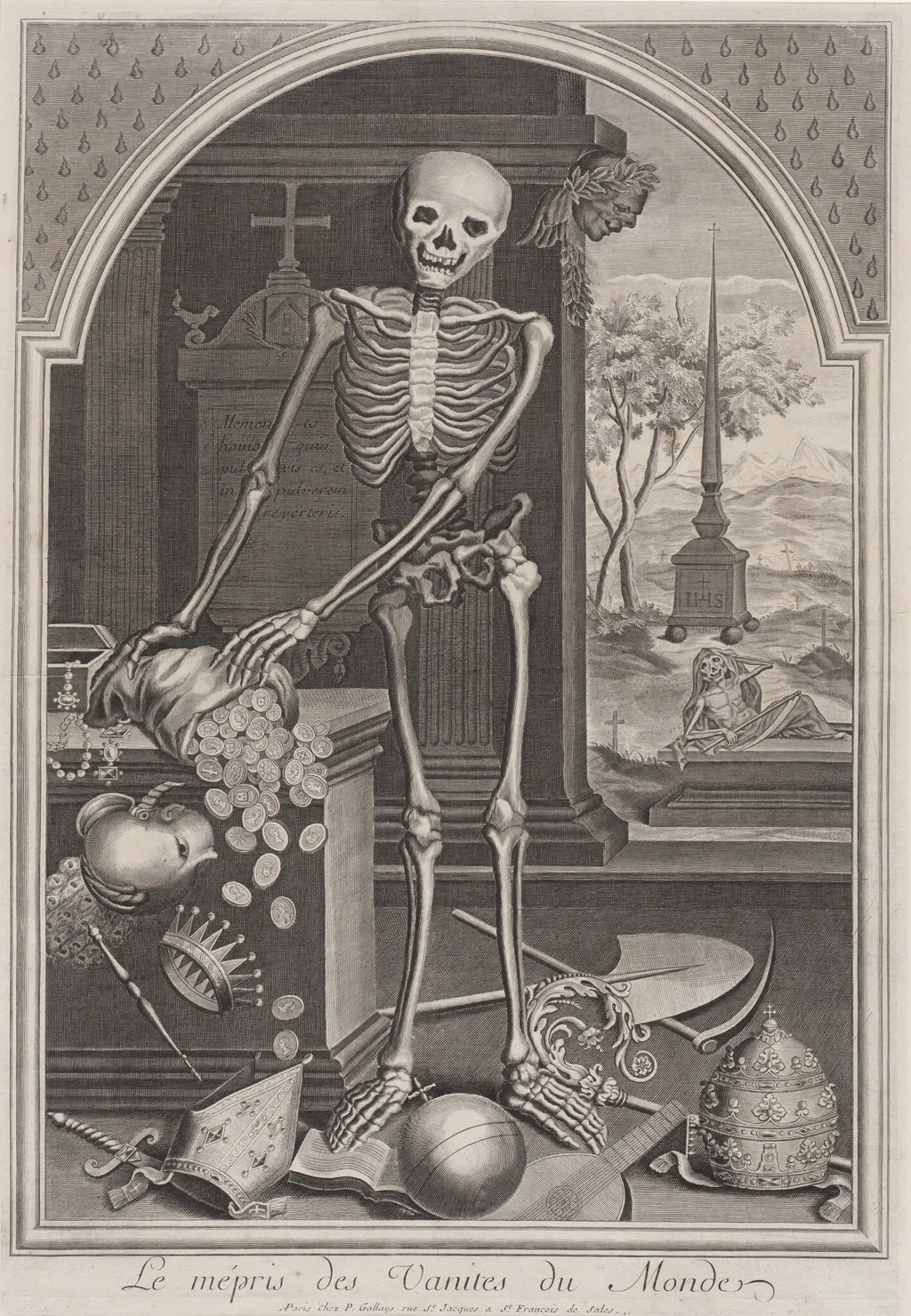
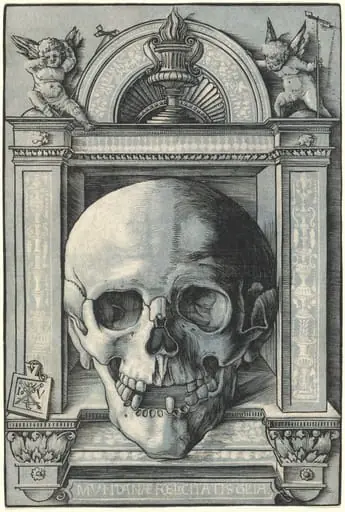
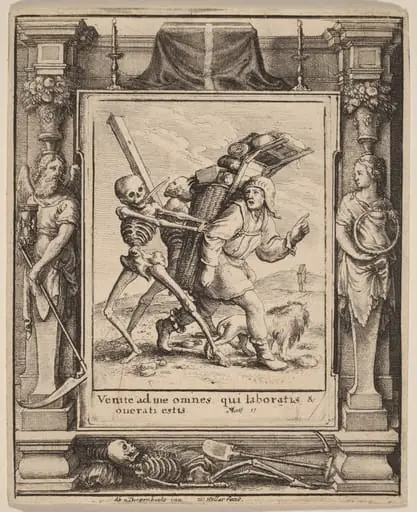
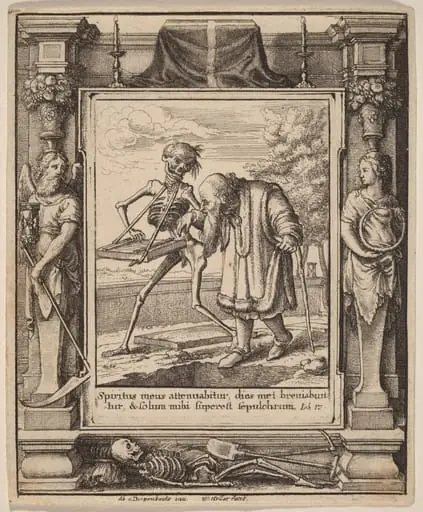
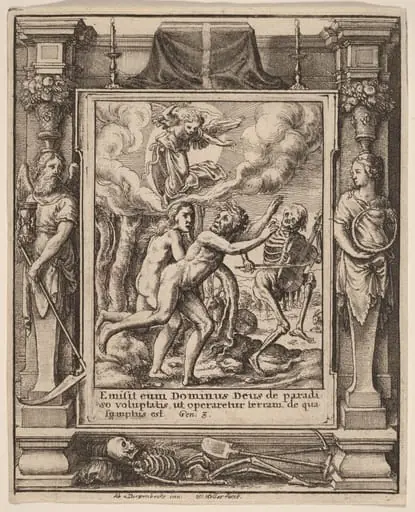
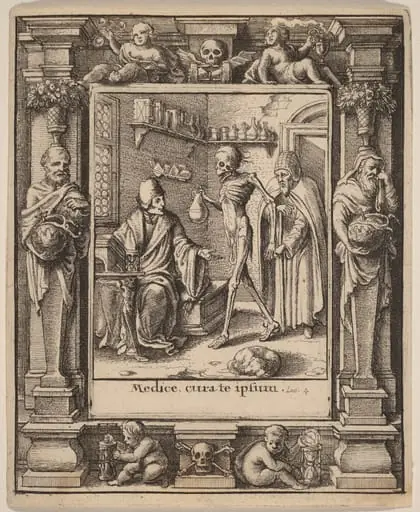
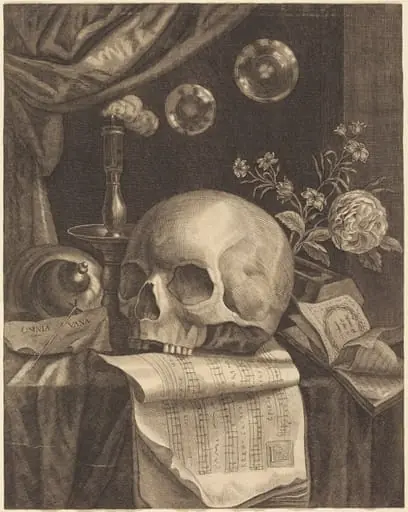
Death with Worldly Vanities is an ink print by the Baroque artist French 18th Century. It dates from 1710 and is held in the collection of the National Gallery of Art. This engraving depicts Death as a skeletal figure holding an hourglass and a globe, surrounded by symbols of earthly pursuits.
About this work
Overview
This engraving depicts Death as a skeletal figure holding an hourglass and a globe, surrounded by symbols of earthly pursuits. Rendered on laid paper, the image functions as a memento mori, a visual reminder of mortality. The composition centers the figure of Death amid discarded luxuries, emphasizing the futility of material wealth and status in the face of inevitable end.
Subject & Meaning
The scene conveys the transience of human achievements. Coins, a broken crown, and a shattered hourglass signify the decay of wealth and temporal power. The sword and musical instrument suggest the futility of martial glory and earthly pleasure. A book implies the limits of knowledge. Together, these objects form a catalog of vanities, all rendered powerless before Death’s silent presence.
Technique & Style
The artist employed fine, precise engraving lines to model form and depth, creating contrast through dense cross-hatching and delicate etching.
The artist employed fine, precise engraving lines to model form and depth, creating contrast through dense cross-hatching and delicate etching. The intricate detailing of each object reflects a meticulous approach, typical of Northern European printmaking traditions. The background’s distant spire and graveyard are rendered with subtle tonal gradations, anchoring the scene in a tangible, somber world.
History & Provenance
The print emerged in the late 16th or early 17th century, likely within the Protestant regions of Europe where moral allegories flourished. It was produced as a reproductive or original print, circulated among educated audiences familiar with religious and philosophical themes. Its survival in multiple institutional collections suggests it was widely copied and valued for its didactic message.
Context
This image aligns with the broader tradition of vanitas art, which gained momentum during the Reformation and Counter-Reformation. In an era of religious upheaval and social change, such imagery reinforced theological teachings on humility and the impermanence of life. The inclusion of ecclesiastical architecture underscores the church’s role as a moral guide amid worldly distractions.
Legacy
The print contributed to a visual language of mortality that persisted in European art for centuries. Its combination of symbolic objects and stark composition influenced later still-life and allegorical works. Though not attributed to a single renowned artist, its clarity and emotional weight ensured its continued reproduction and study as a representative example of moral printmaking.
Artist & collection

Artist
This artist worked in late 18th-century France, making portrait paintings and etched prints.