Artwork
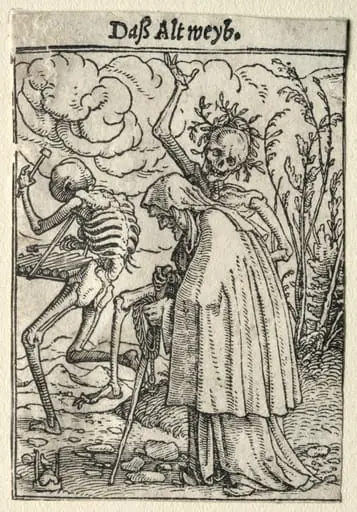
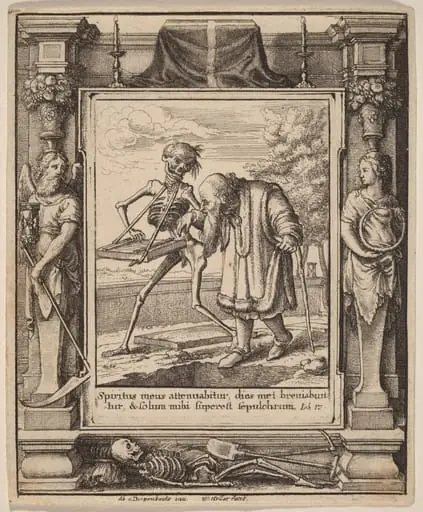
Dance of Death: The Old Man
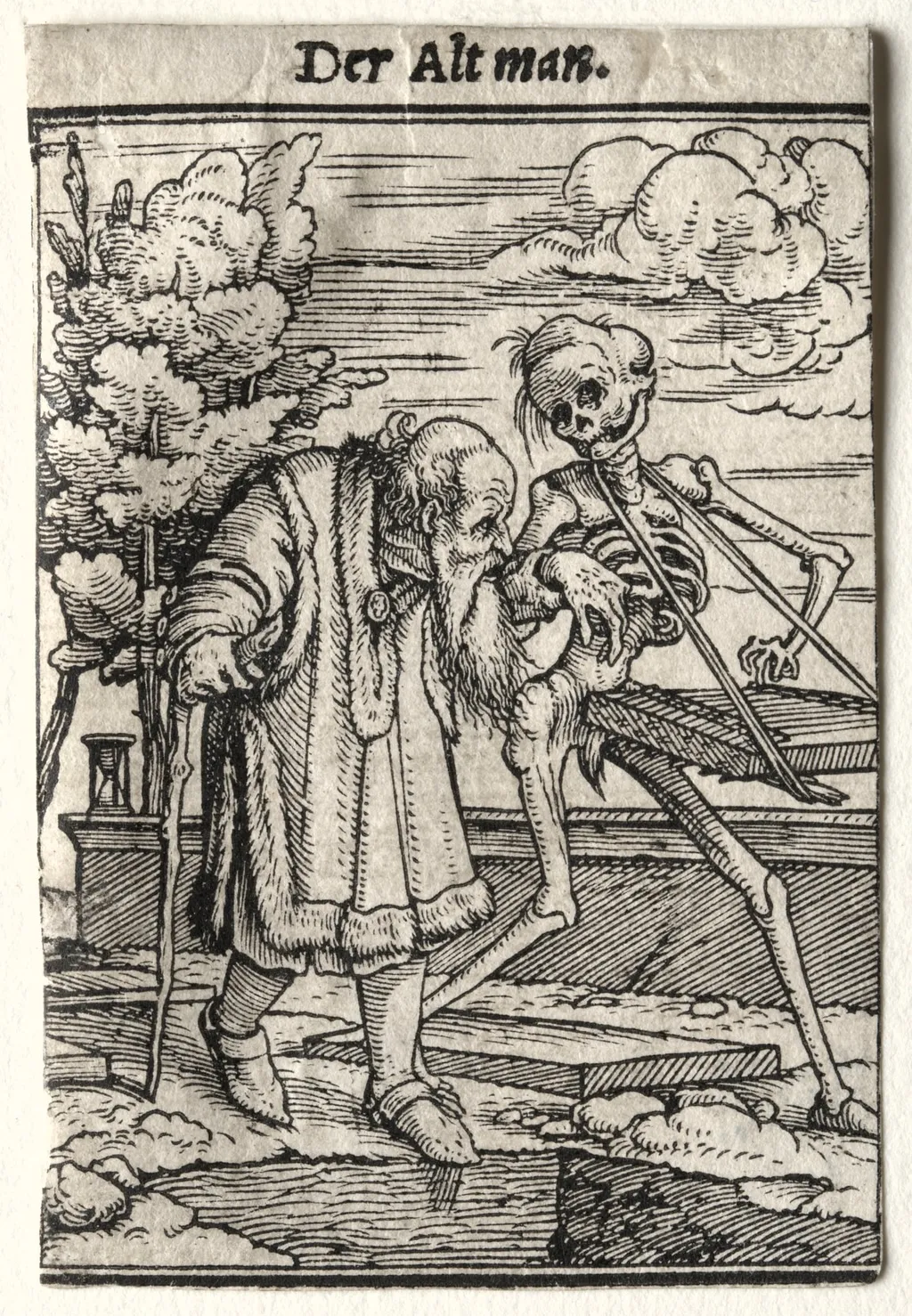
Dance of Death: The Old Man is a print by the Renaissance artist Hans Holbein the Younger. It dates from 1526 and is held in the collection of the Cleveland Museum of Art.
About this work
Overview
Holbein, a German artist of Swiss origin, was known for his precise draftsmanship and engagement with humanist themes in both portraiture and book illustration.
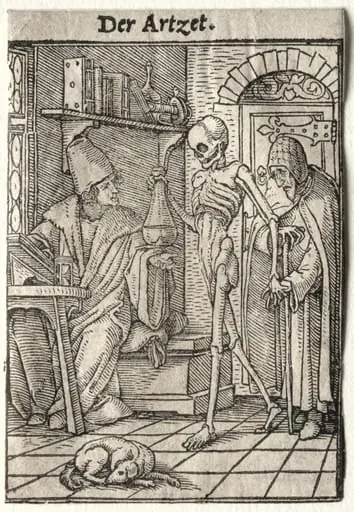
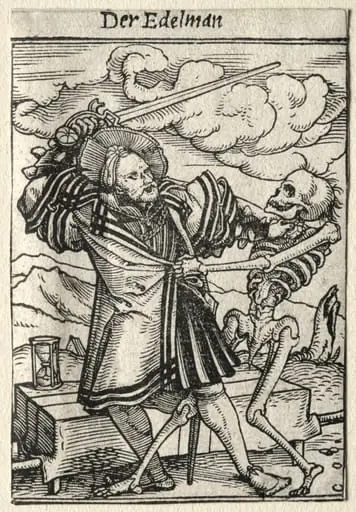
Hans Holbein the Younger produced *Dance of Death: The Old Man* circa 1526 as part of a larger sequence of woodcuts examining death’s universality. Created during his time in Basel, the print belongs to a tradition of memento mori imagery that confronted viewers with death’s inevitability. Holbein, a German artist of Swiss origin, was known for his precise draftsmanship and engagement with humanist themes in both portraiture and book illustration.
Subject & Meaning
The print portrays an elderly man, clad in period attire and leaning on a cane, being gently but firmly guided by a skeletal figure. His downward gaze and passive posture suggest resignation rather than resistance. The skeletal hand, neither menacing nor grotesque, implies death as an impartial force, indifferent to age or status. The scene underscores a medieval and early modern belief: no social rank shields one from mortality.
Technique & Style
Holbein executed the image as a woodcut, using fine, controlled lines to define form and texture. The figures are rendered with anatomical clarity, characteristic of Northern Renaissance attention to detail. Background elements—clouds, water, sparse trees—are minimized, focusing attention on the interaction between the two figures. The lack of color enhances the somber tone, emphasizing line and composition over ornament.
History & Provenance
The print was originally published as part of Holbein’s *Dance of Death* series, printed in Basel around 1538. It circulated widely in early printed books, reinforcing its cultural reach. The Cleveland Museum of Art acquired the print as part of its permanent collection, where it remains a key example of early 16th-century Northern European printmaking and moral allegory.
Context
In the early 1500s, the Dance of Death motif gained traction across Europe amid plague outbreaks and religious upheaval. Holbein’s version diverged from earlier, more theatrical depictions by adopting a quiet, intimate tone. His series reflected humanist concerns with individual experience and the equality of death, resonating with reformist ideas challenging ecclesiastical authority and worldly vanity.
Legacy
Holbein’s *Dance of Death* series influenced later artistic treatments of mortality, particularly in print culture. Its restrained imagery and psychological depth set a precedent for allegorical scenes that prioritized emotional nuance over spectacle. The work endures as a quiet testament to the era’s preoccupation with transience, preserved in institutional collections and studied for its formal precision and philosophical weight.
Artist & collection
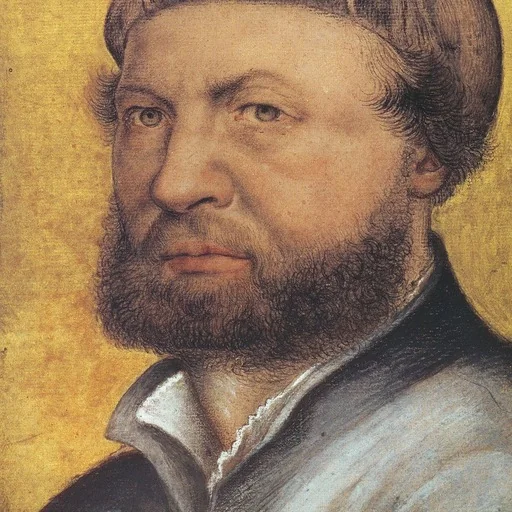
Artist
Hans Holbein the Younger (UK: HOL-byne, US: HOHL-byne, HAWL-; German: Hans Holbein der Jüngere; c.