Artwork
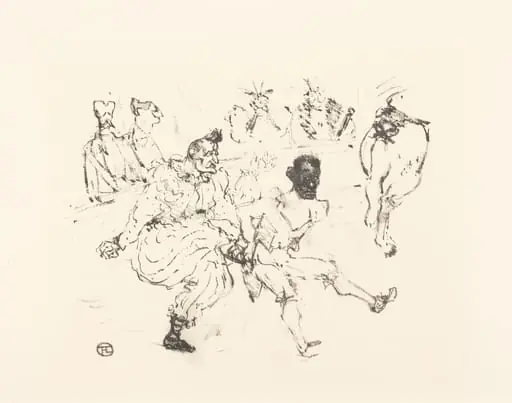
Footit and Chocolat (Footit et Chocolat)
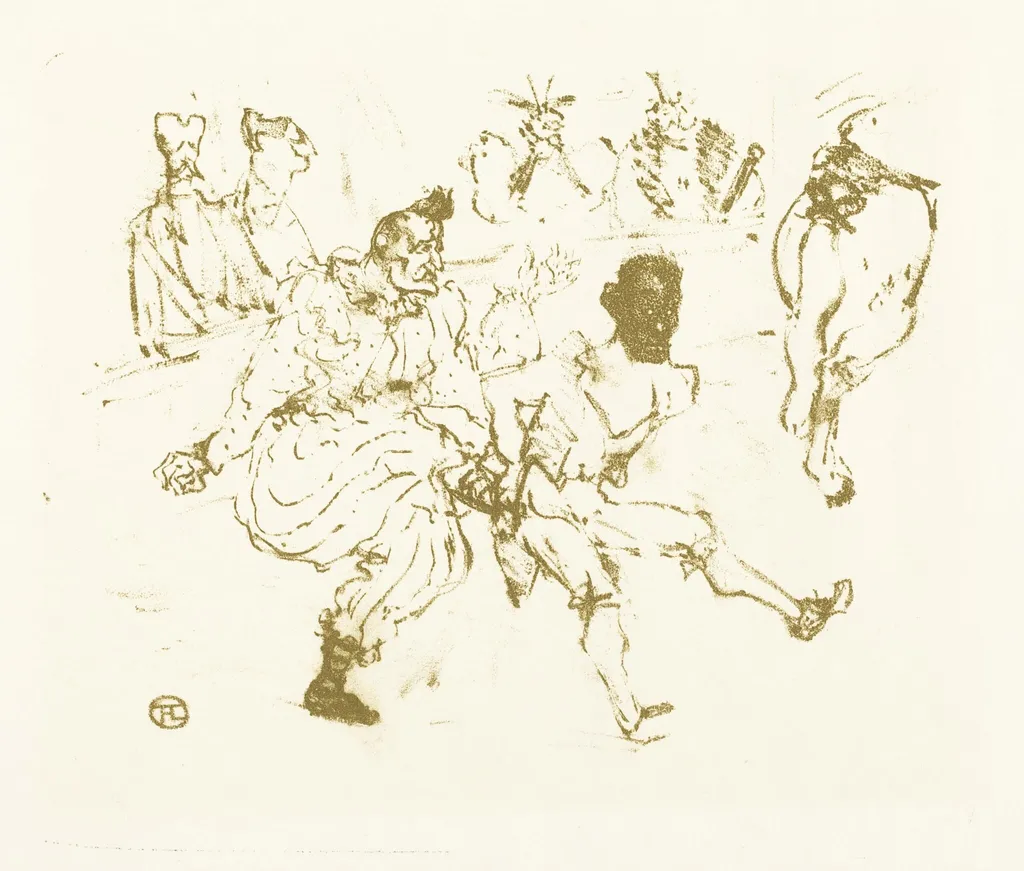
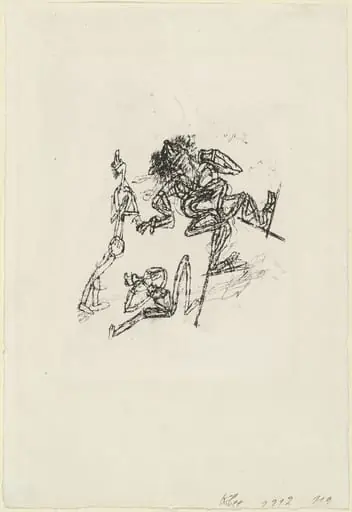
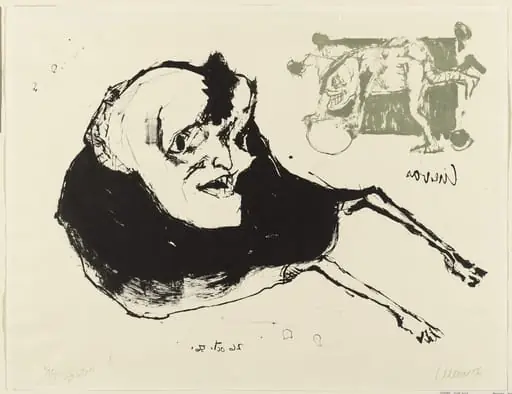
Footit and Chocolat (Footit et Chocolat) is an ink print by the Romanticist artist French 19th Century. It dates from 1850 and is held in the collection of the National Gallery of Art. Footit and Chocolat is a single-color lithographic print rendered entirely in olive green.
About this work
Overview
Footit and Chocolat is a single-color lithographic print rendered entirely in olive green. The composition depicts a dense, tangled mass of figures, some upright, others collapsing or reaching outward, without any discernible background. The image’s immediacy derives from its sketch‑like, hurried line work, which conveys a sense of disorder and movement.
Subject & Meaning
The work presents an anonymous crowd caught in a moment of chaotic interaction, suggesting themes of collective anxiety or social turbulence. By omitting individual identities and focusing on the massed forms, the piece invites viewers to contemplate the dynamics of human crowds and the emotional intensity that can arise within them.
Technique & Style
Created through lithography, the artist drew directly onto a limestone or metal plate with a greasy medium, which was then chemically treated to retain the drawn image while repelling ink elsewhere. The print’s single olive‑green hue and its loose, sketchy lines align with Romantic sensibilities that favored expressive, dramatic effects over precise, academic rendering.
History & Provenance
The print was produced as part of a series exploring urban or social scenes, though specific details of its exhibition history or ownership remain limited. Its survival in a single‑color state suggests it may have been intended as a limited edition or as a study for a larger project.
Context
During the 19th‑century Romantic period, artists often emphasized emotional intensity, the sublime, and the tumult of modern life. Footit and Chocolat reflects this ethos through its crowded composition and the raw, unrefined line work that captures a moment of collective unrest.
Legacy
While not widely cited in major art historical surveys, the print exemplifies how lithography was employed to quickly disseminate vivid, socially charged imagery. Its stark visual language continues to inform contemporary discussions of crowd dynamics and the expressive potential of monochrome printmaking.
Own this work as a print
Artist & collection

Artist
This sculptor liked to keep sharp tools in the studio and blunt ones in his pocket—his niece recalled finding him absentmindedly whittling a stick while talking philosophy.